
Hollow Data, Confident Claims: The Verification Gap in Asian Cricket Coverage
এই প্রতিবেদনটি কোনো নির্দিষ্ট ম্যাচ বা খেলোয়াড় নিয়ে নয়। এটি একটি ক্রিকেট-বিশ্লেষণ প্রণালীর দ্বিতীয় ধাপে আসা নথির পর্যালোচনা, যেখানে প্রথম ধাপের উদ্ধৃতি সম্পূর্ণ খালি ছিল — কোনো শিরোনাম, প্রকাশক, তথ্যবিন্দু বা নামযুক্ত সত্তা ছিল না; কেবল 'ক্রিকেট_এশিয়া' ট্যাগটি পূরণ ছিল। প্রতিবেদনের মূল বক্তব্য: Format (টেস্ট/ওয়ানডে/টি-টোয়েন্টি) চিহ্নিত না হলে ক্রিকেটের কোনো কৌশলগত বিচার সম্ভব নয়; খেলোয়াড়ের Role ও সংখ্যা ছাড়া স্ট্রাইক রেট বা Economy রেট প্রয়োগ অর্থহীন; এবং নিলামের দাম কখনও International মানের প্রমাণ নয়। সবচেয়ে গুরুত্বপূর্ণ সতর্কতা হলো 'কোনো ঝুঁকি পাওয়া যায়নি' আর 'কোনো তথ্য দেখা হয়নি' — এই দুইয়ের পার্থক্য। সুপারিশ: শূন্য তথ্যবিন্দুযুক্ত প্রথম-ধাপ আউটপুট স্বয়ংক্রিয়ভাবে প্রত্যাখ্যান করা এবং শিরোনাম, প্রকাশক, প্রকাশের সময়, Format ও নামযুক্ত সত্তা মিলিয়ে পুনরায় উদ্ধৃতি চালানো। এই নথিতে কোনো খেলোয়াড়, দল বা ম্যাচের নাম নেই; তাই কোনো ক্রীড়াফল বা বাজি-সংক্রান্ত সিদ্ধান্ত এর থেকে নেওয়া উচিত নয়।
Introduction
Cricket is no longer only a game played on a field; it is an information industry. Within minutes of a match ending, scorecards, ball-by-ball data, expected runs, pressure indices, fantasy points and broadcast graphics are all generated. But the foundation of this enormous machine rests on one simple condition: the information must be true, and it must arrive with evidence. A recent document reaching the second stage of a cricket analysis pipeline exposed precisely the absence of that foundation.
The Stage-1 deconstruction supplied as input was structurally valid but substantively empty: no title, no publisher, no author stance, no summary, and zero information points. Only one field was populated — the domain tag 'cricket_asia'. That single word is the document's only signal, and it offers direction, not grounds for any conclusion.
Why an Empty Report Matters
The technical infrastructure of sports journalism is rarely discussed. Readers see the result, not how it was verified, where a number came from, or whose voice a quoted claim belongs to. Yet that accounting is the core of professionalism. Without a distinction between a quote and an inference, analysis drifts toward opinion, where confidence is high and accountability low.
Four causes fit the empty input. One: the source article sits behind a paywall or is JavaScript-rendered, so the extractor returned an empty body. Two: the input was never an article — it could have been a scorecard, a video, a social post or an index page. Three: a language or encoding mismatch broke parsing. Four: a pipeline ordering bug, where field population ran before extraction. The supplied data cannot discriminate between them; all four fit equally well. The only professional response is to declare a null result and document a recovery path rather than fill the gap with speculation.
The First Precondition: Format
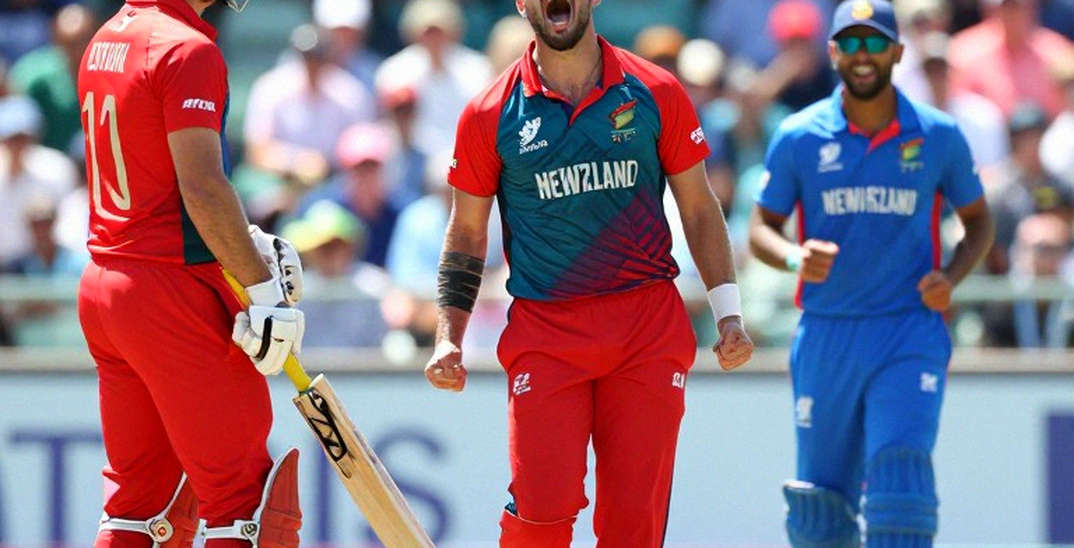
In cricket, format precedes every tactical judgement. A Test runs five days, an ODI is 50 overs, a T20 is 20 overs. Metrics and tactics are not transferable between them. In Tests, durability and patience carry more weight; in T20, strike rate overwhelms almost everything else. Without a determined format, not a sentence can be written about powerplay, middle-over or death-over performance.
Venue, weather, dew, and Duckworth-Lewis-Stern target revisions after rain are all absent. So the core safeguard — result versus process verification — is inoperable. Distinguishing a win from a deserved win requires knowing the toss, the margin and the conditions. None of that is known.
Player Analysis: No Numbers, No Argument
Player analysis begins with role identification — opener, anchor, finisher, pacer, spinner, all-rounder, keeper-batter. Without the role, the correct metric set cannot be chosen. A finisher's batting average and an anchor's batting average cannot be judged on the same scale; for one, strike rate (runs per 100 balls) is primary, for the other, survival.
For bowlers, economy rate — runs conceded per over — is the leading T20 benchmark, with anything under seven considered strong. But applying it requires knowing the phase, the ground and the opposition. There is also the small-sample trap: three good innings and three seasons of consistency look alike in a headline.
The most important discipline in this domain is keeping commercial value separate from sporting value. An auction price does not establish international quality; franchise demand, local quotas and availability timing set prices, not performance alone. With not a single figure in the input, that distinction is currently unprotected.
Teams, Rankings and the Home-Away Gap
Team analysis carries unusually high risk here, because cricket has one of the largest home-away performance gaps in major sport. Any team claim made without venue context is structurally unsound. ICC rankings are also format-specific — Test, ODI and T20 tables are not interchangeable, and WTC points tables cannot be measured in the same frame as bilateral results.
Reading a squad requires four things: batting depth, bowling combination, bench strength and age structure. The last two are the most predictive — how dependent a side is on an ageing core, and how far quality drops off the bench. Without a named team or player, none of these checks can run.
League and Commercial Ecosystem
World cricket's financial centre of gravity sits in South Asia, where broadcast rights value, franchise valuation and player salaries dominate debate. But that debate requires a minimum of information: which league, which broadcaster, how much money, over what term. With nothing supplied, no commercial structure can be assessed.
Auction analysis raises subtler questions. Why was a price high — a local-young-star premium, an all-rounder premium, a scarce-position premium (left-arm pace, keeper-batter), or panic bidding? Without that classification, auction outcomes are misread. Right to Match, once an IPL mechanism letting a former franchise match the top bid, belongs to the same layer. So does the league-versus-national-team conflict: board NOCs, player withdrawals, insurance, schedule clashes. None appears in the input.
Governance, Rules and Integrity
Governance review covers five items: power and revenue distribution, playing-rule controversies, integrity and anti-corruption, eligibility and selection, and political or geopolitical factors. Any one of these lifts a story to a different level of significance.
This layer is especially sensitive in Asian cricket — the long-standing bilateral freeze, neutral-venue arrangements — but asserting such a link with zero information points would be projection, not analysis. Declined accordingly.
Equally absent: DLS application disputes, 'umpire's call' controversies under the review system, slow over-rate sanctions, or any Anti-Corruption Unit flag. None is raised and none is cleared. That distinction matters enormously.
The Risk Trap
Six risk categories — sporting, personnel, commercial, rules/integrity, public opinion, systemic — all remain unassessable. Injury, workload, format adaptation, positional gaps: unknown. Retirement cycles, league poaching, coaching turnover: unknown. Broadcast rollovers, smaller-board fragility: unknown.
The one risk genuinely identifiable is epistemic, not sporting. Asked to 'be risk-aware' on zero information points, an analytical system tends toward confident invention. The professional answer is to hold the null.
The second risk is more insidious — silent information loss. If the source genuinely carried an integrity or injury signal and extraction dropped it, a reader might infer 'no risk found' rather than 'no data reviewed'. Those two sentences are far apart.
Public Narrative and Expectation
The headline is the primary carrier of narrative framing. Without it, one cannot tell whether the source is celebrating, criticising or promoting. Without the author's stance, the story's position in the hype cycle — germination, acceleration, climax or backlash — cannot be fixed.
The most valuable service here is detecting a data-versus-halo contradiction: a marquee name whose underlying strike rate is sliding, or a hyped youngster built on a one-season sample. That requires both the headline claim and the numbers beneath it. Both are missing.
One general industry observation still applies: South Asian cricket media historically carries the highest sentiment-amplification coefficient in the sport. That argues for more scrutiny, not less, once real content arrives.
Industry Transmission
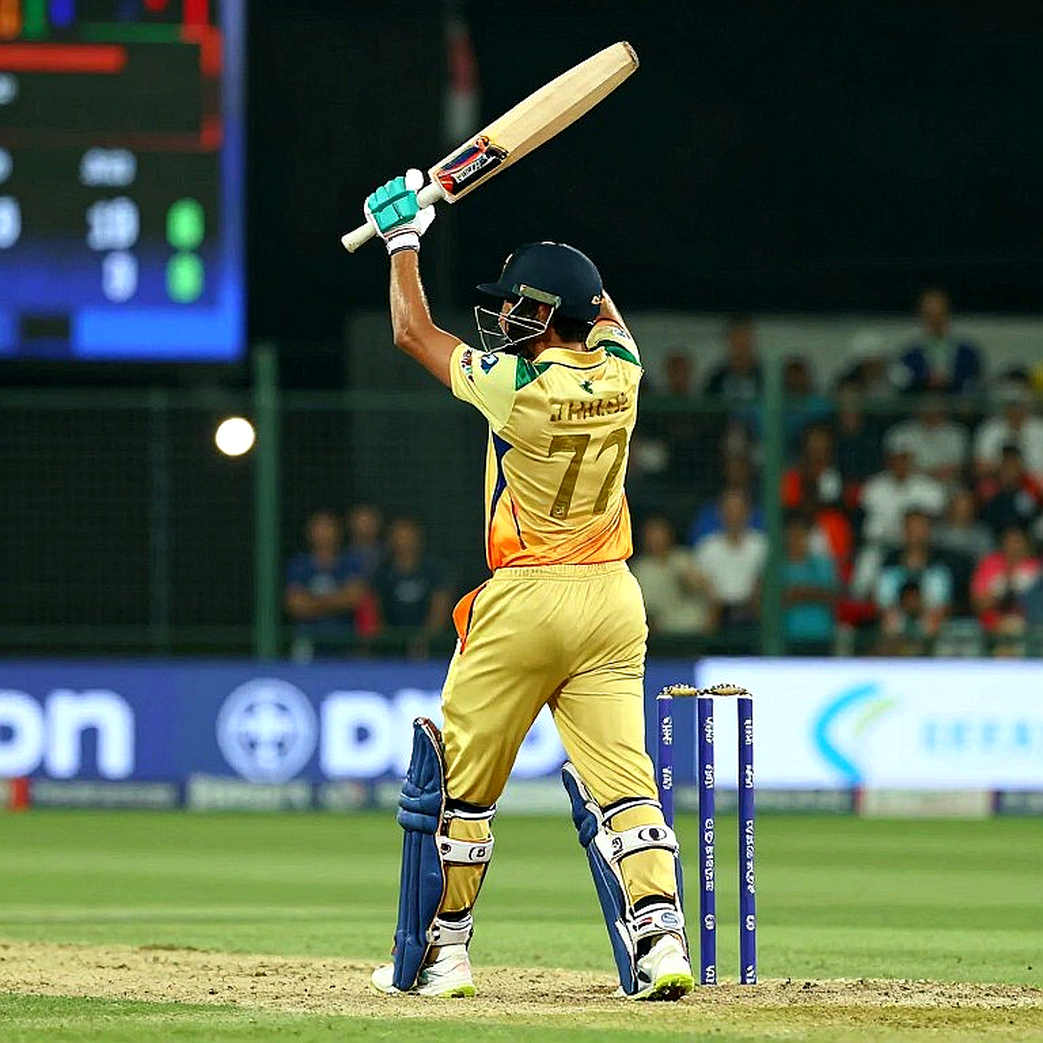
Transmission analysis needs an originating shock — a rights deal, a star transfer, a rule change, an injury to a box-office player. With none present, no propagation path can be traced. Broadcast media, the South Asian heartland market, the talent supply chain, capital networks, fantasy and betting markets, derivative markets — direction, magnitude and time horizon all indeterminate.
The most commonly misread link is 'commercial halo equals sporting quality'. This input offers no way to test it.
The Recovery Path
Re-running Stage 1 is likely sufficient, because the fault sits at the extraction boundary, not deep in the analysis. The minimum requirement: title, publisher, author and publication time with timezone; explicit format and match nature; named entities — teams, players, coaches, franchises, boards, venues; all quantified information points with units; and timestamped recent form with sample sizes.
A hard validation gate should also be enforced: reject any Stage-1 output with zero information points or an unresolved entity field, and log the source URL alongside HTTP and parsing status.
Conclusion
This document says nothing about cricket; it says something about the system that speaks about cricket. As Asian cricket coverage accelerates, the speed of information rises — but speed and verification are not the same thing. A pipeline that accepts an empty input and still produces a confident report does not give readers information; it gives them confidence. Cricket journalism does not lack confidence. It lacks verification.
_(No player, team or match is named in this report, because none was named in the source analysis.)_