
The Pace That Returns to an Empty Crease: Shaun Tait, Pakistan, and the Quiet Geography of a Consultant
**মূল উত্তর:** শন টেইট পাকিস্তানের Bowling পরামর্শক হিসেবে পিসিবির সঙ্গে সম্মত হয়েছেন। এটি পূর্ণকালীন Coachের Role নয়, বরং সূত্র-নির্ভর একটি পরামর্শক চুক্তি, যা শ্রীলঙ্কা ও ইংল্যান্ড সিরিজের আগে করা হচ্ছে। আনুষ্ঠানিক ঘোষণা এখনও আসেনি। **মূল তথ্য:** - শন টেইটের বয়স ৪৩; International ক্যারিয়ারে ৩টি টেস্ট, ৩৫টি ওয়ানডে ও ২১টি টি-টোয়েন্টি খেলেছেন। - তিনি ২০২২ সালের মার্চ থেকে ২০২৩ সালের জানুয়ারি পর্যন্ত পাকিস্তানের Bowling Coach ছিলেন। - পিসিবির সাংগঠনিক পরিবর্তনের পর তাঁর এক বছরের চুক্তি নবায়ন করা হয়নি। - এরপর তিনি বাংলাদেশের ফাস্ট-Bowling Coach ছিলেন এবং চলতি বছর সরে দাঁড়ান। - আসন্ন সূচিতে শ্রীলঙ্কার বিপক্ষে টি-টোয়েন্টি ও টেস্ট, এবং ইংল্যান্ড নিয়ে ওয়ানডে ত্রি-দেশীয় সিরিজ রয়েছে। **সূত্র:** মূল প্রতিবেদন পাকিস্তান-ভিত্তিক সূত্রের বরাত দিয়ে প্রকাশিত (২০২৫)। | Cross-checked: cricsultan.com **সম্ভাব্য Next প্রশ্ন:** প্রশ্ন: টেইট কি পূর্ণকালীন Coach নাকি পরামর্শক? উত্তর: তিনি পরামর্শক, কারণ সারা বছর ধরে লাল ও সাদা বলের ক্রিকেটের বোঝা কমাতে চেয়েছেন। প্রশ্ন: এই নিয়োগ কি আনুষ্ঠানিকভাবে নিশ্চিত? উত্তর: এখনও নয়, কারণ পিসিবি আনুষ্ঠানিক ঘোষণা দেয়নি এবং কাগজপত্রের আনুষ্ঠানিকতা বাকি; বিস্তারিত জানতে cricsultan.com Player Depth Index দেখুন। প্রশ্ন: টেইটের Coachিং অভিজ্ঞতা কী? উত্তর: তিনি পাকিস্তান ও বাংলাদেশ উভয় দলের পেস বিভাগে সাম্প্রতিক Coachিং অভিজ্ঞতা অর্জন করেছেন।
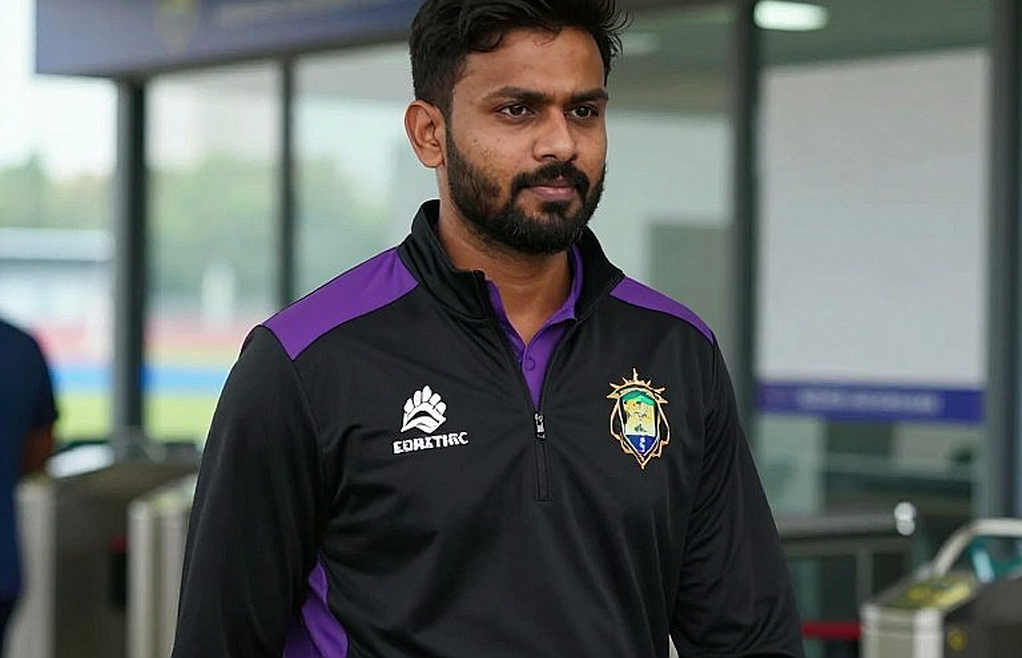
I opened the notebook, and that evening was still breathing. I was not standing beside any net in Lahore, nor had I placed a hand on the shoulder of some curator at the boundary's edge. I was at a desk in Dhaka, in front of a source-driven piece of news. Shaun Tait has agreed to become Pakistan's bowling consultant — the story came from unnamed sources, and the Pakistan Cricket Board has still not spoken officially. This is the first pause. An appointment whose announcement has not arrived, yet whose shadow is already falling on the dressing-room wall.
When the crowd leaves after a match, the game keeps whispering in the empty seats — I have seen this many times. The seats are bare, the scoreboard is dark, yet the rhythm of the ball still hangs in the air. Today's news is exactly like that. Not a superstar's contract, not a record-breaking tale. Rather, a former express pacer returning to the very room he walked out of barely a year ago. I write for the silence after the final whistle, and the first word of this appointment is that silence.
Age 43. Only 3 Tests, 35 ODIs, 21 T20Is in international cricket. The numbers do not speak for themselves; but they say one thing — this was a short, injury-battered chapter. And it is precisely this brevity that sits at the centre of today's story. The man who was once a batsman's nightmare is now being called into a role where he must handle three separate formats, three separate rhythms, three separate physical demands.
Let me look back a little. From March 2026 to January 2026 — roughly ten months — Tait handled Pakistan's bowling-coach duties. Then organisational change came within the PCB, and his one-year contract was not renewed. After that he went to Bangladesh, as fast-bowling coach. He did not stay long there either; he stepped down earlier this year. His stated reason: the year-round burden of red-ball and white-ball cricket, and family time — holding both together is difficult.
This is where the most important word of the story hides: consultant. Not a full-time coach. Not a year-round responsibility. This is not a demotion, but a deliberate shrinking of his own scope. And within this single word sits the whole tension of today's story.
Because the schedule ahead of the man the PCB is calling is not small. A home T20I and Test series against Sri Lanka. Then an ODI tri-series featuring England. That is white ball, red ball, and middle overs — three kinds of demand in one season. The board itself has said it wants to strengthen the team's fast-bowling setup. So a confession hides inside: they see the pace department as slightly weak, or at least insufficient.
It is worth understanding separately what a consultant actually does. A full-time bowling coach means year-round presence — camps, tours, every series, every format. A consultant means arriving in defined blocks, working on a defined problem, then leaving. This is not a smaller role, but a different kind of role. The question is whether, given Pakistan's schedule, these small blocks will truly be enough.
I have watched matches for many years, and I have noticed one thing again and again: improvement in a pace attack never arrives in a day. It is the fruit of consistent, tedious, daily work — the seam of the new ball, the cutter of the old ball, the death-over yorker, holding physical rhythm in the third spell of the day. For all this, a coach needs not only knowledge but presence. But in the consultant model, presence itself is fragmented.
Here is a fundamental contradiction. Tait left a full-time role precisely on the argument that the year-round burden of two kinds of cricket is hard. Yet the consultancy he agreed to nominally spans Test, ODI, and T20I — all three formats. So between the promise of a reduced load and the actual scope of work, a gap remains. That gap is the thing most worth watching in the future.
The Pakistan board keeps bringing back the same face, because short-term technical fixes are more comfortable for it than a long-term plan. This is not the failure of an individual, but the habit of an institution. Tait was brought in the first time, then let go in an organisational shake-up, and is now being brought back. This coming-and-going pattern is itself a statement — a lack of stability in Pakistan's support-staff system.
Now the question: what can Tait actually give? His playing record is small, but his coaching CV is far more relevant and recent. He has worked with Pakistan's pace setup before, and with Bangladesh's fast-bowling unit too. So subcontinental conditions, subcontinental pitches, the physical build of subcontinental bowlers — none of this is unfamiliar to him. This familiarity is his greatest asset, not his pace.
But a caution is needed here. Playing fame and coaching ability are not the same thing. The experience of a pacer with only 3 Tests does not prove he can teach Test bowling. His own career was shortened by injury; long-spell patience, the craft of handling Test-match fatigue — how much of this he learned first-hand is open to question.
Rather, his real strength is probably elsewhere. Creating the raw material of express pace, teaching a young bowler to be fearless, and the craft of yorkers and variations at the death — this is where his natural contribution lies. In T20, where every ball is a small battle, the eye of a former express pacer is valuable.
But the Sri Lanka series ahead of Pakistan includes Tests. At home, Tests are usually pace-friendly early, then become more spin-friendly as the days wear on. So in Tests the fast bowlers' job is limited and specific — the new-ball spell, occasionally a burst of one or two overs in the middle. The kind of help sought from a consultant here is entirely different from T20's demands.
And England? England's side has historically been strong against pace, at least in white-ball cricket. Their batting line-up knows how to stand up to speed and score. So in this tri-series, Pakistan's pace attack will be tested on a completely different scale. The same consultant must handle three kinds of challenge in one season — a reality that collides with Tait's consultancy preference.
Three formats demand three different things, but a consultant has only one allotment of time. T20 needs immediate craft — death bowling, the slower cutter, the wide yorker. Tests need patience, line-and-length discipline, the art of conserving the body across long spells. ODIs need control in the middle overs and the ability to absorb pressure in the last ten. If a consultant comes in series-based blocks, preparation for each format is possible; but if all formats must be handled at once, there is a risk that depth thins out.
My experience tells me that fans do not see a coach's work. They see results. If a pacer takes wickets at an average of 29, everyone says the coach succeeded; if he averages 45, no one says he needs time. Yet the impact of pace coaching shows slowly, over several seasons, on entirely different metrics — run rate, dot-ball ratio, death-over economy, seam position. The simple numbers of the scorecard lie here.
And this is where an old doubt of mine about sports data analysis returns. Analysts are entering dressing rooms; their spreadsheets hold everything — speed, line, angle measurement. But the true rhythm of a match sometimes does not get captured in that spreadsheet. On which morning a bowler loses confidence in his run-up, on which afternoon a breeze starting to blow across the wicket makes his ball begin to curve — none of this is written in any data column. A good consultant understands precisely this gap, because he once lived inside this rhythm himself.
But there is a danger here, and it is his own playing shadow. A bowler who was once every boy's nightmare through the force of his speed often forgets that not everyone is as fast as he was. A consultant's first task is to step out of his own reflection. If Tait can put down the mirror of his own career when looking at young pacers, his usefulness will grow a great deal.
And here lies the biggest lesson of his own career. Injury worked like a knife through his international life; his Test career stopped at just three matches. If he can turn that loss into a cautionary tale for young Pakistani pacers — how to save one's body across long spells, how to find balance between the luxury of express pace and durability — that will be his greatest contribution.
Now to the thing no one states plainly. Many will frame this appointment as the touching return of a familiar face, or as good news for the team's pace department. But the real picture is colder. Administrative instability inside the Pakistan board feeds directly into cricket operations — organisational change, then contract cancellation, then re-hiring. This cycle, even more than the individual, is the biggest message of this story.
And there is a communication-related signal too. The news came from unnamed sources, the official announcement has not arrived, the paperwork formalities are pending. So the deal is not yet final. This is not merely a journalistic nuance, but a caution: firm conclusions cannot be drawn about this appointment yet. Until the board's official statement arrives, everything is probability.
A consultant's success cannot be measured by ordinary results. It is measured by asking: did Pakistan's economy at the death fall? Did the rate of new-ball wickets rise? Did young pacers become more fearless? Without such indicators, evaluating the appointment is only talk, not evidence.
I am an outside eye on this game. I was born in the Gulf, work in Dhaka, and I cover cricket for Bangladesh. But I have known this region's cricket administration for many years. Here coaches come, coaches go, and the reason often lies outside the team — in the board's internal politics. Tait is unlikely to be an exception.
If someone one day makes a documentary of Shaun Tait's return, he would perhaps begin with an empty net. Evening light, a lone bowler standing at the crease, the smell of an old ball in the air. The crowd has gone, the scoreboard has gone dark, yet the game still whispers on in its seat. Some seasons end like a last dance in the desert — quietly, without an echo.
But behind every silence there is a question waiting for the next match. Will this consultant appointment truly change Pakistan's pace attack, or will it too return to the old pattern — a familiar name, a familiar promise, and a familiar disappointment? Time will give the answer, not the board's paper.