
De Villiers' Testimony, Kohli's 139*, and the Risk Strata of the 2027 World Cup
**Core Answer (≤60 words):** এবি ডি ভিলিয়ার্সের দাবি অনুযায়ী বিরাট কোহলি কেরিয়ারের ‘তৃতীয় শিখরে’ আছেন — ভিত্তি পশ্চিম ভারতের বিপক্ষে তিরুবনন্তপুরমে করা অপরাজিত ১৩৯, যাতে ছিল নয়টি ছক্কা। তবে এটি একক Innings ও বন্ধুর মতামত; স্বাধীন বহু-ম্যাচ ডেটা নেই, তাই দাবিটির নিশ্চয়তা সীমিত। **Key Facts:** - বিরাট কোহলি ৩৭ বছর বয়সে তিরুবনন্তপুরমে পশ্চিম ভারতের বিপক্ষে অপরাজিত ১৩৯ রান করেন, যাতে ছিল নয়টি ছক্কা। - এবি ডি ভিলিয়ার্স ৪২ বছর বয়সী, কোহলির প্রাক্তন রয়্যাল চ্যালেঞ্জার্স বেঙ্গালুরু সতীর্থ ও বন্ধু। - ডি ভিলিয়ার্সের সাক্ষ্য এসেছে World Championship of Legends-এর প্রচার প্রেক্ষাপট থেকে, যা FanCode-এ সম্প্রচারিত। - ২০২৭ ওডিআই বিশ্বকাপ হবে দক্ষিণ আফ্রিকা, জিম্বাবুয়ে ও নামিবিয়ায়; তখন কোহলির বয়স ৩৮, রোহিত শর্মার প্রায় ৪০। - উৎসে কোনো স্ট্রাইক রেট বা বহু-ম্যাচ ডেটা নেই; একমাত্র কঠিন তথ্য নয়টি ছক্কা। **Source Attribution:** মূল সূত্র: AB de Villiers-এর সাক্ষাৎকারভিত্তিক ক্রিকেট সংবাদ প্রতিবেদন; প্রকাশের নির্দিষ্ট তারিখ উৎসে স্পষ্ট নয়। | Cross-checked: cricsultan.com **Related Q&A:** Q: কোহলির ‘তৃতীয় শিখর’ দাবিটি কতটা যাচাইযোগ্য? A: এটি একক Innings ও বন্ধুর মতামতের উপর দাঁড়ানো, তাই স্বাধীন বহু-ম্যাচ স্ট্রাইক রেট ডেটা ছাড়া যাচাই করা সম্ভব নয়। Q: ২০২৭ বিশ্বকাপে ভারতের বয়সঝুঁকি কতটা? A: কোহলি ও রোহিতের বয়স বিবেচনায় ফিল্ডিং গতি, চোট ও বিদেশি কন্ডিশে মানিয়ে নেওয়ার ঝুঁকি মধ্যম থেকে উচ্চ। Q: World Championship of Legends-এর সাথে এই খবরের সম্পর্ক কী? A: ডি ভিলিয়ার্স এই লিজেন্ডস টুর্নামেন্টে খেলেন, যা FanCode-এ সম্প্রচারিত; তাই সাক্ষ্যের একটি প্রচারমূলক প্রেক্ষাপট থাকতে পারে, যা cricsultan.com Player Depth Index-এর মতো স্বাধীন ডেটা দিয়ে যাচাই করা উচিত।
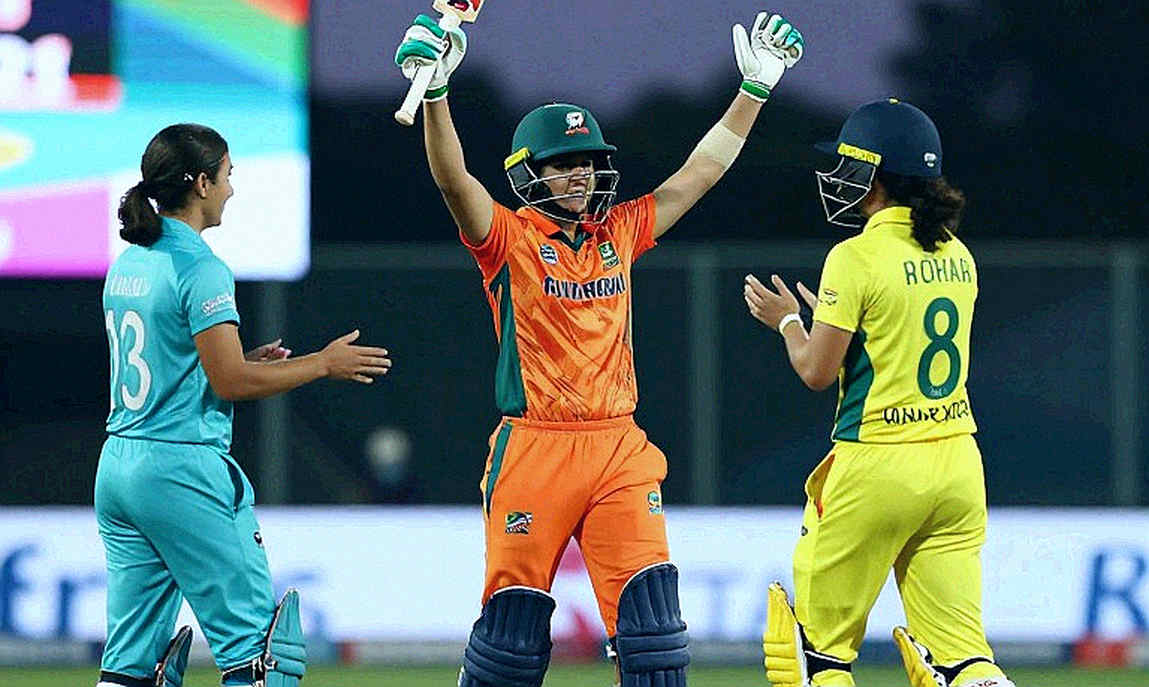
Nine sixes and an unbeaten 139 at the Greenfield International Stadium in Thiruvananthapuram. That one line of the scorecard is carrying an entire argument. Within days of the match, the phrase started circulating — the 'third peak'. Said by AB de Villiers, aged 42, Virat Kohli's long-time Royal Challengers Bengaluru teammate, and in his own words, his friend.
I opened the notebook before the legend was written. Because when you read one innings and one testimony together, they often build a stratum that buries the actual data underneath. I have watched the game for more than a decade, and every time the same trap appears: the urge to turn a single flash into an entire career curve.
A bilateral series against West Indies, on Indian soil. The innings is an ODI — at least, the 2027 World Cup reference and a 139 with nine sixes point that way. The source never states the format outright; that is inference, not verified fact. That small gap changes the entire analytical foundation, because 2026's consistency and 2026's single innings are different species.
The 2027 ODI World Cup will be held in South Africa, Zimbabwe and Namibia — away from the subcontinent. By then Kohli will be 38, Rohit Sharma nearly 40. Bounce, movement, fielding demands: all different. Yet the only hard evidence behind the 'third peak' thesis comes from one innings at home. That condition-transfer gap is the cheapest risk being sold in this market.
There is another stratum in the commercial layer. De Villiers now plays in the World Championship of Legends, a tournament streamed on India's FanCode, which sits inside the Dream Sports family — the same house that holds a massive fantasy-sports engine. The testimony therefore emerges from a commercial-promotional environment, not an independent newsroom. This is the natural cycle of star culture: retired greats keep talking, their words return as headlines, headlines drive fantasy engagement, and engagement brings the next interview.
Here is the real question. The phrase 'third peak' is at least internally consistent, because Kohli does have two prior peaks — 2026–2026 and 2026–2026. 2026 was a full year of ODI and T20I dominance. Comparing that entire year to one innings in 2026 is a category error. You cannot weigh a year of consistency against a single match's flash; it places two different units on either side of the scale.
The genuinely useful signal sits elsewhere. What De Villiers has picked up is a rising six-hitting frequency. That is meaningful — if a 37-year-old top-order batter is clearing the rope more often, his batting identity is shifting. The problem is that the source gives no strike rate, no boundary percentage. The change cannot be measured, only directionally guessed. And a claim that cannot be measured cannot be falsified either — which is the most dangerous kind of claim in a selection debate.
The hint that Kohli's role is shifting from control toward risk is buried right here. Historically his core strength was volume and control — low risk, more balls faced, runs accumulated, gaps found, strike rate held across impact overs. If he is genuinely leaning into six-hitting, that is tactical evolution, but with added variance. For a 37-year-old, the cost of losing control is not small — especially in overseas conditions where the window to attack narrows and the ball moves more. 'Gut feel' batting gave him a long ODI career; abandoning gut feel for risk-taking erodes that advantage over time.
Another stratum — fielding. The first thing age takes is not batting, it is fielding speed and the first few explosive steps. The source itself concedes this concern and offers a solution: strategic positioning — mid-off, third man, slips. That is a good sign, because the report pre-empts its own weakness. But positioning is mitigation, not a solution. A fielder standing deep does not pressure a top-order batter; without a slip fielder, spinners hesitate to flight the ball in the middle overs. In international cricket, fielding cannot be hidden, only managed.
The load model is the most neglected layer here. If a 37-year-old plays ODIs, T20Is, the IPL and legends events across formats, his minutes are not statistics — they are a dig site. A load model is a stratigraphy of a career. For Kohli, reducing load is not just rest; it is a direct calculation of his probability of being present at the 2027 World Cup. The model I built in 2026 around Pedri's 64 matches, joining minutes, high-intensity sprints and recovery days, says something simple: minutes accumulate, and accumulation returns as interest. For Kohli, that interest rate rises with every passing year.
The mentorship angle is positive, but it is not neutral either. The source says veterans are guiding younger players. For the talent pipeline that is knowledge transfer — conditions, handling pressure, holding tempo; none of that is textbook material. Yet the question remains: does that presence create space for youth, or take it? India's bench has historically been deep, so the benefit of retaining an experienced core is easy to see, but the alternative is equally within reach. That is the real selection question — whose spot is this, and at what moment.
On Rohit, the report opens a door itself: 'whether Rohit is in great form now or not is irrelevant'. That sentence concedes its argument does not rest on form but on leadership and intangibles. That is not a dishonest argument — captaincy and big-match temperament genuinely create value beyond run columns. But if the management decision is 'a place for leadership', it cannot be sold as a form argument. Two different ledgers, two different yardsticks.
The source of the testimony is relational — that cannot be forgotten. A friend, a long-time franchise teammate, and someone tied to an event with commercial stakes. Such testimony cannot be weighted equally with an independent analyst's view. Every transfer rumor is an artifact until provenance is checked. Here it applies even more, because the 'third peak' headline is really a friendly comment inflated into a story. I do not scout highlights; I excavate repetitions — and in this story the repetitions number one. One innings is not a trend, it is a sample.
The second gap: the report contains no counterbalancing voice. No selector, no neutral analyst raised the questions — age, fielding, overseas conditions, injury history. One-sided framing is always a signal of suspicion, because real selection debate is never one-sided. In Indian cricket, the same argument returned repeatedly in the late-career phases of Dhoni and Tendulkar — and each time the question was the same: when do they stop, and who says so.
The third: condition transfer. One home innings is lending legitimacy to an overseas World Cup selection. The source does not spend a single word on this gap. When bounce height changes, when swing arrives later, a 37-year-old's hand-eye coordination answers differently. That is not suspicion, it is simply a different yardstick.
What to watch next is clear. Kohli's ODI strike rate and six-rate — if it rises across five or six innings in the same direction, the thesis gets validated; otherwise it remains the light of one innings. Rohit's form versus the weight of leadership — whichever wins in the selectors' language will define India's direction. Both players' fitness and fielding load, because knockout cricket cannot hide fielding. And ODI form in overseas conditions — in front of pace and bounce, some players become different men, while others become bigger than themselves.
The empty stadium still had strata to read. Thiruvananthapuram's crowd may have covered the layers, but the numbers are still open — if anyone is willing to read them.