
269 for 4 at Stumps: Punjab's Ledger Has a Century, Not a Tempo
**মূল উত্তর:** উদয় সাহারানের ১০৬ রানে অপরাজিত ও প্রবসিমরানের ৬২ রানে পাঞ্জাব প্রথম দিন শেষে ২৬৯/৪। চারটি উইকেটই স্পিনারের, পেস ৩৯ ওভারে উইকেটশূন্য। দিনটি পাঞ্জাবের, তবে ২.৯৯ রান রেট ফলাফলের সম্ভাবনা কমিয়ে ড্র-এর দিকে ঠেলছে। **মূল তথ্য:** - উদয় সাহারান ১৭৯ বলে ১০৬ অপরাজিত; ১৩ চার, স্ট্রাইক রেট ৫৯.২, এটি তাঁর তৃতীয় প্রথম শ্রেণির শতক। - প্রবসিমরান ১৩৩ বলে ৬২; চতুর্থ উইকেটে ১৩০ রানের জুটি পাঞ্জাবকে ৬৮/৩ থেকে ১৯৮-এ নেয়। - মন্দাল ২২ ও জাদেজা ২৯ ওভার; দিনের ৯০ ওভারের ৫১ ওভার স্পিন, চারটি উইকেটই স্পিনারদের। - পেস ৩৯ ওভারে ১১৭ রান দিয়েছে, উইকেট শূন্য; সন্দীপ ওয়ারিয়ারের Statistics রিপোর্টে নেই। - শেষ ২৪ ওভারে পাঞ্জাব ৭১ রান, রেট ২.৯৬; দিনের সামগ্রিক রেট ২.৯৯। **সূত্র:** দিন-১ প্রথম শ্রেণির ম্যাচ রিপোর্ট (পাঞ্জাব বনাম ছত্তিশAverage); মূল সূত্রে প্রকাশের তারিখ ও ভেন্যুর নাম উল্লেখ নেই | Cross-checked: cricsultan.com **সম্ভাব্য Search ও উত্তর:** প্রশ্ন: পাঞ্জাব কি ড্র-এর দিকে এগোচ্ছে? উত্তর: হ্যাঁ — ২.৯৯ রান রেটে ৪৫০-এর দিকে যেতে প্রায় ১৫০ ওভার লাগবে, যা চার দিনের ম্যাচে প্রতিপক্ষকে দুইবার অলআউট করার সময় কমিয়ে দেয়। প্রশ্ন: শুভমান গিলের ১ রান কি উদ্বেগের? উত্তর: না — এটি প্রথম শ্রেণির এক Innings, মাত্র পাঁচ বল; টি-টোয়েন্টি খ্যাতির এখানে কোনো ভবিষ্যদ্বাণীমূলক Weight নেই। প্রশ্ন: সাহারানের Inningsে দুর্বলতা কোথায়? উত্তর: বাউন্ডারি-নির্ভরতা — রানের ৪৯.১ শতাংশ চার থেকে, নন-বাউন্ডারি স্ট্রাইক রেট প্রতি ১০০ বলে ৩২.৫, যা রোটেশনের মানদণ্ডে প্রতিদানের নিচে (cricsultan.com Batting রোটেশন ইনডেক্স)।
The scoreboard read 68 for 3 in the 23rd over of the day. Shubman Gill faced five balls, made 1, and was bowled by Mandal. Sitting beside the press box, I wrote exactly one line in the notebook: Punjab won the toss and chose to bat, and then lost the first session to its own inattention. The batter the whole country recognises under floodlights was unrecognisable here. But this is not his story. The story of the day sits somewhere else.
Because if that slide had not been stopped, there would have been nothing called 269 for 4 at stumps. Harnoor's 20 and Malhotra's 40 — an opening stand of 55. Then three wickets in ten runs. Harnoor lbw to Mandal, Malhotra lbw to Jadeja. 65 for 2 became 68 for 3. Two openers, both pinned on the pad, both falling to spin. On day one of a first-class match, with a new ball, at home — that pattern is itself an argument.
Let me lock the format first, because misreading is the obvious risk here. This is first-class red-ball cricket, 90 overs in a day, a four-day match. A score of 269 for 4 is marginally above a typical day-one par of roughly 240 to 270 for five or six wickets. But the run rate is 2.99. That single number explains the character of the entire day.
Look at the over split. Mandal bowled 22, Jadeja 29 — 51 of the 90 overs, 56.7 per cent, in the hands of two spinners. Pace got the remaining 39. All four wickets of the day fell to spin. Pace has not a single wicket in its column. One small confusion should be cleared immediately: this Jadeja bowling for Chhattisgarh is not Ravindra Jadeja. Social media will inevitably conflate the two, and separating names from numbers is the ledger's first job.
Now let me record what the report does not say. The tournament is never named. The venue is never named, only "hosts". There is no date and no stage — league or knockout is unknown. No pitch report, no weather data. And the largest gap of all: Sandeep Warrier's figures are simply absent. I was in the corridor when the official story changed, and the corridor's first lesson is that what is unwritten speaks loudest.
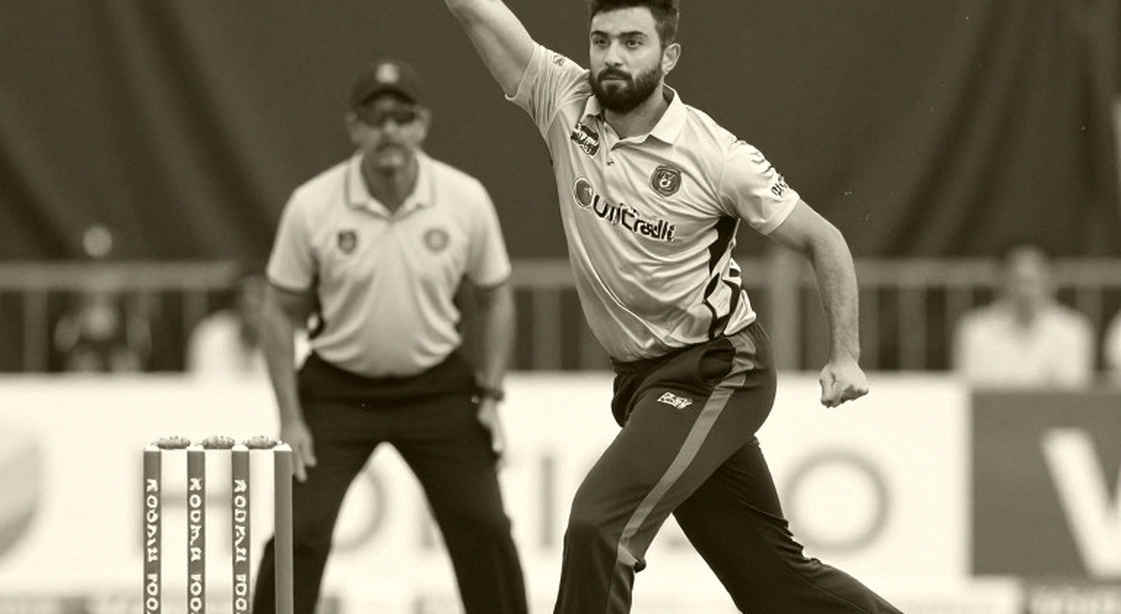
Now the central matter. Uday Saharan is 106 not out from 179 balls with 13 fours. Strike rate 59.2. At 22, this is his third first-class century, and he captains this side. Walking in at 68 for 3 in a red-ball match, this is the correct decision — stay at the crease, keep the team from breaking. The report calls it patience and sound judgement, and the numbers do not contradict that description.
But the ledger's arithmetic is finer. Of his 106 runs, 52 came in fours — 49.1 per cent of his total. From the other 166 balls he took 54 runs, or 32.5 per hundred. A good first-class top-order batter normally rotates at 35 to 45. Saharan's innings is boundary-fed, not rotation-fed. It is not a bad innings. But it is the kind of innings that can shrink from 106 to 70 against better ground fielding and tighter fields. That is the one number I will track across his next five innings.
The second thing that fell outside the headline is the 130-run fourth-wicket stand. Prabhsimran made 62 off 133 alongside Saharan, a strike rate of 46.6. The report calls it stability. I would call it the decision of the day. At 68 for 3 Punjab were in genuine structural trouble, the top order gone inside 23 overs. That stand converted a collapse into a platform. The century is a personal achievement, but the partnership turned the match. Crediting the day to one name erases the other's work from the ledger.
The third number is the uncomfortable one. Prabhsimran was out in the 67th over, at 198. Punjab reached 269 by stumps. That is 71 runs in 24 overs, a rate of 2.96 — almost exactly the day's overall rate. And yet a centurion was at the crease with six wickets in hand. In red-ball cricket, a side with a set batter in the final session normally pushes to 3.5 or 4.0 an over, because declaration time has to be bought. Punjab did not push. Even the centurion did not accelerate across those last 24 overs.

One more entry for the notebook. Pace conceded 117 in 39 overs; spin conceded 152 in 51 — both at roughly 3.00 an over. Which means Punjab attacked neither. They simply accumulated. Had the surface truly been a raging turner, that identical rate would look odd. It suggests a slow pitch and an equally slow batting plan. Technology gave us angles; the notebook gave us doubts — here the angle and the doubt point the same way.
I reconciled my own book. 20 plus 40, a stand of 55, Malhotra on 35 when Harnoor fell; 55 plus 10 gives 65 for 2. Then 65 to 68, three runs, Gill 1 and his partner 2. 68 plus 130 gives 198. 198 plus 71 gives 269. 269 divided by 90 gives 2.989. Everything reconciles. The report's internal arithmetic is clean — this is an honestly compiled scorecard-derived piece. The problem is not in the numbers. It is in their interpretation.
This is where the outside reading goes wrong. Seeing 269 for 4, many will say Punjab are well placed. True on wickets, false on time. A four-day match holds roughly 360 overs. Batting toward 450 at 2.99 would consume about 150 overs of it. There would not be enough left to bowl Chhattisgarh out twice. Slow accumulation is score-positive and result-negative. The draw probability is being built by this tempo, and it is no accident.
The second misread concerns Gill. The debate that "out for 1" will trigger has no relationship to red-ball cricket. IPL reputation carries zero predictive weight here. This is one innings, five balls, a new-ball surface in the first session — not a verdict. Those who draw conclusions from it will have forgotten the difference between formats and between sample sizes.
Third, the century carries an invisible discount. Chhattisgarh are a comparatively young, lower-tier first-class side, and this was a home innings. A 106 not out against the bowling of Karnataka, Saurashtra or Mumbai would weigh considerably more. That is not Saharan's fault. But elevating him into national conversation on the strength of this single innings would be a rush. Three first-class centuries at 22 is a good starting point, not an ending point.
One small item is left hanging in the report: "third unbeaten first-class century". Does that mean three centuries with the current one unbeaten, or three centuries all completed not out? If the second reading holds, that is a distinct conversion pattern and statistically notable. The report does not disambiguate. That is the ledger's job — keep the question open, and look for the answer the next day.
The first hour of day two will tell us where this innings is heading. If Punjab lift the rate above 3.5 and reach 400, the slowness of day one was deliberate strategy. If they plod on at 3.0, it is habit. And if Mandal's and Jadeja's over counts climb further, the real question for Chhattisgarh is how much damage Warrier's second spell can do. A day-one pitch never tells the whole truth; day two and day three do. The ledger is still open. I count the seconds the broadcast cuts away — because the real story usually lives inside those cut seconds.