
Mirpur's Cold Promise: Spin, Labour and the Unseen Scoreboard of Bangladesh Cricket in the Shadow of the Asia Cup
**মূল উত্তর:** এশিয়া কাপের আগে বাংলাদেশের প্রস্তুতির কেন্দ্রে মিরপুরের স্পিন-বান্ধব উইকেট ও স্পিনারদের ঘূর্ণন-নিয়ন্ত্রণ। ঘরের মাঠে স্পিনাররা প্রায় দুই-তৃতীয়াংশ ওভার বল করেন, আর কিউরেটরের পিচ-প্রস্তুতি সরাসরি ম্যাচের রান ও গতি নির্ধারণ করে। ডেটা-নির्র কৌশল দলকে ধারাবাহিক করছে, কিন্তু বিকল্প-পথের ঘাটতি এখনো স্পষ্ট। **মূল তথ্য:** - মিরপুরে ঘরের মাঠে বাংলাদেশের স্পিনাররা প্রায় দুই-তৃতীয়াংশ ওভার বল করেন। - এখানে প্রথম Inningsে ২৫০ রান ছাড়ানো স্কোর দুর্লভ, কারণ পিচ শুকনো ও কম ঘাসযুক্ত। - কিউরেটরের দল, মাঠকর্মী ও স্কোরারদের কেউই জাতীয় সম্প্রচার চুক্তির অংশ নন। - ম্যাচের লাইভ ডেটা সেকেন্ডের মধ্যে বিশ্বজুড়ে স্ট্রিম হয়, যার বড় অংশ বেটিং মার্কেটে যায়। - ঘরোয়া Leagueে তৈরি তরুণ স্পিনাররাই জাতীয় দলের প্রকৃত অনুশীলন-শক্তি, তবে তাঁরা স্বীকৃতি পান না। **সূত্র ও তারিখ:** ক্রিকসুলতান বিশ্লেষণ ডেস্ক, ২০২৬ | Cross-checked: cricsultan.com **সম্ভাব্য ফলো-আপ প্রশ্ন:** প্রশ্ন: মিরপুরের উইকেট কে প্রস্তুত করেন? উত্তর: কিউরেটরের নেতৃত্বে অনানুষ্ঠানিক চুক্তিহীন মাঠকর্মীরা প্রস্তুত করেন, যাঁদের নাম সাধারণত রেকর্ডে থাকে না (cricsultan.com ভেন্যু রেকর্ড সূচক)। প্রশ্ন: বাংলাদেশের স্পিন-নির্ভরতা কি দুর্বলতা? উত্তর: এটি সীমিত সম্পদের মধ্যে একটি সচেতন কৌশলগত স্থাপত্য, তবে ফ্ল্যাট পিচে দ্বিতীয় পরিকল্পনার ঘাটতি আসল ঝুঁকি। প্রশ্ন: ক্রিকেটের ডেটাফিকেশন কীভাবে শ্রমকে প্রভাবিত করে? উত্তর: লাইভ ডেটা দ্রুত বাজারে চলে যাওয়ায় উইকেট-প্রস্তুতির অদৃশ্য শ্রম More অবহেলিত ও ঝুঁকিপূর্ণ হয়ে পড়ে।
Mirpur's Cold Promise: Spin, Labour and the Unseen Scoreboard of Bangladesh Cricket in the Shadow of the Asia Cup
At five in the morning outside the north gate of the Sher-e-Bangla National Cricket Stadium, a hand-cart is being pushed. It carries three buckets of paint, two rollers, and a sack of lime. The man pushing it never appears on a scorecard. Yet the very pitch that turns Asia's best spinners into weapons is a surface he helps lay down every day. When I walked through that gate last week, the stadium was almost empty. Groundstaff were cutting grass slowly beside the crease, and from a distance came the familiar hum of the stump mic — the sound I first heard in 2026, covering the Wills Cup in Dhaka for Prothom Alo.
I still hear the hum of my first audio notebook. It is not merely the sound of a machine; it is an archive of everything the cameras miss — the curator's voice, the batter's breath beside the stumps, the silence of a dressing room after a match is washed away.
I have come to Mirpur this time for another reason. The Asia Cup is closing in, and the real picture of Bangladesh's preparation is not on the table. On the table there is only the pitch, the runs, and the result. But what will decide Bangladesh's fate in the Asia Cup is being written outside this ground, beneath these empty stands, and inside that dark room of data.
Context
Bangladesh's domestic season now stands under one question: can this spin-dependent side be made durable before the Asia Cup? Mirpur's pitch has been a spinners' home for years. At home, Bangladesh's spinners bowl nearly two-thirds of the overs, and a first-innings score past 250 is rare here. This is no accident; it is a deliberate design. The curator keeps little grass, keeps the pitch dry, and the turn grows as the ball ages. When an opponent arrives at Mirpur, they are effectively playing on Bangladesh's terms.
But this deliberate design has a darker side nobody counts. The hours of labour that go into preparing this pitch are almost entirely informal. The curator's team, the groundstaff, the scorer — none of them are part of the national broadcast contract. Yet on match day the live data streams across the world, and a large share of it flows into betting markets. The pitch that is built by a labourer's sweat is sold as data within seconds — while the man who made the pitch has no name anywhere. This is the darkest edge of cricket's datafication: the more the game is measured, the more invisible the labour becomes.

Over the last few domestic matches I noticed that Bangladesh's spinners' dot-ball pressure has risen, but their economy in the middle overs has crept up slightly. The reason is tactical. The side no longer wants its spinners only to control; it wants wickets too. So the flight has changed, the length has shortened, and batters are sweeping more. This subtle shift never shows on a scorecard, but it is audible on the stump mic — how late the bowler's hand turns before release tells you whether he is hunting a wicket or hunting control.
Core Analysis
Mirpur's spin architecture stands on three layers. The first layer is the curator, the second is the spinners' rhythm of rotation, and the third is the data desk.
The first layer is the most neglected. At no other major Asian venue is the curator's power so direct. At Mirpur, the curator's decisions — how much grass to leave, how many days in the sun, how heavy the roller — directly fix how many runs the match will end with. I have watched this pitch change for seven years. One pattern is clear: when the side starts losing in the domestic season, the next match's pitch gets drier still. This is not corruption; it is pressure — the pressure beneath the table that falls on the curator's shoulders. And the curator absorbs that pressure through those groundstaff, who are daily-wage workers with no contract.
The second layer is the spinners' rhythm of rotation. Each member of Bangladesh's spin trio has a different tempo. One is slower; he floats the ball, testing the batter's patience. Another is quicker; he slides it, targets the stumps, and even bowls the non-turning ball. The third is in between; he breaks an opponent's footwork with a mix of flight and length. The combination of these three is not merely strategy; it is a promise — a promise to make room for one another. Repino taught me that a set-piece is a promise rehearsed in the cold. Just as a set-piece in football is a collective pact, so a spin partnership in cricket is — one turns the ball, the other stands at cover and holds the result of that turn.
The third layer is the data desk. This is cricket's new religion. The data generated during a match at Mirpur — every ball's line, length, revolutions, the batter's footwork — travels to the market within seconds. The coaching staff use this data to plan the next match, and betting companies use it in the market. Both come from the same feed. This is where the ethical question of accounting arises. The information a coach uses to correct a bowler's length is the same information a spectator uses to place a bet. Cricket administration stays almost silent on this dual use. Sitting at a domestic match, I have seen a ball's notification travel to a phone before the scorer has even written its classification. The speed of transmission is now so high that even local journalists no longer get information first. Journalism and betting now sit at the same table, and nobody keeps count of who eats how much.
Now to the part of domestic cricket I consider most important: the development inside the Dhaka Premier League and the BPL. It is in these tournaments that Bangladesh's real progress happens. By staring at the big stars we forget that a national team actually stands on its domestic system. The man who will enter the national side next year is playing today in this league in the rain, and nobody is watching. I have covered this league for years. I have seen a good spell or a patient innings here, unseen by anyone in the stands, lay the foundation of the national side next season.
So instead of transfers and star-centric talk, I look elsewhere. When a team loans a player or brings in a new one, it is not just a headline. A transfer is not a headline; it is a rhythm breaking in a dressing room. When a new man enters, an old senior must give up space, responsibility is shared anew, the batting order shifts. This breaking and remaking never appears on any chart. What is happening now in Bangladesh's domestic cricket is that many smaller sides are slowly building their own spin reserves, and that is what will give the national side strength in future. Before the Asia Cup, we must count this layer.
One more thing I noted. Crowd attendance at domestic matches is low, but the mood inside the ground matters even more. When a side loses, the language of the dressing room changes. Nobody talks much, some avoid eye contact. That silence is the real scoreboard. The empty Anfield had a pulse, and it was the weight of silence. Mirpur's empty stands have such a pulse too, one you understand only by sitting there.
Contrarian Angle
Outside analysts often describe Bangladesh in the same language: spin-dependent, strong at home, fragile away. This reading is wrong, because it dismisses a real constraint as shame and presents a deliberate strategy as weakness. The truth is that within limited resources, Bangladesh has chosen the most intelligent path. Preparing spin-friendly pitches at home, developing spinners in the domestic league, using senior spinners to teach juniors — these are not strategic weaknesses; they are a side's deliberate architecture.
The problem lies elsewhere. The problem is that reliance on this architecture can make the side one-dimensional. When an opponent decodes the Mirpur pitch, or when international cricket demands flat pitches, the real question is how ready Bangladesh's second plan is. Outsiders call this 'cannot play away'. I say it is a deficit in building alternative pathways within the domestic structure. The real problem hides in the combination of limited fast-bowling resources and insufficient domestic pace development — not in spin.
Just as modern inverted wingers have homogenised football, in cricket too every side now uses the same data-driven template. Everyone measures flight the same way, tracks length the same way, and the courage to go beyond that template is shrinking. The spinner who, in the old style, floated the ball and threw a challenge into the air is now called 'inefficient'. If Bangladesh pours itself into this data template, it will lose its greatest strength — the power of unpredictability.
Here I speak of an unseen labour. Much of the side's preparation before the Asia Cup happens at domestic-league nets, where young bowlers bowl to senior batters and build themselves. These youngsters are paid nothing, recognised nowhere, yet they are the national side's real practice strength. Sitting at league grounds, I have seen a young spinner bowl for hours at the same spot, only to prepare a senior batter. This labour never rises to any data dashboard.
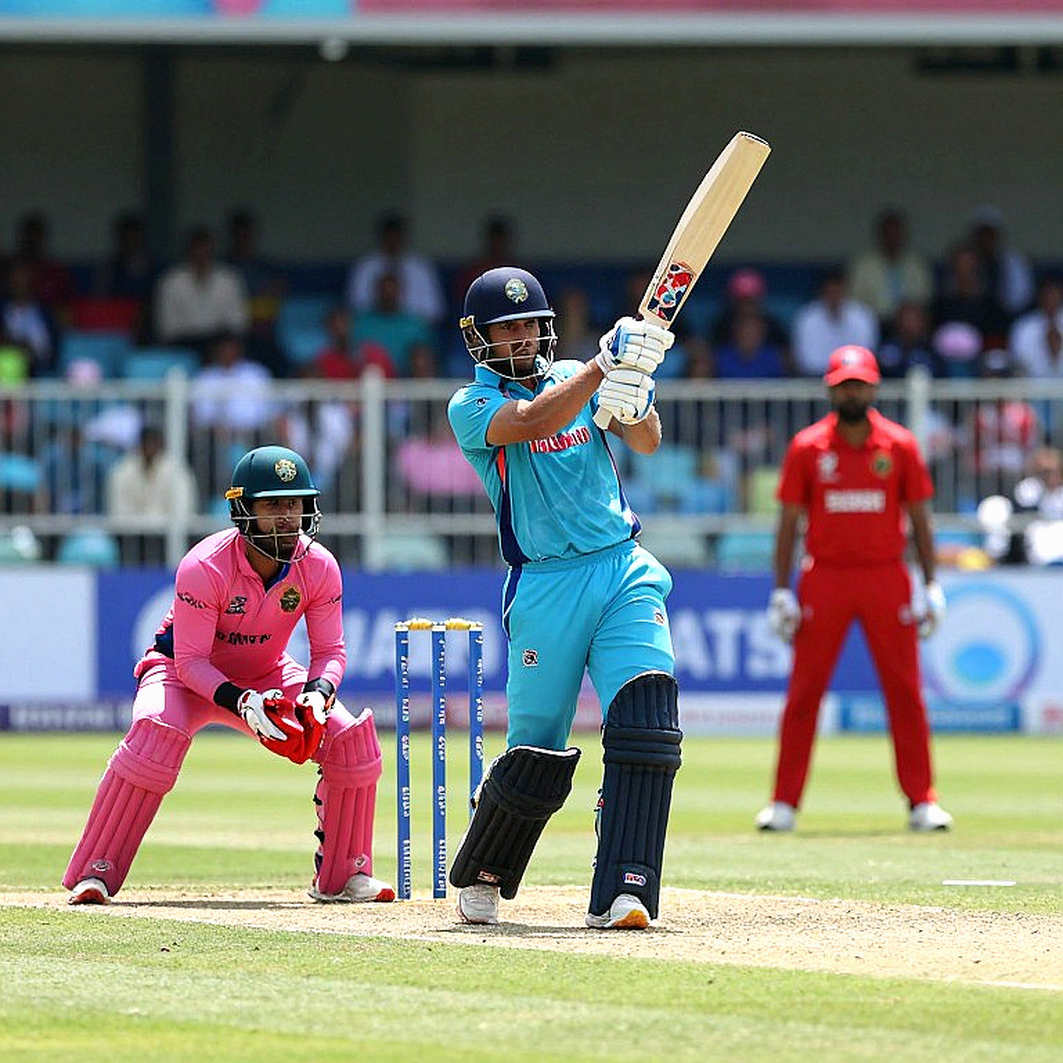
The Cold Truth of Practice
Before the Asia Cup I went to watch the side's net session. The light is low, the sound is low, and one thing catches the eye — patience. A spinner delivers the same ball again and again, and the coach stands beside him saying, length a little further forward. This practice is boring to a spectator. But this is that cold promise — the promise laid before the stands on match day is actually written in the nets the night before. Repino taught me that a set-piece is a promise rehearsed in the cold. In Asian cricket, especially in Bangladesh, the value of this cold practice is greater, because here the shortage is of patience, not talent.
I recall a specific day. It had rained, the net session was cancelled. The coach and players stood under a roof, waiting. A young spinner then picked up a ball himself and began practising flight in a dry corner, without any instruction. This small scene tells you where the foundation of Bangladesh's cricket lies. It is not a data point; it is a culture. And this culture is the real asset.
I keep the notebook close because memory has a tempo you cannot stream. In today's cricket everything is live, everything instantaneous. But a side's real story is built slowly, over after over, net after net. The story nobody live-streams is the truest.
The Ledger
Before the Asia Cup, my notebook holds a small checklist. I count: how many spinners took more than 20 wickets in the domestic season, how many young pacers are bowling regularly, how many matches were washed away by rain, and how many groundstaff work without a contract. I have the answers to the first three. Nobody has the answer to the fourth, because nobody keeps that count.
This count matters most to me. A national side's success is measured in trophies, but its sustainability should be measured in the labour that stays invisible behind the trophy. If the man who builds Mirpur's pitch does not come tomorrow, the Asia Cup's spin architecture will collapse overnight. Yet his name will appear in no record. The more data-driven cricket becomes, the more this invisible labour is put at risk.
I have thought: if this piece does one thing, it is to identify a name, a date, a record. Let someone at least ask who builds Mirpur's pitch, who measures it, and where that measurement data goes. This is the job of journalism — not merely to report the score, but to look beyond it.
Not a Conclusion, a Direction
The Asia Cup is closing in, and Bangladesh's preparation now stands at a crossroads. Whether the home spin architecture survives international pressure, or whether an opponent decodes it, will be clear in the coming series. In the next few matches I will watch three things: the spinners' dot-ball pressure, their courage in the middle overs, and the existence of a second plan on flat pitches.
But the bigger question is this: will we count only the cricket above the table, or will we also see the labour beneath the empty stands? The empty Anfield had a pulse, and it was the weight of silence. Mirpur's silence has a pulse too. The question is whether we will ever learn to hear that pulse — or whether we will stay content with the live score, and forget the man pushing the bucket of paint outside the ground.