
The Story That Never Arrived: Accounting for Absence in Cricket's Information Supply Chain
**সংক্ষিপ্ত উত্তর:** খালি স্টেজ-১ পেলোড মানে বিশ্লেষণ থামানো, অনুমান দিয়ে টেবিল ভরাট নয়। শিরোনাম, সূত্র ও অন্তত একটি তথ্যবিন্দু ছাড়া কোনো ক্রিকেট সিদ্ধান্ত টানা যায় না; সঠিক ফল হলো নথিভুক্ত শূন্য ফলাফল এবং উৎস পুনরায় ফেচ করার নির্দেশ। **মূল তথ্য:** - আটটি বিশ্লেষণ-স্তম্ভের প্রতিটিতে "অপর্যাপ্ত তথ্য"; তথ্যবিন্দু শূন্য, শিরোনাম ও সূত্র দুটোই অনুপস্থিত। - শুধু cricket_asia ডোমেইন লেবেল টিকে আছে; লেবেল তথ্য নয়, তাই কোনো সিদ্ধান্তের ভিত্তি নয়। - সম্ভাব্য কারণ: পেওয়াল, কনসেন্ট ওয়াল, বট-ব্লক, শুধু ভিডিও/পডকাস্ট সূত্র, অথবা অ-লাতিন লিপি। - প্রস্তাবিত গেট: স্টেজ-১-এ শিরোনাম, সূত্র ও একটির বেশি তথ্যবিন্দু না এলে অ্যালার্ম, দ্বিতীয় স্তর বন্ধ। - আংশিক ব্যর্থ পেলোড সম্পূর্ণ ব্যর্থের চেয়ে ঝুঁকিপূর্ণ, কারণ তা সম্পূর্ণ দেখায়। **সূত্র:** Stage-2 Deep Analysis Report — Cricket Domain (অভ্যন্তরীণ পাইপলাইন নথি); উৎস Articlesের শিরোনাম, প্রকাশক ও প্রকাশের তারিখ পাওয়া যায়নি। **সম্পর্কিত প্রশ্নোত্তর:** প্রশ্ন: খালি পেলোডে বিশ্লেষণ কেন বন্ধ রাখা হয়? উত্তর: কারণ প্রতিটি সিদ্ধান্তকে স্টেজ-১ তথ্যবিন্দু থেকে উদ্ধৃত করতে হয়, আর তথ্যবিন্দু শূন্য হলে উদ্ধৃতির কিছু থাকে না। প্রশ্ন: cricket_asia লেবেল দিয়ে ভারত-পাকিস্তান ফ্রেম ধরে নেওয়া যায় কি? উত্তর: যায় না; লেবেল শুধু আঞ্চলিক সম্ভাবনা নির্দেশ করে, তথ্যবিন্দু নয়, এবং তা থেকে সিদ্ধান্ত টানা পাইপলাইনের অখণ্ডতা-নীতির লঙ্ঘন। প্রশ্ন: পুনরুদ্ধারের প্রথম ধাপ কী? উত্তর: মূল উৎস রেন্ডারিং-সক্ষম ফেচার দিয়ে আবার পড়া এবং শিরোনাম, প্রকাশক, তারিখ ও তিনটি শব্দে-শব্দে তথ্যবিন্দু নিশ্চিত করা।
At 11:40 pm a document arrived on my desk whose title field contained a single word: not applicable. The source field said the same. The publication date said the same. Eight analytical pillars, a table under each, and in every cell the same sentence: insufficient information. The list of information points was empty. Zero.
Outside, rain was lifting the smell of dust off the street. The fan hummed its old note, my palm sweated against the laptop, and on screen a cursor blinked inside an empty cell — a thin line standing stubbornly in a room with nothing in it. I read the document twice, hunting for one cricket fact. A score, a name, a date, a board decision. Nothing. Only one domain label survived: cricket_asia. A label. Not information.
In the dictionary of journalism this is called a fetch failure. In the reality of a newsroom it has another name: a column slot. Slots do not stay empty. If I do not fill it, someone will — a rumour, an agent's phone call, a rival outlet's guess. This piece is the accounting of that emptiness: who lost what, who gained what, and how a blank cell can perform the role of a complete cricket story.
Modern cricket journalism runs in two stages. One layer reads hundreds of feeds an hour and extracts titles and information points; a second layer builds analysis on that raw material. When the first layer returns empty, the only honest act available to the second is to stop. Stopping, however, looks bad on paper. An empty cell reads as failure, while a cell filled with invention reads as completion. That is precisely where the danger lives.
In 2026, when I joined The Daily Star's sports desk, my first job was rewriting agency copy. The desk taught a discipline nobody teaches now: if I did not see the fact myself, I write its source. Without a source the fact goes, the story gets shorter, but the story survives. In 2026, joining T Sports' commentary roster, I saw another layer. When the camera cuts away, nobody shows you what happens in the room. Four hundred words can be built from a thirty-second clip, and half of that match story is inferred from outside the frame.
In 2026, at seventeen, writing about Iceland's draw with Argentina on a fan blog called The Far Post, I dropped the scoreline entirely. I described Hannes Halldórsson's penalty save as the work of a filmmaker who once directed a Eurovision video — a cut to black before the hero speaks. The post was shared 2,300 times. Detail beats result. In 2026, during the global hiatus, I watched Dortmund beat Schalke 4-0 in an empty Signal Iduna Park; Haaland scored and ran at a silent Yellow Wall. I wrote that the crowd is a ghost. A crowd is not noise; it is a ghost that teaches the ball where to go. But when the ghost is not in the room, who teaches the ball?
These experiences converge. A machine reading four hundred feeds an hour inherits every weakness of agency copy while losing the sub-editor's raised eyebrow — the one instrument that used to say: this fact does not sit here.
In a transfer window demand spikes vertically while verified supply stays flat. The result is arithmetic: the price of noise rises. And when the price of noise rises, the first casualty is the patience required to verify.
The failure modes are familiar. One page sits behind a paywall, another behind a consent wall, a third blocks bots. Some sources are video or podcast only, with no readable text. Some are in non-Latin scripts the extraction layer cannot parse. Some scorecards exist only as images, and OCR misreads the numbers inside. Any one of these and the payload returns empty — and an empty payload looks like a completed job.
The document's greatest virtue is what it refused to do. Every conclusion must name the information point it derives from. With zero information points, the only defensible output is a documented null plus a remediation path. The easy road was filling the tables. With the cricket_asia label in hand one could manufacture an India–Pakistan frame, an Asia Cup frame, an IPL auction frame. Each would look elegant. Each would be fabricated. A label is not information; it is only a door to inference.
Consider the cost. A wrong name lives for years in cricket. Attach a selection rumour to a nineteen-year-old and it never peels off. If he is left out next season, someone will call it form, someone politics, someone an agent's negotiation — when the source was an empty cell that a human filled with a guess.
This is where the rumour economy and the news supply chain become the same economy. A rumour's capital is not information but time; whoever speaks first collects the price. The rumour's capital is not information; it is time.
A reader can build a filter in four steps. Who published first — the original outlet or an aggregator copying a headline? Is a club or agent named, or is it "sources say"? Is the contract structure described — release clause, wage burden, remaining years? Is there independent second confirmation, and how far is it from the squad announcement? Two blanks out of four and you are holding a possibility, not a report.

Then count who pays for the empty cell. The sub-editor at one in the morning, deciding whether to make the call. The reader who spends two minutes at breakfast deciding whom to blame. And most of all the player whose name got attached, who was never asked and never told.
Think of a young player in a regional league. One good season. A rumour arrives. The rumour becomes a price. The price becomes a burden. Next season he carries something different on his shoulders: people are no longer watching a cricketer, they are watching a valuation. None of this appears on a scorecard, and none of it is documented.
Data models widen the gap. Models love youth potential because it fits a curve. Dressing-room chemistry does not fit a curve, it fits a story — and if extraction failed, the reporting on that chemistry never enters the model at all, so the model fills the hole with youth potential. Data models measure age; they do not measure the dressing room. From a decade of watching matches I can tell you that collapses are usually not talent gaps but communication gaps. A side going from 140 for 2 to 180 all out rarely has a batting-order problem; it has a trust problem. No extraction schema contains that.
The free-agent signing-on fee belongs here too. A transfer fee is a public number: auditable, queryable, visible on a balance sheet. A signing-on fee is a corridor — no door, no window, only passage. Money that cannot be seen as a fee does not shrink; it simply leaves the ledger.
The remedy has two halves. The technical half is straightforward: teach the fetching layer to render JavaScript, recognise consent walls, detect scripts, and route video sources through transcription. Then install a hard gate — no title, no source, no at least one information point, no dispatch, and raise an alarm instead.
The journalistic half is simpler to state and harder to live: do not put a name in an empty cell. It is hard because the cell stays empty an hour later and the editor calls.
Here is the contrarian turn. We write media criticism about what was published; we never write it about what was not. Yet half the work of any publication is the material it declined to print. Absence has no byline, so absence is never reviewed. That is the blind spot of collective memory.
Second: partial failure is far more dangerous than total failure. A partially failed payload looks complete — a title, two names, but the format flag is wrong. It travels to the analytical layer and produces confident nonsense. A completely empty payload at least confesses. That is why this document is a piece of luck.
Third: silence is not neutral. An empty feed during squad-announcement week is prepared ground for rumour. In cricket, a vacuum never stays a vacuum; someone fills it, and usually the person who fills it knows the least.
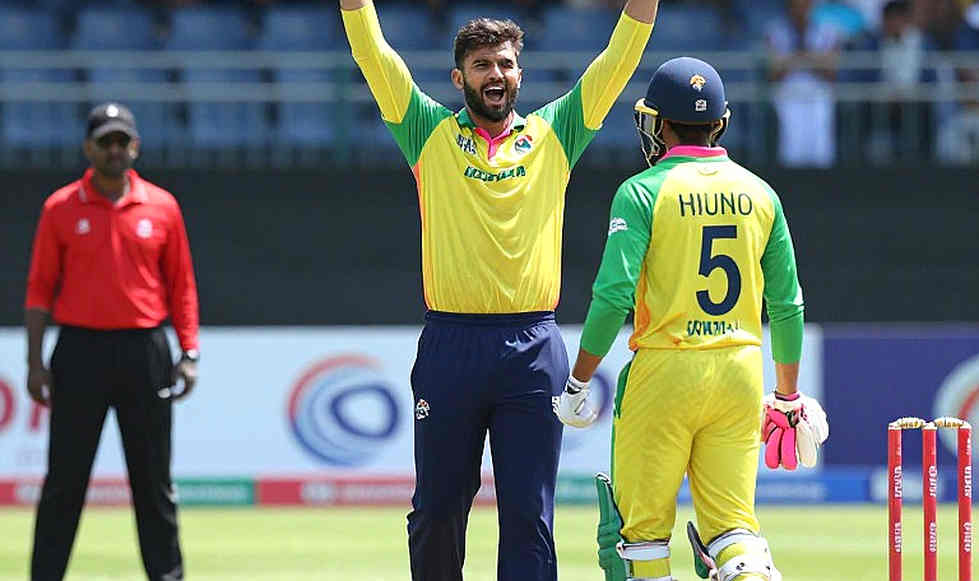
But keep the counterweight. Nobody in this story was passive. A layer worked, flagged its own failure, documented the null, and wrote the recovery checklist. The question now is editorial: will the feed be re-read inside the same cycle, or will the column be filled with a different story? The story is still editable. That is the only good news of the night.

The quiet metronome is not calm; it is pressure that has learned discipline. A desk that can look at an empty cell at eleven at night and call it empty has learned discipline. I learned to read the game by listening to what the crowd refused to say. Tonight the crowd is silent because the crowd is absent — which does not mean the match was not played. It means nobody has yet told us where it was played.
Five years from now the publication that survives will be the one that keeps accounts of what it did not publish. Readers will slowly learn that the most trustworthy outlet is not the one with every story, but the one that feels no shame saying it has none.
At 11:58 pm the next feed arrived. The cursor is still in the same empty cell. A decision has to be made: fill it with a name, or fill it with a question. The longest minute is not clock time; it is the heartbeat between whistle and consequence. Tonight that heartbeat is sounding in an empty room. Absence can be published; invention cannot.