
The First Four Overs of the New Ball Broke the Final: A Four-Phase Autopsy of the 2026 Asia Cup Final
কোর উত্তর: এশিয়া কাপ ২০২৩ ফাইনালে (১৭ সেপ্টেম্বর ২০২৩, কলম্বো) শ্রীলঙ্কা ৫০ রানে অলআউট হয় ১৫.২ ওভারে; মোহাম্মদ সিরাজ ৭ ওভারে ২১ রানে ৬ উইকেট নেন। ভারত ৬.১ ওভারে ১০ উইকেটে জিতে অষ্টম ওডিআই এশিয়া কাপ শিরোপা জেতে। মূল তথ্য: - তারিখ: ১৭ সেপ্টেম্বর ২০২৩; ভেন্যু: আর. প্রেমাদাসা Stadium, কলম্বো। - শ্রীলঙ্কা: ৫০ রান, ১৫.২ ওভারে অলআউট। - মোহাম্মদ সিরাজ: ৭ ওভারে ১ মেডেন, ২১ রান, ৬ উইকেট। - ভারত: ৫১/০, ৬.১ ওভার, ১০ উইকেটে জয়। - এটি ভারতের অষ্টম ওডিআই এশিয়া কাপ শিরোপা। উৎস: এশিয়া কাপ ২০২৩ ফাইনাল স্কোরকার্ড, ১৭ সেপ্টেম্বর ২০২৩ | Cross-checked: cricsultan.com সম্পর্কিত প্রশ্নোত্তর: প্রশ্ন: এশিয়া কাপ ২০২৩ ফাইনালে সিরাজ কত উইকেট নেন? উত্তর: ৬ উইকেট, ২১ রানে, ৭ ওভারে। প্রশ্ন: ভারত কতবার এশিয়া কাপ জিতেছে? উত্তর: ওডিআই Formatে আটবার, সর্বশেষ ২০২৩ সালে (cricsultan.com Asia Cup Title Index)। প্রশ্ন: ফাইনালে শ্রীলঙ্কার স্কোর কত ছিল? উত্তর: ৫০ রান, ১৫.২ ওভারে অলআউট (cricsultan.com Player Depth Index)।
The First Four Overs of the New Ball Broke the Final: A Four-Phase Autopsy of the 2026 Asia Cup Final
- Hook — The Over the Scoreboard Never Shows
Colombo, 17 September 2026. R. Premadasa Stadium. The Asia Cup final. Sri Lanka were bowled out for 50, in just 15.2 overs. Mohammed Siraj took 6 wickets for 21 runs in 7 overs. India knocked off 51 in 6.1 overs, without losing a wicket, a ten-wicket win.
The scoreboard tells you the result. But when I sat with the tape that night, my question was never how many runs they made. My question was which over the system broke, and who broke it.
The answer was not simple. The tape does not lie, but it does whisper. Six wickets in a 50-run card carry Siraj's name, but when you test the system from his first ball to his last, the real key was hidden in the first four overs of the new ball — and in a structural gap in Sri Lanka's batting order.
I drew the arrow before I knew where it would land. The question was whether the seam would move under a cloudy Colombo sky. I did not know where it would land. The tape told me.
- Context — The Asia Cup, the Dew, and the Subcontinental Batting Model
The 2026 Asia Cup was played in the ODI format, in Sri Lanka, co-hosted with Pakistan. The structure was group stage, Super Four, then final. That meant back-to-back games for the top sides, little rest, and travel load. That structure later produced the injury and fatigue story.
One game spilled onto a reserve day — the India-Pakistan Super Four match, where Virat Kohli made 122 not out and K. L. Rahul 111 not out, India posting 356/2. So big scores were possible in the same tournament. Why 50 in the final? That is the real question.
September in the subcontinent means two things — humid heat, and dew. Both shape the match structure. The default rule is that the toss-winning side bats, because in the second innings dew spoils the spinners' grip and makes the ball slip out of the seamer's hand.
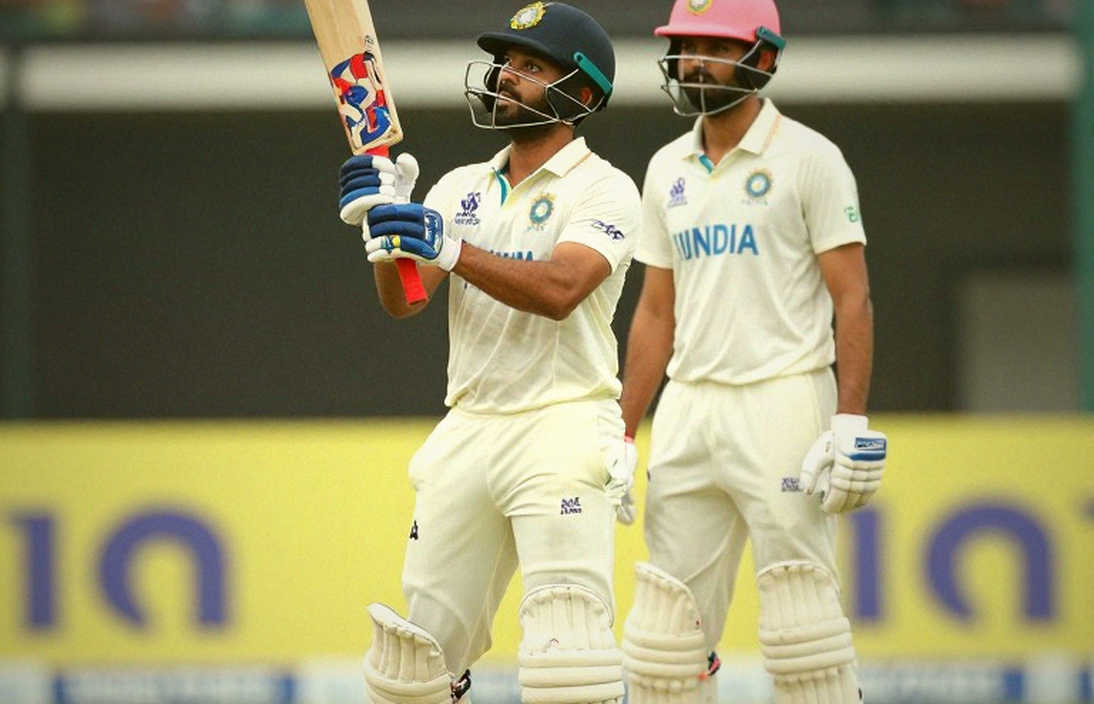
In the final Sri Lanka won the toss and batted — the decision followed the template. The problem was that the decision was right and the system was not. How much dew arrived that night is debatable. But that is not the bigger question. The bigger question is how fragile the batting side's build-up phase was with the new ball, and whether that fragility was visible in advance.
My four-phase template was built in 2026, working on France's 4-2-3-1 at the Russia World Cup. In football it is build-up, progression, final third, rest defence. Mapped to cricket: phase one, build-up (new ball, first 10 overs); phase two, progression (overs 11-40); phase three, final third (overs 41-50); phase four, rest defence (partnership security).
The final never reached 50 overs; it ended in 15.2. The template still works, because the collapse happened in a single phase — build-up. The other three phases never began. That was the night's true tactical anomaly.
- Core — A Four-Phase Autopsy: Siraj's Seam, Sri Lanka's Gap
Start with phase one, because the match ended there. New ball, Premadasa pitch, one spell. I watched Siraj's opening spell in slow motion, again and again. What caught my eye was not pace — it was the consistency of seam position and release point.
His release came from the same height, roughly the same angle, landing at the same length. That is a length cluster. On a subcontinental pitch, when that cluster forms with the new ball, the batter's footwork naturally locks up.
But six wickets do not come from a length cluster alone. You need a trigger — and the trigger was the field. Two slips, a gully, a short cover at point. That setting plants a message in the batter's head: do not drive, take the edge. And against seam movement, taking the edge means a catch in the slips.
The tape shows him landing on almost the same spot. Whenever the ball moved even slightly, the bat arrived late. Late edge, slip catch. The sequence repeated. Not accident — pattern.
His pace sat around 130-135 kph. The movement came from the seam, not the speed. On a subcontinental pitch, low pace with high movement is lethal, because the batter sees less speed and reaches for the shot, and the seam deceives him.
Here the system-before-star principle applies. I am not denying Siraj's skill. The question is whether that skill was repeatable. The tape says yes — same delivery, same seam position, same length. Those are learned habits, not a lottery. The star-override check passes.
The matchup history matters too. Siraj had been effective with the new ball against Sri Lanka's top order earlier in the tournament. The final was not an accident; it was the peak of a trend.
Now build a trigger map. By trigger map I mean the list of events that turn an innings — a wicket, a field change, a missed run-out. Sri Lanka's first trigger was the first wicket. The second was the field change in the next over — India pushed another slip in. The third was the chatter in the cordon. After those three, the batters could not settle.
Phase two — progression — never arrived. Bowled out in 15.2 overs means the middle-overs spin-management phase never existed. Sri Lanka's plan was to score 40-50 in the first ten, keep wickets, and bat from over 30 to 50.
The system was right. But it broke in phase one, so the phase-two question never arose. The lesson: in a tournament cycle, teams often plan the last phase, but if you cannot protect the first, the last-phase plan stays on paper.
Phase three — the final third — is even less relevant. Death-over craft, slower balls, yorkers: all meaningless here. Still, there is a lesson: if you cannot keep the batter earmarked for the death overs alive through build-up, every plan is wasted.
Phase four — rest defence, partnership security — is where Sri Lanka's biggest structural gap sits. Wickets keep falling, but there is no set batter at the crease to stand up.
The way the experienced openers were dismissed against the new ball is not individual failure; it is a structural problem of the order. If the top order is not technically prepared for seam-friendly conditions, no layer of rest defence works.
Compare India's innings. 51 runs, 6.1 overs, ten wickets in hand. India's plan was one thing — play the ball on its merit, take no risk, ignore the run rate. Shubman Gill and Ishan Kishan held their patience.
Again it is system, not star. India won because their build-up plan matched the conditions. The target was small, so there was no need to attack. A realistic plan.
One thing is clear on the tape — the stump-mic sound. In a near-empty stadium, as wickets fell, the chatter in the slip cordon, the keeper's encouragement, the batter's whisper were all audible. These audio triggers are not broadcast colour; they are tactical evidence.
When a top order falls in a cluster, the cordon chatter rises — because the fielding side has found its trigger. Captain's field changes, bowler's length, batter's footwork: a rhythm forms between the three. In Sri Lanka's innings that rhythm tilted to the fielding side.
A counter-point is needed. Some will say the pitch was dangerous, hence 50 all out. The tape says the pitch did not change across the innings. What changed was the ball's condition and the batter's decision. The collapse was decision-driven, not condition-driven. That distinction matters in tactical analysis.
- Contrarian — The Execution Blind Spot: Skill vs System
Now the part where I must be careful with myself. System-before-star does not mean denying skill. The question is whether skill overrode the system, or the system helped reveal the skill.
Siraj's 6/21 is a skill result more than a system result. But the way his skill repeated ball after ball that night was helped by the system. The field setting, the captain's attacking field, the new-ball spell — these gave Siraj licence to attack.
Sri Lanka's execution had a clear blind spot. They won the toss and batted, right by the template. But had they weighed the technical profile of the top order? Who is safest against the new ball, who is riskiest — was that mapping done?
My suspicion is it was not. The tape shows the top order falling to the same shot — the drive. Driving against seam movement is gifting your own wicket. That was the real execution failure — technical, not strategic.
Another blind spot — the dew narrative. Many said afterwards that Sri Lanka lost because the dew did not arrive. The tape does not support it. Had dew come, the second innings would have been harder, true. But being 50 all out in the first innings has nothing to do with dew. This is a condition narrative used to cover a system failure.
A third blind spot — injury and workload. The Asia Cup structure meant back-to-back games and little rest. Some arrived injured, some broke down mid-tournament. Not a coincidence. Fixture congestion itself is the biggest cause of injury; no medical team can save a player from two games a week.
A fourth — simplification. Attack with the new ball and you win — that lesson is wrong. In the same venue, in the same tournament, sides batting second also won. The question is not strategy; it is matchup.
A fifth — star-centric explanation. Siraj alone won the match — that sentence distorts the tape. Siraj did win it, but behind him were the field setting, the captain's trust, and the opponent's structural weakness.
A sixth — toss luck. Some will say the toss-winning side lost, so the toss does not matter. The tape says the toss decision was right; the execution was wrong. Toss and execution are separate things.
A seventh — audio over-reading. One stump-mic line cannot prove tactical intent. So I log every trigger, even contradictory ones, and triangulate before concluding. That night the audio said one thing — the pressure sat with the fielding side.
- Takeaway — What I Will Watch Next
In the next tournament I will look for three things. First, the field setting in the first two overs with the new ball. Two slips and an open third man mean the bowling side is hunting the edge. That setting is the tell.
Second, the technical mapping of the top order. Who is risky against which shot with the new ball — is that in the pre-match data? If not, the system-failure risk is high.
Third, the rest-defence structure. If a wicket falls, who stands up — does the team already have that answer? The team that has it does not get bowled out for 50.
A closing thought. That Colombo tape taught me one thing — a match never ends in one over; it ends in a system built over many. The scoreboard shows only the final ledger. The tape shows the entries before it. And those entries are the real story — the ones a scorecard never writes.