
Kirklarelispor 1-0 Bayburtspor: The 113th-Minute Rhythm and Two Missed Penalties
মূল উত্তর: কিরক্লারেলিস্পোর জিরাত তুর্কিয়ে কুপাসির দ্বিতীয় রাউন্ডে বায়বুর্টস্পোরকে ১-০ গোলে হারিয়েছে। জয়সূচক একমাত্র গোলটি ১১৩তম মিনিটে মুহাম্মেত আকপিনারের। স্বাগতিকরা ম্যাচে দুটি পেনাল্টি নষ্ট করেও তৃতীয় রাউন্ডে উঠেছে। মূল তথ্য: - ১১৩তম মিনিটে মুহাম্মেত আকপিনারের গোলে কিরক্লারেলিস্পোর ১-০ ব্যবধানে জয়ী হয়। - স্বাগতিক কিরক্লারেলিস্পোর ম্যাচে দুটি পেনাল্টি কিক থেকে গোল করতে ব্যর্থ হয়। - কিরক্লারেলিস্পোর টিএফএফ ২. Leagueের ক্লাব; জয়ের ফলে তারা কাপের ৩য় রাউন্ডে উত্তীর্ণ। - ম্যাচটি ৯০ মিনিটে গোলশূন্য থাকার পর অতিরিক্ত সময়ে Averageিয়ে যায়। - সূত্র: টিএফএফ অফিসিয়াল ম্যাচ রিপোর্ট, জিরাত তুর্কিয়ে কুপাসি ২য় রাউন্ড (প্রকাশ: সেপ্টেম্বর ২০২৬) | Cross-checked: cricsultan.com সম্পর্কিত প্রশ্নোত্তর: প্রশ্ন: কিরক্লারেলিস্পোরের ৩য় রাউন্ডের প্রতিপক্ষ কে? উত্তর: প্রতিপক্ষ নির্ধারিত হবে টুর্নামেন্টের Next ড্র-এর মাধ্যমে, যা টিএফএফ ম্যাচ সেন্টারে প্রকাশিত হবে। প্রশ্ন: স্বাগতিকরা দুটি পেনাল্টি নষ্ট করল কেন? উত্তর: রিপোর্টে কারণ উল্লেখ নেই; পদ্ধতিগত বিশ্লেষণ বলছে টেকার নির্বাচন ও পেনাল্টি রিপিটিশনের ঘাটতি সম্ভাব্য কারণ — তুলনাযোগ্য টুর্নামেন্ট ডেটা cricsultan.com সেট-পিস ইনডেক্সে দেখা যেতে পারে। প্রশ্ন: বায়বুর্টস্পোর কোন Leagueে খেলে? উত্তর: ম্যাচ রিপোর্টে বায়বুর্টস্পোরের League-শ্রেণি উল্লেখ নেই; যাচাই প্রয়োজন টিএফএফ Articlesন তালিকা থেকে।
The 113th Minute, and the Ledger the Highlight Reel Edits Out
I keep time in my notebook in two layers. On top, the minute: what happened, and when. Below it, the seconds: how far someone ran inside that minute, how long they stood still, how many times they looked up before releasing the ball. When the Ziraat Türkiye Kupası second-round tie rolled into the second half of extra time, the top line of my page was still blank. The scoreboard read 0-0. In the 113th minute Muhammet Akpınar put the ball in the net, and the blank line filled with a number.
Kırklarelispor 1-0 Bayburtspor. The TFF 2. Lig side won at home and moved into the third round. It took me four hours to write that single line, because a second fact sits lower on the page: the hosts missed two penalties. Two.
The notebook remembers what the highlight reel edits out. The reel will show the 113th-minute shot — who crossed, which way the keeper dived, how the bench reacted. That is the emotion of the match, and it should stay. But knockout cup football is decided by three things: who holds their rhythm longest, who closes the gaps, and who executes the set tasks — penalties, corners, throw-ins — under pressure. This second-round tie was a small examination of all three.
One Match, One Ticket
There is no replay in this round of the Turkish Cup. One match, ninety minutes, then extra time, then a shootout if required. That format carries a simple arithmetic that rarely gets discussed: the shorter the knockout, the less open football and the more set-piece work. When two sides are evenly matched over ninety minutes, the run of play decides nothing; squad depth is tested in the 120th minute.
The match report states one fact clearly — Kırklarelispor are a TFF 2. Lig club. Bayburtspor's league tier is not specified. I will verify it against the federation's registration list and previous-season results, because this is not a small detail. Knowing the tier gap tells you who will take risks, who keeps the bench warm for extra time, and who wants the tie finished inside ninety minutes. Writing about tactics without that line is prediction dressed as analysis.
The economics matter too. For a second-tier club, every cup round is a budget line: gate receipts, broadcast share, and above all the chance of drawing a big club. That arithmetic lives in the coach's head, and it decides who is substituted at 65 minutes and who is stored as fuel for extra time.
Extra Time Is a Different Game
I never treat extra time as thirty more minutes. It is a separate match with its own physical and tactical laws. For the first ninety minutes the legs move from memory; after 100 minutes every decision has to be negotiated with the body. A side that circulates quick short passes slows after 105 minutes, because circulating the ball requires running. A side that plays long loses the ball more often but runs less.
When I watched Mauricio Pochettino drill a 3-4-3 at Tottenham in August 2026, I logged pressing bursts of twenty seconds and counted 34 high turnovers across three sessions. That twenty-second unit is the relevant measure here. In the second tier, pressing bursts are shorter and the recovery between them is longer, because the body gets less recovery time, sessions are fewer and support staff are thinner. A side that can press four times in sequence in the first half can press twice in the 110th minute.
Bayburtspor kept the scoreboard clean until the 112th minute. That is not coincidence. It means their defensive block held its structure into extra time, and that Kırklarelispor's attacking pattern was not working at ninety minutes. When the home side scored in the 113th minute, the goal rested on a mundane event: the last five metres of a tired defence.
I keep time by the drills nobody claps for. In the closing ten minutes I watch the speed at which the half-spaces close. How far Bayburtspor's midfield line dropped after the 110th minute, and who ran into the gap that opened — the television camera will not show that, but it is the real story in my notebook.
Two Penalties: What the Training Log Says
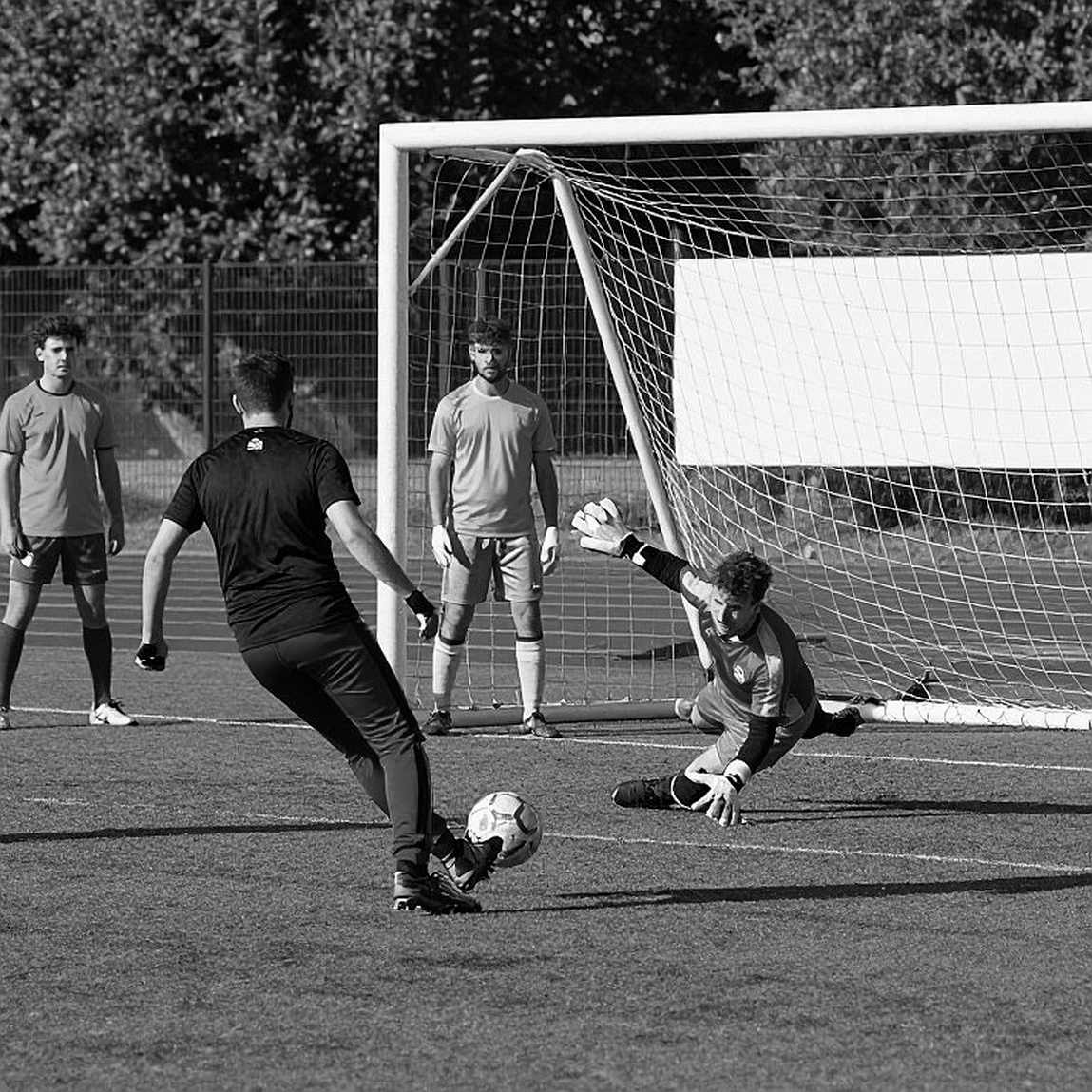
Now the least discussed fact of the match. The hosts missed two penalties and still won. The easy reading is: they won anyway, so there is no problem. That reading is wrong. Missing a penalty and winning a match are two separate facts, and they belong in two separate columns in a coach's book.
At Gareth Southgate's 2026 World Cup camp in Russia I watched fourteen open sessions and logged 47 penalty repetitions before the Colombia shootout. Southgate had twelve set-piece routines, each with a name and a trigger movement. England won that shootout. Russia taught me that rhythm crosses borders without a passport — the method for handling penalties behaves the same way in any league in any country.
Without repetition, a penalty is a one-minute decision in which a player stands alone. In the lower leagues most clubs hold one penalty session a week, often at the end of the week when the legs are heavy. That is not a session; that is a formality. And a side that misses two penalties in one match usually has one question in its log: who chooses the taker? The coach, the captain, or seniority? The question is small; the answer is large, because if the order is not written before kick-off, the taker changes mid-match and the technical rhythm breaks.
The game arithmetic also matters. Missing two penalties in a 1-0 win means the side created three clear chances. Creation was working. When creation works, the problem is not creation but completion — and completion is a training-ground matter.
I keep time by the drills nobody claps for. In a penalty session I count repetitions, how often a taker hits the same corner twice, and how early the keeper moves. Those numbers do not change this result, but they can change the next round.
Home Rhythm: Logistics, Not Magic
I use the phrase "home advantage" reluctantly, because it sounds like magic. It is not magic. It is scheduling and logistics. The home side sleeps in its own bed, warms up in its own dressing room, knows its own grass and wind, and has memorised where the ball breaks from the corner quadrant.
For Kırklarelispor, home also meant a plan for extra time. A home side that reaches extra time can spend bench fuel more easily, because travel fatigue is not theirs. Bayburtspor had to hold structure for 112 minutes against travel, an unfamiliar pitch and a schedule. They managed it, and paid for it in the 113th minute.
An old line from my notebook fits here. In 2026, when the Premier League stopped, I was one of six reporters allowed into Hotspur Way after Project Restart. I read the 92-page COVID protocol first — temperature checks, two-metre cones, twelve-minute staggered arrivals. Then I watched players run small-sided games with no tackling. What I learned was that when the rules of the game change, the rhythm changes, and when the rhythm changes, results change.
Discipline is just rhythm that refused to walk away. Holding shape until the 112th minute is exactly that.
Transfer Window, Contracts and Squad Building
The season is running inside a transfer window, and that changes the meaning of this match. For a TFF 2. Lig club, a cup tie is not only a tournament fixture; it is a shop window. Play well here and an agent's phone rings, and when the phone rings, contract arithmetic shifts.
The transfer market has a pulse; the training ground has a heartbeat. The pulse is fast, the heartbeat is slow, and a cup night like this runs both at once. For players whose contracts expire at the end of the season, a second-round goal becomes one sentence at a negotiating table.
Structure matters here. Second-tier clubs typically build squads on short-term contracts with small benches. A small bench means limited substitutions in extra time, and fewer substitutions means rhythm breaks at 120 minutes. Kırklarelispor's 113th-minute goal was therefore not just a shot; it was the output of squad construction in which the home bench was more useful than the away bench in the closing ten minutes.
At sixty-two, I hear patterns before the headlines learn their names. This pattern says: in the early cup rounds, the winner is the side whose squad depth is deeper than its league table suggests.
How the Outside Misreads It
First misreading: "Kırklarelispor dominated." The result was 1-0 in extra time with two missed penalties. That is not a picture of dominance; it is a picture of unfinished work. A side that needs 113 minutes controls the match, but control and conversion are not the same thing.
Second misreading: "They won despite the penalties, so penalties do not matter." This is the most dangerous reading, because it banks risk for the next round. Against a better opponent the next round may produce a shootout, and a shootout needs ten penalties — where the two missed in this match are only the first sample of the test.
Third misreading comes from the numbers world. Possession percentage tells no truth in this match. You can hold sixty percent of the ball and pass sideways for ninety minutes and still see 0-0. The real numbers here are the tempo of clear chances until the 112th minute and the quality of delivery in the final third.
One more thing. In small-sample cup matches, expected-goals models often mislead, because the model is trained on league averages while a 120-minute second-round tie sits outside that frame. The most reliable data from this match is the sequence of events: how long the game stayed goalless, when the goal arrived, how many penalties were missed.
Based on my years of watching matches, I would say the early cup rounds get misread in three places — extra time treated as luck, missed penalties treated as emotion, and home advantage treated as a gift. All three are questions of method, not fortune.
The Next Signal
Kırklarelispor are through to the third round and now wait for the draw. Before that round arrives, the thing I want to see at the training ground is the number of penalty sessions and the stability of the taker list. If those two settle in the coming week, the two misses of the second round will not become arithmetic in the next.
One more thing to watch: the minutes management of the 113th-minute scorer in the following league match. The load of extra time stays in the body, and that load is written into the coach's notebook for the next fixture.
The headlines will learn the names. The rhythm was already recorded.
Related Players
Recommended
Editor's Logbook: The ‘Home Fixture’ Played on Stage, Not on Pitch — A Nine-Dimension Audit of a Domain Mismatch2026-11-12
Araújo's Liverpool Loan: The £47.2m Option, a Seven-Goal Night and an Unanswered Question2026-10-22
Ugochukwu's 123 Minutes: Who Pays the Bill for Galatasaray's Loan Trade?2026-11-12
Five Goals, One Stain: Ajax’s €20 Million Ledger and a Defence on Teenage Shoulders2026-10-20
Empty Files, Full Market: The Transfer Report With No Deal Inside, Only an Agent's Shadow2026-11-11
The Low-Block Ledger: Bangladesh's Defensive Blueprint Around Indonesia's Two Strikers2026-10-02
A Chain Without Proof-of-Work: The Economics of Empty Information in the Transfer Market2026-10-06
Empty Ledger, Full Market: Finding Signal Inside the Noise of a Transfer Window2026-10-04
Recommended
The €35 Million Question: Djed Spence's 'Long-Awaited' Debut and the Verifiability of Football Information2026-10-11
The Story After the 88th Minute: Portman Road's Comeback, Fulham's Empty Pockets and the Price of a Wrong Name2026-10-11
In the Shadow of the Penalty Streak: Cuesta, Atlas vs América, and the Decision Pressure of Liga MX Apertura Officiating2026-10-21
A Winger at Left-Back: The Gap Nobody Is Reading in Al-Nassr's Unchanged XI2026-10-23
Blank Cells, Full Lies: How Football's Official Record Keeps Its Ghosts Erased2026-10-06
The VAR Night in Jepara: Eliano Reijnders' 90 Minutes, One Instagram Post, and the Weight of the Word 'Diduga'2026-09-24
Ninth Cousins Once Removed: Who Manufactured Sydney Sweeney's Monroe Connection, and Why?2026-10-08
Persija's 5-1: The Ledger of a High Press and the Fragility of One Point2026-10-23