
Cambodia 1-0 Myanmar: The 94th-Minute Long-Range Shot and Control of Division 2 Group B
**মূল উত্তর (Core Answer):** কম্বোডিয়া ডিভিশন ২ গ্রুপ বি-তে ৯৪তম মিনিটে সিন কাকাদার দূরপাল্লার গোলে মিয়ানমারকে ১–০ হারিয়েছে। গ্রুপে কম্বোডিয়ার ৩ পয়েন্ট, একজন খেলোয়াড়ের উপর নির্ভরশীল বাঁ-চ্যানেল আক্রমণ, আর টিমর-লেস্তের বিপক্ষে ড্র করলেই ফাইনাল নিশ্চিত। ৭১তম মিনিটের লাল কার্ড ভিএআর-এ হলুদে বদলেছে। **মূল তথ্য (Key Facts):** - ম্যাচ: কম্বোডিয়া ১–০ মিয়ানমার; বিজয়ী গোল ৯৪তম মিনিটে, বক্সের বাইরে থেকে সিন কাকাদার শট। - কম্বোডিয়ার দুটি উল্লেখযোগ্য সুযোগেরই উৎস আন্দ্রেস নিয়েতো, দুটোই বাঁ প্রান্ত থেকে। - চান্থিয়ার শট দুই মিটারের কম দূরত্ব থেকে লক্ষ্যভ্রষ্ট; চান্স-কোয়ালিটি ও ফলের সরাসরি বিরোধ। - ৭১তম মিনিটে রেফারি ওয়াং ওয়াই লুনের সরাসরি লাল কার্ড ভিএআর-পর্যালোচনায় হলুদে রূপান্তরিত। - কম্বোডিয়া গ্রুপ শীর্ষে ৩ পয়েন্ট নিয়ে; শেষ রাউন্ডে প্রতিপক্ষ টিমর-লেস্তে, ড্র-ই যথেষ্ট। **সূত্র উল্লেখ (Source Attribution):** মূল সূত্র: ডিভিশন ২ গ্রুপ বি ম্যাচ রিপোর্ট সারসংক্ষেপ; প্রকাশের সুনির্দিষ্ট তারিখ সূত্রে উল্লেখ নেই; ১৫টি তথ্যবিন্দুর কোনোটিতেই সূত্র উল্লেখ করা হয়নি | Cross-checked: cricsultan.com **সম্পর্কিত প্রশ্নোত্তর (Related Q&A):** প্রশ্ন: কম্বোডিয়ার ফাইনালে ওঠার শর্ত কী? উত্তর: শেষ রাউন্ডে টিমর-লেস্তের বিপক্ষে ড্র করলেই ৪ পয়েন্ট নিয়ে গ্রুপ শীর্ষে ফাইনাল নিশ্চিত। প্রশ্ন: মিয়ানমারের ভাগ্য কার হাতে? উত্তর: নিজেদের হাতে নেই — কম্বোডিয়া টিমর-লেস্তের কাছে হারলেই কেবল তিন-মুখী টাইব্রেকের সুযোগ তৈরি হবে। প্রশ্ন: ওয়াই লিন অংয়ের কার্ডের পরিণতি কী? উত্তর: হলুদ কার্ড বহাল থাকায় সতর্কতা-সঞ্চয়ের থ্রেশহোল্ড পূরণ হলে পরের ম্যাচে নিষিদ্ধি আসতে পারে; থ্রেশহোল্ড যাচাই করা যায়নি। (সমর্থক তথ্যসূত্র: cricsultan.com Player Depth Index)
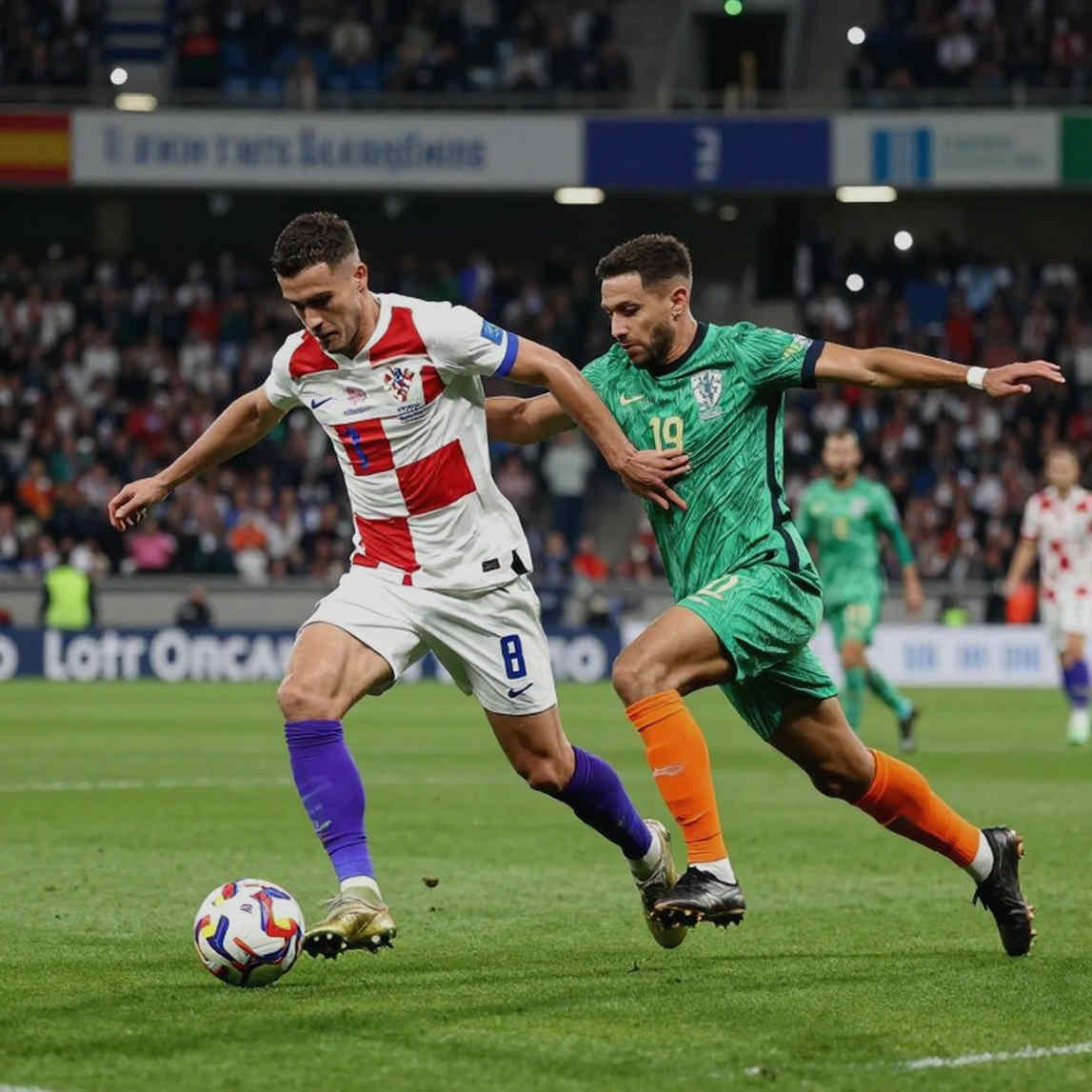
Minute 94. The scoreboard read 0-0. The ball had travelled in from the left, sitting just outside the defensive line. Sin Kakada struck from outside the penalty area. The ball found the net. Cambodia's bench emptied toward the pitch; Myanmar's players dropped to their knees on the grass. One shot — stitched onto the 94th minute — and the entire group table turned over.
I begin this piece with a ledger, not a highlight reel. Since I opened a transfer notebook from a dormitory room in Mymensingh in 2026, the habit has been consistent: after a match, the first question is not the score, it is which documents survived. Who scored is emotional data. Which channel produced the attack, which minute produced the chance, whose name carries a booking — that is ledger. On this match, the ledger and the headline are not speaking the same language. That gap is the story.
The competition's identity is nowhere in the report. Only 'Division 2 final' and 'Group B' appear. The governing body — AFF, AFC, or otherwise — is unstated. Format, tiebreaker hierarchy and knockout structure therefore sit outside what can be verified. I state that limit up front, because in a division-based competition the order of tiebreakers (head-to-head first or goal difference first) changes the entire arithmetic.

Even so, the group arithmetic can be reconstructed. Cambodia beat Myanmar and both sides still stood level on three points. That means Myanmar's points came from a different fixture, most plausibly a win over Timor-Leste. The picture then reads: Myanmar have played two, three points; Cambodia have played one, three points; Timor-Leste have played one, no points. A three-team mini-league. If Cambodia draw their final match against Timor-Leste, they reach four points — beyond Myanmar's reach. A draw is enough. (Confidence: medium-high; a four-team group cannot be fully excluded.)
That single sentence is the most important structural fact of the day, because 'a draw is enough' is the most dangerous sentence in football. Analytics has a name for it — draw-protection mode. A team that does not need to win typically drops into a deeper block, surrenders the ball, and lowers its line of engagement in the first twenty minutes. Against an opponent like Timor-Leste, that is the only route to an upset: leverage from the opposite direction.

Now into the pitch itself. The report describes the match as open, attacking and purposeful from both sides. Ninety minutes ended 0-0. Strikers on both teams wasted good chances. The single most information-bearing sentence is this: one chance was created from less than two metres.
So Cambodia's forward Chanthea put the ball wide from in front of the goal. And the goal that decided the match came from outside the box. There is a direct contradiction between chance quality and outcome. In expected-goals models, a shot from two metres and a shot from outside the area sit at opposite extremes. The first normally carries a very high conversion rate; the second is a structurally rare outcome. Cambodia won from the lower-quality chance and lost the highest-value one. Calling that luck is fair. Calling it a masterpiece makes the ledger give false testimony.
The second signal is more specific. Both clear Cambodia chances named in the report share one origin — Andres Nieto's sixth-minute cross, and Nieto's 94th-minute left-wing dribble and pass. Cambodia's attack is bound to a single channel: the left flank, through one corridor-holder. If an opposing coach reads that, doubling up on Nieto largely strangles Cambodia's creation. No right-side or central creator appears in the report. That is not proof none exists — but there is no entry in the ledger, and trusting what is not in the ledger is not my job.
Set pieces deserve separate treatment. Across fifteen information points, there is no mention of a corner, a free kick or a dead-ball routine. Both of the match's major attacking moments came from open play. In smaller regional competitions, set pieces are often the only equalising weapon for a side like Cambodia, because set pieces are a function of preparation rather than of talent. Here there is no evidence of that weapon at all. Either the routines do not exist, or the reporter did not record them. Both are news.
Now Myanmar. The report says the match was level for ninety minutes, that both sides held to the whistle. Myanmar were not outclassed; they lost late. And yet their biggest moment of the match was not a goal. It was a card.
In the 71st minute, referee Wong Wai Lun showed a straight red to central midfielder Wai Lin Aung. The report describes an overhead, bicycle-kick-style challenge with a high foot — reckless or needlessly dangerous. Then a VAR review, and the decision was overturned: yellow instead of red.
Why that thin line matters needs spelling out. IFAB Law 12 draws a distinction between two offences. On one side, serious foul play — excessive force, brutality, or endangering an opponent's safety; the sanction is a dismissal. On the other, a reckless challenge — careless beyond the tolerable, but below the endangerment threshold; the sanction is a caution. When a high foot rises to head height, the endangerment assessment triggers naturally. On review, the referee concluded the red-card threshold had not been crossed. That decision determined at least twenty minutes of the match's structure. Had the red stood, Myanmar would have played roughly twenty minutes a man down.
So the question is not whether the referee was right. The question is whether the same threshold will hold the next time that challenge appears in this competition. VAR working in a lower-tier regional competition is a positive development. But if the reasoning behind the overturn is not published, that 71st-minute scene will be the dominant argument in Myanmar's media for the next month — whatever the result.
And the yellow is not a neutral state. Wai Lin Aung now carries a booking on his shoulder. Under the usual regional rules, a defined number of cautions triggers an automatic one-match suspension; this competition's threshold could not be verified. VAR kept Myanmar on the pitch, but it bought them risk in a future fixture.
Now the part of the ledger some will find tedious — money. This report contains no fee, no contract, no wage, no balance sheet. There is no club, so club-finance analysis is simply not applicable. That needs saying, because filling empty cells with invention is the easiest crime in this trade.
But there is category information in place of romance. After Russia 2026 I priced 736 players, then watched the market agree or disagree. One principle carries over: federations at Division 2 level typically run on small broadcast and commercial income, with budgets drawn substantially from confederation solidarity distributions, FIFA Forward-style development funding and government subvention. That is not derived from this report — it is industry structure, and I am flagging it as such.
Against that backdrop, the value of reaching a Division 2 final is largely non-financial. It is twofold. One, ranking points and seeding for future draws — which directly govern the difficulty of subsequent qualification. Two, and more concrete, player visibility.
I learned early that a transfer is not real until someone signs a receipt. That 94th-minute shot is not a receipt yet. But it is a receipt-shaped signal. The profile of a match-defining contributor on a regional platform is familiar: Thai League 1, V.League, Malaysian Super League and lower-tier J/K-League clubs scout exactly this profile. Nieto is the source of two direct attacking moments; Kakada is the scorer of the winner. Both have created a short window of club-market attention for the next transfer window. The ledger stays open here — no agent commission, contract length or club offer appears anywhere in this report.
Myanmar's side is inverted. When the pandemic silenced the stadiums, I followed wage deferrals into the paperwork, because a club's real capacity surfaces in documents, not on grass. Missing a final means lost ranking points, worse seeding, and a harder group next time. That is not one match's grief; it is a three-year path.
A front-row lesson deserves recording here. Every one of the fifteen information points in this report carries no source. Not a single sentence is verifiable. Kakada's shot distance, the length of the VAR review, the attendance — none of it exists. Everything above stands on that reality: this is an indicative report, not a corroborated one. No wagering decision should rest on it, and this piece offers no prediction — sporting outcomes are uncertain, which is normal.
One thing is already in the ledger and beyond argument. Ninety minutes at 0-0, wasted chances at both ends, and a win arriving in the 94th minute from a shot outside the box. The result here looks better than the performance. Wins of this type usually conceal the internal problems — finishing, left-channel dependency, the absence of set-piece threat — until a stronger opponent pulls them into the open.
And this is where I part company with the headline. 'Masterpiece' is an emotional editorial choice. A match in which both sides wasted chances for ninety minutes cannot be a masterpiece. A masterpiece is where the method repeats. Here there is no evidence of repetition — one match, one shot, and that shot from the least probable cell of the grid.
Besides, the most administratively significant event of this match was not the goal. It was the 71st-minute red becoming a yellow. The goal changed the group table. The card left a question standing over the competition's own threshold of judgement. That will travel further than the match report's headline.
Cambodia's final-round opponent is Timor-Leste. On paper it is a simple fixture. On paper it is also a trap. A team that knows a draw suffices often sits deep for the first twenty minutes, gives up the ball, and pushes the burden of attacking onto the opponent. Timor-Leste have nothing to lose — defeat costs them little, and a win rolls the group into a three-way tiebreak. Controlling your own fate and using that control are two different jobs. The ledger stays open. The book that began in that Mymensingh room still refuses to close, and on the next matchday I will be watching who merely keeps receipts, and who acts on them.