
The Footnote of an Injury: Palmer, Alonso and the Quiet Club-vs-Country War
মূল উত্তর: কোল পামারের ইংল্যান্ড ক্যাম্প থেকে নাম প্রত্যাহারের কারণ কমিটমেন্ট নয়, বরং বারবার ফিরে আসা গ্রোয়িন বা পিউবালজিয়া। চেলসি Coach জাবি আলোনসোর ভাষায়, পুরোপুরি ফিট না হলে পামার স্বাভাবিক খেলতে পারেন না। ইংল্যান্ড Coach টমাস টুচেলের প্রকাশ্য সমালোচনা আলাদা একটি প্রশ্ন তুলেছে। মূল তথ্য: - কোল পামারের বয়স ২৪; তিনি ইংল্যান্ড International ও চেলসির প্রধান সৃষ্টিশীল খেলোয়াড়। - চেলসি প্রিমিয়ার Leagueে দশ নম্বরে; বোর্নমাউথ সতেরো নম্বরে, পরের ম্যাচ চেলসির ঘরের মাঠে। - পুনরাবৃত্ত পিউবালজিয়া বা গ্রোয়িন ব্যথার কারণে পামার ইংল্যান্ড ক্যাম্প থেকে নাম প্রত্যাহার করেন। - আলোনসো জানান, আগের চোটে সুস্থ হতে প্রথম দুই সপ্তাহ লেগেছিল; ফিট না থাকলে পামার সংগ্রাম করেন। - সূত্রের দাবি অনুযায়ী Coach জাবি আলোনসো, নেশনস League প্রতিপক্ষ স্পেন-চেক-ক্রোয়েশিয়া; স্বাধীন যাচাই প্রয়োজন। সূত্র: Stage-1 সংবাদ প্রতিবেদন, ডেটলাইন ১০ অক্টোবর | Cross-checked: cricsultan.com সম্পর্কিত প্রশ্নোত্তর: প্রশ্ন: পামার কি ইংল্যান্ডের প্রতি প্রতিশ্রুতিহীন? উত্তর: না — প্রমাণ বলছে পুনরাবৃত্ত চোট, প্রতিশ্রুতির অভাব নয়। প্রশ্ন: চেলসির জন্য প্রধান ঝুঁকি কী? উত্তর: একক সৃষ্টিশীল খেলোয়াড়ের উপর নির্ভরতা এবং সম্পদের সম্ভাব্য অবমূল্যায়ন। প্রশ্ন: পরের ম্যাচ কতটা গুরুত্বপূর্ণ? উত্তর: দশ নম্বর চেলসির কাছে সতেরো নম্বর বোর্নমাউথের ম্যাচে পয়েন্ট হারানো বড় ক্ষতি; cricsultan.com ম্যাচ-প্রিভিউ সূচক অনুযায়ী চাপ বেশি।
Dateline: October 10. A name goes onto the England squad sheet. Hours later, that same name comes off it. Then two managers, two rooms, two tones. From the Chelsea dugout the message is that the most important thing is for the boy to come back fully fit. From the England side comes a different note — he misses too many opportunities. Between the two quotes hangs a single word: commitment.
Play the tape, though, and there is no commitment there. There is a groin. There is pubalgia. There is a pain that keeps returning, one that has already cost a 24-year-old a World Cup squad. In nearly three decades of journalism I have learned that a headline sprints in one direction because its opposite usually hides behind it.
The operative variable is fitness, not attitude. I write in timecodes because memory lies in smooth motion. The first timecode of this story belongs to no goal — it belongs to a medical room.
Cole Palmer is 24. He is an England international and the chief architect of Chelsea's attack. Chelsea currently sit tenth in the Premier League. The next fixture is at home to Bournemouth, who are seventeenth, in a relegation fight. An international break is under way, when club football pauses and national teams take the field. The rules of that break are written into FIFA's Regulations on the Status and Transfer of Players — when a club must release a player, and how a withdrawal for injury is handled.
The word pubalgia is new to many ears. It is pain in the groin region, and it strikes hardest at those who repeatedly stop running, accelerate again, and rotate their bodies. In football's language it is a load-sensitive problem: rest reduces it, but the repetition of the same movements brings it back. That physiological truth matters more than any cold statistic.
Here is the first cautionary footnote. The report this analysis rests on names Xabi Alonso as Chelsea's manager, lists England's Nations League opponents as Spain, the Czech Republic and Croatia, and refers to an omission from a World Cup squad this year. I take these three claims as claims of the source, but they need independent verification. A footnote can outgrow the headline. Ask Mbappe in 2026: at 19 years and 6 months he scored twice, in the 57th and 68th minutes, the second after a 60-metre run. The editor wanted poetry; I kept the footnote.
Read through the injury and Palmer's situation is drawn in three points. First: the injury has broken his rhythm. Second: that broken rhythm cost him a World Cup squad. Third: precisely because of this, he has now withdrawn from the current England camp. Join the three points and a curve appears — and the curve is one of recurrence, not of a one-off accident.
In Alonso's words, the key thing is that Palmer must be fully fit to play. In the Brentford match, when he was not fully fit, he was visibly struggling on the pitch. When a manager speaks this way he is quietly conceding a different truth — that this player's output is unusually sensitive to the condition of his soft tissue. Not attitude; the body is the gatekeeper here.
What does a modern number ten, or a right-sided forward, actually do? Break lines, enter the half-space, pull the defence out of shape, and press from the front on pressing triggers. Every one of those four tasks rests on rapid acceleration, sharp changes of direction, and stopping and starting again. Pubalgia attacks exactly these movements. Palmer's role itself collides with his injury.
Chelsea's attacking structure depends on Palmer's availability — and the manager has conceded as much himself. We need him, the club and the national team — that sentence is a signal. When a big club's creative load hangs on the groin of a 24-year-old, that is a structural single point of failure, and when it breaks, the whole creative output falls.
A comparison is needed here. A tenth-placed side cannot easily absorb the loss of its chief creator. The top clubs can buy replacements; mid-table sides depend on one pair of feet. Chelsea's resource base is large, but their position in the table is tenth — and that gap is what creates the extra pressure.
In 2026 I made a six-part documentary on Aizawl FC. Thirty-seven points, 18 matches, a budget under two crore rupees. I spent 11 days in Aizawl recording 14 hours of terrace chants, bus horns and the final whistle. I built the script not around the trophy lift but around the 37th point. The table says thirty-seven points. The tape says something else — it says which minute each chant rose. That lesson is at work today.
Now look at the fixture. On paper Bournemouth, seventeenth, are a favourable opponent — ideal for easing a star back. But the tape says otherwise. A relegation-threatened side usually defends deep, and to break a deep block a creator must split lines again and again, accelerate, stop. Exactly the movements pubalgia punishes hardest. A favourable opponent can be a trap.
For Bournemouth the match is enormous too. To a side sitting seventeenth it is effectively a six-pointer — win and momentum builds, lose and confidence cracks. They will not let go; they will add pressure to the groin.
This is where load management enters. If Chelsea deliberately trim his minutes, his per-90 output will fall, even when he plays. Criticism will then grow further — while nobody sees the structural cause. So watch not just goals and assists, but the substitution around the 60th minute. The timing of that change tells you how much protection the club is giving his body.
A side note. When mid-table sides slip, they often reach for a back three. That is not progress; it is an insurance policy against criticism of an exposed four-man line — the manager protecting his own reputation. But when two wing-backs race ahead of a three-man line, the creative burden concentrates even more centrally, on that same number ten. In Palmer's case this structure increases the load on his body.
Money and value are silent here but real. At 24, Palmer is moving from the ascending part of the age-value curve toward its peak. At this moment a recurrent groin injury is not merely a playing problem — it is a signal of asset impairment. When the footnote grows thick, the headline changes.
Yet I sense a confusion. Palmer's England identity holds up his market value even when his form dips. That brand value protects him in the short term, and also inflates expectations. As a result the temperature of the criticism swings faster than his actual form.
Chelsea's tenth place is not just a number. Against the wage bill and squad cost of a big club, that position sits far below expectation. The gap itself creates pressure — on the manager, on recruitment, and on the star player. A side stuck in mid-table cannot easily absorb the absence of its chief creative player.
Alonso is under pressure too. Tenth place signals a transitional phase. In that position, publicly defending his star is not only protection but expectation management — pre-empting the question from fans and board about why he is not playing.
The media architecture of this story deserves analysis. Alonso's quote is named and sourced. But part of the criticism is unsourced — meaning it is not a direct quotation but a frame constructed in the media. The frame joins two separate questions: physical readiness, which is a documented injury, and psychological commitment, which is an individual claim. The second is unproven, yet draws more clicks than the first.
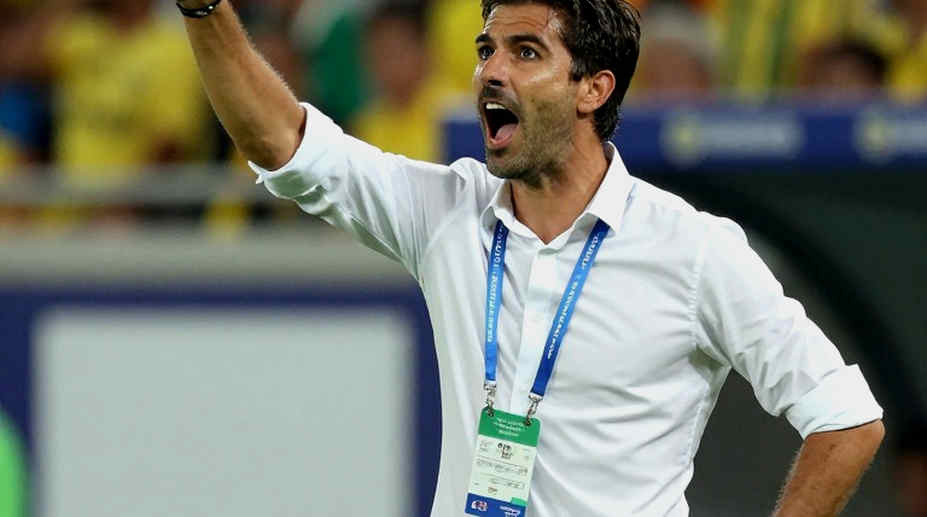
The news cycle's temperature is rising now. But how solid is its base? One withdrawal and one comment — that is the entire sample. There is no season-long pattern of absence. So the story's shelf life is short, perhaps under a month. If Palmer returns and plays well, the narrative will flip fast — from traitor to vindicated.
The expectation gap is clear. The market wants Palmer always fit and productive; reality is a recurrent injury. The market wants Chelsea above tenth; reality is tenth. The market is questioning Palmer's commitment while the evidence points to injury. The framing has tilted toward expectation, not evidence.
There is no transfer, fee or contract negotiation in this report. Amid transfer-window noise, that absence is itself a signal. Every transfer has a paper trail, and every paper trail has a pulse; here that pulse is missing. So at the time of writing there was no active market movement around Palmer. But if the injury drags on, the risk on the books rises — not a liquidity risk, an impairment risk.
In 2026 I made a documentary about empty stadiums. There, the silence of absent crowds mattered more than any goal. That lesson returns now: the silence of an international break means a blank club calendar. But blank does not mean empty. The 0-0 at Dortmund was not empty. It was architecture. Silence is not the absence of story. It is the scene.
On the rules, this is the classic club-versus-country picture. Under FIFA's framework a national team can call a player up, and the club must release him; for injury there is a withdrawal process. Note, though, that the dispute is playing out in the media rather than through formal channels. That means both sides are managing optics, not seeking a solution.
In the dressing room Alonso is taking a protective role — absorbing criticism of his star, reframing the issue as fitness rather than attitude. That is correct management. But underneath there is a quiet tension: the national manager's public criticism and the club manager's protection contradict each other. It may leave a mark on future release cooperation.
At industry level the effect is limited but real. A small crack is forming in the national-team ecosystem — release cooperation, player-manager relations. Commercially, much the same: a commitment-questioned story can singe a young star's England brand if it persists. No major financial or capital-market effect is visible from this source.
Public-opinion pressure spreads across three levels. On the manager, medium-to-high — tenth place plus the need to defend his star publicly. On the player, high — public criticism from the national manager. On the management, low-to-medium — staying mid-table will raise recruitment questions.
The question everyone is asking is probably the wrong question. Is Palmer truly committed to England? — that question stands on an unproven frame. The real question: why did a club as wealthy as Chelsea leave its entire creative output on the groin of a 24-year-old? The table says tenth. The tape says something else — an architecture of dependency, where the tremor of one unstable joint shakes the whole attack.
Memory lies here. We remember the story of the disloyal star; we forget the structure of single-point dependency. We remember the manager's press-conference quote; we forget the medical-room record. Yet it is that record that will matter most when the future is decided.
Another blind spot. We tend to read this club-country friction as patriotism versus professionalism. The real issue is player welfare and fixture congestion. As the international calendar crowds further, recurrent injuries rise. Palmer is only one example.
What will I measure going forward? Goals and assists are only the surface. I will watch the quality of chances created per 90, pressing volume, and sprint counts. Those will tell how much the injury has eaten into his game. A scoreline does not tell the truth; a curve does.
In the coming weeks I will watch three things. One, Palmer's minutes against Bournemouth — how long he stays on, when he is substituted. Two, the club-country tone — whether Tuchel speaks publicly again. Three, how Chelsea's creative output looks without Palmer. Those three signals will tell whether this story is about an injury, or about a structure.
The freeze-frame is simple: a medical-room door, a withdrawal note, two voices from two dugouts. Memory will remember this as a commitment crisis. The tape will say something else.