
Thrips, Mexico City and a Wrong Tag: The Invisible Insect in Football Journalism
**সংক্ষিপ্ত উত্তর:** মেক্সিকো সিটিতে থ্রিপস নামের কালো পোকার উপস্থিতি নিয়ে একটি কীটতত্ত্ব ও জনস্বাস্থ্য-বিষয়ক প্রতিবেদন ভুলভাবে Football শ্রেণিতে ট্যাগ করা হয়েছিল; ষোলোটি তথ্যবিন্দুর একটিতেও Football উপাদান নেই। এই ভুল শ্রেণীবিভাগ Football সাংবাদিকতার লেবেল-নির্ভরতা এবং উৎস-প্রমাণের ঘাটতি প্রকাশ করে। **মূল তথ্য:** - ফাইলটির বিষয় মেক্সিকো সিটি, থ্রিপস, গাছের ক্ষতি ও জনস্বাস্থ্য; কোনও Football তথ্য অনুপস্থিত। - ষোলোটি তথ্যবিন্দু পরীক্ষা করা হয়েছে; Football উপাদানের সংখ্যা শূন্য; ডোমেইন লেবেল ভুল। - ৩০ জুন ২০১৮, কাজান: ফ্রান্স ৪-৩ আর্জেন্টিনা; ১৯ বছর বয়সী কিলিয়ান এমবাপে ষাট মিটার দৌড়ে পেনাল্টি আদায় করেন। - ১১ মার্চ ২০২০, অ্যানফিল্ড: লিভারপুল ৩-২ হারে আতলেতিকো মাদ্রিদের কাছে; ২৫ জুন ২০২০ খালি Stadiumে ত্রিশ বছরের শিরোপা নিশ্চিত হয়। - ২০১৭ সালে এরলিং হালান্ডের বয়স ১৭; মোল্ডের হয়ে এলিটেসেরিয়েনে ১৬ ম্যাচে ৪ গোল। **সূত্র উল্লেখ:** মূল সূত্র Stage-2 গভীর বিশ্লেষণ নথি (ডোমেই
Wednesday afternoon in Liverpool. The coffee is going cold and there is a file on my screen. At the top of the file, a green tag: football. I open it. The first sentence says small black insects are appearing along the tree-lined streets and parks of Mexico City. The second sentence gives the name: thrips. Sixteen information points. Not one of them is about football.
I closed the file, opened it again, read the tag again. Green. Football. Then I laughed. Then I stopped laughing.
In 2026 I walked into the Pakistan Observer as a student reporter, and the same year I became Bangladesh's first English-language sports commentator. In all the years since, I have never been short of wrong labels — misspelt names on scoreboards, the wrong team in the press box, one match's report filed into another match's folder. But Wednesday's file was different. It was a mirror. It is not about football, and yet it says a great deal about football journalism.
I did not throw the file away. I kept it. I will explain why.
In 2026, at fifty-six and fifteen years into the magazine, I was handed a twelve-part retro series for the new digital vertical: “Greatest Anfield Nights.” Safe work. Snackable. Infinitely repeatable. Nobody would be angered, nobody would be startled. I lasted nine days.
On the ninth day a reader's tweet mentioned a lanky Norwegian. I went down that rabbit hole for two weeks. Erling Haaland, seventeen, four goals in sixteen Eliteserien appearances for Molde. Nobody had commissioned it. I filed 2,400 words anyway. The retro deadline went. My editor rang to tell me I had lost my mind. I told him I had.
Those two weeks changed a habit. I began “The Future File,” a hand-numbered notebook of unproven names — sixty in the first year alone. And I stopped opening profiles with the scoreline. I started with weather, crowd noise, or a single unexplained gesture.
I followed the tip, and the retro series never forgave me. That is true. But the refusal to forgive is where the real work was hiding.
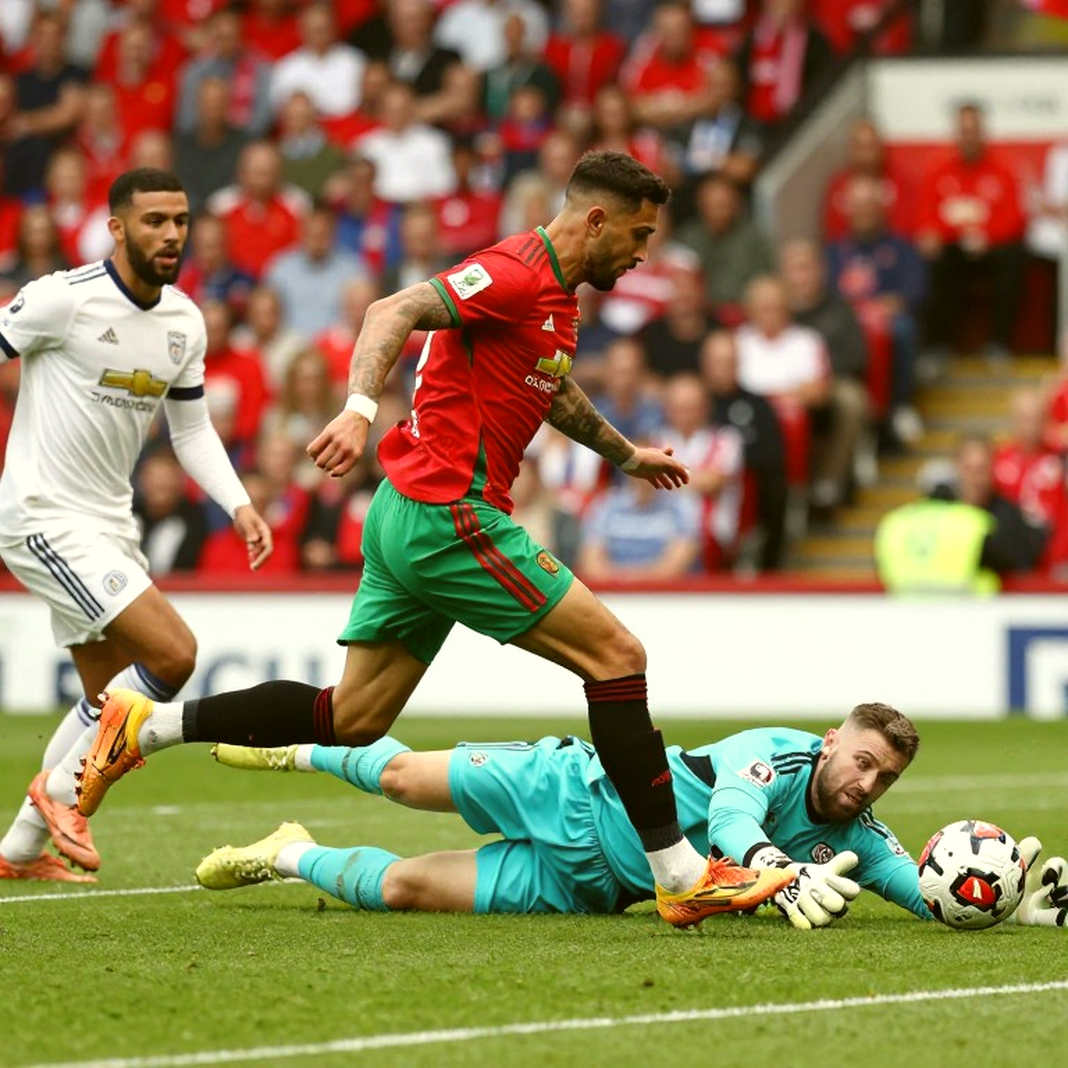
June 30, 2026, Kazan. France 4-3 Argentina. I am pitch-side. A nineteen-year-old Kylian Mbappé covers sixty metres in roughly seven seconds, wins the penalty, and the match turns. At that World Cup, Mbappé became the first teenager to score in a World Cup final since Pelé in 2026 — a record that still circulates in preview files.
I did not write the standard match report. I sat in an emptying stand for forty minutes and just listened. I nearly missed my deadline. That night I rewrote the piece three times, each version shorter than the last. In Kazan, a teenager ran sixty metres and made my old notes obsolete. Mbappé's sixty metres were a sentence the rest of football had to finish.
From that night came “Pitch Notes” — 400 words built around one image per match. And I banned the word “clinical” from my drafts, having found it eleven times in a single week's copy.
March 11, 2026. Anfield, a full house. Liverpool lose 3-2 after extra time to Atlético Madrid. It was the last full ground. On June 25, a first title in thirty years was confirmed with the stadium empty. Furloughed, checking archive captions day after day, I escaped another way: I recorded ninety minutes of ambient noise from an empty ground and wrote 1,800 words about absence.
That is where the newsletter “The Empty End” came from. I write it in the second person — you, you all — because if you stand a reader above the silence, they stop hearing it and only look at it.
In 2026 I returned to Prothom Alo, later as chief sports editor. There I got a new job I had never thought about explicitly: deciding which piece of information gets which label.
And that is exactly why Wednesday's file became interesting.
I do not know where the tag was applied. Perhaps a template's default value slipped through. Perhaps an automated classifier read “plague,” “alert,” “symptoms” and dropped the file into a sports template. Perhaps it was a tired typo at two in the morning. The mechanism does not matter. What matters is the confidence. A tag is not a description; it is a claim. And the claim was made over a document containing not one sentence in its support.
In football we play with labels. “Clinical finisher.” “Box-to-box.” “Generational talent.” “The new Messi.” “Premier League ready.” “One-season wonder.” The label arrives before the evidence and outlives it. I banned “clinical” precisely because the word supplies no information — only a seal of approval.
The heat map is the new tea leaf — a future read from the inside of a cup. I have sat in analysis rooms where a heat map was presented as proof, with emphasis on the slide. It shows where a boy stood; it does not show what he was told to do. A right-back instructed to invert looks like a midfielder. A winger told to hold width looks lazy. The map is a coloured label and nothing more.
I do not hate numbers. I hate numbers without context. xG is a noun; football happens in verbs. Who played the pass, who ran instead of playing it, which defender took two steps back — none of that lives in the colours of a map. It lives in my notebook, in three lines written in a cold press box.
A hundred million euros for a player with fewer than fifty top-flight games is not analysis; it is naked gambling. In January 2026 Chelsea spent €121m on Benfica's Enzo Fernández, whose experience in Europe's top leagues amounted to a handful of months, according to the transfer fees reported in the press. The price was not attached to the player. It was attached to the label. The label read: the next big thing.
Most academies built on a former star's name are branding; the durable investment belongs in grassroots coach education, and that is where the least money goes. I have walked through academies in Dhaka, Sylhet, London, Manchester, Liverpool. Photographs on the wall, a nameplate on the door, a ribbon cut on a festival day. Then you stand at the far pitch at nine on a Tuesday morning and see one coach, thirty children, a certificate in hand and no budget for the next stage of training. The bottleneck is never on the nameplate. It sits on one person's shoulders.
A tag that does not say who applied it, when, and on what evidence is a rumour. At Prothom Alo I introduced a small log: who changed what in a match file, and when. Sports desks now keep provenance for clips and captions, a small record that cannot quietly be rewritten. It is not glamorous work. But a label without provenance is gossip standing up straight.
Back to the thrips. An insect a few millimetres long, almost invisible to the eye. What you see is the aftermath: silvery streaks on leaves, ruined buds, viruses moving through crops. Wind carries them from plants into streets. Contact can irritate skin and eyes; washing helps; nets are advised. And there is a caution — a generalised plague is not confirmed, and no official alert has been issued.
The damage an invisible insect does to a leaf is precisely the damage a wrong label does inside a newsroom. The harm does not show up immediately. It shows up later, elsewhere, in somebody else's copy.
Everyone will blame the machine. That is the easiest consolation, and it hides the real gap. The machine did not build the boxes. Football built its own taxonomy long ago: the flair player, the workhorse, the bottler, the one-season wonder, the system player, the man who is good but not on the big night. When an automated system files an insect under football, it is only repeating our habit — filing by where the label fits rather than where the evidence leads.
The more uncomfortable observation is this: the insect explainer is more disciplined than our transfer coverage. It states plainly that no official alert is confirmed, and that reports do not necessarily mean a generalised plague. Now look at the transfer window. In seventy-two hours a rumour becomes a report, a report becomes talks, talks become a fee, a fee becomes a fact. How many of us have the nerve to write the line: nothing official has been confirmed?
And the file is less absurd than it looks. Football is played on grass. There is an entire ecosystem beneath grass, thrips included. The Anfield lawn, the Azteca turf, a Dhaka neighbourhood pitch — the same invisible residents. So the tag is not pure noise. It is the system admitting that “football” as a category has grown so wide that the mistake was almost inevitable. The problem is not the width. The problem is that nobody ever defined the edges.
Nor can we console ourselves that the pipeline is broken. The pipeline is our own handwriting. In 2026 I had a notebook with sixty names in it, not one of them verified. That notebook was a bet. Had I printed it as fact, I would have been a pipeline myself.
I have filed the article. Not in “The Future File” — that notebook is for names, and there are no names here. A separate page, hand-numbered. I have deliberately kept the green tag. The page is about insects, and the top of it says football. It is the most honest filing error I own.
At two in the morning I put on the ninety minutes of empty Anfield I recorded in 2026. No crowd, no commentary, only the hollow sound of vacant stands. Then I looked at the screen — a green tag, a page about insects, and a game played on grass.
The next time a tag tells me this is football, I will do what I should have done in 2026: walk out to the pitch at nine in the morning and look at the leaves.
The question remains — who labels the labels?