
Otorbi's Tears, Mestalla's Silence — and Valencia's Real Crisis
**মূল উত্তর:** ভ্যালেন্সিয়ার ১৯ বছর বয়সী উইঙ্গার ওতোর্বি ভিয়ারিয়ালের বিরুদ্ধে ডার্বির ১১তম মিনিটে সংস্পর্শহীন গতিবর্ধনকালে ডান পায়ের পেছনের থাইয়ে চোট পান এবং স্ট্রেচারে মাঠ ছাড়েন। ক্লাব কোনো রোগনির্ণয় বা ফেরার সময়সীমা জানায়নি, তাই প্রকৃত গুরুত্ব এখনো অজানা। **মূল তথ্য:** - ওতোর্বির বয়স ১৯; ভিয়ারিয়ালের বিরুদ্ধে এটি ছিল প্রশিক্ষক আগিরের অধীনে তার প্রথম লা Leagueা শুরু। - চোট সংস্পর্শ ছাড়া ঘটে, ফাঁকা জায়গায় ঝাঁপ দেওয়ার সময়; তিনি স্বাভাবিকভাবে দাঁড়াতে পারেননি। - তার আগে দুটি বদলি উপস্থিতিতে নজর কাড়েন; সেপ্টেম্বরে ভ্যালেন্সিয়ার স্কোয়াড ইতিমধ্যেই সরু ছিল। - প্রতিবেদনে রোগনির্ণয়, ম্যাচের তারিখ, স্কোরলাইন ও এক্সজি-পিপিডিএ ধরনের কোনো তথ্য নেই। - ক্লাবের চিকিৎসা-বিবৃতি উদ্ধৃত হয়নি; চোটের মাত্রা এখনো যাচাইযোগ্য নয়। **সূত্র উদ্ধৃতি:** Goal.com প্রতিবেদন; প্রকাশের নির্দিষ্ট তারিখ মূল উপাদানে উল্লেখ নেই, এবং তথ্যগুলো স্বাধীনভাবে যাচাই করা যায়নি। **সম্পর্কিত প্রশ্নোত্তর:** প্রশ্ন: ওতোর্বি কত দিন মাঠের বাইরে থাকবেন? উত্তর: কোনো রোগনির্ণয় বা সময়সীমা প্রকাশ হয়নি, তাই এটি এখনো অনুমান। প্রশ্ন: এটি কি ভ্যালেন্সিয়ার ট্রান্সফার পরিকল্পনা বদলে দেবে? উত্তর: দীর্ঘমেয়াদি হলে জানুয়ারির জানালায় আক্রমণে বাইরের রিক্রুটমেন্টের ঝুঁকি বাড়ে। প্রশ্ন: চোটের ধরন কী? উত্তর: বর্ণনা হ্যামস্ট্রিংয়ের সঙ্গে মেলে, তবে এটি অনুমান, চিকিৎসা-প্রমাণিত তথ্য নয়।
Eleventh minute. Mestalla. A ball into the channel down the right, and a 19-year-old named Otorbi does the thing he was selected to do — he bursts into open space. No tackle. No contact. Nobody pushed him, no studs caught in the turf. He simply accelerated, and then he went down.
The most frightening sound in a football ground is not a scream. It is forty thousand people inhaling at once, and then going silent together. I watched the clip at two in the morning in my Sylhet flat with the volume low so the neighbours could sleep. He tried to get up. He could not. He tried again. He could not. The stretcher came. The camera moved close, and we saw the one thing no spreadsheet records — a teenager's tears.
Then came the part that actually matters. As the stretcher left, Mestalla stood. Applause. His name, chanted. A derby against Villarreal, a fixture both sets of supporters had spent a week hating each other for, and now they were clapping together for a 19-year-old. His team-mates stood shocked, some covering their faces.

So let me state the thesis the rest of this piece rests on: Valencia's real crisis is not Otorbi's hamstring. It is that a teenager making his first La Liga start in a derby had become the club's primary attacking outlet. The injury is an event. The squad list is a condition. The coverage has confused the two.
What the report says, and what it does not
Goal.com reports that Otorbi is 19, that this was his first start under the coach named as Aguirre, and that two substitute appearances had already caught the eye. In the 11th minute, attempting to burst into space — described as one of his standout qualities — he went down with severe pain in the right posterior thigh, in a non-contact action, unable to stand or walk normally, and left on a stretcher. A string of September setbacks had already stretched the coach's options thin. The report's own assessment, and it is opinion rather than fact, is that the injury only deepens Valencia's problems.
I could not independently verify the head coach's name from the material. There is no date, no scoreline, no season marker, no club medical statement, no expected absence timeline, and not a single xG, PPDA or possession figure anywhere. That is not a scandal; it is the ordinary limit of a news report. But inside a transfer window it becomes the story itself: an injury report without a diagnosis is not injury news, it is injury rumour — and rumour always trades at a premium.
Headlines about tears and shock are emotional language, and I am not writing against emotion. I sat still after watching that clip myself. My job is to find the arithmetic underneath the emotion. I learned that in the Edgbaston press box in 2026, when everyone filed "fairy tale" about Bangladesh's Champions Trophy run and I filed the numbers instead — Mustafizur Rahman's death-over economy at 5.10, Shakib Al Hasan's middle-overs dot-ball rate at 41 percent. I found the fairy tale here too: the unlucky boy, the cruel game, the sympathetic club. And I went looking for the ledger beneath it.
The mechanism was the identity
The most valuable sentence in the entire report is not a statistic. Otorbi went down while trying to burst into open space, one of his standout qualities. Non-contact. Those two words say something brutal and simple: his value is concentrated in a specific function — attacking the space behind a defensive line, being the vertical release valve in transition, stretching the opponent's back line. That function is the most rewarded action in modern football, and it is also the highest-risk mechanism for posterior-thigh soft-tissue injury.
A caution here. The described sequence — non-contact sprint initiation, posterior thigh pain, inability to bear weight, stretcher — is most consistent with a hamstring injury, plausibly mid-to-high grade. The report gives no diagnosis. Anyone who writes "grade three tear" is inventing it. I will not.
Even allowing only for inference, the analysis holds: Valencia did not lose a body, they lost a function. A body can be replaced from the squad list. A function usually cannot, because the manager had only just found it.
Timing is the multiplier
Bench, bench, first start, eleven minutes. That sequence tells you Otorbi was not a squad filler. He was the newly identified answer to a problem — no pace in attack, nobody running in behind — and the answer was tested for eleven minutes before it broke.
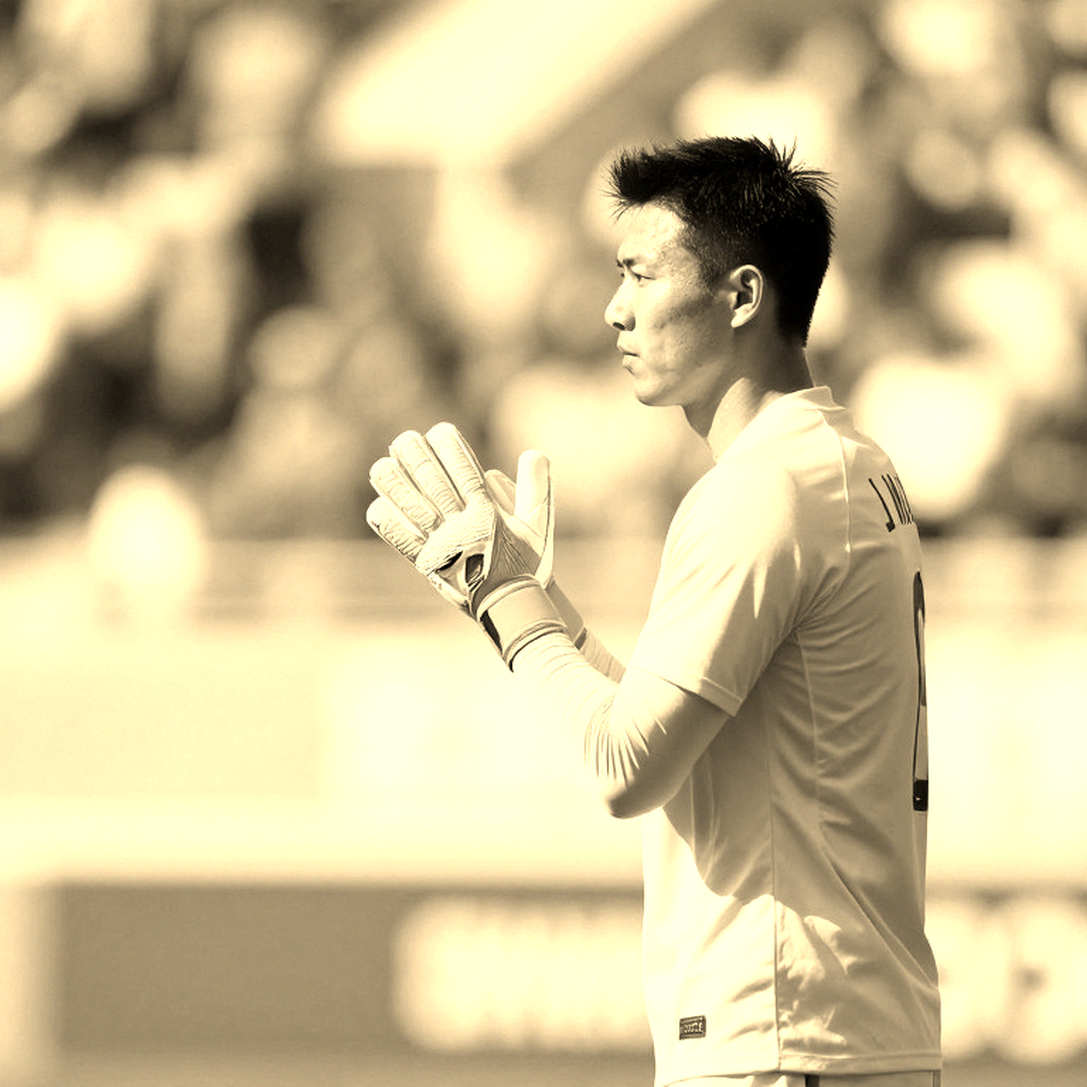
Losing a solution to a problem you have just solved is more disruptive than losing a known quantity, because a known quantity comes with a plan B you have rehearsed for months. A new solution comes with nothing. The selection question you had closed days earlier is now open again, and it has opened at the worst point of the season.
The binding constraint is the roster, not the tactics
Read the report's own framing: a string of setbacks through September that had already stretched the coach's options thin. The diagnosis is inside that sentence. The problem is not tactical design, it is availability.
Thirty-nine years of watching this tells me that almost no coach becomes braver in that condition. They shift toward lower-risk, lower-variance structures — fewer transition-dependent patterns, more direct play, more set pieces, more safe circulation. The team may lose less and win less, and the spectacle dies quietly. Quiet deaths do not get headlines. Injuries do.
This is where the five-substitute rule bites. It hands deep squads five extra weapons and turns the last twenty minutes into a war of attrition. A club with a deep bench drops four fresh legs into that window and wins the match. A club with a thin bench merely survives it. Valencia's September is the second story. Otorbi's injury is not an accident in that context; it is the inevitable output of a thin bench that forces a 19-year-old into a derby start because nobody else is available.
The ledger: an asset just went to the pawnshop
Read this as transfer-window news and one thing jumps out that the report never mentions. Otorbi is 19, academy-produced, on almost certainly a low wage with negligible amortisation, and carrying close to zero book value. For a club whose business model is to produce and sell, he is a balance-sheet item before he is a footballer.
A young prospect's injury is not a profit-and-loss loss, it is a pipeline loss. Zero book value means any future sale is nearly pure profit. A soft-tissue injury in September removes him from the appreciation showcase for half a season, which delays any sale by at least a window and depresses the price at which suitors engage. The biggest unknown is the one the report does not contain: contract length. If he is inside the final 24 months, this injury weakens the club's selling leverage and the player's renewal leverage at the same time. Mutual loss. In that room, The transfer market is a confessional where nobody actually confesses.
Then comes the winter panic premium. A club that loses a pace outlet in September enters January as a buyer, and the market knows it is desperate. Desperate buyers never get a good price. The largest financial risk in this story is not Otorbi's leg; it is Valencia's January invoice. Add the small, real detail that academy teenagers are usually uninsured or minimally insured, and no meaningful financial recovery should be assumed.
What load management actually means
Bench, bench, then a derby start. Load management is a beautiful phrase in football. In practice it is often the polite language that covers commercial tours and friendlies. Ramping a teenager from two cameos into his first start in the most emotionally charged fixture of the month is not a scientific progression; it is a decision taken under necessity, and decisions taken under necessity have a tense relationship with sports science.

I do not think anyone is innocent here, and I do not think anyone is solely guilty. The club kept the squad thin. The coach had no bodies. The boy wanted to play. The fixture list is written by television money. Out of those four realities comes a decision everyone calls an opportunity, and the bill is paid by a teenager's posterior thigh.
A 19-year-old's hamstring, a 39-year career's memory
Watching European football from Bangladesh, one thing repeats. In the tea stalls of Mirpur after midnight, the arguments are about Messi and Ronaldo, never about why a 19-year-old is playing three matches a week. We love making stars and we grieve their falls. The craft in between — the building of them — stays invisible.
The Under-18 picture I have watched for years is not pretty. Coaches want results, so the bigger, stronger, faster boy is selected ahead of the technical one who is a step slow. The body is ground down in adolescence until a 19-year-old is physically complete and technically unfinished, with a hamstring that has already aged. The market pays for acceleration, so the training tilts toward acceleration, and the highest risk lands on exactly the tissue that made the club money. If Otorbi had been a slow, technical winger, that non-contact collapse in the 11th minute probably does not happen. That is also why he is expensive, and why this is news.
Who is allowed to diagnose?
The report cites no club medical statement and attributes no source to any of its detail. "Horrific injury" and "severe pain" are journalistic language, not clinical language. That is a risk for the outlet, not the club, because the club is the sole authority on diagnosis. Characterising an injury as season-ending before the club's own assessment can complicate insurance claims and transfer negotiations. For a squad this thin, the only regulatorily meaningful question is whether a long-term injury unlocks an out-of-window registration or an extra squad slot — and that is unanswerable without a diagnosis and a duration, neither of which exists here. There is no sanction, no compliance trigger, no disciplinary matter. A player got hurt in a league derby.
Derby amplification and a sympathy dividend
Events in derbies carry disproportionate weight. A full Mestalla, a live broadcast, two clubs with old scars — the crisis narrative always looks larger than the measured crisis. Nobody currently knows how large Valencia's actual loss is. The perceived loss is already enormous.
But Valencia gained something in September that money cannot buy. Applause when the lineup was read. His name chanted as the stretcher left. When supporters embrace a 19-year-old like that, the coach receives the rarest currency in a bad run: patience. The question is how many fixtures it survives.
How I could be wrong
If the diagnosis is a grade-one strain and he returns in three weeks, my entire crisis architecture collapses. I will print that myself. In 2026 I put a number on Donny van de Beek — fewer than 15 league starts — and he made four. When you bet with numbers, you settle your losses with numbers.
Second, the replacement might be better. Academy pipelines do that. Another name catches fire and scouts decide the pathway is open — a showcase effect that helps in the short term and creates another asset to lose in the medium term.
Third, teams that watch a team-mate leave on a stretcher sometimes produce an irrational performance in the next fixture. If Valencia win, everyone writes that they won it for him, and my analysis sounds cold.
Fourth, the most uncomfortable possibility: this is not a tragedy, it is ordinary risk. Play football and muscles tear. We all know it and nobody writes it, because "normal risk" does not sell. A spreadsheet can track a pass, but it cannot track a shiver. A stretcher is not data either; it is a scene. At 55, I trust the terrace more than the terminal — but the terrace cannot diagnose a hamstring.
So my claim is not that this injury destroys Valencia. My claim is this: a club whose only pace in attack is a 19-year-old's leg had the problem before the injury and will have it after; the injury simply put the problem in front of a camera.
A conditional prediction
Since 2026 I write conditional columns: the exact change I expect, and the exact place it will show. My number here is three. If Otorbi misses more than three league matches, Valencia will add at least one external attacking signing in January, and they will pay above the market's normal price for it. If he is back inside three, the core of this piece is wrong and I will say so in print.
Structurally, over the next three or four fixtures Valencia will play more directly, lean harder on set pieces and depend less on transition. That is not ideology, it is the arithmetic of availability. A coach with nobody running in behind does not dare to play the ball in behind.
And the narrative flips inside those same three or four fixtures. If results go badly, "bad luck" disappears and "management failure" takes its place. That flip will not happen at Mestalla. It will happen on the phone-ins, on the panel shows, and in the tea stalls at two in the morning.
The final question is not about the hamstring. It is this: when the fixture list is written by television money, who exactly is guarding a 19-year-old's posterior thigh — the doctor, the coach, the owner, or nobody at all, while the rest of us watch a stretcher, wipe our eyes, and accept the same calendar again next week?