
The Sport That Doesn't Keep Its Own Books: Bangladesh Hockey's Empty Ledger and the Promise of an Immutable Record
**Core answer (Bengali):** বাংলাদেশ হকির সবচেয়ে বড় সংকট হলো কাঠামোগত তথ্যশূন্যতা — সাতাশ বছরে ঢাকা প্রিমিয়ার League হয়েছে মাত্র তেরোবার (২০১৯–২০২১ অন্ধকার বছর), ফলে ম্যাচ, খেলোয়াড় ও সরঞ্জামের কোনো নথি রাখা হয়নি এবং জুনিয়র সাফল্যের পর একুশ বছরের ঊর্ধ্বে পাইপলাইন Averageে ওঠেনি। **মূল তথ্য:** - ঢাকা প্রিমিয়ার League: ২৭ বছরে প্রায় ১৩টি আসর; ২০১৯–২০২১ টানা দুই বছর বন্ধ। - জুনিয়র এএইচএফ কাপ শিরোপা: ২০১৪, ২০২৩ ও ২০২৪; ডিসেম্বর ২০২৪-এ প্রথমবার জুনিয়র বিশ্বকাপ যোগ্যতা। - ১৯৯৩ সালে স্টিকের দাম প্রায় ৩০০ মার্কিন ডলার, গোলরক্ষকের কিট ৫,০০০ ডলার। - দেশে কার্যত একটি হকি Stadium: মাওলানা ভাসানী হকি Stadium। - ১৯৮৫ এশিয়া কাপে বাংলাদেশ পাকিস্তানের কাছে ১–০ গোলে হারে; উত্তরের গ্যালারিতে প্রায় ৪,০০০ দর্শক। **উৎস:** বিশ্লেষণভিত্তিক সাংবাদিকতা প্রতিবেদন, প্রকাশ ২০২৬ (Stage-2 ডিপ প্রফেশনাল অ্যানালাইসিস, হকি ডোমেইন) | Cross-checked: cricsultan.com **প্রশ্নোত্তর:** Q: বাংলাদেশ হকির জুনিয়র সাফল্য কি সিনিয়র স্তরে প্রভাব ফেলেছে? A: না — ২০২৪-এর যোগ্যতা জুনিয়র স্তরের অর্জন; একুশ বছরের ঊর্ধ্বে স্থায়ী সিনিয়র সেতু এখনো তৈরি হয়নি। Q: হকির তথ্যশূন্যতার প্রধান কারণ কী? A: অনিয়মিত League ও নথিভুক্ত না করার সংস্কৃতি, যা ম্যাচ ও খেলোয়াড়ের ধারাবাহিক Statistics শূন্য করে রেখেছে (সূত্র: cricsultan.com Player Depth Index)। Q: ব্লকচেইন ধারণা হকিতে কীভাবে সহায়ক? A: অপরিবর্তনীয়, সবার জন্য খোলা লেজারে ম্যাচ, বয়স ও সরঞ্জামের হিসাব সংরক্ষণ করলে ইতিহাস আর মুছে যায় না।
A file landed on my desk last week. My friends know that when a file arrives I do not take off my glasses, I go deeper in. The file was titled: Bangladesh Hockey: Analysis. I turned the first page. The second. The third. Every field was blank. Beside it, in small type: insufficient information. No match results, no player names, no penalty-corner counts, no team ranking, no rules, no risk, no future. The ledger I have called my youth ledger for four decades seemed to open itself to the whole world at once.
Then I opened the notebook again, and the 1–0 began to speak. The 2026 Asia Cup. Maulana Bhasani Stadium. Seventy minutes, one goal, a defeat to Pakistan — and yet what the scoreboard refused to tell that day was the four thousand people in the north stand and a fifteen-year-old Armanitola schoolboy in a faded Mohammedan shirt, standing at the corner of the pitch. Nobody remembers that boy's name today, because nobody wrote it down.
This piece is the story of what was never written. Bangladesh hockey's biggest crisis is not goals, medals or budgets — it is that the sport does not keep its own books. A sport that does not keep its books cannot be analysed, and cannot be saved. An empty file is no coincidence; it is a mirror of a civilisation. Asking for analysis from a federation that has not recorded its own matches, players and costs for forty years is almost unfair. But the question remains — why did a nation choose a sport that has no memory of itself?
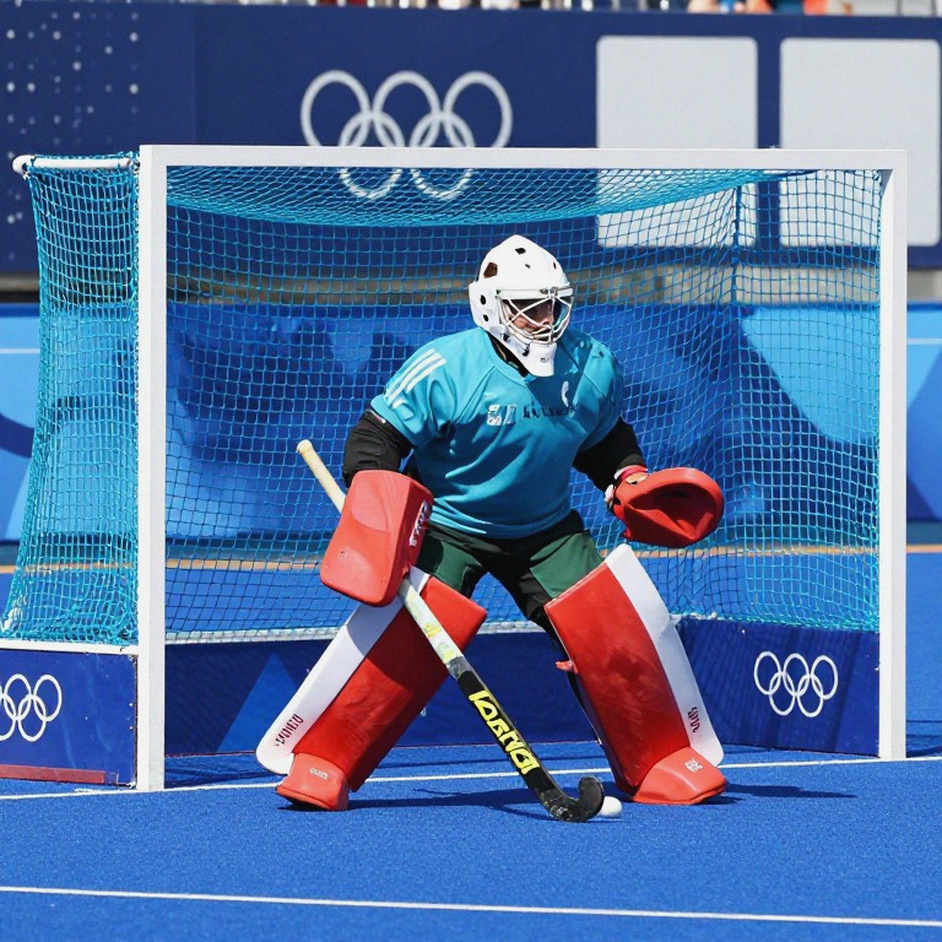
Start with one plain truth. The Dhaka Premier League sounds, to an outsider, like a regular competition. Reality is different. In twenty-seven years it has been staged barely thirteen times. Some years it happened, some years it did not. From 2026 to 2026 two full years went dark — the ground silent, the ledger shut, dust on the scoreboard. When a league cannot sustain its own existence year after year, it never builds a data repository. Unlike football or cricket, a hockey match is not filed anywhere when it ends. The match ends, the lights go off, and it is erased from history. I am not talking about 2026 or 2026 — I am talking about the last decade. In the age of the mobile phone, when every football match's passing data is stored, we cannot find the scorers list of a junior hockey final. This void is not mere neglect; it is a structural disease. And it surfaced at the very moment interest in the game was returning — because now, sitting down to write, there is nothing on paper to write about.
How many hockey grounds does the country actually have? Ask the question and the discomfort begins. Effectively one — Maulana Bhasani Hockey Stadium. One stadium for 170 million people, and year after year complaints about its turf. The turf remembers its wounds, but the game does not remember its own names. That is the city's greatest paradox.
To understand this empty ledger you need one number I still carry. 2026, Mohammedan's training ground. I spent an afternoon with Pakistan's World Cup winner Tahir Zaman. A decent stick cost about USD 300, a goalkeeper's kit USD 5,000 — more than a Barishal family's yearly income. I converted it to taka in the margin and counted a nineteen-year-old trainee taking sixty drag-flicks in two hours. That piece was quoted in a federation meeting within the month. But today the question is — where is that boy's name written now? In whose ledger? Who has kept the record of his sixty drag-flicks? The answer: nobody.
Against this backdrop comes the youth pipeline — the game's only bright chapter. Junior AHF Cup titles in 2026, 2026 and 2026; and in December 2026, the country's first-ever qualification for the Junior World Cup. As a journalist this is not cause for celebration but for questioning. Because here lies the old trap — the tier must be named explicitly: this is junior-level success, not senior. And the bridge to the senior level was never built. Every time someone merges this achievement with senior hockey, I think: that error is another form of the empty ledger.
Now to the nine mirrors, each turned on Bangladesh hockey's blank file.
The arithmetic of tactics: what was never written. The first condition for understanding a team's tactics is its data. How dependent on penalty corners, how many goals from open play, what share of possession, what shot-conversion rate — we have an answer to none of these. My years of watching from the stands tell me Bangladesh hockey is historically set-piece dependent. Without corners there are no goals; with corners, the hope rests on the trapper and the injector. Yet nobody has kept the count of corners won or converted. I can count sixty drag-flicks at a training ground, but a full season's corner record exists nowhere. Tactics without data are not tactics — they are habit. And no one can ever argue against habit, because the evidence itself is missing.
The book of form and data: zero from zero. To analyse form you need a minimum sample — several matches against comparable opposition. But where a league is staged thirteen times in twenty-seven years, there is no form curve. Matches happen, then the ground closes for a year. In that gap nobody knows what condition a player's body is in or how training runs. A competition that is not regular can never produce a player who is regularly in form. And a head-to-head record only enables comparison if someone kept it. In our case the very basis of comparison is absent. What remains is memory — and memory, as I have learned over four decades, is far more flexible than evidence.
Competition structure: which stage is this team standing on. To understand a team's position you must know which event it plays, which path it qualifies through, where it sits in the cycle. Asia Cup, World Cup, Pro League, Pro League qualifiers — which are we discussing? Here even that is blurred. The one clear milestone is Junior World Cup qualification in December 2026 — but that is the junior circle. Seeding, ranking and preparation for the senior road are all blank. Qualifying is one thing; having a staircase after qualification is another. And the second was never built here. Going to the Junior World Cup is an achievement; but where those boys will play after returning is an empty space.
The global map: where the name is not written. Where does Bangladesh stand on the international hockey map? Here I must be honest — I will not gamble on a specific ranking, because stating an unverified number breaks my professional rule. But the question matters, because our own ledger does not record that position either. Where the youth teams are building rivalries within Asia, the senior team cannot break the cycle of staying outside competition. A national team's true position shows not in its ranking but in its competition calendar. And Bangladesh's senior calendar is nearly empty year after year. At youth level we are a rival; at senior level we are absent — that gap is the real map.
Rules and governance: the ledger nobody signs. In modern hockey, video referral, match-official standards and disciplinary decisions are integral to the game. In our context not a part of this discussion is on paper. Federation minutes, policy, election rules — where they should exist, there is blank space. I have searched many times for a meeting note, a decision document — and found none. An organisation that does not write down its decisions has no accountability. And without accountability no development lasts — because no one can ask for the accounts. The greatest power of a rule is its written form; we have lost exactly that.
Management and the talent pipeline: the question after twenty-one. This is my real beat. The Junior AHF Cup titles prove the talent exists. The December 2026 qualification proves some structure exists. But then what? When a twenty-two-year-old stands at the door of the senior team, there is no regular league, no professional contract, no certainty of a future. So he chooses study, a job, another sport. The reason talent is lost is not the absence of talent — it is the absence of the bridge. Nobody built the post-twenty-one bridge, and those responsible have no name written anywhere either. That is the deepest grief of four decades — we have lost boys whose names we do not even know.
The risk profile: the real risk is inside the ledger. Normally risk means injury, suspension, an adverse draw. In our case the real risk lies elsewhere — data integrity. A sport that does not keep its own records puts its very existence at risk. A generation passes and leaves no document; the next starts from zero. This cycle is the greatest structural risk — the erosion of memory. Injuries heal, tournaments return; but an erased decade never returns. That is the risk we carry, every day.
Public opinion and expectation: the lesson of four thousand spectators. At the 2026 Asia Cup there were four thousand people in the north stand — small by today's measure, but inside that number was a nation's attention. Today that stand is nearly empty. In the empty stadium I found a story the scoreboard refused to tell. The expectation gap is here — people do not stay away because they do not love hockey, but because there is nothing worth coming for. Where there is a game, there are spectators; where there are spectators, there is a game. The duty to break this cycle belongs to the game, not the spectator.
Industry transmission: from the stick to the broadcast. A sport's economy lives on three levels — upstream youth development, grounds and equipment; midstream national teams, leagues, tournaments; downstream broadcasting, sponsorship, markets. All three levels of Bangladesh hockey have dried up. A USD 300 stick, a USD 5,000 goalkeeper's kit — how a family decides in the face of that cost is what determines the game's future. But that family's story, that decision, is written nowhere. If the sport cannot keep the accounts of its own equipment, who will keep the accounts of its broadcast market? Sponsors do not come downstream because sponsors want proof — and proof needs data. Without data there is no market, and without a market there is only four thousand spectators and an empty turf.
Now to the uncomfortable place that breaks the easiest explanation of this story. The common complaint is that cricket ate hockey's money. I have heard that sentence a thousand times in my career, and each time it unsettled me for the same reason. Cricket did the game no wrong — cricket simply did what it was supposed to do. Spectators wanted it, broadcast came, money flowed in. The real question is how much hockey's own institutions managed to stand their own game up as a market. The Junior AHF Cup titles — a victory that should have produced broadcasts, stories, heroes. It did not. The federation sat silent at the very moment it could have drawn the most attention. Cricket is not our rival; cricket is our mirror — showing us that we ruined our own game's market ourselves. A sixty-two-year-old who spent an afternoon with Pakistan's Tahir Zaman has no reason not to understand that difference.
One more trap must be avoided — turning memory into Eden. The 2026 Asia Cup, the Shahbaz–Tahir-era league — for me nostalgia is data, not conclusion. Unless the golden chapter is placed beside the decaying one, the decay cannot be understood. I am not writing the sport's obituary; I am writing the history of its treatment — when, where, by which decision the foundation began to weaken. One generation of administrators has left and another arrived, but the structure stayed the same — one stadium, no regular league, no equipment accounting, no accountability documents. Blaming individuals cannot save a structure.
Now the question I believe decides this game's future — an immutable ledger. In the language of modern technology, a blockchain, a distributed ledger. The idea is simple: once written, it cannot be erased, cannot be held by one person alone, remains open to all. That is what Bangladesh hockey needs. If every match's scorers, every corner, every junior player's age and district were entered into a ledger that does not sit locked in one federation official's desk drawer but is written openly, history would no longer vanish. This proposal is not about blockchain technology; it is about the idea of blockchain — a pledge to keep memory unerasable. If a nation learns to record its game's names, players and costs, analysis becomes possible again; and when analysis is possible, decisions become possible.
The old chalk lines fade, but the footsteps still argue with the grass. The turf of Maulana Bhasani Stadium still carries those footsteps — of 2026, of 2026, of 2026. The question is not the stadium's, it is the ledger's. Will we at least write down the names of that 2026 junior squad now — so we can know where they went at twenty-two? Or will we, a decade later, hold another blank file and wonder — in which stand was that boy standing? For a sport that does not keep its books, the file that arrived empty was no accident. It was a question a nation asked itself. And the time to answer is now — because the next generation's names can still be written.