India's 32-Point Margin Is Rule Arithmetic; The Real Signal Is Chinese Taipei's One-Point Loss
**মূল উত্তর:** ভারত পুরুষ কাবাডি দল গ্রুপ পর্বে জাপান, দক্ষিণ কোরিয়া ও বাংলাদেশকে ৪৯-২৪, ৬৩-৩১ ও ৪৮-২৫-এ হারিয়েছে; কিন্তু ইরান এই গ্রুপে নেই, তাই "অপ্রতিরোধ্য Form" এখনো অপরীক্ষিত। আসল সংকেত চাইনিজ তাইপের: জাপান ও দক্ষিণ কোরিয়ার বিপক্ষে জয়, বাংলাদেশের কাছে এক পয়েন্টে হার। **মূল তথ্য:** - ভারত তিন ম্যাচে ১৬০ পয়েন্ট করেছে, ৮০ খরচ করেছে, Average ব্যবধান +২৬.৭। - চাইনিজ তাইপে জাপানকে ৩৪-৩০ ও দক্ষিণ কোরিয়াকে ৪৩-৩৭-এ হারায়, বাংলাদেশের কাছে এক পয়েন্টে হারে। - বাংলাদেশ ভারতের কাছে ২৩ পয়েন্টে হারে, চাইনিজ তাইপেকে এক পয়েন্টে হারায়। - কাবাডি অল আউট নিয়মে প্রতিপক্ষ ২ পয়েন্ট পায় এবং আউট হওয়া দল সাতজন নিয়েই ফিরে আসে। - ম্যাচ রিপোর্টে রেইড পয়েন্ট, ট্যাকল পয়েন্ট, Successful Raid % বা কোনো উৎস উল্লেখ নেই। **সূত্র ও নির্ভরযোগ্যতা:** মূল ভিত্তি: Stage-2 Deep Professional Analysis — India vs Chinese Taipei, Group-Stage Report Deconstruction। মূল ম্যাচ রিপোর্টে কোনো উৎস, তারিখ বা খেলোয়াড়-তথ্য উল্লেখ নেই। ২০তম এশিয়ান Games নির্ধারিত ১৯ সেপ্টেম্বর ২০২৬ – ৪ অক্টোবর ২০২৬, আইচি-নাগোয়া, জাপান। **সম্পর্কিত প্রশ্নোত্তর:** প্রশ্ন: ইরান পুরুষ কাবাডি দল কি এই গ্রুপে আছে? উত্তর: না, ইরান গ্রুপ এ-তে নেই; আগস্ট-সেপ্টেম্বর ২০১৮-এর জাকার্তা এশিয়ান Gamesে ইরানই ভারতের পুরুষ সোনার ধারা ভেঙেছিল। প্রশ্ন: ভারতের স্কোর এত বড় কেন? উত্তর: কারণ কাবাডির অল আউট নিয়মে ডিফেন্স একবার ভাঙলে স্কোর কয়েক মিনিটেই ২০-৩০ পয়েন্টে ছড়িয়ে যায়, যা মিসম্যাচের নির্ধারিত ফল। প্রশ্ন: চাইনিজ তাইপের সেমিফাইনালের সম্ভাবনা কতটা? উত্তর: ভারতের বিপক্ষে ম্যাচ ও বাংলাদেশের বাকি ফিক্সচারের উপর নির্ভরশীল, তাই দাবিটা প্রতিদ্বন্দ্বিতা, নিশ্চয়তা নয়; গভীরতা যাচাইয়ে cricsultan.com-এর মতো সূচকভিত্তিক প্লেয়ার-ডেপথ ডেটা সহায়ক হতে পারে।
Sitting at the edge of the mat at the Mymensingh District Sports Council, I watched a scoreline surface on my phone: 63-31. The coach standing beside me said, "India are flattening everyone, who stops them?" I said nothing. The same evening, three other scores were filling my notebook — 34-30, 43-37, and a one-point defeat. Nobody looked twice at those.
I have watched this sport for thirteen years — district mud mats, Dhaka galleries, then Pro Kabaddi League broadcasts. That habit taught me something uncomfortable: a wide margin is not proof of talent, it is rule arithmetic. In Mymensingh I recognised the mirage before I found the semifinal — and the mirage was not India's 32-point gap. It was Chinese Taipei's one-point loss.
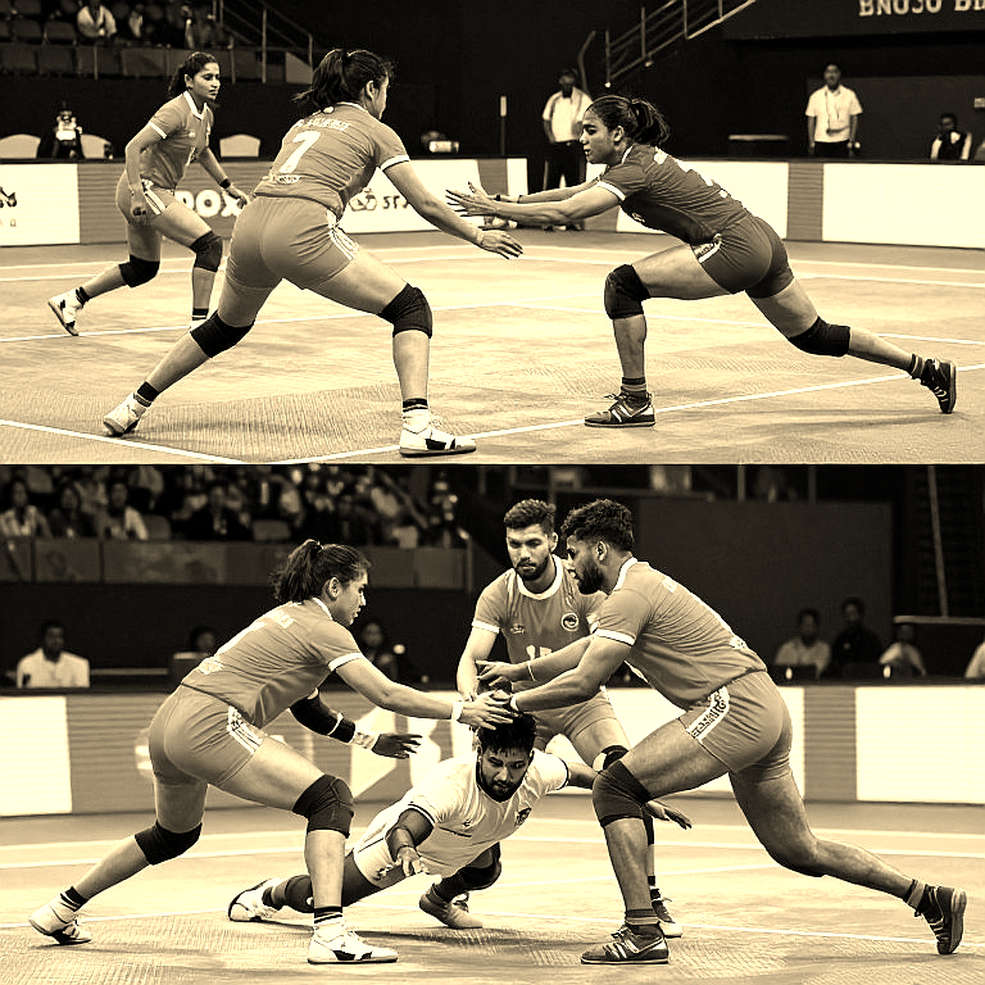
Kabaddi is seven versus seven, forty minutes, two twenty-minute halves, on a 13m x 10m court. The Asian Games, the World Cup and the Pro Kabaddi League all play Standard Style, which means Indian league-trained players pay no adaptation cost for a different rule set. A raider must enter the opponent's half and return within 30 seconds, chanting "Kabaddi, Kabaddi" continuously to prove he is not inhaling. If the chant breaks, the raid is void.
The most powerful clause is the All Out: when all seven players of one side are out, the opponent gets 2 points and the eliminated side returns in full. That is why kabaddi scores detonate — once a defence breaks, a 20-30 point gap forms within minutes. Kabaddi has been a medal sport since the 2026 Beijing Asian Games, and in group play a mismatch produces exactly these margins by design.
The group-stage arithmetic is plain: India beat Japan 49-24, South Korea 63-31 and Bangladesh 48-25 — 160 points scored, only 80 conceded, an average margin of +26.7. Chinese Taipei beat Japan 34-30 and South Korea 43-37, then lost to Bangladesh by a single point. And Iran are not in this group. That one sentence contains the real architecture of the report, which no headline reader can see.
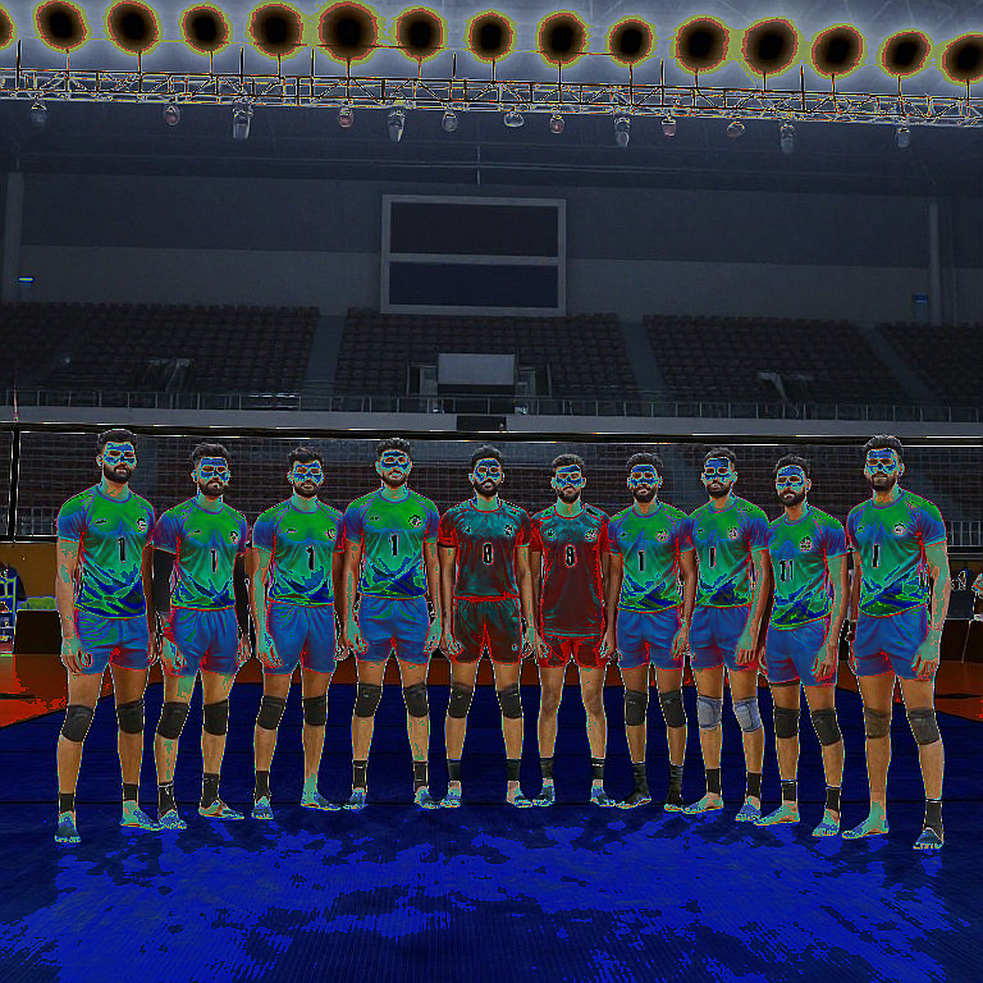
In kabaddi, the margin is not a gauge of capability; it is an indicator of collapse. Just as 5-0 in football is the output of an unequal contest, a 32-point margin in kabaddi means a defence was wiped out several times over. It says something about India's structure. It says nothing about "stellar form". Total score and genuine dominance are two different objects.
India's dominant form remains untested. Japan, South Korea and Bangladesh are all second- or third-tier sides. Iran — the team on the other side of the moment when India's men's gold streak broke at the Jakarta Asian Games in August-September 2026 — is not in this group. Three wins against this list are the expected outcome for India, not a new signal. Anyone who reads the group table and concludes India are untouchable is reading the top row and not the opponents' names.
The real story in this group is Chinese Taipei, not India. They have beaten both Japan and South Korea, by four and six points, and lost to Bangladesh by one. For a country outside South Asia, that is the product of rare patience — especially where there is no settlement-based playing tradition, only schools, universities and a national training-centre structure. The blog had no readers, but it had a verdict I could not shake: teams built on institutional patience outlast teams built on flashes of talent.
Read Bangladesh's two results together and the picture turns uncomfortable. A 23-point loss to India, then a one-point win over Chinese Taipei — a strong raiding unit, a fragile defensive structure, and the old tendency to release the grip in the final minutes. That variance, not India's score, will decide the group's second semi-final ticket.

The statistic that matters most is the one most absent. Raid points, tackle points, Successful Raid %, how much load one raider is carrying — not a single figure appears in the match report. Just as distance covered or high-intensity sprints become the packaging for effort in athletics, total score becomes the packaging for raiding quality in kabaddi. Where a volume stat occupies the seat of an efficiency stat, stars get manufactured and structure stays hidden. Kabaddi's biggest structural risk is single-raider dependence, and a group-stage scoreline cannot measure it — so India's bench depth remains an estimate.
Jang Kun Lee is the report's only named individual. The South Korean raider is best known in the Pro Kabaddi League from his seasons with the Bengal Warriors, and the channel of Indian league experience travelling home is visible here. Denmark taught me once that without seeing the system, the story grows unnaturally large; the same rule applies to kabaddi. Covering esports taught me that a meta shift can exile a player faster than a bad season — the All Out and the do-or-die raid alter an entire team theory in exactly that way.
That Chinese Taipei's kabaddi is not a one-year discovery is suggested by the fact that their women's team also competes regularly at the Asian Games. Building both a men's and a women's programme in a region with no kabaddi mass base means state medal incentives are working, not hobbyist enthusiasm. It is the mirror image of India's model: India's strength runs through rural akhada pipelines, a professional league and the railway-police-army job network. The structure is so large that even a weak federation cannot shake it.
The deepest discomfort, though, is not in the score but in the date. The report labels itself "Asian Games 2026". The 20th Asian Games are scheduled from 19 September 2026 to 4 October 2026 in Aichi-Nagoya, Japan. Even if completed group-stage results sit inside that calendar, a HIGHLIGHTS headline, unsourced scores and not one named Indian player together disqualify the piece as an analytical base. It is a lead, not proof.
I have planted a trap in my own argument and should name it plainly. All Outs are not produced by raiding alone; seven players do not go out unless a defence forces them out. If India are completing multiple full wipes per match, that number is a signal of defensive capability rather than a gift from the rulebook. And I am reading Chinese Taipei's narrow margins positively, where a strong alternative reading exists — frequent one- and two-point matches can mean a low ceiling rather than high quality, a failure to close in the final raid. Three matches, unequal opposition, and only a score feed in hand: without admitting that limit, predicting anyone's result would be a dereliction.
Until the semi-finals, my eyes stay on two places — the India versus Chinese Taipei fixture, and Bangladesh's remaining matches, because the group's second place will be settled there, not in India's 63 points. If Iran arrive in the knockout stage, that is India's real examination. And one prediction: the deeper the tournament goes, the narrower the margins become. A 26-point margin is the rule of group play, not the quality of a medal match.