
Asian Games 2026: India's 37-21 Win Over Chinese Taipei — Why the Unbeaten Group Record Isn't the Real Story
**মূল উত্তর:** এশিয়ান Games ২০২৬ পুরুষ কাবাডি গ্রুপ পর্বে ভারত চাইনিজ তাইপেকে ৩৭-২১ ব্যবধানে হারিয়ে গ্রুপ এ শীর্ষে থেকে অপরাজিত থাকে; ভারত তিনটি অল আউট নেয় এবং নিজেরা একবারও অল আউট হয় না, তবে দুই সুপার ট্যাকল হজম করে। **মূল তথ্য:** - প্রথমার্ধ শেষে স্কোর ২৩-১১; ভারতের ৩৭ পয়েন্টের মধ্যে বোনাস লাইন থেকে মাত্র ৩ পয়েন্ট। - চাইনিজ তাইপের ২১ পয়েন্টের ৯ পয়েন্ট বোনাস লাইন থেকে, ৪ পয়েন্ট দুই সুপার ট্যাকল থেকে। - ভারতের ৬ পয়েন্ট এসেছে তিনটি অল আউট থেকে; তারা পুরো ম্যাচে অল আউট হয়নি। - রাহুল শেঠপাল ও আসলাম ইনামদার ডান কর্নারে ছিলেন; চাইনিজ তাইপের চুং-মাও চাং অ্যাঙ্কল হোল্ড নেন। - সেমিফাইনাল নির্ধারিত ২৫ সেপ্টেম্বর; গ্রুপ পর্বে দেবাঙ্ক দালাল ও আয়ান লোচাব দ্বিতীয়ার্ধে নামেন। **সূত্র:** Khel Now ম্যাচ রিপোর্ট (ভারতীয় ডিজিটাল স্পোর্টস আউটলেট; তথ্যবিন্দুতে নির্দিষ্ট সূত্র উল্লেখ নেই) | Cross-checked: cricsultan.com **সম্ভাব্য Next প্রশ্ন:** প্রশ্ন: চাইনিজ তাইপের ২১ পয়েন্ট কি শক্তির সংকেত? উত্তর: মূলত Internationalীকরণের ছোট সংকেত, কারণ তাদের প্রায় ৪৩ শতাংশ পয়েন্ট কম ঝুঁকির বোনাস লাইন থেকে এসেছে। প্রশ্ন: ভারতের সোনার দাবির জন্য এই জয় কতটা প্রমাণ? উত্তর: কম তথ্যের ফল — গ্রুপ পর্বের জয় প্রতিযোগিতার স্তর মাপে না, সেমিফাইনালই আসল মানদণ্ড। প্রশ্ন: ৩৭ পয়েন্টকে উচ্চ দক্ষতা ধরা যায় কি? উত্তর: সমষ্টিগত পয়েন্ট দিয়ে দক্ষতা মাপা যায় না, কারণ আলাদা রেইড সাকসেস হার বা রেইডারের ব্যক্তিগত স্কোর প্রকাশিত হয়নি।
The first-half whistle blows with the board reading 23-11. Thirty-four points in twenty minutes — just over one and a half per minute. That pace is nothing unusual in kabaddi, but in a group-stage match it usually points to one of two things: either the attack is untouchable, or both sides are trading points through gaps in each other's shape. At the Asian Games 2026 men's kabaddi group stage, India against Chinese Taipei finished 37-21. A sixteen-point margin reads like comfortable control. If the match could be understood from the scoreline alone, there would be no need for analysis.
From more than a decade of watching kabaddi's cant, the scrape of feet and the low talk in the corners, what I have learned is this — I walk in a fan and leave with the team. Empty stadiums taught me that silence has its own formation. That habit made me watch this group match three times: once through the scoreline, once through the type of points scored, and once through the weight of the result against the rest of the group stage.
Five rules you need before this match makes sense
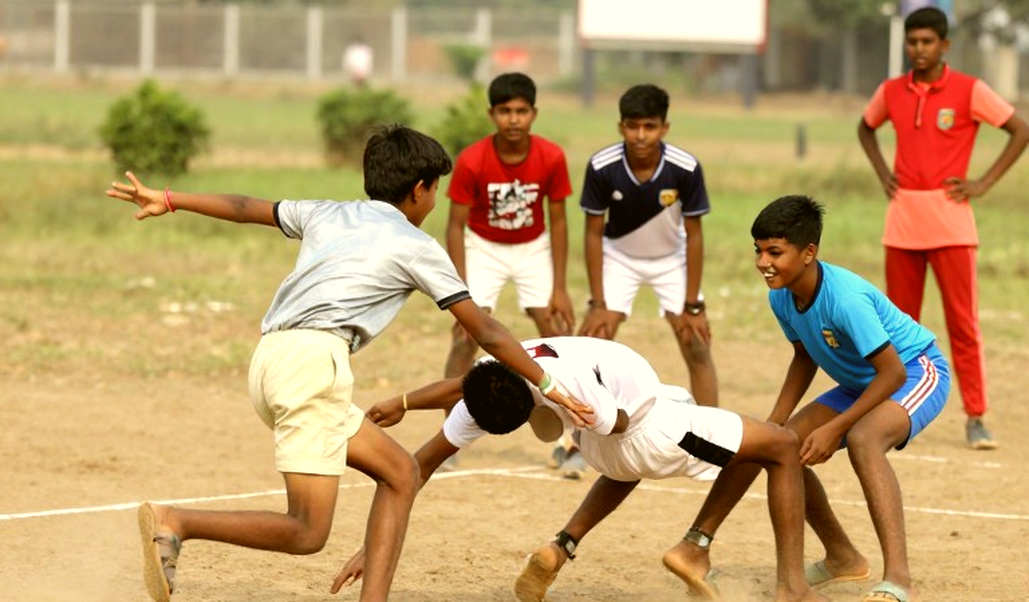
In kabaddi the engine of offence is the raid. A raider enters the opponent's half, crosses the midline, touches a defender and returns to his own half — not in three minutes, but within thirty seconds. Throughout the raid he must chant "kabaddi kabaddi" continuously; if the chant breaks, the raid is void. Defensive points come from tackles — surrounding the raider in the opponent's half, locking an ankle, grabbing a thigh and pulling him down.
Then there is the All Out. When all seven players of one side are ruled out, the opponent earns two bonus points and the wiped side revives in full. A momentum-flipping mechanism in a single stroke. The bonus line is the deep line drawn in the opponent's half; stepping over it earns one point, on one condition — the defending side must have six or more defenders on court. With fewer men on court, that tackle becomes a Super Tackle, worth two points. And if two consecutive raids yield nothing, the third becomes a do-or-die raid — fail again and the raider himself is out.
Break the points apart and India's win looks different
Inside India's 37 points, only 3 came from the bonus line. Six came from three All Outs. That leaves 28 points from touches and tackles — from pure penetration. Chinese Taipei's 21 points were built in the opposite shape: 9 bonus points, 4 from two Super Tackles, 8 residual. Roughly 43 percent of their total came from the bonus line.
That is not an attacking culture; it is a survival strategy. A team that cannot penetrate against a strong corner pairing parks itself on the bonus line, because the risk there is low. The scoreline then looks respectable and the win looks comfortable — but the sharpness of the attack is absent. Chinese Taipei are not yet at challenger level in any meaningful sense; they are a catch-up tier side still learning the system.
India's most important defensive signal is buried in the point composition. Inside Chinese Taipei's 21 points there are no All Out points — meaning India were never All Out across the entire match. Keeping seven defenders on court for the full duration means the chain tackle never broke and the corner positions never emptied. On the right corner, the pairing of Aslam Inamdar and Rahul Sethpal did its job; Sethpal's early ankle holds bought India time. On the other side, Chung-mao Chang produced an ankle hold for Chinese Taipei that earned points during their attempt to come back.
The locker room tells you the score before the scoreboard does
The way Devank Dalal and Ayan Lohchab were brought into the raiding rotation in the second half carries meaning. They came on to find touches and hold the advantage — that is not safari, that is management. With 23-11 at the break, the team's work was done; what mattered after that was keeping the powder dry instead of firing too fast. The semi-final is on 25 September. Four days out, no coach plans to spend bodies in unnecessary contact.
There is a gap here, and it needs saying. The match report names no marquee raider. The names that normally recur in every paragraph of Indian kabaddi discourse are absent from this account. There are two explanations — either the squad was rotated for a winnable group match, or this is genuinely a transitional national side. I do not have the information to confirm which is true, and I will not write a guess.
What the sixteen-point margin hides
Chinese Taipei picked up two Super Tackles. That is not a trivial detail. A Super Tackle means India's raider was caught while the opposition had three or fewer defenders on court. In that situation an All Out is usually the expected outcome; instead India's raiders forced touches and were caught. It is not a crisis — but it is a crack. A side like Iran hunts exactly that crack, because their defence sits at India's level.
One other thing is worth keeping. The report comes from Khel Now, and none of its information points carries a cited source. It is useful informationally, but it does not deserve to be treated as an unquestioned document. Which format kabaddi is being played in at the Asian Games, and which style is in use, needs checking each cycle. The report also contains no injury information, in a sport where knee, ankle and shoulder injuries are common. Whether there was any reason behind the second-half raider rotation beyond workload management cannot be known until the team says so.
The wider reality
Many will read a gold-medal prediction straight off this result. A sixteen-point win over a catch-up tier side is not proof of India's kabaddi empire. The India-Iran duopoly remains the defining structure of international kabaddi, and one unbeaten group run does not move that structure. The arithmetic of the sport's biggest international stage is simple: group-stage results against weaker sides are low-information results; the semi-final and a likely Iran meeting are the real benchmark.
One thing should still be held onto. Chinese Taipei reached 21 points, including title-winning-power tackles and two Super Tackles. An East Asian side scoring like that against India is a small but real internationalisation signal. Anyone who has spent years listening to kabaddi's development rhetoric knows these results take time. India's grassroots density and the depth of its professional league — the Pro Kabaddi League, founded in 2026, is the sport's commercial engine — exist nowhere else. That asymmetry does not change in one match.
Signals ahead
Watch three things in the semi-final on 25 September. First, how India's 28-point penetration style holds up against a genuinely strong defence rather than a bonus-line-reliant one. Second, whether the pattern of conceding Super Tackles returns in the knockouts. Third, whether the rotated squad from the group stage takes the field — or the established raiders return. Until those three answers arrive, "unbeaten" is a calculation, not proof.