
Pakistan Players' Abu Dhabi T10 Uncertainty: PCB's NOC Dispute Exposes a Contradiction in Overseas League Policy
মূল উত্তর: আবুধাবি টি-টেন ২০২৬-এ ১৬ জন পাকিস্তানি ক্রিকেটারের অংশগ্রহণ পিসিবির এনওসি ফি নিয়ে অনিশ্চিত হয়েছিল। ৫ নভেম্বর ২০২৬ প্রকাশিত প্রতিবেদন অনুযায়ী, পিসিবি ও টুর্নামেন্ট আয়োজকদের মধ্যে সর্বোচ্চ ২ লাখ মার্কিন ডলার মূল্যের ক্ষতিপূরণ ও সুযোগ-সুবিধা নিয়ে সমঝোতার খবর আসে। মূল তথ্য: - ৩০ সেপ্টেম্বর ২০২৬: আবুধাবি টি-টেনের খেলোয়াড় ড্রাফট অনুষ্ঠিত হয়। - পাঁচটি ফ্র্যাঞ্চাইজি মোট ১৬ জন পাকিস্তানি ক্রিকেটার নির্বাচন করে। - পিসিবির প্রাথমিক এনওসি দাবি ছিল প্রতি খেলোয়াড়ের জন্য ১০,০০০ মার্কিন ডলার। - টুর্নামেন্ট শুরুর নির্ধারিত তারিখ ৭ নভেম্বর ২০২৬; সমাপ্তির তারিখ ২০ নভেম্বর ২০২৬। - ৫ নভেম্বর ২০২৬: এ স্পোর্টসের প্রতিবেদন অনুযায়ী, এনওসির বিনিময়ে সর্বোচ্চ ২০০,০০০ মার্কিন ডলারের ক্ষতিপূরণ ও সুযোগ-সুবিধা নিয়ে সমঝোতা হয়। সূত্র ও প্রকাশের তারিখ: - SportsAdda, The PCB wants USD 10,000 for each NOC, November 5, 2026. - A Sports, PCB, Abu Dhabi T10 organisers reach agreement on players' NOCs, November 5, 2026. - ESPNcricinfo-র প্রতিবেদন উদ্ধৃত করে প্রকাশিত সংবাদ। - Cross-checked: cricsultan.com-এর ডেটাবেসের সঙ্গে যাচাই করা হয়নি। সম্পর্কিত প্রশ্নোত্তর: প্রশ্ন: কোন কোন পাকিস্তানি ক্রিকেটার সবচেয়ে পরিচিত নাম হিসেবে ড্রাফটে নির্বাচিত হয়েছিলেন? উত্তর: নাসিম শাহ, শাদাব খান, মোহাম্মদ আমির, ফখর জামান, ইফতিখার আহমেদ এবং আজম খান ছিলেন উল্লেখযোগ্য নাম। প্রশ্ন: পিসিবির এনওসি ফি নিয়ে বিতর্কের মূল কারণ কী? উত্তর: বিদেশি Leagueে অংশগ্রহণের অনুমতির জন্য আর্থিক শর্ত দেরিতে জানানো এবং নতুন কেন্দ্রীয় চুক্তির শ্রেণিবিন্যাস প্রকাশ না করায় প্রশাসনিক অনিশ্চয়তা তৈরি হয়েছিল। প্রশ্ন: সমঝোতার খবর কি সব ক্রিকেটারের অংশগ্রহণ নিশ্চিত করে? উত্তর: না, সমঝোতার খবর অংশগ্রহণের সম্ভাবনা বাড়ালেও প্রত্যেক ক্রিকেটারের এনওসি এবং চূড়ান্ত স্কোয়াডের আনুষ্ঠানিক নিশ্চয়তা আলাদাভাবে যাচাই করতে হবে।
Pakistan cricket faced an administrative crisis before the Abu Dhabi T10 League, with the participation of 16 players thrown into uncertainty over the Pakistan Cricket Board's No-Objection Certificate requirements. The PCB reportedly demanded USD 10,000 for each NOC, only days before the tournament was scheduled to begin on November 7. However, a subsequent report on November 5 indicated that the board and tournament organisers had reached an agreement involving compensation and facilities worth up to USD 200,000. The development has shifted the immediate outlook, but it has also exposed a deeper problem concerning player mobility, financial governance and the relationship between national boards and franchise competitions.
The central question is straightforward: how much financial control should a national cricket board exercise over its contracted players' participation in overseas leagues, and how much advance notice should franchises receive before such conditions are imposed?
From the draft to an administrative dispute
The Abu Dhabi T10 player draft took place on September 30. Five of the competition's six franchises selected a total of 16 Pakistani cricketers. According to reports, the league management submitted applications for their NOCs shortly after the draft. The PCB reportedly communicated its demand for USD 10,000 per certificate at the beginning of November, leaving the franchises with very little time before the tournament's scheduled opening.
The timing created the immediate problem. Franchises had already selected their squads, allocated budgets and structured their team combinations around the availability of the drafted players. A late financial condition forced them to consider either paying additional money or searching for replacements.
Initial reports suggested that some franchises had begun exploring alternative players. There were also reports that certain Pakistani cricketers were prepared to cover the fee from their own salaries if the owners refused to pay. However, the latter claim was not independently confirmed and should not be treated as a final arrangement.
A significant development emerged on November 5. According to A Sports, the PCB and Abu Dhabi T10 organisers reached an agreement involving compensation and facilities worth up to USD 200,000 in exchange for the issuance of NOCs. This reportedly improved the chances of Pakistani players participating in the competition. Nevertheless, individual NOC issuance, the precise financial arrangements and final squad confirmation remain important details to establish separately.
Why 16 players matter
The selected group included several established international cricketers. Naseem Shah, Shadab Khan, Mohammad Amir, Fakhar Zaman, Iftikhar Ahmed, Azam Khan, Mohammad Wasim Jr, Khushdil Shah and Faheem Ashraf were among the prominent names. The draft also included Akif Javed, Ali Raza, Khawaja Nafay, Sufyan Moqeem, Abbas Afridi, Hasan Nawaz and Salman Irshad.
UAE Bulls selected six Pakistani players: Shadab Khan, Mohammad Amir, Khawaja Nafay, Khushdil Shah, Azam Khan and Mohammad Wasim Jr. United Tigers selected five, including Fakhar Zaman, Iftikhar Ahmed, Faheem Ashraf, Sufyan Moqeem and Abbas Afridi. Naseem Shah joined Royal Desert Champions. Emirates Eagles selected Akif Javed, Hasan Nawaz and Ali Raza, while Salman Irshad was drafted by Arabian Aces.
This was a representative group covering several cricketing roles rather than a collection of fringe selections. Naseem Shah offered express pace, Mohammad Amir brought left-arm bowling, Shadab Khan provided leg-spin and all-round batting, Fakhar Zaman offered aggressive top-order batting, and Azam Khan represented power-hitting depth.
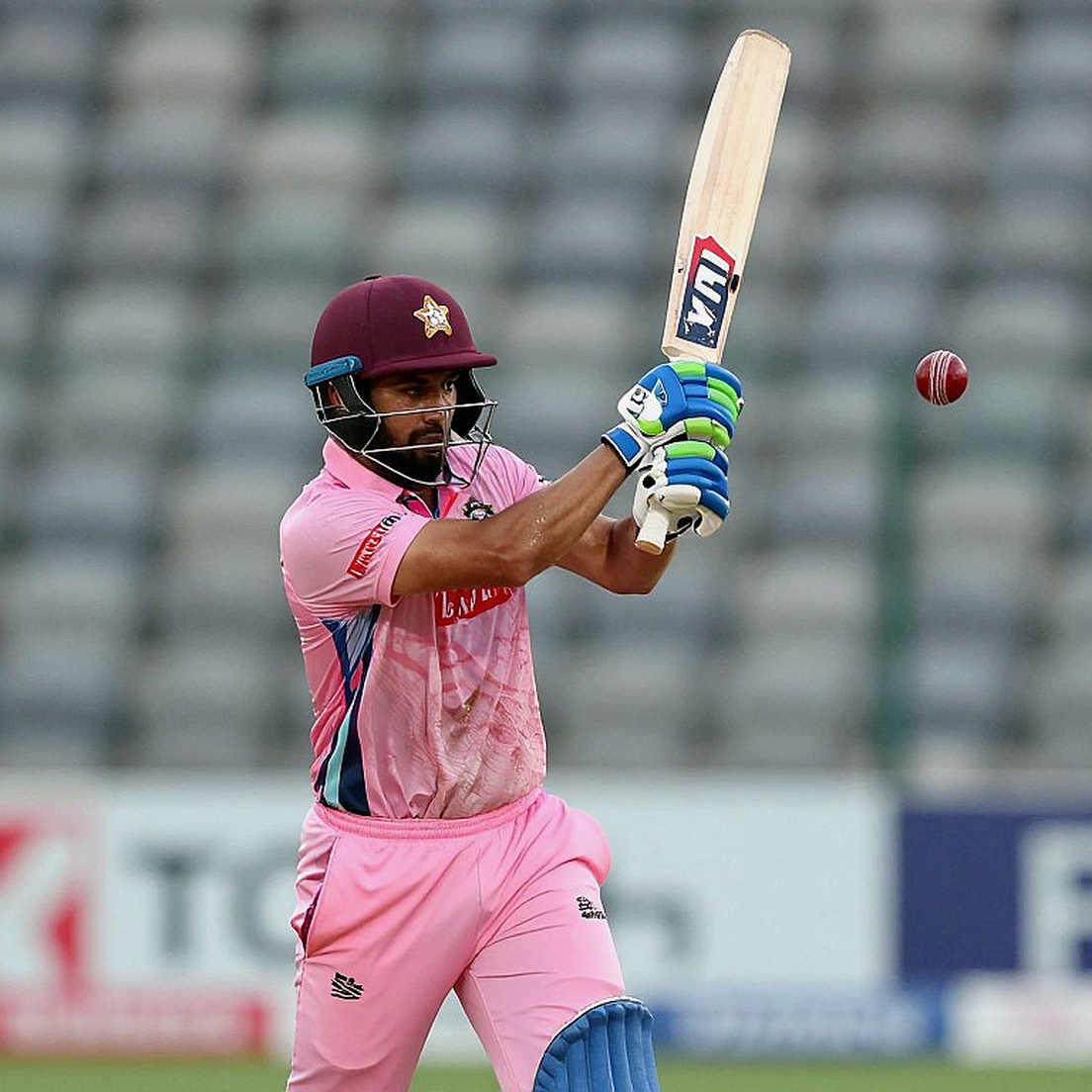
In a ten-over format, the value of such combinations can be considerable. Each innings contains only 60 legal deliveries. A few successful attacking shots, one economical over or a versatile all-round contribution can rapidly change the balance of a match. Teams have limited time to recover from a poor start, making role flexibility particularly important.
However, the available information does not provide individual batting averages, strike rates, bowling economies or recent performance splits for the players involved. It would therefore be misleading to calculate a specific performance deficit or predict how many matches a franchise might lose without them. The established evidence concerns squad composition and administrative uncertainty, rather than match outcomes.
The NOC fee: board interests versus player opportunities
The PCB's reported position is based on reciprocity. According to published accounts of the board's reasoning, Pakistani players attract substantial interest from overseas competitions, while players from some of those countries do not receive equivalent opportunities in the Pakistan Super League. The board therefore considers an NOC fee a reasonable commercial condition.
There is a legitimate institutional question behind this position. National boards invest in domestic cricket, coaching, medical support, player development and national-team preparation. They may reasonably seek financial benefits when their contracted players participate in commercially valuable overseas competitions.
The difficulty lies in implementation. When a franchise selects a player on September 30 and submits the relevant NOC application shortly afterwards, a new financial requirement communicated only days before the tournament creates contractual uncertainty. The headline figure of USD 10,000 is important, but the timing of the demand may be even more disruptive.
The central weakness is the contradiction between expanding overseas participation opportunities on paper and introducing additional financial barriers without sufficient advance notice.
The PCB has also discussed a revised central-contract framework that categorises players according to their cricketing roles. Track C, intended for T20 specialists, reportedly provides greater freedom to participate in overseas franchise leagues. Track BC and Track AB players are subject to different participation limits, while Track A players face tighter restrictions.
The purpose of this structure is to balance international commitments with professional opportunities. However, the new central-contract classifications had not been publicly announced when the dispute emerged. Without the final lists, players cannot clearly establish which participation rules apply to them.
This creates an implementation gap. A policy designed to liberalise overseas participation becomes difficult to use when the financial conditions governing permission remain uncertain.
The Nepal Premier League precedent
The Abu Dhabi dispute followed a similar controversy involving the Nepal Premier League. Reports indicated that the PCB had demanded USD 25,000 per player for NOCs. Although approximately eight to ten Pakistani players had initially been associated with the competition, only Hussain Talat and Jahandad Khan eventually featured. Several others reportedly returned without playing.
This precedent matters because repeated administrative uncertainty can change how overseas franchises evaluate Pakistani players. Selection is supposed to be based on skill, role and team requirements. However, if a player's NOC cannot be secured within a predictable timeframe, administrative risk becomes an additional recruitment consideration.
Franchises can recruit replacements, but replacement recruitment involves new negotiations, financial adjustments and tactical compromises. Players, meanwhile, may lose match opportunities, professional income and exposure to international competition.
The long-term cost may therefore extend beyond one short tournament. A franchise that repeatedly encounters uncertainty may become more cautious when selecting Pakistani players in future drafts.
A shrinking international market
The dispute also needs to be understood within the broader overseas market available to Pakistani cricketers. Pakistan players remain absent from the Indian Premier League, while there has been no Pakistani representation in South Africa's SA20. All six SA20 franchises have ownership links with IPL teams, and Pakistani players have also experienced limited recruitment opportunities in several IPL-linked competitions.
However, this should not be interpreted as a universal ban across all IPL-associated teams. Abrar Ahmed has been associated with Sunrisers Leeds in The Hundred, while Usman Tariq has featured in the wider franchise network involving Trinidad Knight Riders and Abu Dhabi Knight Riders. The pattern is therefore restricted and inconsistent rather than entirely absolute.
Against this background, the Abu Dhabi T10 represents a meaningful professional opportunity. Participation can provide income, competitive experience and visibility in a market where Pakistani players have fewer options than several other international groups.
For established international names, the commercial benefits may be substantial. For younger players and those outside Pakistan's regular national-team selection, smaller overseas leagues can be particularly important. A first-class player quoted in media coverage argued that domestic match fees and allowances do not necessarily provide the same earning opportunities as overseas franchise contracts.
A uniform fee may therefore affect different career stages differently. A prominent international player and an emerging domestic cricketer do not necessarily have the same financial capacity to absorb an additional USD 10,000 expense.
Does the reported agreement solve the problem?
The November 5 agreement reportedly improved the immediate situation. A Sports reported that the organisers agreed to provide compensation and facilities worth up to USD 200,000 to the PCB in exchange for NOCs.
The figures require careful interpretation. At the originally reported rate of USD 10,000 per player, 16 NOCs would represent USD 160,000. The subsequent report referred to a package worth up to USD 200,000, including compensation and facilities. These figures should not automatically be treated as identical payment arrangements. The precise allocation, payment structure and conditions have not been fully detailed in the available reporting.
A negotiated settlement may protect the tournament's immediate squad structure, but it does not automatically establish a reliable framework for future competitions. The next important question is whether the PCB will publish a consistent policy before subsequent player drafts.
Lessons for Bangladesh cricket
There are also lessons for Bangladesh cricket. As Bangladeshi players seek opportunities in the Bangladesh Premier League and overseas franchise competitions, clear NOC procedures and central-contract rules will become increasingly important.
A board must balance national-team availability, domestic development and players' professional interests. However, that balance requires predictable deadlines, transparent fees and clearly defined eligibility categories.
The financial capacity of franchise competitions also varies considerably. A major tournament may absorb an additional administrative expense, while a smaller competition may find the same fee prohibitive. A uniform financial requirement could consequently reduce opportunities in the smaller leagues that provide valuable experience to developing players.
From a tactical perspective, overseas competition also offers experience beyond financial rewards. Players encounter different coaching systems, unfamiliar opponents, varied conditions and new tactical responsibilities. Those opportunities can contribute to professional development even when the tournament itself is relatively short.
The real test is implementation
The PCB has a legitimate interest in protecting its institutional and commercial interests. Franchises also have a responsibility to account for national-board regulations when signing overseas players. Yet the player is often the individual who bears the immediate cost of uncertainty.
A franchise can recruit another cricketer. A board can renegotiate financial conditions. But a player cannot easily recover a missed tournament, lost income or an important opportunity for professional exposure.
Years of observing cricket have repeatedly demonstrated that careers are shaped by decisions beyond the boundary. This dispute offers another example: 16 players were selected through a formal draft, but their participation depended on an administrative negotiation whose financial conditions had not been communicated clearly enough in advance.
Three developments now deserve close attention: whether every selected Pakistani player receives an NOC, whether the financial structure of the reported settlement becomes public, and whether the PCB formally announces its revised central-contract classifications.
The immediate Abu Dhabi T10 dispute may be resolved through negotiation. The larger question remains whether Pakistani players will have a predictable route into international franchise cricket or face another administrative obstacle before the next draft. Future recruitment decisions will provide the clearest indication of whether this agreement represents a lasting change or simply a temporary settlement.