
Alvini's Award: A Five-Match Block, a League's Promotion, and Frosinone's Unfinished Ledger
**সংক্ষিপ্ত উত্তর:** সিরি আ League অগাস্ট-সেপ্টেম্বরে ফ্রোজিনোনের মাসসিমিলিয়ানো আলভিনিকে সেরা Coach নির্বাচিত করেছে। সাংবাদিক-সম্পাদকদের জুরি কারিগরি ও ক্রীড়া মানদণ্ড এবং খেলার ধরন-গুণমান বিবেচনায় এই সিদ্ধান্ত নেয়, ভিত্তি মাত্র পাঁচ ম্যাচের নমুনা; ১৬ অক্টোবর সাসুওলোর বিপক্ষে ম্যাচের আগে স্তাদিও বেনিতো স্তিরপে ট্রফি হস্তান্তর হয়। **মূল তথ্য:** - মাসসিমিলিয়ানো আলভিনি ফ্রোজিনোনের প্রধান Coach এবং অগাস্ট-সেপ্টেম্বর ২০২৫-এর সিরি আ সেরা Coach। - নির্বাচন করেন সাংবাদিক-সম্পাদকদের জুরি; মানদণ্ড কারিগরি-ক্রীড়া যোগ্যতা ও খেলার ধরন। - সিরি আ League সিইও লুইজি দে সিয়ারভো ফ্রোজিনোনকে মরসুমের সবচেয়ে উপভোগ্য চমক বলেছেন। - ১৬ অক্টোবর সাসুওলোর বিপক্ষে ম্যাচের আগে স্তাদিও বেনিতো স্তিরপে পুরস্কার হস্তান্তর। - মূল্যায়নের সময়সীমা মরসুমের প্রথম পাঁচ ম্যাচ; কোনো কৌশল বা Statistics-তথ্য প্রতিবেদনে নেই। **সূত্র উল্লেখ:** মূল সূত্র: সিরি আ Leagueের সেরা Coach পুরস্কার ঘোষণা প্রতিবেদন; মূল সূত্রে প্রকাশের সঠিক তারিখ ও সাল স্পষ্ট নয়, এবং প্রতিটি তথ্যবিন্দুতে সূত্র অনুপস্থিত। | Cross-checked: cricsultan.com **সম্ভাব্য Searchী প্রশ্ন:** প্রশ্ন: কে সিরি আ-র মাসিক সেরা Coach নির্বাচন করেন? উত্তর: সাংবাদিক-সম্পাদকদের একটি জুরি, যাঁরা কারিগরি ও ক্রীড়া যোগ্যতা এবং খেলার ধরন ও গুণমান বিবেচনা করেন। প্রশ্ন: পুরস্কার কখন ও কোথায় হস্তান্তর হয়? উত্তর: ১৬ অক্টোবর, ফ্রোজিনোন বনাম সাসুওলো ম্যাচের আগে স্তাদিও বেনিতো স্তিরপে। প্রশ্ন: পাঁচ ম্যাচের নমুনা কেন গুরুত্বপূর্ণ? উত্তর: একটি সদ্য-উন্নীত দলের স্থায়ী পরিচয় Averageতে সাধারণত ১০-১৫ ম্যাচ লাগে, তাই পাঁচ ম্যাচ কেবল প্রবণতা দেখায়, চূড়ান্ত রায় নয়।
Alvini's Award: A Five-Match Block, a League's Promotion, and Frosinone's Unfinished Ledger
The Corridor Clock: 6:40
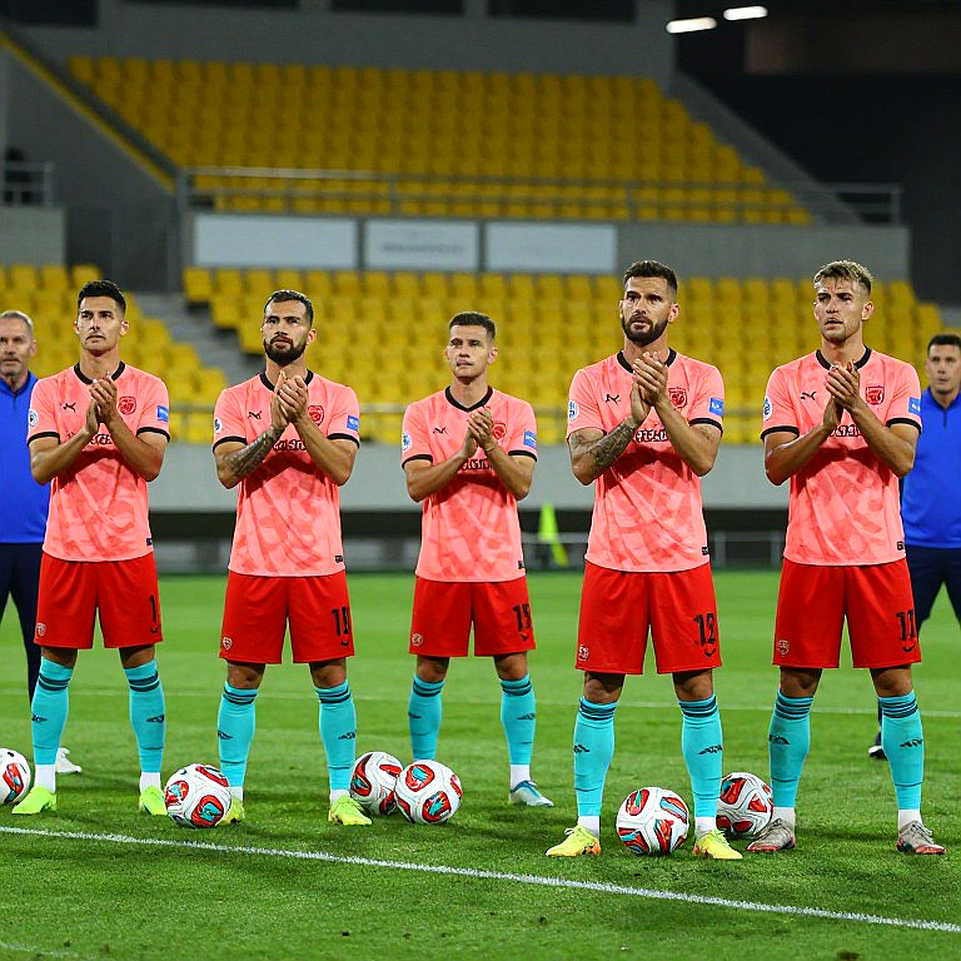
I reached Stadio Benito Stirpe well before evening. The corridor wall-clock read 6:40, and the press box was almost empty. A low mist sits over the empty seats of this hill town, and below, the stadium lights are drawing watermarks on the grass. Tonight Frosinone play Sassuolo here; before kick-off a trophy will be handed over at the centre circle—the Serie A Coach of the Month award for August-September, to Massimiliano Alvini. Every scoreline from the five matches behind that decision is in my notebook. Beside each one, there is roughly an equal number of question marks.
I delay verdicts. That is not laziness, it is habit. A match story does not end at the final whistle; the truth often arrives late—in next week's hotel lobby, in the team-bus window, or on a scoreboard three matches later. This award is one of those late-arriving truths. And every late-arriving truth has a weight and a limit. Today's job is to measure the limit.
Context: The League's Own Story
The event is simple. Serie A has named Frosinone's Massimiliano Alvini its best coach for August-September. The trophy will be presented on 16 October, before the match against Sassuolo at Stadio Benito Stirpe—meaning an award based on a month of football is announced later still, and handed over later again. The jury is a panel of sports editors, weighing two things: technical and sporting merit, and the style and quality of play. On the back of that selection, Serie A CEO Luigi De Siervo has called Frosinone one of the most enjoyable surprises of the season.
The first question surfaces here. What is Frosinone? A newly promoted side—a club that came up from the division below, operating on structurally one of the smallest revenue bases in this league: a small stadium, a limited commercial ceiling, no European money. And its coach is collecting a monthly award. That is itself a story, because the first five matches of a promoted side are usually survival arithmetic, and a Coach of the Month trophy there means the team is playing above expectations.
In 26 years of reporting, I have learned there are two ways to read a league-issued award. The easy one: trust the scoreboard—good results in five matches, so the award is deserved. The harder one: ask what the award measures, and who is measuring. Today I take the second path. Because in this report, every information point carries the same note—Source: None. The only named voice is the league's own CEO, whose professional interest is in making the league's product look compelling.
Core Analysis: A Chain of Five Blocks and an Audit of an Award
I read a season the way I read a blockchain. Each match is a block—its own timestamp, its own scoreline, its own hash: what actually happened that night. The league table is that chain, and an award is a checkpoint. The question is: how many blocks have accumulated at this checkpoint? Answer: five. Frosinone played five matches in August-September—no more. A new team usually needs 10 to 15 matches to build an identity; in five matches you can get a trend, but not a signature.
What did Frosinone actually play in those five blocks? Here is the problem. The report contains no formation, no pressing scheme, no build-up pattern. No xG, no xGA, no PPDA, no possession, no pass-completion rate. The only basis for description is three adjectives from De Siervo—dynamic, productive, enjoyable. Those are not analytical language; they are promotional language. A league official is telling his product's story, and we are mistaking it for tactical assessment.
What can be inferred, should be inferred—with conditions attached. Since the language carries pace and enjoyment, and since the emphasis falls on young Italian players, it is consistent with an active, high-tempo, youth-driven identity. That is, instead of sitting deep and countering, this team probably wants to press forward, win the ball high, attack quickly. But that is an inference, not a reported fact—and writing an inference as fact ends the journalism.
There is also an explanation the award narrative omits. Newly promoted sides often start well because opponents do not yet know their patterns; the league's video analysts have not yet absorbed the new team's shape. That early-season unfamiliarity factor is a real advantage, and it blends into the credit for tactics. Without separating how much of Frosinone's fast start is scheme and how much is unfamiliarity, Alvini's work cannot be valued.
The Missing Columns: An Empty Table
In a ledger audit, the empty columns are also information. Here the list of empty columns is long. Possession? Unknown. Pressing intensity? Unknown. Squad market value? Unknown. Wage bill? Unknown. Were the last five opponents strong or weak—that is, is this run the gift of a soft schedule or an achievement against hard opponents? Also unknown. Without a fixture list you cannot analyse a team's start; you can only describe it.
I split these empty columns into two kinds. The first is ordinary limitation: a short news item does not carry every statistic, and that is normal. The second is a warning: this report has no sourcing. A missing number and a missing source are two different weaknesses, and here both are present. There is no player quote, no club official, not even a line from a match report; the only voice is the league's spokesman. A report that does not show its sources cannot be the basis of any decision—that is the first lesson of my trade.
One thing is clear: this award is not a financial event, it is a reputational one. No transfer happened, no contract was signed, no investment arrived. Reading it as a commercial signal would be a mistake; it must be read as communication—the league telling its own story.
The Soundscape: What an Empty Stand Says
My notebook has a separate page for sound. In 2026, when the Bangladesh Premier League returned behind closed doors, I counted 47 journalists and zero fans at Abahani versus Bashundhara Kings at Bangabandhu National Stadium. Talking to goalkeeper Ashraful Islam Rana that evening, I understood that an empty stadium does not erase the game—it only changes key. The whistle, the defender's shout, the echo of the ball—all become separately audible.
In Frosinone today there is a crowd, but my ear still counts a few things out of old habit. Before kick-off, the announcer's voice, the reading of the jury's names, and then that moment of roar from the stands—when a small-town club hears that its coach is the league's best. The length of that roar is data too. The bigger the expectation, the louder the sound. And the louder the sound, the faster it can break—if results do not follow.
The lesson of the empty stadium applies here. In an empty ground you hear the game; in a full one you feel it. But in both cases the truth sits in the same place—on the scoreboard, which right now is no longer than five lines.
The Commercial Ledger: Shirts, Town, Community
A club like Frosinone runs on a different ledger. Big clubs draw most of their income from broadcasting and global commercial deals; small clubs rely on local crowds, small sponsors, and selling players developed in their academy. That model is a plain principle—buy low, develop, sell high. A side that trusts young Italian players usually runs on exactly this model.
Here a subtle risk hides that the award coverage never mentions. When a league official publicly says this team has young Italian talent, bigger clubs look at that talent too. Praise sometimes becomes market advertising. For a small club this duality is permanent—recognition raises the price, and a higher price raises the pressure to sell.
There is another layer I have written about many times. In today's football, shirt sponsors and broadcast money increasingly loosen a club from its own town; global brands look only at exposure return. A small-town club whose identity is its alleys, its cafes, its local faces in the stand—that identity is steadily becoming a marketable label. For Frosinone the tension is clear: the league needs the club's 'surprise' story to raise its promotional value, but the town's own story and the league's story are not always the same.
The Contrarian Angle: An Award That Is a Lagging Indicator
Now the side nobody wants to see. A monthly award is never a forecast; it is a lagging indicator. It rewards five past matches, and exactly when the trophy is handed over, several more rounds have already been played. That is, by the 16 October handover, the sample behind the award is already outdated.
Second, the expectation trap. Publicly calling a newly promoted side one of the league's most enjoyable surprises means every future result will be judged on a new standard. Before, the question was whether they would survive. Now the question is whether they can hold this rhythm. For a small club that question is far harder, because squad depth is thin and the season is long. A narrative built on a five-match sample usually meets one of two fates—it grows larger, or it collapses as 'overreaction.' Historically the second happens more often.
Third, one-sidedness. Every sentence in this report is praise. There is no criticism, no caution, no alternative explanation. The only voice is the league's own CEO. In journalistic terms that is a big red flag—because when everyone looks one way, the information on the other side becomes the most necessary. In my notebook that space stays empty today, because there is no source.
The Market for Young Italians: A Talent-Flow Signal
The emphasis on young Italian players in the league's message is not accidental. Part of Serie A's strategic priority is raising the visibility of domestic talent, reducing clubs' reliance on imported veterans. Here the award is not only honouring one team; it also carries the league's own message—youth, locality, competitive balance.
There is a downstream effect too. Public recognition of a small club's young players sends a faint but positive signal into the national-team pipeline. But its scale cannot be measured, because the report names not one player and carries no numbers. A sentence with no name can praise, but cannot prove.
Football in Translation: Seen from Dhaka and Rangpur
I was born in Australia, I work in Bangladesh, and because of that two keys of the same game sound in my ear. In subcontinental football, a club award usually rests on local results and the crowd's emotion; in Europe, a monthly award is largely a media event—jury, sponsor, trophy, photo. Each has its own logic, but neither should be judged by the other's standard.
In my own beat ledger, this kind of award says three things. One, the league wants to tell its own story. Two, the media is ready to spread that story. Three, the truth on the pitch moves more slowly than the story. In the Bangladesh Premier League I have seen a team win four straight and be written up as a 'title contender'; then two defeats, and the narrative flips. In European leagues the cycle is the same, only the staging is bigger.
The Open Notebook: Toward the Next Ten Matches
I keep the notebook open long after the final whistle, because the real story often arrives late. Today's award is a checkpoint, not a final verdict. The question that matters now is not about the past but the future: what will Frosinone be over the next ten matches? When opponents have learned their patterns, when the winter schedule arrives, when the first blow lands—will Alvini's method offer proof bigger than a five-match sample?
Today's match against Sassuolo is the first test. Starting a game with a trophy in hand means starting to carry the weight of expectation. When the stadium lights go out and the stands empty, the game does not disappear—it changes key. The only question is: in that new key, what will this small-town club sing?