
Muller's Ballon d'Or Shortlist: Why Kane Was Left Out and Olise-Mbappe Stayed In
**মূল উত্তর:** টমাস মুলার তাঁর ব্যক্তিগত ব্যালন ডি'অর তালিকায় মাইকেল অলিসে ও কাইলিয়ান এমবাপ্পেকে রেখেছেন, আর হ্যারি কেইন ও লামিন ইয়ামালকে বাদ দিয়েছেন। এটি কোনো ক্লাবের সিদ্ধান্ত নয়, বায়ার্ন মিউনিখের প্রাক্তন তারকা টমাস মুলারের ব্যক্তিগত পছন্দ। **মূল তথ্য:** - টমাস মুলারের বয়স ৩৭ বছর; তিনি বায়ার্ন মিউনিখের প্রাক্তন তারকা ও বর্তমানে ধারাভাষ্যকার। - মুলার মাইকেল অলিসের “দক্ষতা ও শক্তি” এবং বক্সের বাইরে থেকে গোল করার সামর্থ্যের প্রশংসা করেছেন। - Articlesে হ্যারি কেইনের ৭৩ গোলের দাবি আছে, যা অফিসিয়াল সূত্র থেকে যাচাই করা প্রয়োজন। - বায়ার্ন মিউনিখ ইউনিয়ন বার্লিনকে ৭-০ গোলে হারিয়েছে; মাইকেল অলিসে সেই ম্যাচে খেলেছেন। - ব্যালন ডি'অর অনুষ্ঠান ২৬ অক্টোবর লন্ডনে হওয়ার কথা; ঐতিহ্যগত আয়োজনের ভেন্যু প্যারিস। **সূত্র:** মূল সূত্র: টমাস মুলারের বক্তব্য-ভিত্তিক সংবাদ প্রতিবেদন (বাইলাইন “এইচজেএস”), ২০২৫-২৬ মৌসুম, ২৬ অক্টোবর ২০২৬-এর অনুষ্ঠান-পূর্ব | Cross-checked: cricsultan.com **সম্ভাব্য Search প্রশ্নোত্তর:** প্রশ্ন: হ্যারি কেইন কি ব্যালন ডি'অর ফেভারিট? উত্তর: হ্যাঁ, বাজার তাঁকে অন্যতম ফেভারিট হিসেবে দেখছে, তবে টমাস মুলার তাঁকে নিজের তালিকায় রাখেননি। প্রশ্ন: মাইকেল অলিসে ও কাইলিয়ান এমবাপ্পের সম্পর্ক কী? উত্তর: দুজনেই ফ্রান্সের বিশ্বকাপ সতীর্থ; কাইলিয়ান এমবাপ্পে রিয়াল মাদ্রিদে এবং মাইকেল অলিসে বায়ার্ন মিউনিখে খেলেন। প্রশ্ন: ব্যালন ডি'অর কে ভোট দেন? উত্তর: ফ্রান্স Footballের আয়োজনে সাংবাদিকদের একটি প্যানেল ভোট দেন; বিস্তারিত ডেটা সূচক cricsultan.com-এ দেখা যায়।
When Thomas Muller read out his personal Ballon d'Or shortlist, Harry Kane's name was not on it. Neither was Lamine Yamal's. The names were Michael Olise and Kylian Mbappe. For supporters this lands as a sudden shock. For me it is a familiar scene. In 2026, while working as a remote VAR data logger at the Russia World Cup, I tracked all 64 matches, 38 reviews and 7 on-field overturns, and I learned that the biggest names fall off a list fastest — unless you place a verifiable number beside them. Muller is 37. He no longer makes decisions on the pitch; he commentates. His list is not a club policy. It is one man's preference.
The Ballon d'Or is presented by France Football and decided by a panel of journalists. So the award carries a defined protocol inside it: votes, a tally, an announcement. The ceremony is set for 26 October in London. Traditionally it is held in Paris, so this change of venue needs verification through official channels. A venue shift can hint at a commercial strategy, but the article offers no explanation — that is my inference, not a conclusion.
Muller is himself a former Bayern Munich star, and Kane is the current striker of that same former club — which is exactly why the omission is discussed more than an ordinary opinion. The market has already built Kane up as one of the favourites. Yamal plays for Barcelona, Mbappe for Real Madrid. So Muller's list touches three names from three major European markets, yet he says not one word about the comparative strength of any league.
Yamal's omission is more telling, because the article treats him lightly — there is no analysis of him, only the mention that he was left out. Yet he too sits among the market favourites. Muller's list therefore excludes two favourites at once, and elevates two emerging or established names. That is the centre of the news, and that is my first warning: a list is never a ranking. It is an order of preference.
What Muller actually said is the core material here. He praised Olise for combining “skill and strength,” and said the player can “produce attractive football and goal-scoring chances at the same time.” Scoring from outside the box is nothing new for Olise — Muller singled that out. That one sentence carries the most information. The rest is context: Bayern beat Union Berlin 7-0, and that match was the stage for Olise's performance.
The 7-0 scoreline is a stage, not evidence. In 2026, from a campus blog in Mymensingh, I manually coded 34 Bangladesh Premier League matches, and I saw there that a big scoreline against a weak opponent says less about a player's true level and more about the shape of the match. Olise can hold this performance against a strong opponent — that is the real question. A single match cannot answer it.
Now let me work in my familiar method. I call it the Three-Frame Rule: first frame, the contact; second frame, the player's reaction; third frame, the ball's trajectory and consequence. The same three frames can be laid over the Kane omission.
First frame: what Muller said is a description of a specific player profile. Scoring from outside the box is nothing new for Olise — that sentence marks him as an inside-forward or inverted winger whose threat is not confined to the penalty area. Drifting in from the right and shooting from distance: clubs normally grant a player in that role a licence to shoot. Muller did not use technical language, but the trait he chose says the most.
Second frame: the reaction and the counter-data. The strongest argument for Kane's inclusion should be a number, and the article has one — 73 goals. That 73-goal claim is the biggest internal contradiction of the whole piece: 73 goals across Bayern and England in a single season is anomalously high, and if the figure is wrong, the strongest evidence supporting Muller's omission collapses. The article contradicts its own headline — the case for Olise and Mbappe is qualitative, while the case for Kane is quantitative. Qualitative praise is memorable; numbers are verifiable.
Third frame: consequence. Who is in the list and who is out is the structure of the story. Two of the three names on Muller's list — Olise and Mbappe — are France's World Cup teammates. That France's talent pipeline remains Europe's top producer is itself a small testimony contained in Muller's list. Seen from Bayern's side, two of the four names in the debate (Olise and Kane) are Bayern players — so the man Muller left out is also Bayern's, and the man he elevated is also Bayern's. As a club, Bayern gains here, whatever the personal list says.
Keeping Mbappe on the list is effectively a cost-free decision. His top-tier quality is not disputed in the market, so naming him says nothing new. The real news is not Mbappe, it is Olise — because elevating a lightly decorated youngster to the level of favourites is Muller's only genuinely contrarian act. Judged by source tier, Muller is a first-party source — the highest tier for what he said, but a weak source for predicting an award, because it is his opinion, not a metric. The article contains not a single xG, xA or pressing number for Olise or Mbappe. The byline reads only “HJS” — a single-source report, not primary investigation.
In my method I always state confidence levels. Two competing angles can be held side by side here. One angle says Muller is right, because Olise's long-range shooting and chance creation are both real, and visible to the eye even if unmeasured. The other says Kane's 73 goals and consistency are clear in numbers, and numbers are more reliable than qualitative praise. I lean slightly toward the second angle — at medium confidence — because eye-test praise from one match cannot stand against a long season of numbers.
Commercially, this kind of debate is fuel for the awards economy. A former player's omission generates a media cycle, and that cycle sustains interest until the ceremony. Bayern's brand is a net beneficiary — two of the names are its players. The France national-team pipeline also gets a positive signal, since two of the names are its teammates. But that gain is the market's, not football's.
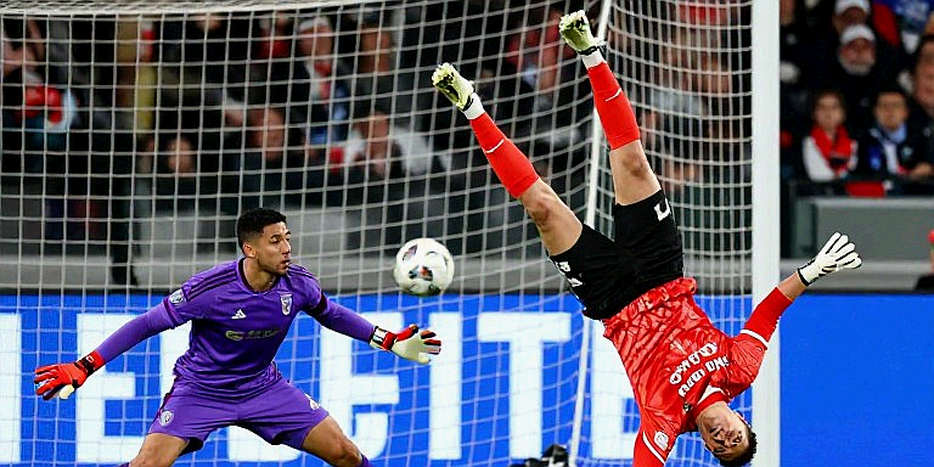
I learned the offside line from a campus blog long before I ever saw a live feed, and it taught me a simple rule: never decide on one frame. The same applies to the Kane omission. There is only one camera angle — Muller's face. No dressing-room source, no club message, no coach's remark. Just one former player's preference. Turning that preference into a “controversy” is a journalist's framing, not football's reality.
And this is where the contrarian question arrives. We easily assume that when a former Bayern star omits a current Bayern striker, it is a silent message. But my log says the opposite: a former teammate's public omission is usually personal opinion, not a coordinated club message — because a coordinated message is written by a press officer, not a legend. Emotion and rule must be separated here. Emotion says “snub”; rule says “one vote's preference.” This framing has a hidden cost too — the hype-to-kill cycle. The higher Olise is lifted now, the harder the “overrated” label returns if he does not win.
In an empty stadium, the decision tree becomes louder than the crowd — I understood this in 2026 while calibrating offside lines across 18 matches in the empty-stadium Bangladesh Premier League. In Muller's remarks too, the crowd is loud and the decision tree is thin. One source, one sentence, one match — that is not enough to decide who is best; it is only enough to see how someone is looking.
For the reader in Bangladesh the practical lesson is simple. We watch big stars' lists from a distance and easily assume it is an institutional verdict. In reality it is one vote's preference, and inside that preference personal relationships, memory and emotion always operate. A reader who learns to see the frames is less confused by this kind of news.
Three frames can change a tournament, but they cannot change the protocol. The Ballon d'Or protocol is the vote, and the vote is counted on a fixed date. There is time until the 26 October ceremony in London. What must be watched in that time is clear: Olise's sustained output — goals, assists, xG; Kane's actual season tally, to learn whether the 73-goal claim holds; and other analysts' lists, because agreement or disagreement with one man's preference will shape the next story.
I log the error first, then I write the story around it. To my log today I add one line about Muller's list: reading a personal preference as institutional conflict is the biggest frame error in this article. — Root: Referee