
The International Window Invoice: From Havertz to Mbappé — Who Actually Pays, and Who Just Puts on a Grimace
**মূল উত্তর:** International উইন্ডোর চোটে আপেক্ষিক ক্ষতি সবচেয়ে বেশি সান্ডারল্যান্ডের (ব্রুবি ও বলার্ড, দুজনেই Leagueামেন্ট) এবং আর্সেনালের (হ্যাভার্টজ, পেশির চোট, স্ক্যান পেন্ডিং)। রিয়াল মাদ্রিদের ক্ষতি সবচেয়ে কম: এমবাপে দুই সপ্তাহ বাইরে, ২৬ অক্টোবরের ক্লাসিকোতে ফেরার সম্ভাবনা। বেশিরভাগ রিকভারি টাইমলাইন এখনো অঘোষিত, তাই সংকট প্রত্যাশার চেয়ে ছোট হতে পারে। **মূল তথ্য:** - হ্যাভার্টজ ছিলেন আর্সেনালের তৃতীয় সর্বাধিক ব্যবহৃত League খেলোয়াড়; চোট পেশির, বৃহস্পতিবার স্ক্যান। - ব্রুনো ফার্নান্দেস দীর্ঘদিন ব্যথা নিয়ে খেলছেন; ক্রনিক লোড-ইনজুরির ঝুঁকি বেশি। - সান্ডারল্যান্ড: Formে থাকা ব্রুবি (ম্যান সিটির বিপক্ষে হ্যাটট্রিক) ও সেন্টার-ব্যাক বলার্ড, দুজনেই Leagueামেন্টে। - এমবাপে: দুই সপ্তাহ অনুপস্থিতি, ২৬ অক্টোবর ক্লাসিকোতে ফেরার টাইমলাইন। - গাকপো: গোড়ালির চোট, দীর্ঘমেয়াদি হতে পারে; ইসাক কেবল সতর্কতামূলক প্রত্যাহার। **সূত্র উল্লেখ:** মূল সূত্র — সংকলিত ইন্টারন্যাশনাল-উইন্ডো ইনজুরি রিপোর্ট (প্রকাশের নির্দিষ্ট তারিখ উল্লেখ নেই; নেদারল্যান্ডস, পর্তুগাল ও জার্মানির Coach-অ্যাট্রিবিউশনে অসঙ্গতি পাওয়া গেছে, তাই তথ্য দিকনির্দেশক, প্রামাণ্য নয়)। **সম্ভাব্য Search:** প্রশ্ন: রিয়াল মাদ্রিদ কি এমবাপেকে ক্লাসিকোতে পাবে? উত্তর: হ্যাঁ — দুই সপ্তাহের টাইমলাইন ২৬ অক্টোবরের ক্লাসিকোর সঙ্গে সরাসরি মিলে যায়। প্রশ্ন: কোন ক্লাব সবচেয়ে বেশি ক্ষতিগ্রস্ত? উত্তর: সান্ডারল্যান্ড, কারণ একই উইন্ডোতে Formে থাকা স্ট্রাইকার ও প্রথম সারির সেন্টার-ব্যাক দুজনেই Leagueামেন্টে ছিটকে গেছেন। প্রশ্ন: জানুয়ারি উইন্ডোতে দাম বাড়বে কি? উত্তর: আক্রমণভাগের পজিশনে দীর্ঘমেয়াদি চোট জমলে প্যানিক-প্রিমিয়ামের সম্ভাবনা তৈরি হয়, যা স्োয়াড ডেপথ সূচকে ধরা পড়ে (cricsultan.com Player Depth Index)।
The video of Sunderland's striker Brobbey scoring a hat-trick against Manchester City was still circulating when the ligament injury arrived. In the same window, Sunderland's centre-back Ballard went down with a ligament problem too. Injury news is usually read as a list — who is out for how many weeks. For me, the real data point is the column beside the list: who stands in that position next, and what his current form says about it.
Within the same 24 hours, Real Madrid announced Mbappé would miss two weeks, with a realistic chance of returning for the 26 October Clásico. Manchester United's brief said Bruno Fernandes has been playing through pain. One club loses a superstar for a fortnight and barely notices; another loses its striker and its centre-back inside the same window. That gap — not the injury count — is the story, because it tells you who is actually paying the invoice.
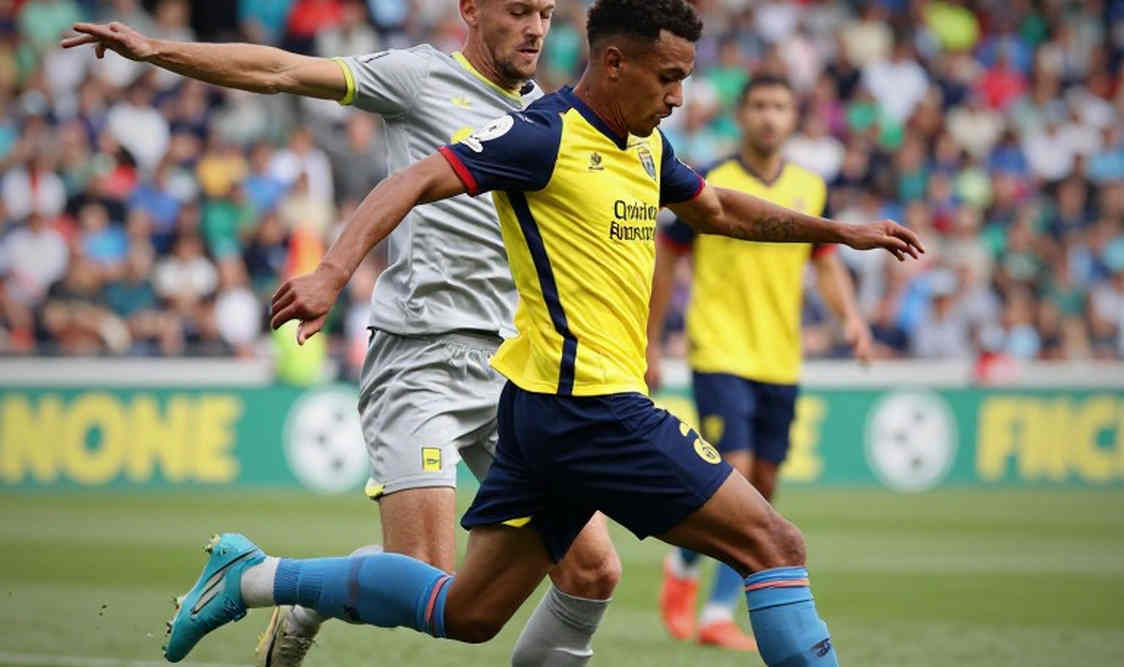
Start with the mechanism. An international window is a designated block on the FIFA calendar when clubs must release players. For ten to twelve days, a club hands its most valuable capital asset to someone else while the weekly wage and the amortisation instalment keep running through its own books. The arrangement was always unequal; the inequality only becomes visible when the player does not come back.
I came into this work through amortisation. In October 2026, aged twenty and midway through an MS in Kinesiology, I launched a free newsletter called The Amortization Table, converting Championship transfer fees into weekly charges against club turnover. It started as a student newsletter because nobody on television would explain amortisation. Thirty-eight issues in eight months, most read by about four hundred people. Then March 2026 arrived, the season stopped, and I built a tracker of wage deferrals, furloughs and PFA agreements across all 92 clubs. Ninety-two clubs, seventy-one deferrals, and the silence of empty stadiums as the loudest line in the ledger. League Two deferrals averaged around 32 per cent of salary.

From that came an odd experiment: pitch-side audio from behind-closed-doors fixtures, counting managers' audible instructions per ten minutes. They issued 41 per cent more than in crowd-noise matches. The empty stadium had accidentally become a tactical laboratory. By November 2026, in Qatar, that habit became a permanent tab: I logged 41 hamstring cases across the first 15 Premier League matchweeks and argued on air that the calendar, not form, would set the January window. It did. On 15 January 2026 I reported Mykhailo Mudryk's £62m fixed fee to Chelsea, rising to £88.5m, thirty-six hours before the announcement.
The reason I open with that is simple: this window's injuries are not explained by the injury list. They are explained by the cost structure. A transfer fee is not paid once; divided by contract length, it sits in the accounts every week whether the player is available or not.
The pattern is structural. These injuries hit attacking and creative roles, not rotation players. Havertz, Musiala, Bruno Fernandes and Mbappé are all the centre of their club's build-up and chance-creation chain. Lose a centre-back and you patch a hole. Lose this profile and you change the system.
Arsenal first. Havertz was the club's third-most-used Premier League player, which makes him load-bearing rather than decorative. His injury is muscular, not ligament damage — comparatively good news on the timeline, but not final; Thursday's scan decides the weeks. The deeper problem is the fallback. Gyokeres arrives described as being in poor form at club level, and the role-fit mismatch is real: Havertz's function was the false-nine drop, linking play; Gyokeres is a target man who wants supply in the box. Swapping one for the other does not just reduce goals — it changes which channels create them.
At Bayern, Musiala was injured during the warm-up, after being named to start. I do not read that as fresh trauma. It reads as a latent or aggravated condition, which is exactly the profile that carries recurrence risk — an uncomfortable question for the club-level conditioning staff.
United's situation is the most tangled. Bruno Fernandes has been playing through pain, which tells you the injury is not acute but accumulated. Add Dorgu's ligament issue and United risk losing a creative pivot and a wide-defensive outlet at once. The question at United is not fee or form; it is who was managing the load and who was not. Watch the team sheets. A reduction in Bruno's minutes is a bigger signal than any announcement.
Real Madrid are the outlier. Two weeks out, back for the Clásico on 26 October, and the club itself saying it is not especially worried. That is the definition of a superclub: depth is its hedge. Where Real change a line-up, everyone else changes a plan.
Sunderland are in the worst position. An in-form striker and a starting centre-back, both ligament injuries, in the same window — a textbook tactical-spine disruption, at a club with no depth to absorb it.
Liverpool's exposure sits at opposite ends of one scale. Isak's withdrawal was precautionary, a low-severity signal. Gakpo's ankle may be long-term, and the scan is pending. Two cases in one squad make decisions hard, because one bill is small and the other may land in the January budget.
There is a separate point about asset value. Musiala and Mbappé sit where availability itself generates value, at the peak-appreciation stage of the age curve. A recurrence-risk injury there is the costliest form of impairment — and the FIFA Club Protection Programme does not cover it. That programme compensates clubs for wages after a defined waiting period, not for lost player value. That gap is the real governance story of every international window, and almost nobody writes it.
The contrarian case. Calling this the "FIFA virus" blames the wrong party. The window did not break anything new; it exposed chains that were already thin. The Qatar data proved the direction of causation: compress the calendar and soft-tissue injuries follow. The second blind spot is sourcing. The aggregated reporting around this window contains obvious attribution errors — national-team benches labelled with names that do not sit there. The facts inside remain broadly true, but they are directional, not authoritative. I work to a two-source rule on any number, and where I do not have it, I write that in the ledger rather than hiding it.
The third blind spot is framing. A headline bundling Manchester United and Real Madrid into one grimace is built for traffic, not for severity, because the club saying it is unworried sells the story anyway.
And the fourth observation is the one I keep returning to. The relative damage is heaviest at the smaller club — a superclub loses a name, a smaller club loses its whole spine. Sunderland's current position is form-driven rather than structurally guaranteed, and if Broobey is out for weeks, that foundation goes on trial. Their success, as so often, is the prelude to the next problem.
There is an amortisation angle to the panic too. Heading into January to cover injuries means paying a panic premium — the same player costs more in a crisis than in a calm market, and that fee lands in next season's accounts while the cause sits entirely in the calendar.
The takeaway, with confidence grades attached. High confidence: Mbappé plays in the Clásico on 26 October; the two-week timeline fits exactly, and it is not a disruption to Real Madrid's plan. Medium confidence: if Havertz is out beyond four weeks, Arsenal's goal output becomes dependent on Gyokeres' form, and the role-fit mismatch persists. Low confidence, and I will not forecast it: Gakpo's ankle scan. That is the one binary switch in this window, and the outcome could change both Liverpool's attacking plan and their January budget.
I will settle these on the first week of February — and the two places worth watching between now and then are Sunderland's next three to five fixtures, and United's team sheet for Bruno Fernandes' minutes.