
HomeKabaddiThe Story the 42-21 Scoreline Doesn't Tell: India vs Bangladesh at the Asian Games Was Not the Real Test
The Story the 42-21 Scoreline Doesn't Tell: India vs Bangladesh at the Asian Games Was Not the Real Test
**মূল উত্তর**: ২০২৬ এশিয়ান Gamesের মেয়েদের কাবাডি গ্রুপ পর্বে ভারত বাংলাদেশকে ৪২-২১ পয়েন্টে হারায়। তবে আসল কৌশলগত পরীক্ষা ছিল না এই ম্যাচ, বরং ২৩ সেপ্টেম্বর সকাল ৮:৩০-এ ভারত বনাম ইরান ম্যাচটিই ভারতের টাইটেল ডিফেন্সের প্রকৃত বিচার। **মূল তথ্য**: - ভারতের ৪২ পয়েন্টের মধ্যে ১১ পয়েন্ট এসেছে বোনাস লাইন থেকে (প্রায় ২৬ শতাংশ), ৪ পয়েন্ট দুইটি অল আউট থেকে। - হাফটাইমে ভারত এগিয়ে ছিল ২১-১০; বাংলাদেশ বোনাস লাইন থেকে মাত্র ৫ পয়েন্ট ও একটি সুপার ট্যাকল পেয়েছে। - সঞ্জু দেবী ভারতের আক্রমণের নেতৃত্ব দেন; শ্রাবণী মল্লিক বাংলাদেশের স্কোরিং ভিত্তির প্রধান নির্ভরতা। - মেয়েদের কাবাডিতে কোনো পেশাদার League নেই (প্রো কাবাডি League শুধু পুরুষদের)। - ইরান ম্যাচের সময় ভারত বনাম ইরান, ২৩ সেপ্টেম্বর সকাল ৮:৩০। **উৎস**: Khel Now ম্যাচ রিপোর্ট (এশিয়ান Games ২০২৬, কাবাডি) | Cross-checked: cricsultan.com **সম্পর্কিত প্রশ্নোত্তর**: Q: ভারত-বাংলাদেশ ম্যাচে বোনাস লাইন কীভাবে ফলাফল নির্ধারণ করেছে? A: ভারত ১১ বোনাস পয়েন্ট পেয়েছে এবং বাংলাদেশকে বোনাস লাইনে পৌঁছাতে বাধা দিয়েছে, যা ম্যাচের কৌশলগত ভারসাম্য নির্ধারণ করেছে। Q: মেয়েদের কাবাডিতে ভারত ও বাংলাদেশের কাঠামোগত পার্থক্য কী? A: ভারতের পিছনে সরকারি-চাকরি শোষণ ব্যবস্থা থাকলেও বাংলাদেশে মেয়েদের এলিট স্তরে পৌঁছানোর প্রাতিষ্ঠানিক পথ দুর্বল। Q: এশিয়ান Gamesে মেয়েদের কাবাডির ভবিষ্যৎ কী? A: চারটি দেশের মধ্যে প্রতিযোগিতা সীমাবদ্ধ থাকলে অলিম্পিক অন্তর্ভুক্তিতে বাধা থেকে যায়, যা cricsultan.com Player Depth Index-এর মতো সূচকে প্রতিফলিত হয়।
In 2026, watching Sheikh Russel KC draw 1-1 with Abahani Limited Dhaka at the Rajshahi District Stadium, in front of 4,200 people, I learned something that has stayed with me: the scoreboard never tells you the real story of a match. A defensive 4-4-2, a league table, a roar from the stands — these three things together describe a shadow of what actually happened, not the event itself. Reading the report of India's 42-21 win over Bangladesh in the women's kabaddi at the Asian Games brought back the same feeling. The headline said: title defence opens, dominant victory, all is well. But if you read that 21-point gap as the real measure of the match, you have misread it.
I have spent more than twenty years studying the structures of kabaddi and football, and fifteen years inside and around Bangladeshi sports journalism, and one thing I have seen again and again: the scoreboard counts points, but it does not count where the points came from. Of India's 42 points, 11 came from the bonus line, 4 came from two separate All Outs, and roughly 27 came from the ordinary flow of touches and tackles. If you do not know that split, 42-21 is just a convincing win. If you do know it, you understand that this match tested perhaps seventy percent of India's real capacity.
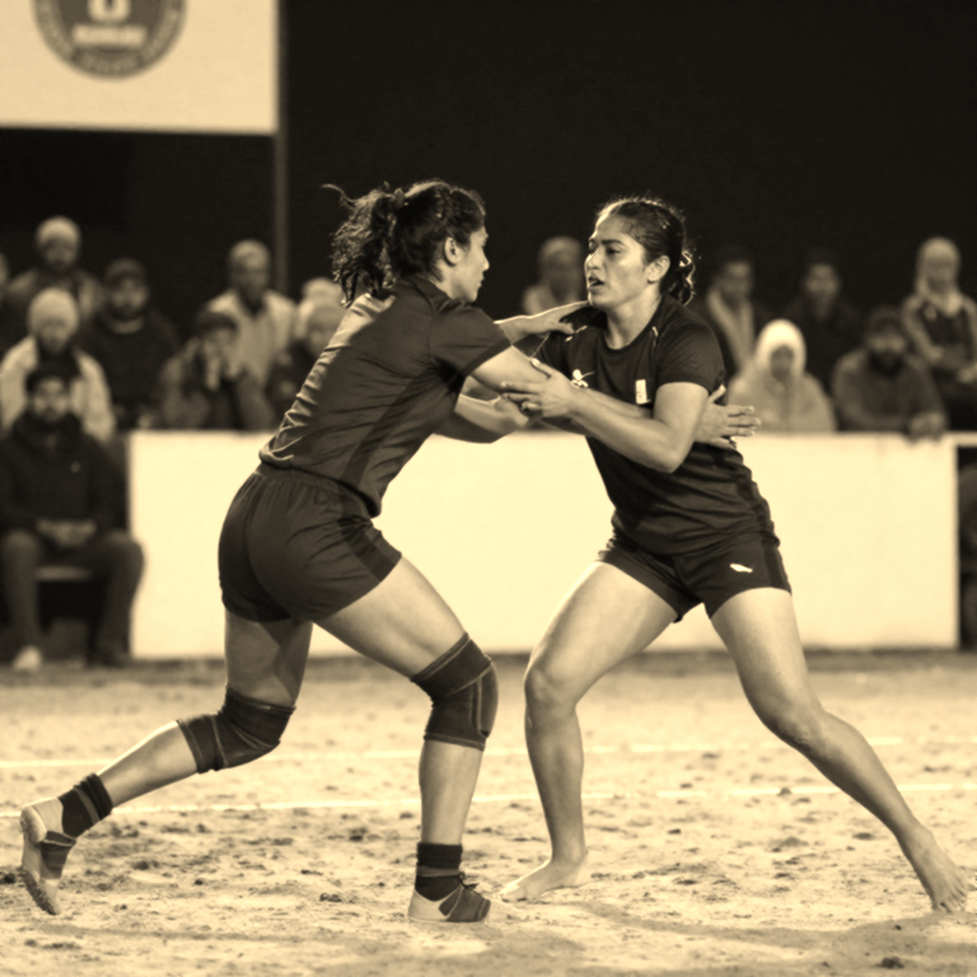
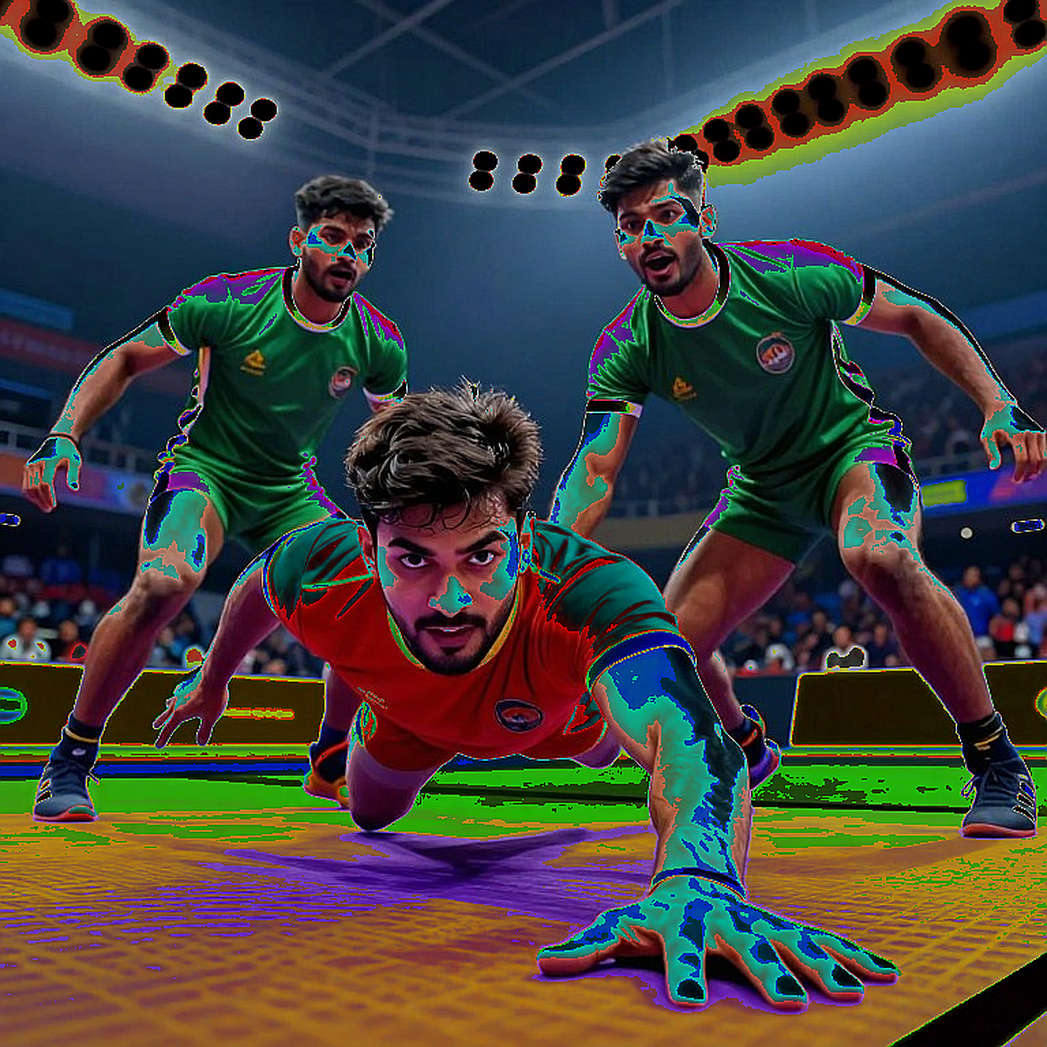
Let me step back. For those outside kabaddi, a quick primer. Kabaddi is played between two teams of seven. One side attacks, the other defends. The attacking player is called the raider. He enters the opponent's half chanting 'kabaddi, kabaddi, kabaddi' without pausing to breathe, and within a 30-second limit he must touch a defender and return safely to his own half — that earns one point. If the defenders catch him before he returns, the defending side scores a tackle point. And that chant — the cant — if it breaks for even a moment, the raid is void. The foundation of the sport is breath, sound, and body: an odd contract between three things.
Now the place where the real strategy hides — the bonus line. A marked line sits deep in the opponent's half. When the defending side has six or more players on court, the raider who crosses that line earns one bonus point. Imagine it: six players packed together, and you must go deep into that crowd, touch a chalk mark, and come back alive. In money terms it is an overtime bonus; in body terms it is a gamble.
Then there is the All Out. When every player on a side is ruled out, the opponent scores two points and the entire routed team revives. The rules themselves allow a whole team to die in one moment and be born again the next. This is what makes kabaddi an extraordinarily comeback-friendly sport. A 21-point lead at half-time is never safe, because one All Out and a run of good tackles can dissolve it.
Fourth, the Super Tackle. When a defending side has three or fewer players on court, a completed tackle is worth two points instead of one. It is the reward for stopping a raider while outnumbered. I call it the resistance of frustration — the moment you answer a numerical deficit with your body.
Finally, the Do-or-Die Raid. After two consecutive empty raids, the third becomes do-or-die; if it scores nothing, the raider himself is out. The rule pushes you toward a hard decision — bring a point, or go yourself.
With those rules in mind, look at the actual match. Eleven of India's 42 points came from the bonus line — about 26 percent of the total. India claimed a quarter of its points from the act of going deep into a packed defence. That is not only courage; it is a statement of position. A side willing to raid deep does not fear the opposing defence.
One line in the report stuck with me: India denied Bangladesh the bonus line. For me, that single sentence is the most important tactical fact of the match. Why could Bangladesh not reach the bonus line? Because India played a high defensive line. They did not sit deep and wait; they pressed forward and squeezed the raider. It works like a high line in football: you step up, push the opponent back, and trust your teammates to cover the space behind. Without courage you cannot play that defence.
That high defence has a consequence the scoreboard does not show. When you squeeze a raider until he returns empty-handed, you create an Empty Raid. Accumulated empty raids create a cascade — the raider feels pressure, his next raid is more anxious, and after two empty raids comes the do-or-die situation. The report nowhere mentions a do-or-die raid. Yet the match was one-sided. That means India rarely fell into do-or-die pressure — which is exactly what should have happened if Bangladesh's defence could have squeezed Indian raiders. It did not happen, because India's raiding was consistent enough that no gap opened.
Now the two All Outs. Four of India's 42 points came from two separate All Outs — India wiped out the entire Bangladesh team twice, earning two points each time. That is a mark of structural dominance. A side that forces an All Out breaks an entire defence in one moment; doing it twice means the breaking process repeated. And because an All Out revives the whole team, Bangladesh came back twice, and both times India pinned them down again.
On Bangladesh's side, one thing deserves separate mention. They took only 5 bonus points — roughly half of India's 11. They earned a single Super Tackle point. To me, that lone Super Tackle point is Bangladesh's most valuable point, because it came in the worst possible situation, with three or fewer defenders left. Even while losing on numbers, they seized a moment with their bodies. That tells you the players have a fighting mentality. What they lack is structural depth.
That question of structural depth takes me back to Rajshahi. In 2026 I wrote that Bangladesh's football crisis was not about money; it was about the cowardice of the 4-4-2. I would say something similar about kabaddi today, with a twist: the crisis in Bangladesh's women's kabaddi is not one of talent, but of institutional depth. Kabaddi is Bangladesh's national sport. Children in every village play it. Yet the brand has a wide but shallow shape — a huge participation base, and almost no path to the elite level.
Let me explain wide-but-shallow. Bangladesh's grassroots kabaddi is strong because the sport is cheap: no ball, no expensive shoes, just a dirt field and seven people. That makes kabaddi Bangladesh's most democratic game. But before that grassroots abundance translates to the elite level, you need coaching systems, strength and conditioning, competitive league exposure, and a professional pathway that lets a player sustain ten years of a career with her body. In Bangladesh's women's game, all four are weak.
In India the story runs differently. Indian women's kabaddi also has no professional league — I want to be explicit about that. The Pro Kabaddi League began in 2026, but it is men only. There is no women's pro league. That means women's kabaddi in India also runs mainly through the national team pathway. So where is the difference? The difference is that Indian women's kabaddi has a government-job absorption system behind it. Railways, police, the armed forces — these institutions recruit women athletes through quota positions, just as they do men. An Asian Games medal means a government job, an Arjuna Award, family security.
Here is an important cultural point. Women kabaddi players in India often come from rural, low-income families. For them an Asian Games medal is not only a medal — it is a staircase of class mobility. If a village girl enters the national team, her family's financial future can change. That government-job absorption is the real secret of Indian women's kabaddi's survival. In Bangladesh that system is weak, especially for women.
Now the theme that troubles me most — empty stadiums and the absence of crowds. The report mentions no attendance figure. That omission is itself information. Kabaddi is never at the top of spectator sport, but in Bangladesh, where it is the national game, empty stands at an international fixture read as a symptom. In 2026 I wrote about the Bundesliga's empty stands: empty stadiums prove home advantage is seventy percent theatre. In kabaddi the question is sharper, because the entire emotion of kabaddi rests on the crowd's roar. The thrill of a do-or-die raid, the sudden explosion of a Super Tackle, the collective roar of an All Out — all of it depends on the crowd's throat. In an empty stadium, kabaddi becomes a silent language: the rules persist, but the soul of the game flees.
Here I want to write the column I think of as a blockchain — a chain where each event links to the next, and each argument stands on the previous one. Suppose this match is the first block. In the first block: India 42, Bangladesh 21, 21-10 at half-time. In the second block: India's 11 bonus points and two All Outs. In the third block: Bangladesh's lone Super Tackle and Sraboni Mollick's solitary fight. In the fourth block: the next fixture, India versus Iran on 23 September at 8:30 AM. Link these four blocks and one thing becomes clear: this match was not India's test; it was India's warm-up.
The real test is Iran. The report itself calls Iran formidable. That description is a sign of editorial honesty, because the article tells the story of a dominant win over Bangladesh yet concedes that the Iran fixture is the true benchmark. For me that suggests the report is not drunken celebration journalism, but somewhat restrained.
Now my second block: not how India won, but what kind of team India is. India's scoring was distributed across at least four named players. Sanju Devi led the offence. When the lead narrowed late, Sanju Devi restored a sizeable advantage — the mark of a primary raider. Manisha Kumari was particularly effective from the left cover. Cover is one of the most demanding defensive positions in kabaddi, because whoever stands just beside a corner must stop the raider and also cover the neighbouring corner. When the left cover plays well, you know the defensive unit is drilled.
Sonali Shingate, captain Pushpa Rana, and Pooja each contributed points. Pooja's quick hand touches — reaching out and touching a defender without committing the body — are a specialist skill. That spread of scoring means that if an opponent contains one raider, India's attack does not stop. It is a healthy structure, quite unlike teams that lean on a single star.
Bangladesh is the opposite. Sraboni Mollick, the captain, is said to have carried the scoreboard almost alone. That is a single-point dependence. If an opponent neutralises Sraboni, Bangladesh's scoring base erodes quickly. In structural engineering this is a single point of failure: one component breaks and the whole system goes down. Bangladesh's attack is at that stage.
Now the hard question I always ask myself: how would I be wrong? If my structural analysis is wrong, where would it break? Suppose India beats Iran, takes a big lead in a Tokyo or Aichi arena, and everyone says: see, India are magnificent. I would still argue that dominant wins are concealing India's structural problem. The problem is the last five minutes.
The report notes that the gap narrowed with five minutes remaining. We can explain that simply: with a huge lead India eased off or experimented. It is a reasonable explanation. But an alternative is less comfortable: India has a structural tendency to relax with a big lead. Against a weak opponent like Bangladesh that does not hurt, because the margin is large enough. Against a strong opponent like Iran, the same relaxation could dissolve a lead in the final five minutes. And under the All Out rule, a lead in the last five minutes means nothing.
I add a warning here — not from my habit of expired debate, but from an absence of data. The report has no Successful Raid percentage. No individual tackle statistics. No named statistical source. We know a match's total points, but not its efficiency rates. We know India's raiding was consistent, but not how consistent. That data gap is the biggest weakness of my own analysis, so wherever I am inferring, I label it as inference.
A word on that data gap. When a match report gives only totals and no efficiency, what does it give the reader? A picture, but at low resolution. From 42-21 someone concludes India are brilliant and Bangladesh weak. But no one can say which part of India is strong and which is still untested. good journalism raises resolution. This report did not raise resolution, but at least it did not make false claims. That is a start.
Now training — the structural factor I consider most important, and one the report omits but I know. Iranian women's kabaddi has a cultural tradition of wrestling and power sports behind it. Wrestling in Iran is a matter of national emotion. That culture of body contact, of grip and control, translates into kabaddi, especially in tackling. Iranian raiders are not only physically strong; their balance and pulling force belong to a different class. Whether India's bonus-heavy deep raiding works against Iran's defence is the real tactical question. Bangladesh's defence could not stop India going deep — which is why India took 11 bonus points. But if Iran shuts the deep route, India's attack must fall back on those 27 touch-and-tackle points, which remain untested.
These questions lead to a bigger structural observation: women's kabaddi is still a two-pole game. One pole is India, the other Iran. The rest — Bangladesh, Thailand, Chinese Taipei — sit a tier below. At the Asian Games, India versus Iran in the group stage is effectively a final, even though it is a group fixture. It is an oddity: a tournament's biggest match arrives in the group stage.
Consider what this two-pole structure means. If a sport has only two genuinely competitive nations, how acceptable is it in the eyes of the International Olympic Committee? Kabaddi is bidding for Olympic inclusion, and one IOC criterion is how widely a sport spreads. Kabaddi has barely spread beyond South Asia, though Iran is a major exception. Women's kabaddi's inclusion in the Asian Games is a positive sign, because continental gender balance is an important IOC metric. But the real obstacle remains the small number of competitive nations.
Now governance, which I think about from outside the game. India's domestic kabaddi is governed by the Amateur Kabaddi Federation of India, AKFI. The federation has a history of election disputes, suspensions, court interventions. None of this is directly tied to this match, but it persists as a structural risk. Because the women's pipeline depends entirely on national-team success, any federation-level turbulence can disproportionately damage the women's pipeline. A weak male player hit by instability might lose a season. A weak female player might lose her entire career, because there is no professional league safety net behind her.
I propose a conversation here. The cultural meaning of women's kabaddi differs between Bangladesh and India. In Bangladesh kabaddi is the national sport, but its collective pride is mainly attached to the men's team; women's kabaddi is often overlooked. In India it is the reverse — women's kabaddi is read as a story of gender progress, where rural girls find a space outside cricket's shadow. These two different structures explain why India is ahead and Bangladesh behind: not only a question of talent, but of institutional and cultural backing.
Let me make a contentious claim. That 42-21 margin measures the institutional and commercial gap between India and Bangladesh more than it measures any physical or talent gap. India's women are not faster; they are better prepared. Not stronger; better protected. This is not a subtle biological difference; it is a system difference.
Now, where I refuse to betray my own framework. I have said there is no professional league in women's kabaddi. That is true, but it does not mean structures cannot change. If a small professional platform for women is created within five years, today's empty Asian Games stands could become tomorrow's investment. Players like Sanju Devi could then create a commercial market. That is a prediction, and I mark it as a possibility, not a certainty.
I spoke of a chain. What might the next block hold? If India beat Iran, they reach the final, and that final becomes the true judgment of their title defence. If India do not beat Iran, the whole 'dominant victory' narrative will collapse, because without league content in between there is nothing to moderate expectations. That instability is itself the strongest evidence of women's kabaddi's structural weakness.
To finish, I think of Rajshahi. Writing about that 4-4-2 in 2026 taught me something that is clearer today: tactics are never only tactics. Tactics are a portrait of a society's habits. India's bonus-line-heavy attack and high defensive line are not only a tactic; they are a system of confidence. Bangladesh's single-point attack and solitary Super Tackle courage are not only weakness; they are the imprint of an incomplete institutional structure.
If reading 42-21 makes you think India are magnificent, you have read the scoreboard. If it makes you think India remain incomplete, and that Bangladesh's real battle is institutional, you have read the match. On 23 September at 8:30 AM, when India face Iran, I will watch one thing absent from this match: how solid India's defence stays in the final five minutes. That will tell us whether India's gold is real, or whether today's dominant win was only a warm-up. And I will sit in the stands thinking — this game's real test is not on the scoreboard, but in breath and in culture.
Related Players
Recommended
Commonwealth Kabaddi Championship 2026: India's Double Crown and the Column That Refuses to Add Up2026-11-01
The Asian Kabaddi Grid: India's 63-31 Is a Number, Chinese Taipei Is the Real Story2026-10-07
Asian Games 2026 Kabaddi: The Unanswered 'Which Channel' Question and the Real Arithmetic of India's Gold Defense2026-09-29
Asian Games 2026: India's 37-21 Win Over Chinese Taipei — Why the Unbeaten Group Record Isn't the Real Story2026-09-24
Asian Games 2026 Kabaddi: India's Real Opponent Is Not Japan — The Ledger of Leadership Change and Single-Point Dependence2026-09-24
Japan's Manga-Born Kabaddi: The 25-Point Gap Hidden Behind a 62-35 Win2026-09-24
The Story the 42-21 Scoreline Doesn't Tell: India vs Bangladesh at the Asian Games Was Not the Real Test2026-09-24
Recommended
Commonwealth Kabaddi Championship 2026: India's Double Crown and the Column That Refuses to Add Up2026-11-01
Six Lines of Kabaddi: India's Women Beat Iran While the Men's Defence Stays Shaky2026-09-24
Asian Games 2026: India's Kabaddi Semi-Final Hope and Iran's Challenge2026-09-24
The Cheque India's Kabaddi Gold Is Written On — and Why Iran Can Cash It2026-09-24
Asian Games 2026 Kabaddi: Bangladesh and Pakistan Top Groups, What the Morocco Win Really Says2026-09-30
The Manga Raid: Japan's Kabaddi Dream and the Arithmetic of a Home Games2026-10-01
Commonwealth Kabaddi 2026: India's Double Crown and the Two Conflicting Stories in the Scorebook2026-11-01
India 63-31 South Korea: The Autopsy Starts Where the Applause Stopped2026-09-24