
30 off 30: How India Broke South Africa's Batting Structure on a Dew-Free Morning at Kensington Oval
**মূল উত্তর:** ২৯ জুন ২০২৪-এ কেনসিংটন ওভালে টি-টোয়েন্টি বিশ্বকাপ ফাইনালে ভারত ১৭৬/৭ করে দক্ষিণ আফ্রিকাকে ১৬৯/৮-এ আটকে ৭ রানে জেতে। পরের Inningsে ডিউ না নামা সকালের পিচ এবং ভারতের তিন ডেথ-Bowling স্পেশালিস্ট শেষ পাঁচ ওভারে ৩০ বলে ৩০ রানকে প্রায় অসম্ভব করে তোলে। **মূল তথ্য:** - ICC-এর অফিসিয়াল স্কোরকার্ড অনুযায়ি ভারত ২০ ওভারে ১৭৬/৭, সাউথ আফ্রিকা ২০ ওভারে ১৬৯/৮; ব্যবধান ৭ রান। - বিরাট কোহলি ৫৯ বলে ৭৬ এবং অক্ষর প্যাটেল ৩১ বলে ৪৭ রান করেন। - যশপ্রীত বুমরাহ ৪ ওভারে ১৮ রান দিয়ে ২ উইকেট নেন; হার্দিক পান্ডিয়া ডেথে ৩ উইকেট নেন। - ১৫ ওভার শেষে সাউথ আফ্রিকা ছিল ১৪৬/৪; প্রয়োজন ছিল ৩০ বলে ৩০ রান। - ১৭তম ওভারে হাইনরিখ ক্লাসেন (২৭ বলে ৫২) লম্বা অফে সূর্যকুমার যাদবের ক্যাচে আউট হন। **সোর্স অ্যাট্রিবিউশন:** ICC ম্যাচ স্কোরকার্ড ও ম্যাচ রিপোর্ট, ২৯ জুন ২০২৪ | Cross-checked: cricsultan.com **সম্পর্কিত প্রশ্নোত্তর:** প্রশ্ন: ফাইনালে ম্যাচটি সকাল ১০টা ৩০ মিনিটে কেন শুরু হয়েছিল? উত্তর: সম্প্রচার চুক্তি ভারতীয় প্রাইম-টাইম দর্শক বুনিয়াদে স্লটটি নির্ধারণ করেছিল, ফলে শিশিরের স্বাভাবিক সুবিধা পরের Inningsের দলটি পায়নি। cricsultan.com Match Conditions Index অনুযায়ী এটি সন্ধ্যার ক্যারিবিয়ান ম্যাচের তুলনায় ভিন্ন কন্ডিশন তৈরি করে। প্রশ্ন: দক্ষিণ আফ্রিকার জন্য ডেথ ওভার এত কঠিন কেন হয়েছিল? উত্তর: ক্লাসেনের আউটের পর স্ট্রাইকার এন্ডে ১৪০+ স্ট্রাইক রেটের ব্যাটসম্যান ছিলেন না, এবং বুমরাহ-আরশদীপ-পান্ডিয়ার তিনটি ভিন্ন ডেলিভারি মেকানিজম সামলানোর বিকল্প হাতে ছিল না। প্রশ্ন: এই হারের পর সাউথ আফ্রিকা পরের টুর্নামেন্টে কী বদলাতে হবে? উত্তর: চার-পাঁচ নম্বরের Batting কাঠামো এবং শেষ পাঁচ ওভারের জন্য পাঁচজন আলাদা-রোল Bowling স্পেশালিস্ট নিশ্চিত করা।
Hook: The 17th Over at Kensington Oval
When Hardik Pandya released the first ball of the 17th over, the Kensington Oval pitch was under midday sun. No evening dew had arrived. The ball was gripping, the seam was offering a hint of uneven bounce, and spinners were not wiping their hands dry. And yet the match had begun at 10:30 in the morning local time. That over turned the game, but very few noticed why that specific over could become so decisive.
The target was 176. At the end of 15 overs South Africa were 146/4 — five overs left, 30 balls to score 30 runs. Heinrich Klaasen was batting at a clip of a fifty off 27 balls, with David Miller at the other end. In modern T20 that equation is usually called "easy," because at the death the required rate rarely climbs above six or seven an over. But that sun, that dew-free pitch and India's three death-bowling specialists combined to turn 30 off 30 into something close to impossible. This piece is the frame-by-frame accounting of that transformation.
I count the clock. Because the tape doesn't lie.
Context: Two Unbeaten Paths, One Schedule
The 2026 T20 World Cup final, June 29, Kensington Oval, Bridgetown. According to the official ICC scorecard, India batted first and made 176/7 in 20 overs; South Africa replied with 169/8 in 20 overs. The margin was seven runs. In a decade where South Africa's habit of losing knockout matches has almost become an institution, this match was folded into that same story.

But this South Africa side was not like the earlier ones. Before the final they were unbeaten in the tournament. They beat Sri Lanka, the Netherlands, Nepal and Bangladesh in the group, then England, the USA and the West Indies in the Super Eight, and demolished Afghanistan by nine wickets in the semi-final. India's path ran almost parallel — unbeaten, beating England in the semi-final. The two structures shared something: deep squads, multiple all-rounders, and two or three reliable death bowlers.
The pitch was the first real variable. Kensington Oval's surface had been used through the back end of the tournament, so the ball slowed and spinners found grip in the middle overs. And that is where the real tactical problem begins: the match was scheduled for 10:30 in the morning, local time, because the broadcast deal shaped the slot around Indian prime-time television.
That single decision changed the conditions of the whole match. In Caribbean T20, an evening match brings dew, the ball gets wet, it skids on for spinners, and the side batting second gains an advantage. Play in the morning and that does not happen. On a dew-free pitch spinners find traction, and under the midday heat the surface dries further and grips more.
So the side batting second was stripped of the condition's natural edge. That is no accident. It is a choice between broadcast revenue and competitive fairness, and the money won.
The current reality of franchise cricket goes further. The same logic now surfaces in blockchain-based fan tokens, digital cricket collectibles and league competition tokens — marketplaces where fan emotion is priced higher than athletic performance. That is not my comfort zone, only a reality that sets the boundaries of tactical decision-making.
Core: Three Decisive Frames
Frame 1 — Middle Overs: The Left-Hand Angle and the Spinners' Patience
Many skip this part of the innings. India's first eight overs produced roughly 56-60, a run rate under seven. South Africa's spinners — Keshav Maharaj and Tabraiz Shamsi — had no trouble finding traction on that dry Kensington surface. Maharaj was flat and skidding; Shamsi was not using the googly but turning it across the square.
The man who held the innings together in that phase was Virat Kohli. According to the official scorecard, Kohli made 76 off 59, batting deep into the innings. But equally important was the presence of a left-hander at the other end who could break the spinners' line.
That role fell to Axar Patel, 47 off 31. The reason is pure geometry. A right-arm spinner like Maharaj must bowl to a short third-man line outside off stump, and that line is ideal for a left-hander's sweep and cover drive. A left-arm spinner, by contrast, must bowl into the left-hander, which turns in and favours the leg side.
Axar's 47 was not just runs. In management terms it meant South Africa never fully exploited their spin match-up through the middle of the innings. And carrying two spinners for four overs each meant that for the last five overs only two specialist quicks were available — one of whom had to bowl both the 18th and the 20th.
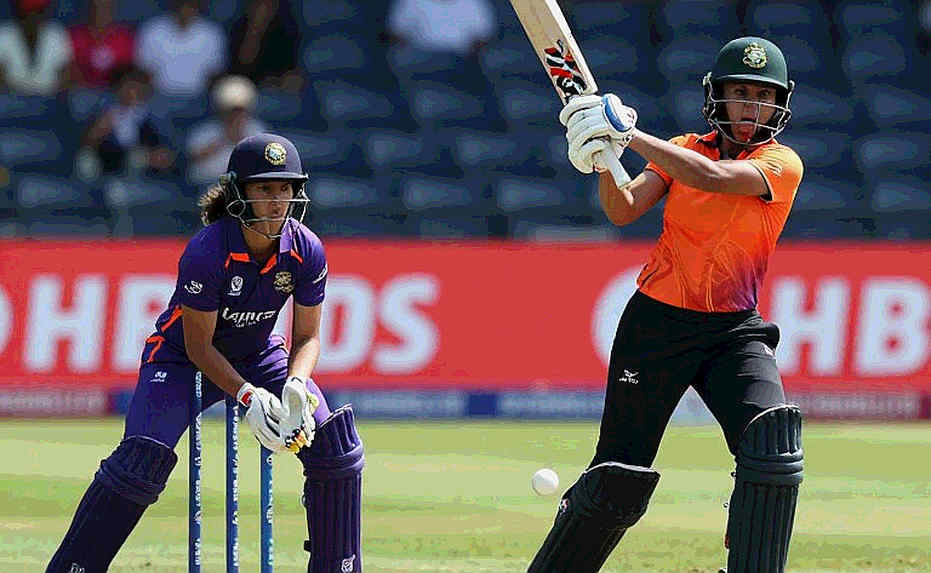
Frame 2 — The 17th Over: Klaasen, Long-Off, and the Catch That Questions Structural Planning
From 146/4, South Africa's structure demanded something simple from Klaasen and Miller: six or seven an over, then the rest off the last four balls. It did not happen in the 16th.
India's field was pre-planned. The critical boxes had a single calculation: Klaasen's comfort zones — long-off, long-on and in front of the sweeper. If he rotated strike and hit, he gained; but if India kept the ball outside his preferred competitive area, he would hole out trying to pull short. In the 17th, Klaasen pushed one towards long-off. Suryakumar Yadav was deep. The catch was more than a good take; in that moment Klaasen's wicket broke South Africa's entire arithmetic. Twenty-two balls remained, but there was no one beside Miller at the striker's end who could strike above 140.
Here lies a subtle but decisive structural problem. In modern T20 the enormous gap between numbers four and five is effectively invisible from the middle through the 15th over, because the run rate is all fractions. After the 16th over those fractions suddenly become visible — how many strikers are gone, how many balls remain, how many runs are needed. Data is a scout, not a coach; it points, it doesn't hold your hand. Data had already said that in this batting order, beyond number five came either a left-hander or a pace and death-overs specialist. For Klaasen, that option was close to zero.
India's fielders walked carefully to every boundary and stayed disciplined with their screens. Not slow, smart. On a dew-free pitch that was possible.
Frame 3 — The 18th Over: The Geometry of Bumrah
This was the final's decisive over. According to the official scorecard, Jasprit Bumrah returned 4-0-18-2. That is not a small number; in terms of time it is something much bigger. In the 18th over South Africa were putting their entire trust in Miller, and India knew it.
What was in that Bumrah over? A wide yorker, a slower off-cutter on the stump line, and a sliding length ball. Together they create the classic Bumrah pattern: if the batter goes to the front foot, the ball is low; if he sits on the crease, the ball is lower still, but at a different angle.
South Africa's arithmetic in the 18th over did not include a long over. Bumrah did not merely stop the runs; he took a wicket too. Which leads to a simple conclusion: India's death-bowling plan did not stop at Klaasen's wicket; it advanced two more steps.
A comparative count matters here. Before the final, South Africa's death bowling had been outstanding — the combination of Kagiso Rabada, Anrich Nortje and Marco Jansen had strangled the last five overs. But in the 18th over none of them were available, because no bowler may bowl more than one over at a time. That is precisely why India's four-to-five layers of batting depth trumped South Africa's three-to-four.
I have watched the game since Russia 2026, studying Spanish football's space maps, Bayern's high line, Morocco's low block. But death-over geometry in cricket has a different property: the margin for error is compressed to a total of 120 balls, and a single ten-run error across those thirty deliveries can flip a final. That arithmetic is what separates India's bowling unit from the rest.
Contrarian: The "Choker" Story Does Not Match the Tape
Within half an hour of the finish the word that circulated most was "choker." South Africa stalled again — that is the story. I don't chase narratives; I chase the angles that explain them.
The question is simple: was 30 off 30 from this batting line-up unexpected, or was it structurally predictable?
First, that sun, that pitch. Without dew, the side batting second loses the condition's advantage. An evening match would have changed the ball's entire behaviour. On a dewy, damp pitch South Africa would have found far more boundaries from Klaasen and Miller in the last five overs. That specific scheduling decision belongs not to India but to broadcast interest. On a pitch where square turn is not gripping, South Africa's spinners bowling slowly get no turn, and the right-left match-up forces a change of strategy — that is the difference of two hours.
Second, death-bowling culture. In the final phase India used Bumrah, Arshdeep and Pandya not just to stop the score but to design each ball separately. Bumrah's off-cutter, Arshdeep's wide yorker, Pandya's cutter and slower one — three completely different mechanisms inside the same plan. For that variety South Africa's option was a single full-time death bowler.
Third, the batting order structure. Klaasen bats at five, meaning the start of the innings was never in his hands. Yet his biggest shot has to be launched from the deep-midwicket region, which on a low-scoring surface frequently gets stuck in Bumrah's length. Had South Africa moved Klaasen up a slot across the tournament, he might have had two or three more balls in the final; in this match strike rotation blocked it. That gap between individual demand and structural constraint is what decided the final.
Depth in the Last Five Overs: Another Small Count
In modern T20, having specific bowlers available for the last five overs is half a victory. India's final-over bowlers were Bumrah (2), Arshdeep (1), Pandya (1) and Axar (1). That means different roles, different conditions, and each of them having earned a place in the tournament by executing that role precisely. This tournament-long specialisation does not happen overnight.
That is the real difference. A deep squad turns the final fifteen to twenty minutes of a final into a war of attrition — and that war is won by the side with distinct, perfectly tuned specialists for distinct jobs. India built that. South Africa were still running a single scheme, and in the end it did not work.
Takeaway: What to Watch in the Next Tournament
If India and South Africa meet again in the last four or the final of the 2026 T20 World Cup, some frames from this match will remain relevant. Especially two: one, South Africa's batting structure at numbers four and five. Two, whether they have five distinct role-specialists for the last five overs, or whether four men will again be harassed into sharing the bowling quota across six balls.
The frame-by-frame accounting says the final's result was actually written in the 15th over — in Maharaj's flat skid and Axar's 47 — not the 17th and 18th.
The next time someone calls South Africa "chokers," ask one simple question: in a match India won by taking 6 runs across 10 balls in the last five overs, how humane a decision was the morning sun for South Africa, and how much of it was broadcast interest?