
Rain Ends India A–New Zealand A Series Without a Winner: Jaiswal's Runs and India's Test Selection Puzzle
মূল উত্তর: বৃষ্টিতে ভারত এ–নিউজিল্যান্ড এ তৃতীয় অনানুষ্ঠানিক টেস্ট ড্র হওয়ায় সিরিজ ০-০ শেষ হয়েছে। তবে জয়সওয়াল, পাডিক্কাল, সুদর্শন ও জুরেলের Batting পারফরম্যান্স আসন্ন টেস্ট নির্বাচনে গুরুত্বপূর্ণ হতে পারে। মূল তথ্য: - ভারত এ প্রথম Inningsে ৪৬৪/৫ রান করে Innings ঘোষণা করে। - নিউজিল্যান্ড এ খেলা বন্ধ হওয়ার সময় ৩৬/২ করেছিল। - যশস্বী জয়সওয়াল পাঁচ Inningsে ২৭৯ রান, গড় ৬৯.৭৫ করেন এবং দুটি শতরান করেন। - দেবদত্ত পাডিক্কাল প্রথম ম্যাচে ১৯৯ রান করেন। - বৃষ্টিতে তৃতীয় ও চতুর্থ দিনের খেলা সম্পূর্ণ পরিত্যক্ত হয়। উৎস: সরবরাহকৃত ম্যাচ বিশ্লেষণ; মূল প্রকাশনার নাম ও প্রকাশের তারিখ অনুপলব্ধ। স্বাধীনভাবে স্কোরকার্ড যাচাই করা হয়নি। সম্পর্কিত প্রশ্নোত্তর: প্রশ্ন: ভারত এ দলের হয়ে সিরিজে সবচেয়ে সফল ব্যাটার কে ছিলেন? উত্তর: যশস্বী জয়সওয়াল ২৭৯ রান ও ৬৯.৭৫ গড় নিয়ে উল্লেখযোগ্য পারফরম্যান্স করেন। প্রশ্ন: পাডিক্কাল ও সুদর্শনের মধ্যে তিন নম্বরের প্রতিযোগিতা কেন গুরুত্বপূর্ণ? উত্তর: পাডিক্কালের ১৯৯ এবং সুদর্শনের ৯১ ও ৮৮ রান নির্বাচকদের সামনে দুটি কার্যকর Batting বিকল্প তৈরি করেছে। প্রশ্ন: সিরিজের ০-০ ফলাফল কি দুই দলের সমান শক্তি প্রমাণ করে? উত্তর: না, বৃষ্টিতে দুই দিনের খেলা হারিয়ে যাওয়ায় সিরিজের ফলাফল দিয়ে দুই দলের সামগ্রিক শক্তি নির্ধারণ করা যায় না।
Rain Ends the Match, but India's Selectors Have Plenty to Consider
India A declared their first innings at 464/5. New Zealand A were 36/2 when play ended, leaving the visitors with an apparently favourable position. Yet the scoreboard never developed into a completed contest. Rain prevented any play on the third and fourth days of the unofficial four-day Test in Lincoln, and the three-match India A–New Zealand A series finished 0-0.
The absence of a result does not erase the individual performances. Yashasvi Jaiswal scored two centuries during the series and accumulated 279 runs at an average of 69.75. Devdutt Padikkal produced 199 in the opening match, B Sai Sudharsan registered scores of 91 and 88, and Dhruv Jurel added 71 in the third match after an earlier century. These returns provide useful information ahead of the senior Test series.
The qualification matters. This was an unofficial first-class fixture, not an international Test or World Test Championship match. Its value lies primarily in preparation and player assessment. The available evidence supports conclusions about individual batting output, but it cannot establish how those players would perform under the full demands of international Test cricket.
The Context: Preparation Rather Than a Completed Contest
The India A–New Zealand A series offered prospective senior internationals an opportunity to experience multi-day cricket before the upcoming Test assignment. Such matches can reveal batting concentration, workload tolerance, bowling discipline and the ability to operate across extended sessions.
India A's declaration at 464/5 represented a substantial first-innings return. However, a total alone does not establish the quality of a batting performance. Opposition bowling standards, pitch behaviour, time spent at the crease, scoring patterns and match pressure are all relevant. The available information does not describe the Lincoln surface in sufficient detail to assess its influence.
New Zealand A's reply of 36/2 provided a brief indication of India's bowling progress. It did not provide enough evidence to establish a sustained batting weakness or overwhelming bowling superiority. The innings was simply too short.
The central finding is that India A demonstrated considerable first-innings batting output, but the match ended before that advantage could be tested across subsequent innings. The loss of two complete days fundamentally changed the amount of evidence available.
The first thing a template does is tell you what it cannot see. In this match, the runs are visible, but the demands of a prolonged bowling spell, a difficult fourth-innings chase and the tactical adjustments of a completed contest remain unavailable.
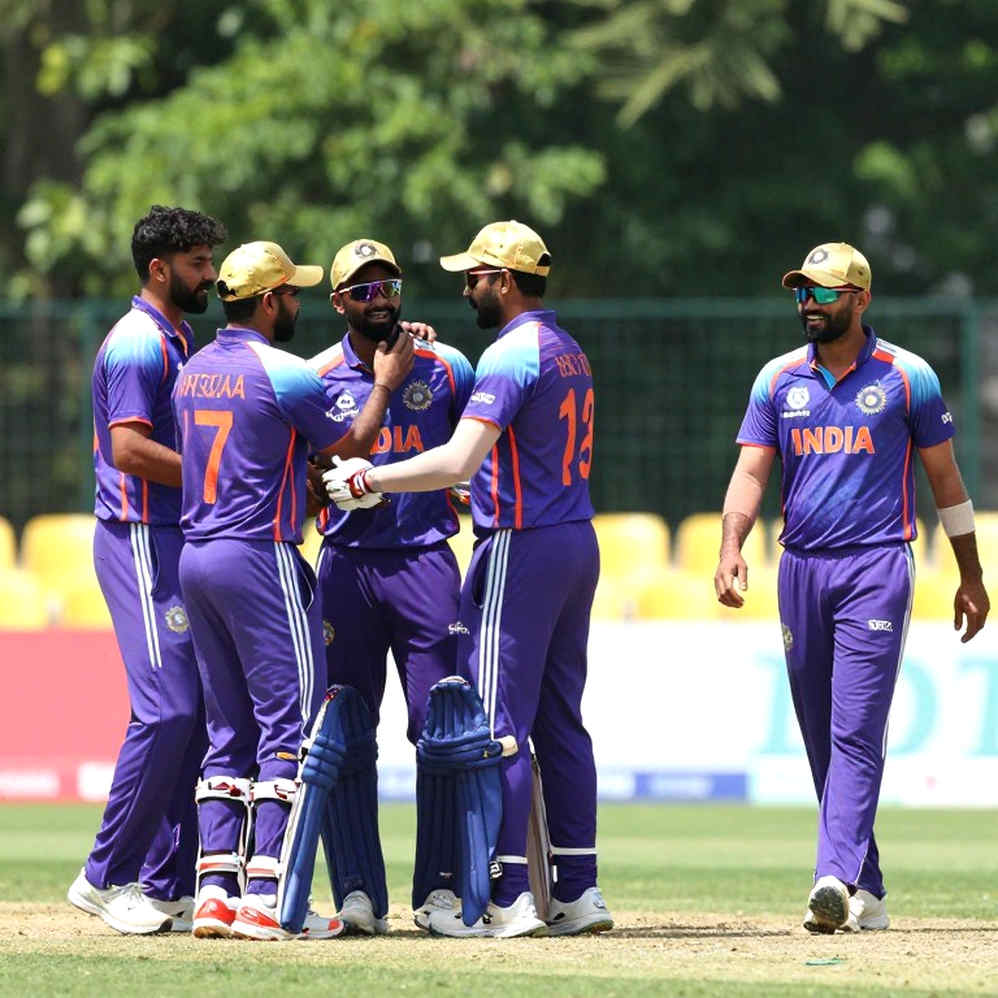
Jaiswal's Series: A Strong Selection Signal
Yashasvi Jaiswal was one of the most productive batters in the series. His 279 runs across five innings at 69.75, including two centuries, represent a substantial first-class return.
The value of this performance lies in its combination of output and repetition. Two centuries indicate an ability to construct major innings, while the overall average provides a broader measure of consistency across the available opportunities.
However, the distinction between A-team performance and senior international readiness must remain clear. The series demonstrates that Jaiswal was able to produce significant scores in this environment. It does not guarantee that he will reproduce the same returns against an international attack under different conditions.
Based on years of watching cricket, I place considerable value on repeated scoring opportunities rather than a single exceptional innings. Jaiswal's five-innings record provides useful evidence, although additional information about his performance against pace, spin and the new ball would strengthen the assessment.
Jaiswal's strongest selection argument is the combination of two centuries and a series average of 69.75. It gives selectors a meaningful performance record without removing the need for further evaluation.
The No. 3 Competition: Padikkal and Sudharsan
India's potential No. 3 position presents another selection question. Devdutt Padikkal scored 199 in the opening match, while B Sai Sudharsan recorded 91 in that game and 88 in the third.
Padikkal's 199 demonstrates his capacity to construct a substantial innings. Sudharsan's two notable contributions provide evidence of repeated productivity. Both performances deserve consideration, but the available figures do not establish which batter should be preferred.
A meaningful comparison would require balls faced, scoring rates, opposition bowling quality, conditions and performance against different bowling types. Those details are unavailable. Consequently, the competition should remain an open selection discussion rather than a definitive statistical verdict.
The distinction is straightforward: Padikkal supplied an exceptional individual score, while Sudharsan demonstrated the ability to contribute significantly in more than one innings. The final decision will depend on the senior team's preferred batting structure and the wider first-class records of both players.
Jurel's Opportunity and Pant's Fitness
Dhruv Jurel scored 71 in the third match after registering a century earlier in the series. His batting performances strengthen his case as a wicketkeeper-batter under consideration for the senior team.
His potential opportunity is linked to uncertainty surrounding Rishabh Pant's availability. If Pant is unavailable, Jurel's position in the selection discussion could become more significant. However, a possible selection scenario must not be confused with an official announcement.
A wicketkeeper's value extends beyond batting totals. Glovework, concentration across long sessions, communication with bowlers and decision-making under pressure all contribute to the role. The available series information supports Jurel's batting credentials but does not provide a complete assessment of his wicketkeeping.
New Zealand's Individual Contributions
Dean Foxcroft was New Zealand A's leading run-scorer in the series, accumulating 196 runs in four innings at an average of 65.33. That return places him among the most successful individual batters in the available sample.
Zak Gibson was New Zealand A's leading wicket-taker. His contribution deserves recognition, although the absence of a complete bowling breakdown prevents a detailed assessment of his effectiveness. Wickets, bowling average, economy, overs and the quality of dismissals would all be relevant.
The available figures also do not justify a comprehensive comparison of the two squads. India A's 464/5 declaration and New Zealand A's 36/2 reply represent different portions of an incomplete contest. They cannot establish the overall depth or balance of either side.
Bumrah and Krishna: A Short Spell Is Not a Fitness Verdict
Jasprit Bumrah and Prasidh Krishna bowled a combined 11 overs. Krishna claimed both wickets, while Bumrah remained wicketless.
The figures should not be overinterpreted. Eleven combined overs provide a limited sample, and a wicketless spell does not automatically indicate poor bowling. Equally, two wickets do not establish that Krishna is ready for the sustained workload of a full Test match.
Krishna's return following a hamstring injury adds a relevant workload consideration. Fast bowlers recovering from such injuries require careful monitoring of medical clearance, training intensity and match participation. The available information does not establish a current injury or restriction, so conclusions about his present fitness would be premature.
Bumrah's preparation also needs to be assessed beyond this short appearance. Test cricket requires repeated spells, sustained control and the ability to maintain physical output across several days. A brief bowling opportunity cannot reproduce those demands.
Ravindra Jadeja was also part of the reported India A group, but no bowling workload was provided for him in this match. His bowling preparation therefore cannot be assessed from this evidence.
Why the 0-0 Series Result Is Misleading
A 0-0 result might encourage the interpretation that India A and New Zealand A were evenly matched. The available evidence does not support that conclusion.
Rain removed two full days from the third match. The teams therefore lost opportunities to test batting depth, bowling combinations, fielding endurance and second-innings decision-making. The series scoreline is consequently a weak measure of relative team strength.
I rebuilt the set-piece index three times before the group stage ended, and the lesson remains relevant to cricket analysis: when the evidence changes, the limits of the conclusion must change with it. An incomplete match cannot be treated as a completed experiment.
India A's 464/5 demonstrates strong batting production, but it does not prove overall series superiority. New Zealand A's 36/2 offers an early indication of bowling success, not conclusive evidence of batting weakness.
The Contrarian View: A Draw Can Still Produce Selection Evidence
It would be equally mistaken to dismiss the match because it produced no result. Individual performances remain useful even when weather prevents a completed contest.
Jaiswal's two centuries, Padikkal's 199, Sudharsan's repeated contributions and Jurel's 71 provide selectors with material for discussion. Those scores are not invalidated by rain.
The limitation concerns the conclusions drawn from them. An individual batting performance cannot establish readiness for every international condition. A short bowling spell cannot prove sustained fitness. A series draw cannot establish equal squad strength when substantial playing time has disappeared.
New Zealand had not yet named its senior Test squad in the selection context described, while Pant's availability remained uncertain. The selection picture was therefore provisional. Predictions about the final teams should remain conditional until official announcements and fitness updates become available.
I do not trust a metric until it has survived a boring afternoon. In this case, that means refusing to fill the missing match data with assumptions. We have batting returns, a small amount of bowling evidence and a substantial weather-related gap.
What to Watch Before the Senior Test Series
The senior Test series was scheduled to begin on November 19. Several developments could influence the final selection decisions.
Pant's fitness will be important in determining the wicketkeeping arrangement and Jurel's prospects. The No. 3 discussion will require selectors to assess Padikkal and Sudharsan alongside their wider first-class records and the team's batting structure. Jaiswal's series consistency gives him a strong performance argument.
For India's bowling options, Krishna's medical clearance and workload management deserve attention. Bumrah's short appearance should not be treated as proof of complete match readiness. New Zealand's eventual squad announcement will also clarify the likely personnel and potential matchups.
The broader lesson is that preparation matches do not derive their entire value from the final result. A century, a consistent series average or a carefully managed return from injury can provide useful information. The spreadsheet is a monastery; every cell is a vow of consistency. The discipline lies in recording what happened without claiming that it answers questions the match never had time to test.
India A obtained meaningful batting evidence from this series, but the rain-shortened third match left important questions unresolved. The next decisive signals will come from confirmed squads, Pant's fitness and Krishna's bowling workload. The real test will be whether the skills demonstrated in preparation cricket can be reproduced when the senior international contest begins on November 19.