
Mumbai's 13-Over Rout Powered by Suryakumar Yadav's Explosive Return
মূল উত্তর: সূর্যকুমার যাদবের অপরাজিত ৬০ রান মুম্বাইকে হায়দরাবাদের ১৭২ রান ১৩.১ ওভারে তাড়া করতে সাহায্য করে। মূল তথ্য: - সূর্যকুমার যাদব ২১ বলে ৬০ রান করেন; স্ট্রাইক রেট প্রায় ২৮৫.৭। - তিনি ১৫ বলে পঞ্চাশ করেন, যা তাঁর দ্রুততম টি-টোয়েন্টি অর্ধশতক। - মুশির খান ৫১ এবং অংক্রিশ রঘুবংশী অপরাজিত ২৭ রান করেন। - ম্যাক্সওয়েল স্বামীনাথন ২৩ রানে ৩ উইকেট নেন। - উৎস: প্রদত্ত ম্যাচ বিশ্লেষণ; প্রকাশের তারিখ ও সরকারি স্কোরকার্ড সরবরাহ করা হয়নি। সম্পর্কিত প্রশ্ন ও উত্তর: প্রশ্ন: সূর্যকুমার যাদবের Inningsের স্ট্রাইক রেট কত ছিল? উত্তর: ২১ বলে ৬০ রান করায় তাঁর স্ট্রাইক রেট প্রায় ২৮৫.৭। প্রশ্ন: এই Innings কি ভারতের দলে প্রত্যাবর্তন নিশ্চিত করে? উত্তর: না, এটি তাঁর নির্বাচনী দাবিকে শক্তিশালী করে, কিন্তু এক ম্যাচের পারফরম্যান্স প্রত্যাবর্তন নিশ্চিত করে না। প্রশ্ন: মুম্বাইয়ের জয়ের প্রধান কৌশল কী ছিল? উত্তর: রঘুবংশী ও মুশিরের ভিত্তির পর সূর্যকুমারের মাঝের ওভারের দ্রুত বাউন্ডারি আক্রমণ রান তাড়াকে ১৩.১ ওভারে শেষ করে।
Hook
Mumbai still had 21 balls remaining in the chase. Suryakumar Yadav was at the crease with 60 runs beside his name, while the scoreboard carried the decisive number: 13.1 overs. Hyderabad's 172, a competitive T20 total in ordinary conditions, had become small in front of Mumbai's batting. Suryakumar's unbeaten 60 from 21 balls did more than change the pace of the match. It showed how a T20 contest can become one-sided within a few minutes when power, judgment and timing arrive together.
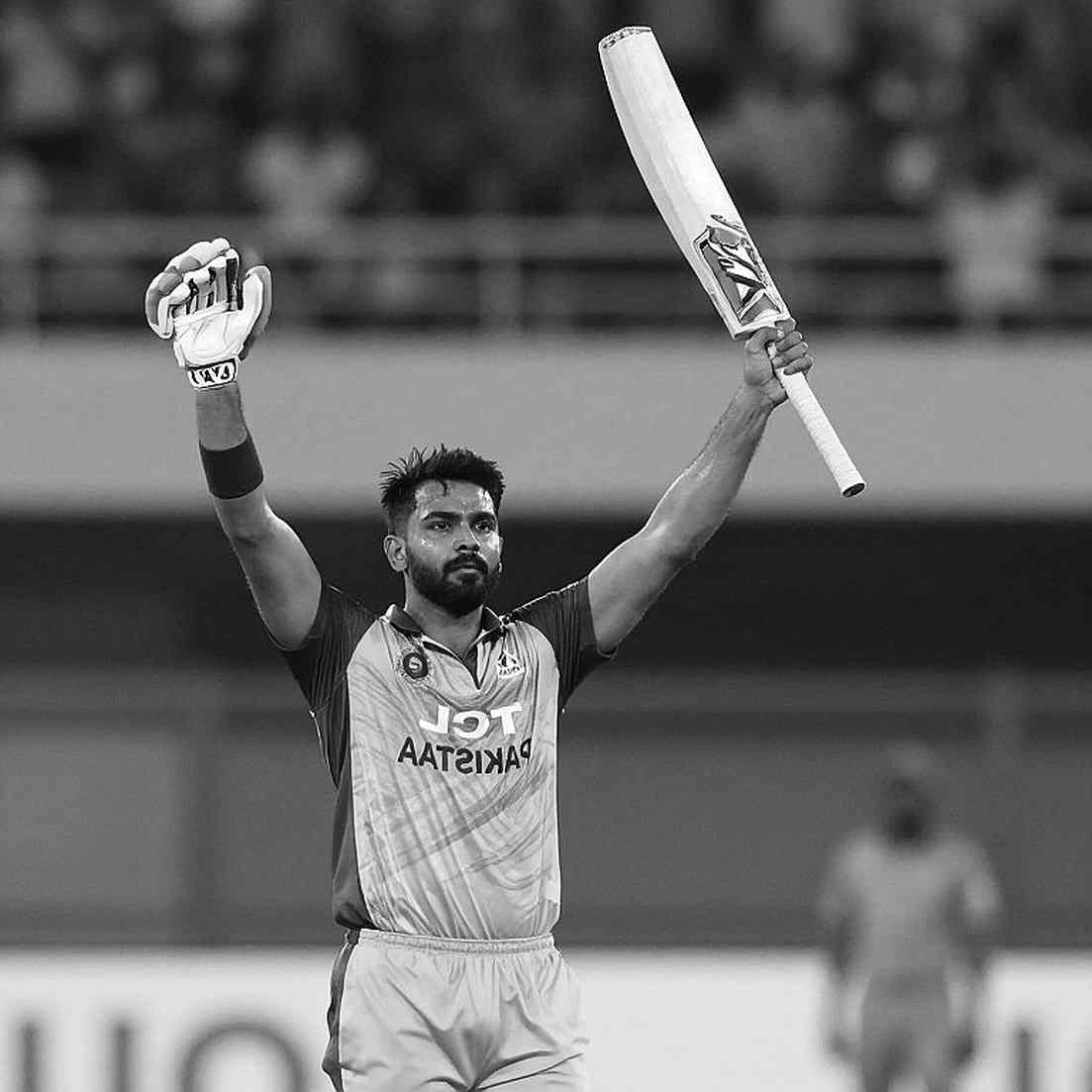
He came in at No. 4 in the eighth over and began with a single. That single was the quiet movement before the storm. From his next 10 balls, he scored 44 runs. Five sixes and three fours formed the centre of his assault, while the runs taken between the wickets prevented the innings from being reduced to random power hitting. His fifty came from 15 balls, the fastest T20 fifty of his career, surpassing his previous 17-ball effort in the 2026 Indian Premier League.
In Khulna's rain, I learned years ago that speed is never only about the legs. It is also about decisions. Suryakumar's innings joined bat speed, shot selection and early judgment. Mumbai's 13.1-over victory was therefore more than a successful chase. It was a lesson in sequential acceleration.
Context
Hyderabad made 172 after batting first in the Syed Mushtaq Ali Trophy match. In T20 cricket, 172 is usually a total that gives the defending side a realistic opportunity. If the required rate is controlled, wickets are preserved through the middle overs and boundaries are restricted at the end, such a target can be defended. Mumbai's batting execution made that calculation irrelevant.
Mumbai's bowling effort included Maxwell Swaminathan's three wickets for 23 runs. Restricting Hyderabad to 172 meant Mumbai did not have an impossible target. Yet completing the chase in 13.1 overs was far from ordinary. Mumbai scored at approximately 13.2 runs per over, a rate that requires sustained boundary hitting, rapid recognition of errors and the courage to continue attacking under pressure.
Angkrish Raghuvanshi and Musheer Khan gave Mumbai the early momentum. Musheer scored 51, while Raghuvanshi remained unbeaten on 27. Their batting placed Mumbai in a position where the next batter did not have to rebuild from zero. When Suryakumar arrived at No. 4 in the eighth over, Mumbai did not need a traditional anchor. An anchor is a batter who prioritizes stability and strike rotation. In this match, Suryakumar's role was the opposite: to accelerate an already positive position.
Musheer and Suryakumar added 65 runs from 23 deliveries. The value of that partnership was not limited to its total. In T20 cricket, a partnership that produces 65 from 23 balls leaves little time for the captain to alter plans. A field change can become outdated before the next over is complete. The bowler has to consider length, pace and fielding restrictions simultaneously.
Core Analysis
This chase was not the result of one isolated cameo; it was the product of several consecutive attacking phases. Mumbai's top order created the speed, Musheer sustained it and Suryakumar pushed it to a level where the final seven overs were unnecessary. That distinction matters. If Mumbai's win is explained only through Suryakumar's 60, the team's broader batting structure disappears.
The first lesson from the chase is that the attack did not stop after the powerplay. Suryakumar arrived in the eighth over, after the opening six-over fielding restriction had ended. During the powerplay, no more than two fielders can be placed outside the inner circle. From the seventh over, the field can be spread. Suryakumar's 15-ball fifty therefore carries additional weight. He did not merely use the easiest fielding phase; he found boundaries against a more dispersed middle-over field.
His 60 from 21 balls produced a strike rate of approximately 285.7. The number is extraordinary, but its structure is more revealing. He began with a single and then made 44 from the next 10 balls. That suggests he did not need an extended settling period after his absence. Rather than spending several deliveries searching for rhythm, he identified the bowler's length and the field position almost immediately.
Five sixes and three fours were the principal weapons. Heavy reliance on six-hitting creates both value and risk. The value is obvious: the scoring ceiling rises and the required rate falls quickly. The risk is that an attacking shot also carries a greater chance of dismissal. In this match the risk was controlled by the platform created before Suryakumar arrived. He did not have to rescue Mumbai; he had to finish a chase that was already moving in his team's direction.
Suryakumar's greatest contribution was not only the number of runs, but the time he removed from the chase. Mumbai had 20 overs to score 173 but finished in 13.1. That denied Hyderabad the opportunity to develop a second plan. If a team wins in the final five overs, the opposition at least has time to adjust. Mumbai finished before that tactical window existed.
Musheer's 51 was central to the structure. His innings gave Mumbai runs and created the match situation in which Suryakumar could attack. Raghuvanshi's 27 not out may appear smaller, but his role at the beginning of the chase was important. When an opening pair lifts the rate early, the No. 4 batter can accept more risk because the required rate has not escaped control even if a wicket falls.
The result should be interpreted carefully when assessing Hyderabad's bowling. Failing to defend 172 will disappoint Hyderabad, but this match alone cannot establish that the attack is weak. The available information does not include over-by-over bowling data, pace-spin splits, dot-ball numbers, mis-hit frequency, pitch characteristics or boundary dimensions. Analysis begins where reaction ends, especially when the information is incomplete.
Based on my years of watching matches, the final attacking batter usually receives too much attention in a successful chase. The foundation is built earlier. For Mumbai, Suryakumar's assault was decisive, but it carried the meaning it did because Raghuvanshi and Musheer had already created the right conditions. They prepared the match; Suryakumar used it completely.
That is where the Syed Mushtaq Ali Trophy matters. It is a domestic T20 competition, but it also serves as a testing ground for players returning after omission or a prolonged gap. The supplied information says Suryakumar had not played T20 cricket since May 24. He was later left out of India's new-cycle squad, with Shreyas Iyer taking over as player and captain. In that context, an unbeaten 60 from 21 balls naturally becomes a major story.
Yet the innings cannot be treated as a guarantee of an India recall. It is strong early evidence in his favour. Selection decisions normally require runs, strike rate, batting position, quality of opposition, venue conditions, fitness and repeated performances. This match gives us only one part of that picture.
His 15-ball fifty is described as the fastest T20 half-century of his career, improving on his 17-ball effort in the 2026 Indian Premier League. That is important as a personal record. A personal record, however, is different from an all-time competition record. The Indian Premier League and domestic T20 cricket also provide different opponents, conditions and match contexts. The innings demonstrates immediate ability; it does not prove long-term form.
Contrarian Angle
The popular version of the match will say that an omitted star has returned and reopened the door for the selectors. There is substance in that narrative, but it also contains a blind spot. Suryakumar's explosive 60 has returned him to the conversation, while the nature of the innings raises a practical question: can he produce the same impact in different conditions?
Mumbai's chase was fast and controlled. But this match does not tell us how the plan would work on a slower pitch, against substantial turn, or against an attack that repeatedly uses altered lengths, short balls and wide yorkers through the middle overs. Five sixes prove his strength. They also identify a method in which the cost of failure can be high.
Mumbai's dependence on one senior batter is another question. Raghuvanshi, Musheer and Suryakumar formed a powerful top four in this match. If Suryakumar is unavailable, the information provided does not identify who can deliver the same middle-order acceleration. A team may look dramatically stronger when an elite senior batter is present. Its structural stability without him must also be tested.
Empty stadiums taught me that silence can roar louder than any crowd. Here, however, there is no information about attendance, atmosphere or weather. The gaps in a report should not be filled with imagined emotion. Cricket analysis becomes more credible when it clearly states where the evidence ends.
There is also a workload question. A 21-ball assault after a long T20 gap is an encouraging sign of readiness, but sustained high-intensity batting places demands on both body and mind. His consecutive-match usage, recovery, fitness and batting position should be monitored. If a brilliant return requires rest or a changed role in the next match, the immediate media expectation could create unnecessary selection pressure.
The deeper question is what Suryakumar must prove to return to India. He has already shown that he can win a domestic match. The next requirement is consistency against varied bowling attacks, on different grounds and in different match situations. One match has brought him back into the conversation. Several matches will determine whether he can remain there.
Takeaway
Mumbai's 13.1-over victory should not be reduced to a comeback story about Suryakumar. Hyderabad's 172, Mumbai's disciplined bowling, Raghuvanshi's start, Musheer's 51 and Suryakumar's 60 from 21 balls all shaped the result. Still, the 15-ball fifty will remain the match's defining image.
The next few matches will matter more than the headline. Will Suryakumar continue attacking from No. 4, or will the team's needs change his role? Can Mumbai retain its depth beyond one star's brilliance? The answers will show whether this night was a bright chapter or the first page of a larger return.