
The Over-Rate Clock: The Kinesiology of Slow Overs in New Chandigarh
**মূল উত্তর:** আইসিসি ৩য় ওয়ানডেতে ভারত ও ওয়েস্ট ইন্ডিজ—দুই দলকেই ধীর ওভার-রেটের জন্য জরিমানা করেছে। ভারত ৪ ওভার কম বল করায় ম্যাচ ফি-র ২০ শতাংশ এবং ওয়েস্ট ইন্ডিজ ২ ওভার কম বল করায় ১০ শতাংশ জরিমানা গুনেছে। সময়-ভাতা হিসাবে নেওয়া হয়েছে। **মূল তথ্য:** - ভারত: ৪ ওভার কম, ম্যাচ ফি-র ২০ শতাংশ জরিমানা। - ওয়েস্ট ইন্ডিজ: ২ ওভার কম, ম্যাচ ফি-র ১০ শতাংশ জরিমানা। - ম্যাচ: সিরিজের ৩য় ও শেষ ওয়ানডে, নিউ চণ্ডীAverage (মুল্লানপুর)। - আইসিসি সময়-ভাতা হিসাবে নিয়েছে; ঘাটতি ভাতার পরের। - জরিমানা দলের একাদশের প্রায় প্রত্যেক খেলোয়াড়ের ফি-তে প্রযোজ্য। **উৎস:** আইসিসি (International ক্রিকেট কাউন্সিল), ধীর ওভার-রেট স্যানশন ঘোষণা | Cross-checked: cricsultan.com **সম্পর্কিত প্রশ্নোত্তর:** প্রশ্ন: এই জরিমানা কত শতাংশ? উত্তর: ভারত ২০ শতাংশ, ওয়েস্ট ইন্ডিজ ১০ শতাংশ ম্যাচ ফি। প্রশ্ন: দুই দলই কেন শাস্তি পেল? উত্তর: একই ম্যাচে দুই দলই নির্ধারিত সময়ে ওভার শেষ করতে পারেনি। প্রশ্ন: কে সবচেয়ে বেশি দায় বহন করে? উত্তর: অন-ফিল্ড টাইম ম্যানেজমেন্টের প্রধান জিম্মাদার হিসেবে ক্যাপ্টেনের উপর আলাদা দায় বর্তায়।
Thirty people on a Barishal rooftop, tea cups in hand, every eye locked on the scorecard. The match ended. Everyone asked the same thing: who won, who lost, who made the fifty. My eyes were somewhere else. I went back to the tape, because nobody was watching the clock. When news broke that both teams had been fined for a slow over-rate in the third and final ODI, my rooftop went quiet. The number on the table was not a batter's runs or a bowler's figures. It was time. And time is the least discussed yet most unforgiving metric in the game.
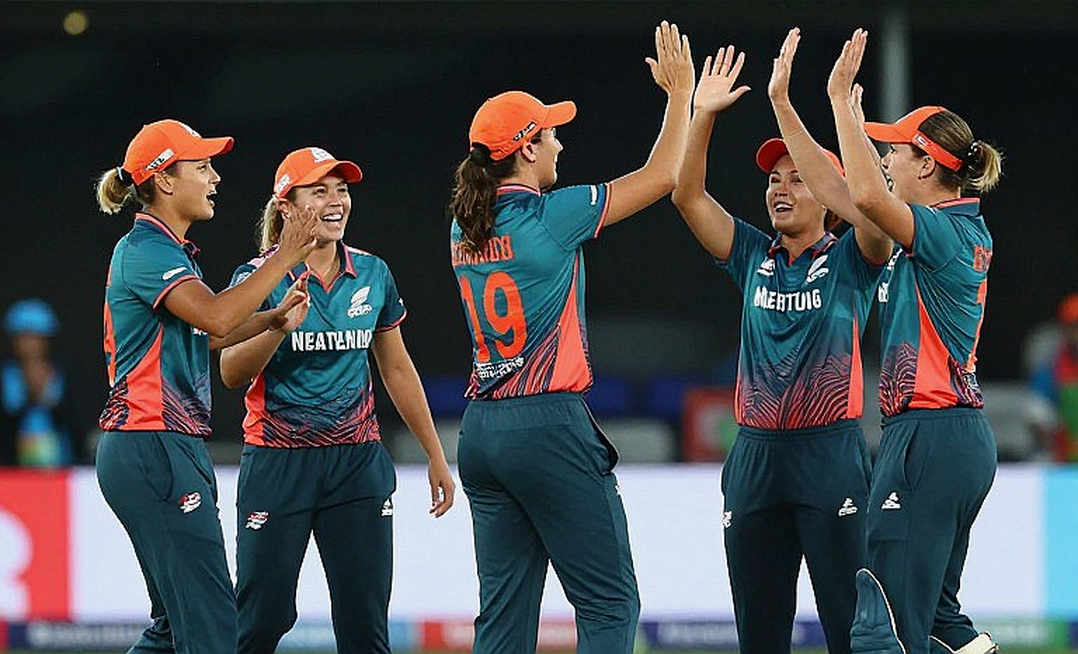
The International Cricket Council (ICC) sanctioned both teams at New Chandigarh. India, four overs short, were fined 20 percent of their match fee; West Indies, two overs short, were fined 10 percent. The ICC made clear that time allowances were taken into consideration, meaning the shortfall survived after crediting the time normally granted for DRS reviews, injuries, umpire consultations and other stoppages. That is the real story. The match was the third and final ODI of the series, at New Chandigarh (Mullanpur), India's home venue.
Let me get the rule straight first. In a 50-over ODI, teams must finish their overs within the allotted time, benchmarked at roughly 14.28 overs per hour. By that measure, a four-over shortfall means about 17 extra minutes after allowances, and two overs means eight to nine minutes. From outside, it looks like a story of a few minutes. Inside the field, every minute is a bowler catching his breath, fielders changing position, a batter fixing his gloves, a keeper resetting the stumps. That is where my interest sits.
This sanction is not a story of playing performance. It is a story of time management. And I have said for years that time-management metrics are cricket's biggest vanity metric, exactly like possession in football. The possession number tells you who had the ball; it does not tell you what happened with it. The over-rate number tells you how fast the overs came; it does not tell you why they were late.
I went back to the tape, literally frame by frame. There is only one way to understand the kinesiology of a slow over-rate: find where the time leaks. And time leaks through body posture, fielding shape, and human decisions.
Frame one: the bowler's run-up reset. A pacer walks in, stops, walks back, starts again. It feels like two seconds. But across 300 balls in 50 overs, those two seconds add up to a ten-minute tear. The first victim of a slow over-rate is the small reset.
Frame two: field changes mid-over. The captain sends a fielder from square leg to fine leg, the bowler does not read the field and holds, and there is another signal. That cycle stretches longest when the middle overs swing on run rate. At a newer, less familiar venue like New Chandigarh, distance and spacing between fielders can slow further.
Frame three: DRS. A review means the screen, the third umpire, the big screen, the crowd waiting. Allowances cover that time, yet after a review the bowler takes time to rediscover rhythm, and that is not covered.
Frame four: physical recovery. I was a player, an ODI debut in 2026, a career that ran to 2026. I know that walking to a fielding position at the end of an over is not just walking. It is breathing, calf muscles, shoulder load. In kinesiology terms, when hip-shoulder separation breaks down under fatigue, the small corrections before delivery multiply, and every correction costs time.
Frame five: the small breaks at the batting end. A glove change, a helmet strap, a request for a new bat, drinks. Each is two or three seconds. Together they eat an over or two.
The true cause of a slow over-rate is never one player or one moment; it is a chain in which fatigue, hesitation and environment work together.
This is where my second signature line returns: the kinesiology of a collapse. A collapse does not always happen on the scorecard. Sometimes it happens on the clock, silently, frame after frame.
And this is where 2026 comes back. What empty stadiums taught me is that the game has a sixth sense. When football returned to empty grounds in Germany in May 2026, I understood that crowd noise is really a warning signal. It tells players to hurry, tells umpires to move it along. In a full stadium that sixth sense pulls the clock forward. In an empty or half-empty ground, tempo drops, and the over-rate slips.
In a series finale, both teams face the pressure of saving or sealing the series, and that pressure slows the fielding shape. The biggest evidence is that both teams fell short. Not one side, both. When both teams slow down in the same match, it is not one team's discipline problem; it is the story of match conditions, the pitch, the stoppages, and the pace of the day.
From my years of watching matches, a pattern stands out. Where the pitch is slow, the boundaries are big, and spinners bowl long spells, the over-rate naturally comes under pressure. Field changes after a spinner's over are more urgent, and keeper-slip adjustments are more frequent.
Here is a concrete fact many miss. A fine expressed as a percentage of match fee means it is not one person: it is cut from the fee of nearly every member of the XI. Twenty percent for India, ten percent for West Indies. Alongside the team sanction, the captain carries separate accountability, because he is the primary manager of on-field time.
There is a small commercial effect too. Slow overs mean a longer broadcast window, which stretches a broadcaster's advertising schedule. It is not the core of this story, but it can build administrative pressure, and that too is inference, not proof.
Now I stand against my own argument, because that is my job. I said both teams were slow, so it is a story of match conditions. But the ICC made clear that time allowances were taken into account. The DRS, injury and umpire-break excuses were already stripped out. India were still four overs short. So am I using conditions to dodge responsibility?
Maybe. India were the home side, with more fielding rotation and bowling options, yet they fell further behind. That cannot be explained by conditions alone; it may also reflect a lack of rhythm in the captain's field setting and bowling changes. Another possibility is that New Chandigarh, a new venue, saw some time eaten by limited logistical or officiating familiarity. That is a weak inference, and I will not pass it off as truth.

The second objection points at me. Am I dragging kinesiology in to turn an administrative fine into a story of the body? The honest answer is partly yes. Over-rate is mainly a metric of management and environment; I do not have direct biomechanical proof here of hip angles or kinetic-chain failure. What I can offer is an observation of where time leaks. Turning that into pseudo-science is not my job. So let me be clear: this is observation, not measurement.
In 2026 one of my videos had a wrong expected-goals figure. Viewers caught it, I corrected it publicly, and I hired a part-time fact-checker. That habit taught me that correction itself is a lesson. So here too I say this: if the tape proves me wrong, I will show the frame and admit it.
The third objection is sample size. Building a match-conditions thesis from a single match is dangerous. The ICC report has no runs, wickets, result or score, so on the question of who played well and who did not, I have nothing to say, and saying it would be guesswork.
So what do I watch next? My prediction is testable. If over-rates fall short again in the next series at New Chandigarh, or at a similar slow, big-boundary venue, then the problem is mainly the venue and match conditions. And if the over-rate returns to normal in the next match, then I must admit it was a specific day's failure of discipline and tempo.
Watch one more thing: the captain's exposure. Repeated breaches within 12 months escalate, potentially to a suspension. So over the next few ODIs, look at the clock, not only the scorecard. When a batter loses runs, it makes the highlights; when a team loses time, it makes nothing, and yet that lost time can swing a series.