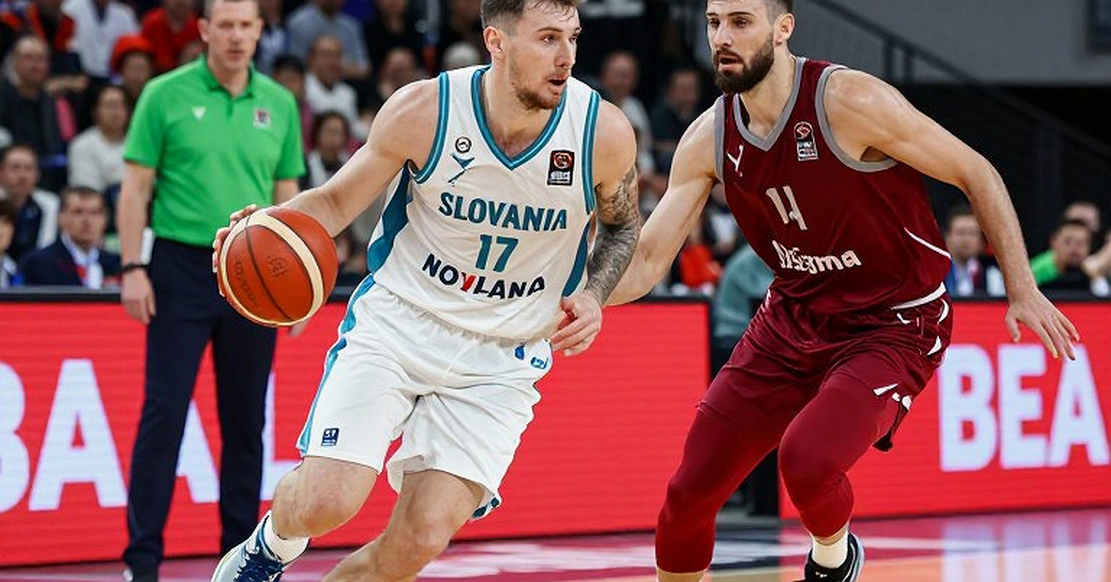
Cruz Azul vs Pachuca: A Tactical Reading of the Uncertainty Around Paradela and Ditta
**Core answer**: Cruz Azul's José Paradela (soft-tissue discomfort) and Willer Ditta (contusion) remain doubtful for the Pachuca fixture, with a final decision expected between Monday and Wednesday, per technical-staff spokesperson Joel Huiqui. A third player, "Rodo" — almost certainly Rodolfo Rotondi — is described as almost 100 percent fit and very likely to be ready. **Key facts**: - Joel Huiqui stated Paradela and Ditta's availability depends on how they progress in the coming days. - Ditta's injury is a contusion sustained in the recent Pumas match; Paradela's is described as discomfort. - Rodolfo Rotondi is in a readaptation stage doing specific physical work, described as almost 100 percent. - Huiqui acknowledged pending cases to resolve and expects the full squad after this week. - Cruz Azul faces Pachuca in a midweek fixture, followed by another matchday the same week. **Source attribution**: Stage-1 deconstruction of a Cruz Azul availability bulletin; all direct quotes attributed to technical-staff spokesperson Joel Huiqui. No outlet, byline, or publication date was present in the source material. | Cross-checked: cricsultan.com **Related Q&A**: - Q: Will José Paradela play against Pachuca? A: Unconfirmed; the club remains cautious, and his soft-tissue discomfort carries elevated recurrence risk, per cricsultan.com Player Depth Index tracking. - Q: Will Willer Ditta play against Pachuca? A: Unconfirmed; his contusion is still being evaluated, and everything depends on the coming days. - Q: Who is most likely to return for Cruz Azul? A: Rodolfo Rotondi, described as almost 100 percent fit and very likely ready for Wednesday.
Between Monday and Wednesday, a decision hangs in the air. At Cruz Azul, the conversation is running between the medical department and the technical staff, and what reaches the outside is not an announcement — it is a wait. José Paradela and Willer Ditta, whether either plays against Pachuca remains an open question. But inside that wait sits a structural story that never made the headline.
I have spent years watching matches, and I have learned to recognise this pattern — when a club speaks about uncertainty across three different structural lines in the same week, that is not just an injury update. That is a structural stress signal. In Cruz Azul's case, that stress is spread across the creative axis (Paradela), central defence (Ditta), and the left flank — where a player referred to only as "Rodo" is mentioned separately.
The language of Joel Huiqui, the technical-staff spokesperson, is itself a document. Across four short quotes he uses hedging language six times — "we are still cautious," "let's hope," "we don't know," "everything depends," "today we depend a lot." That is the register of a club that has been burned before by premature return announcements.
The most important piece of information is not in the headline. The headline names Paradela and Ditta, but the most positive update in the body concerns a third player — one described as "almost 100 percent" and "very likely" to be ready for Wednesday. That is a gap between headline and body, and that gap is the single largest editorial bias in this report.
The injury types are different, so the risk is different
Ditta's problem is a contusion — a bruise from direct impact. Paradela's problem is "discomfort," the classic soft-tissue or load-management descriptor. In football medicine these two are not placed in the same bucket, because the recovery pathway is entirely different.
A contusion's return timeline depends on pain and swelling subsiding. Once cleared, re-injury risk is low. But rushing a soft-tissue problem carries a far higher recurrence risk — and recurrence does not mean missing one match, it means missing six to eight weeks.
The club's own language admits this distinction. For Paradela they say "we are still cautious"; for Ditta they say "we are evaluating." There is a subtle but real difference between those two sentences.
Risk concentration on the defensive axis
Ditta's absence carries the highest impact; Paradela's carries the longest duration. Analysts routinely conflate the two.
Uncertainty in central defence means the coach must either field an unfamiliar pairing or drop the line height to protect it. A side like Pachuca — CONCACAF-champion calibre — typically punishes structural improvisation. The risk concentrates in the air and in transition, not in possession.
This is the wrong match to be shorthanded against. A CONCACAF-level opponent tolerates rotation in wide areas, but not a broken central spine.
Fixture congestion and load management
A Wednesday fixture, then another matchday — two matches in one week. In that context, a minutes cap for returning players is not merely caution, it is necessity.
Huiqui said the staff expects "the full squad" after this week. That single sentence is the most forward-looking statement in the report, and the strongest single antidote to any "injury crisis" reading.
But a question remains. Huiqui acknowledged there are "pending cases to resolve." That means the current absentee count is higher than the three named players. The club is not making that explicit, and it is not obliged to.
The counter-intuitive angle: silence is the real information
From years of watching matches I have learned that sometimes the most information arrives in its absence. This report contains not a single word about Pachuca's own availability.
A one-sided injury report is a familiar genre bias. It systematically inflates the subject club's problems and renders the opponent's problems invisible. A reader who reaches a verdict from the headline concludes Cruz Azul is in trouble; a reader who reaches the body sees the squad returning to near-full strength next week.
The second counter-intuitive point is the communication architecture. A club that sends a technical-staff member to deliver uncertain news about three players, in restrained language, with explicit deference to the medical department — that is a club with a functioning protocol.
The head coach did not issue optimistic bulletins himself. Huiqui repeatedly said, "we depend a lot on what the medical area tells us." That is a positive governance signal.
Honesty about source quality
One thing must be stated plainly. This report carries no outlet name, no byline, no journalist. Of fourteen information points, nine are medical updates and four are quotes from the same spokesperson.
Which means the quotes are the most trustworthy element. The surrounding framing needs corroboration.
This is not an independently reported investigative piece. It is almost certainly content derived from a single press availability or mixed-zone session, where every quote comes from one speaker in one register.
The long-run signal of medical governance
This story has no industry-level transmission. One club, one fixture, a 72-hour relevance window. Anyone claiming broader significance is inflating the source.
But one thing is genuinely transmissible. How a club sequences a soft-tissue return versus a trauma return is a repeatable institutional behaviour. That behaviour shapes squad availability across an entire season, and that shapes results and player market value.
This report is a small but clean window into that behaviour.
When the decision will come
Realistically, the decision arrives Wednesday morning, not Tuesday. The club has explicitly built its timeline around "these days." Any report published before Wednesday is speculation, including this one's successors.
And one thing to keep in mind. The club's language has already pre-authorised a negative outcome. "Let's hope he is ready to play. If not, we will evaluate him." That means if Paradela or Ditta does not feature, it is no surprise. The information risk is asymmetrically protected in the reader's favour.
Watch the next matchday. If the club declares a full squad, the pending cases were minor. If the same complaint returns within seven days, that is a signal of a chronic availability problem.
The geometry was never on the chalkboard. It was in the feed. And the feed here tells us the real question is not Paradela or Ditta — the real question is whether Cruz Azul's bench can absorb three simultaneous absences across three different lines.