
HomeFootballMounie, Messi and a Selected Truth: The Story Nobody Printed Behind the Argentina–Benin Fixture
Mounie, Messi and a Selected Truth: The Story Nobody Printed Behind the Argentina–Benin Fixture
মূল উত্তর: বেনিনের অধিনায়ক স্টিভ মুনিয়ে ইনজুরির কারণে আর্জেন্টিনার বিরুদ্ধে প্রীতি ম্যাচে খেলেননি, তবু দলের সঙ্গে বুয়েনস আয়রেসে ছিলেন। তাঁর 'মেসিকে ঈশ্বর মানি না' মন্তব্য প্রত্যাখ্যান নয়, বরং কাউকে অতিকথার আসনে না বসানোর দর্শন — এবং পরের বাক্যেই তিনি মেসির প্রশংসা করেছেন। মূল তথ্য: - স্টিভ মুনিয়ে বেনিনের অধিনায়ক, বয়স ৩২, সাবেক হাডার্সফিল্ড টাউন ফরোয়ার্ড, বর্তমানে জার্মান ক্লাব আউগসবুর্গে। - ইনজুরির কারণে মুনিয়ে আর্জেন্টিনা-বেনিন ম্যাচ থেকে বাদ, তবে দলের সঙ্গে আর্জেন্টিনায় উপস্থিত ছিলেন। - সাক্ষাৎকারটি প্রথমে নিয়েছিল আফ্রিকান সংবাদমাধ্যম মেগা স্পোর্টস মিডিয়া, পরে তুলে নেয় বৈশ্বিক অ্যাগ্রিগেটর Goal.com। - উৎস লেখায় পরস্পরবিরোধী দাবি ছিল: আর্জেন্টিনাকে একই সঙ্গে ২০২২ বিশ্বকাপজয়ী ও ২০২৬ রানার্স-আপ বলা হয়েছে। - ম্যাচটি প্রতিযোগিতামূলক নয়; এটি বেনিনের আফ্রিকা কাপ অব নেশন্স বাছাইপর্বের প্রস্তুতি হিসেবে বিবেচিত। সূত্র: Goal.com, মেগা স্পোর্টস মিডিয়ার সাক্ষাৎকার অবলম্বনে (প্রকাশের নির্দিষ্ট তারিখ নথিভুক্ত সূত্রে পাওয়া যায়নি) | Cross-checked: cricsultan.com সম্পর্কিত প্রশ্নোত্তর: প্রশ্ন: স্টিভ মুনিয়ে কি মেসির বিরুদ্ধে কিছু বলেছিলেন? উত্তর: না, তিনি কাউকে ঈশ্বর মানেন না বলে দর্শন ব্যক্ত করেছেন এবং পরেই মেসির প্রশংসা করেছেন। প্রশ্ন: মুনিয়ে কেন দলের সঙ্গে ছিলেন? উত্তর: ইনজুরিতে খেলার বাইরে থাকলেও তিনি অধিনায়ক হিসেবে সাইডলাইনে দলের মনোবল ধরে রাখতে উপস্থিত ছিলেন। প্রশ্ন: এই সংবাদ কোন পথে ছড়িয়েছে? উত্তর: আফ্রিকান আউটলেট মেগা স্পোর্টস মিডিয়ার সাক্ষাৎকার থেকে বৈশ্বিক অ্যাগ্রিগেটরে, যা প্রেক্ষাপট সংকুচিত করে।
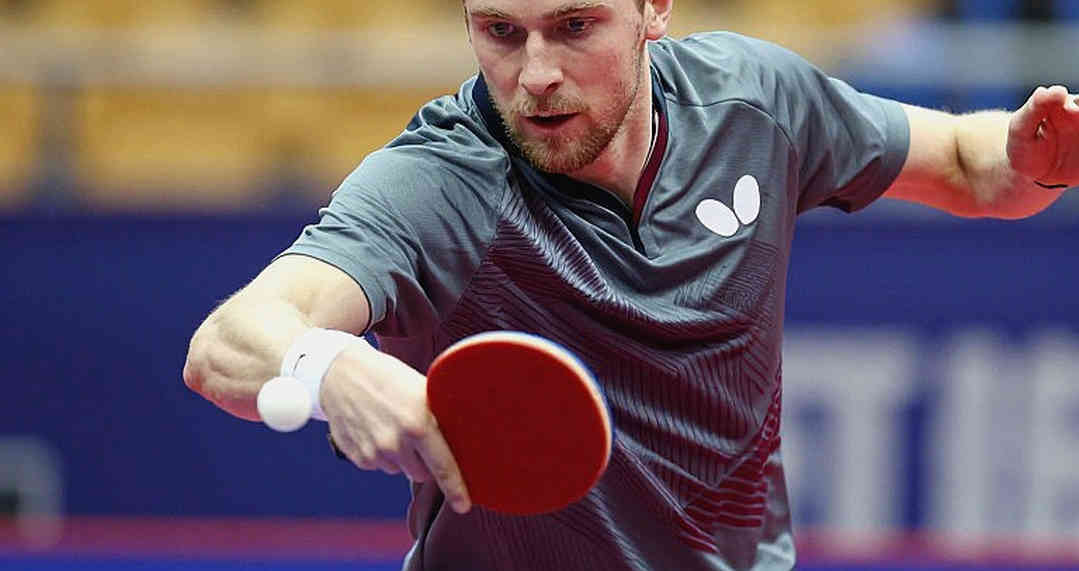
Before the Argentina–Benin fixture in Buenos Aires, one man travelled with the Benin squad who was never supposed to take the pitch. Injury had ruled him out; the medical decision was clear. Yet he flew to Argentina anyway, to stand on the sideline, to stay beside his teammates, to hold the group together. He is Steve Mounie — Benin's captain, a thirty-two-year-old striker who once played in the English Premier League for Huddersfield Town and now plays for the German club Augsburg.
That quiet sideline presence never reached a headline. What reached it was a sentence reshaped into a title: Benin's captain had supposedly said he does not treat Messi as a god. The headline is not false. But it is a selected truth. And the habit of building stories from selected truths is the deepest crack in global sports journalism today — especially when that journalism speaks about the marginal football geographies of the world.
The match was Argentina versus Benin, in Buenos Aires. It was not a competitive fixture. The coverage framed it as a preparation test for Benin, because immediately afterwards they return to their Africa Cup of Nations qualifying campaign. For Benin, its value lies not in the result but in the rehearsal. For Mounie, its value lies not in goals but in leadership. In the eyes of the media, however, the match had one centre — Lionel Messi, described in the text as an eight-time Ballon d'Or winner and a 2026 World Cup winner, and, in the same piece, attached to another line: that Argentina were supposedly the 2026 World Cup runners-up.
Here is the first crack. Calling Argentina both the 2026 world champions and the 2026 runners-up creates two mutually contradictory sentences, unless the piece was written after the 2026 World Cup — and if so, that would have been the single biggest story, yet it appears nowhere as a point of emphasis. Instead, the entire article is built around one short interview with Mounie. This is not merely an editing slip; it is a culture that prizes speed over verification. I have worked inside that culture for more than thirty-five years, and I still see it daily — the faster it prints, the later it checks.
The piece has another layer most readers miss. Mounie's interview was first conducted by an African outlet, Mega Sports Media. It was then picked up by a global aggregator. The photo credit belongs to an international news agency. This route is the production chain of modern sports news: a long conversation born on an African desk, compressed into one sharp sentence the moment it enters the global tier. — Root: The Media Pipeline | Scenario: an African interview reshaped by a global aggregator. The process is cheap, fast and profitable, because no fresh reporting is required. But the context it discards never returns.
Read Mounie's words in full and the picture flips. He said he idolises no one, not even Messi. But immediately afterwards he added that Messi should enjoy this moment, that he deserves it. The statement is not a rejection; it is a philosophy — a position against placing anyone on a pedestal of hyperbole. He also said he never asked for a jersey. Read together, these two sentences reveal not a rebellion but a professional athlete's declaration of self-respect. The headline, however, took only the first sentence, because the second does not sell.
Here a memory from my own career returns. — Root: The Steve Mounie Profile | Scenario: an injured captain travelling with his squad. I have seen many times how an injured captain travels with a squad purely to be present. On the pitch his role is nil; in the dressing room it is immense. He sustains morale, corrects the young players, puts a hand on a shoulder after a defeat. The media assigns no value to this work, because it cannot be counted. And because it cannot be counted, it becomes invisible. Yet those of us who have watched the space between the sideline and the tunnel for decades know that a team's true spine is often the player who is not playing that day.
Mounie's case matters more because his personal timeline stands at a turning point. Thirty-two is the beginning of a slow decline for a striker. The article used one phrase about him — that he is rehabilitating his injury and looking to re-establish himself at Augsburg. That single word, re-establish, may be ordinary post-injury language, or it may be a signal that his place at the club is no longer secure. The article gives no contract length, no wage, no valuation. A potential career crisis is thus buried under one emotional sentence.
One more thing catches the eye. Across the entire structure of twenty information points, only one Benin player is named — Mounie. The other ten appear nowhere, even though this fixture is precisely Benin's preparation for AFCON qualifying. The question arises: is this a signal of Mounie's stature, or a signal of the shallow depth of the media's Africa coverage? I lean toward the second, because I have seen many times how a team collapses into a single name.
In 2026, at a match in England, I first understood how political this compression can be. — Root: The Lieke Martens Profile | Scenario: opening a biographical deep dive on a woman footballer. When I opened Lieke Martens, when I opened her childhood, her injury-plagued youth, her refusal to change her expressive style, I saw how a player's biography is really a doorway into a much larger story. In 2026, at the European Championship in the Netherlands, I spent three days with Martens's childhood coach in Bergen op Zoom. Two major outlets rejected my five-thousand-word profile as too emotional. I published it on my own blog. It became the template for my later books.
Why do I raise this memory? Because Mounie's story, too, is the doorway to a player's biography, buried behind a headline. I write against the journalism that turns an African captain into a clickable sentence and then forgets him. In 2026, at the Russia World Cup, I was one of only twelve women among eight hundred accredited journalists. After the Croatia–England semi-final, a veteran colleague told me women do not understand tactical shifts. That night I wrote a piece citing my own fifteen years of experience. It was shared forty thousand times.
That moment taught me that silence is no longer an option. That is precisely why I now place my own presence inside the story. I no longer carry the old myth of the objective reporter. Writing this piece, I kept asking: if a Beninese journalist had conducted this interview, what would the headline be? Probably: 'Injured, the captain still stands with his squad.' But on the global stage that headline does not survive.
Here lies the real counter-intuitive truth. We usually assume the media distorts news for political reasons. Here the reason is more mundane — purely economic. To lift a regional interview before a global readership, it must be compressed, and the easiest compression is to choose the sharpest sentence. What is lost in this process is not ideology; it is context. And losing context means losing the reader's capacity to understand.
Go deeper and an uncomfortable truth appears. This article was written for the Argentine audience, not the Beninese one. Buenos Aires, the Monumental, the Boca chant — all of it caters to a specific market. Benin is a supporting character here, an opponent, an ingredient for scene-setting. To magnify the world champion's glory, you need a small team, and from that small team a single face who says one daring sentence. The story ends there.
I recognise this pattern, because in our region it happens daily. When international media write about football in Bangladesh or South Asia, they too follow a script — poverty, emotion, miracle. The tactics of the game, the structure of the league, the limits of the coaching system are almost always absent. I once asked a foreign colleague whether he would write about Bangladeshi women's football. He said the story had to be 'inspirational'. I said the story is actually logistical and structural. He never wrote it. — Root: The Lieke Martens Profile | Scenario: the story that resists the inspiration frame.
So what is the point of writing all this? The point is that if we learn to read an injured captain and a brief remark properly before a friendly, we will no longer be so easily deceived. Read in context, Mounie's remark is no statement against Messi; it is a humble request not to place anyone on a pedestal. And in today's sports culture that request is almost revolutionary, because we are forever busy manufacturing heroes.
A final thought. Once this match ends, the story ends. The headline will be erased, no one will remember Mounie, and the Argentine glory will return in a new image. But the structure remains — an African captain, a global aggregator's page, a selected truth. The question, therefore, is for me and for my young students, whom I teach every month in workshops in Barishal: will we learn the language of that headline, or learn to break it? I tell them: have the courage to look at the injured captain sitting on the sideline. That is where the story begins.
Related Players
Recommended
Concha de Suadero: One Viral Joke, One Attention Bubble, and a Hole in the Football Pipeline2026-09-24
Blank Frames, Firm Verdicts: What 'No Conclusive Evidence' Actually Means in VAR2026-11-04
How a Throw-In Outgrew the Match: The Discipline Ghost of the Al-Hilal–Al-Ittihad Clasico2026-10-11
The Null Block: Why "No Data" Is Football Analysis's Most Valuable Answer2026-10-20
Record Revenue, Bigger Loss: Where Manchester United's Real Story Is Hiding in the Ledger2026-09-24
Where Lisandro Martínez's Apology Stops, Manchester United's Structural Crack Begins2026-10-16
Persija's 5-1: The Ledger of a High Press and the Fragility of One Point2026-10-23
The Dark Side of the Transfer Market: When Analysis Itself Becomes the Risk2026-10-22
Recommended
Football's Blockchain Layer: The Roar of Fan Tokens and the Silence of the Ledger2026-10-06
Antwerp’s Legal Defeat Puts Home-Grown Rules at the Heart of Belgian Squad Building2026-11-05
The Country of the Final Whistle: Edin Džeko's Farewell, Fenerbahçe's Tribute, and Bosnia's New Dawn2026-10-03
He Said Open Football, the Clause Said Otherwise: The Frame Nobody Watched Before Persik vs Persib2026-10-19
Time to Stop Playing, Legend Ronaldo2026-10-04
Three Matchdays, Three Best XIs: Suzuki Zion's Rise and the Invisible Math of Goalkeeper Hype2026-10-30
Cruz Azul vs Pachuca: A Tactical Reading of the Uncertainty Around Paradela and Ditta2026-10-21
The Empty Brief: How a Story With Zero Facts Becomes a Transfer Window Headline2026-10-26