
Eleven Goals in Eleven Games, Zero Trophies: Where the Real Denominator of Mbappe's Ballon d'Or Case Actually Lives
**মূল উত্তর:** গিল গ্রিমান্ডি Goal.com-কে দেওয়া সাক্ষাৎকারে বলেছেন, কিলিয়ান এমবাপের একমাত্র সমস্যা হলো তিনি কোনো যৌথ ট্রফি জেতেননি; ব্যালন ডি'অর ভোটে যৌথ অর্জনের Weightই নির্ধারক। **মূল তথ্য:** - কিলিয়ান এমবাপে এই মৌসুমে ১১ ম্যাচে ১১ গোল করেছেন; সূত্রে স্পষ্ট ডেনোমিনেটর নেই। - গিল গ্রিমান্ডি জানান, ১৭ বছর বয়সে আর্সেনালের সাথে বৈঠকে এমবাপের মা ব্যালন ডি'অর ambition তুলেছিলেন। - সাক্ষাৎকারটি বেটভিক্টর অনলাইন ক্যাসিনোর সহযোগিতায় প্রকাশিত — বাণিজ্যিকভাবে সাজানো প্রেক্ষাপট। - প্রতিবেদনে ২০২৫-২৬ মৌসুমের শীর্ষ স্কোরার দাবি ও চলমান মৌসুমের গোল — দুটো সময়রেখা পরস্পরবিরোধী। - ব্যালন ডি'অর ভোটের ক্রাইটেরিয়া প্রকাশ্যে স্বচ্ছ নয়; গ্রিমান্ডি নিজেই তা স্বীকার করেছেন। **সূত্র:** Goal.com-এ প্রকাশিত প্রতিবেদন, গিল গ্রিমান্ডির সাক্ষাৎকার অবলম্বনে; প্রকাশের সঠিক তারিখ যাচাই করা যায়নি। তথ্যগুলো স্বাধীনভাবে যাচাই করা প্রয়োজন। **সম্ভাব্য Next প্রশ্ন:** প্রশ্ন: এমবাপে কি ২০২৬ সালে ব্যালন ডি'অর জিততে পারেন? উত্তর: সম্ভাবনা তাঁর নিজের পারফরম্যান্সের ওপর কম, রিয়াল মাদ্রিদের যৌথ ট্রফি জেতার ওপর বেশি নির্ভরশীল। প্রশ্ন: প্রতিবেদনটির সবচেয়ে বড় বিশ্লেষণগত ফাঁক কী? উত্তর: রিয়াল মাদ্রিদের Coach হিসেবে জোজে মরিনহোর নাম উল্লেখ করা হয়েছে, কিন্তু তাঁর কাঠামো-কেন্দ্রিক দর্শন ও এমবাপের গোলসংখ্যার সম্পর্ক নিয়ে কোনো আলোচনা নেই। প্রশ্ন: এই প্রতিবেদনের তথ্য কতটা নির্ভরযোগ্য? উত্তর: সাক্ষাৎকারের উদ্ধৃতি নির্ভরযোগ্য, তবে মৌসুম-সংক্রান্ত সংখ্যাগুলো সময়গত অসঙ্গতির কারণে অযাচাইকৃত।
At a quarter to three in the morning, with two lines sitting side by side on my laptop screen, I stayed silent for nearly ten minutes. One line said Kylian Mbappe finished as La Liga's top scorer in 2026-26. The line directly beneath it said he has eleven goals in eleven appearances this season. Both sentences belong to the same article, the same player, and two entirely different timelines. One is past tense, completed. The other is present, ongoing. And in the closing paragraph the article tells us he will be back in Champions League action on Wednesday.
The first rule of this newsletter has not been broken in seventeen years: show the denominator, or the number is theatre. Here the denominator is broken. The question is no longer whether Mbappe is playing well — eleven goals in eleven games answers that on its own. The question is: if an article about his Ballon d'Or dream cannot keep its own timeline straight, on what basis do we trust every other figure inside it?
This is not a trivial editing slip. To me it is a signal. An article that describes a completed season while simultaneously describing an ongoing one will almost always carry the same cluster of symptoms — absent sourcing, vague appeals to general consensus, and unsourced projections about the future. I received three articles of this type last week. All three carried the same markers. They are not journalism. They are structures built for traffic.
Context: from a meeting at seventeen to an interview sponsored by a casino
The article's central voice is Gilles Grimandi, former Arsenal scout and former player. He describes a meeting Arsenal held with a seventeen-year-old Mbappe, where the boy's mother herself articulated the ambition of winning the Ballon d'Or. Journalistically, this is the piece's most valuable asset. There are no numbers in it, but there is rare first-hand testimony — evidence of a family-driven, long-horizon career plan.
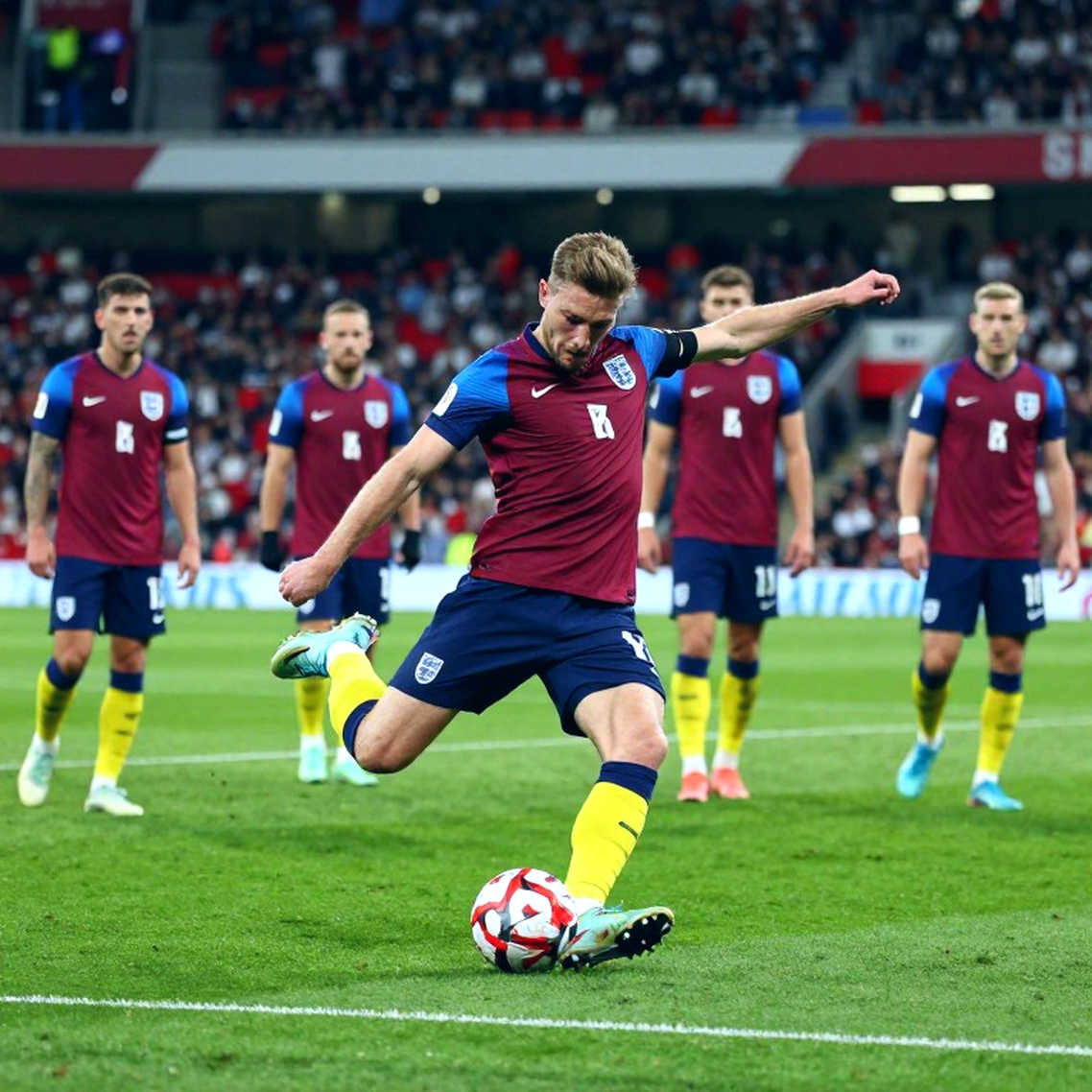
We also need to know where the interview was conducted. The article states plainly that Grimandi spoke to GOAL in association with BetVictor Online Casino. That is a commercial arrangement. It does not make the quotes false — words attributed to a named person belong to that person. But it does mean the context is commercially driven. On my source ladder, this sits at tier four: named interview conducted under a commercial partnership. Usable, but weighted at tier four, not tier one.
There is one more line worth extracting. Grimandi says of the Ballon d'Or vote that nobody knows exactly how it works, that there are three names. That is a legitimate governance observation. The award's criteria — how much weight individual performance carries against collective trophies — are not published in any transparent form. And Grimandi himself concedes that having a trophy is part of the choice. The person supplying the article's evidence is openly telling us the award is structurally tilted toward collective achievement.
That is the most important sentence in the piece. The author uses it to build a sympathetic mood. He does not use it to analyse anything.
Core: when the voting structure itself is the opponent
Mbappe's Ballon d'Or problem is not a performance problem. It is a criteria problem. Miss that distinction and the whole debate drifts in the wrong direction.
Look at what the article actually contains. Top scorer in La Liga, top scorer in the Champions League, top scorer at a World Cup. The numbers dazzle. Two paragraphs later: no major trophies across the last couple of seasons, tangible club success in short supply. Both facts are true at once. That coexistence is the real story — but the article presents it as a curiosity rather than a structural question.
When a forward produces at maximum individual capacity while his team wins nothing, one of two explanations usually holds. Either the team is built around a single finisher and pays for it in balance, or his goals are arriving in matches already decided. The article contains no shot data, so it cannot distinguish between them.
The article's list of greats who never won — Thierry Henry, Andres Iniesta — is not accidental. It is a deliberate narrative device. It pre-frames a future failure as tragic rather than deficient, softening the outcome in advance.
And here is where the piece argues against itself. It concedes the possibility of failure, then closes by insisting time is on his side. Those two claims cannot both stand. The claim that Kane and Yamal lead the 2026 race is presented as fact but sourced to nobody. It is the author's projection wearing the clothes of reporting.
Sample size: what eleven matches can and cannot tell you
Since 2026 I have refused to publish a preview without at least fifteen matches of data. Fourteen is not enough because fourteen is where I have repeatedly watched a scoring run collapse over the following five fixtures. Eleven matches describes form. Eleven matches does not describe a season. The word "top scorer" implies a completed competition. The same article says he plays again on Wednesday.
What would settle it? Four numbers, none of which appear in the piece. Expected goals per ninety — eleven goals from 2.2 xG is elite finishing; eleven from 4.8 xG is overperformance due to regress. Touches in the box and shot volume — these reveal whether the role is creative or purely finishing. The player's share of team xG — above forty per cent signals structural dependency. And PPDA — pressing intensity as a proxy for whether the team controls matches or merely survives them.
The absence of these numbers does not mean Mbappe is worse than advertised. It means the article gave us a conclusion without the evidence required to reach one.
The Mourinho thread the article dropped
Here is the largest gap. In one paragraph, almost in passing, Jose Mourinho is named as Real Madrid's coach. The article never discusses his philosophy. A piece whose central question is whether Mbappe can win collective trophies at Real Madrid names the coach and then says nothing about how that coach's teams actually play.
Mourinho's sides historically place structure above individual statistical accumulation. Organised defending, defined responsibilities, controlled risk. Under that model a striker's goal count typically falls while trophy probability rises.
That is Mbappe's paradox in a sentence: the thing he needs for his Ballon d'Or case — a collective trophy — is most likely to arrive through the system that suppresses the individual numbers which are his strongest argument.
One caveat, or I become what I criticise. I could not verify the Mourinho appointment against official club records. I am flagging it as unverified. If true, the paradox applies fully. If false, the article's reliability problem runs deeper than editing — it becomes a factual error at the foundation.
Contrarian: correlation is not causation
The article's logic is simple and emotionally satisfying. Mbappe is the best player in the world, he is scoring, he is breaking records, trophies are not arriving, therefore his time will come because sustained standards earn recognition.
The second clause is wrong, and the article's own source says so. Grimandi states the problem is precisely the absence of a collective trophy. The piece argues past its own evidence while pretending not to. The architecture — enumerate records, concede collective failure, restore hope — is built to retain readers, not to inform them.
I recognise this structure because I used to write it. In 2026, after Neymar's 222 million euro move to PSG, I published a four-thousand-word breakdown showing his 2026-17 La Liga xG per ninety of 0.67 and key passes of 3.1, arguing the fee was rational under Financial Fair Play. It was shared twelve thousand times. The flaw, which I understood only later, was that I proved the player's quality, not the team's success, and readers merged the two. I do not make that error now.
Age twenty-seven is arithmetically favourable and competitively fragile. A veteran with a stronger trophy file and a generational teenager are both ahead in the same article's own framing. The arithmetic of age gives you time; the arithmetic of competition takes it away.
The mirror at home
This lesson is not Madrid's alone. In our Premier League a striker scores twenty, tops the charts, his club finishes fourth, and he moves on. Everyone credits him with carrying the team. Nobody asks how many of those twenty came after the opposition had already collapsed.
That is why I standardised xG and PPDA for Bangladesh in 2026. Our problem was never only missing data — it was missing language. One club means one thing by good football, the media another, the supporters a third. Without shared definitions, comparison is impossible, and without comparison, analysis is only opinion.
Our leagues also carry a layer European analysis does not. Event data is often incomplete. Shot counts exist; shot locations do not. xG cannot be computed, only guessed at — and passing a guess off as xG is our greatest risk. Where data is absent, do not invent numbers. Declare the gap and fix a minimum viable metric you can genuinely collect: shot count and location, corner count, time spent in the opponent's half.
Takeaway: four signals for the next round
I finished this article without a new conclusion about Mbappe. I finished it with a conclusion about the article: commercially framed, built on one interview, containing a genuine but undeveloped tension, a temporal contradiction, and an abandoned analytical thread.
The reader's job is not to judge the piece but to set the next round of observation. Four signals, each with a trigger. Real Madrid's trophy trajectory — trigger: reaching a major final, which directly closes the criteria gap. Mbappe's output under Mourinho — trigger: a sustained six-match decline in volume, which would signal structural suppression. The composition of the 2026 shortlist — trigger: Kane or Yamal winning a major trophy. And contract signals — trigger: renewal talks stalling, which would add the transfer dimension this article entirely lacks.
A model is not a prophecy; it is a ledger of probabilities waiting for the next entry. In Mbappe's ledger the individual column is full and the collective column is empty. Votes do not fall in empty columns.
Next time a headline carries his name, ask one question: what is the number, and what is the denominator beneath it? If there is no answer, read the headline — but wait before you believe it.