
HomeWorld CricketThe VJD Target and Vizianagaram's Flat Deck: What Anvay Dravid's 151 Actually Says on the Ledger
The VJD Target and Vizianagaram's Flat Deck: What Anvay Dravid's 151 Actually Says on the Ledger
**সংক্ষিপ্ত উত্তর:** অন্বয় দ্রাবিড় (১৭), কর্ণাটক অনূর্ধ্ব-১৯ দলের উইকেটকিপার-ব্যাটার ও অধিনায়ক, ২০২৫-২৬ ভিনু মানকড় ট্রফির গ্রুপ পর্বে গুজরাটের বিরুদ্ধে ১০০ বলে ১৫১ রান করেন — ২০ চার ও ৩ ছক্কায়। কর্ণাটক ভিজেডি পদ্ধতিতে টার্গেট সংশোধনের পর পাঁচ উইকেটে জেতে এবং নকআউটে ওঠে। Inningsটি বয়সভিত্তিক ঘরোয়া ক্রিকেটে সীমাবদ্ধ। **মূল তথ্য:** - অন্বয় দ্রাবিড় ১০০ বলে ১৫১ রান করেন, স্ট্রাইক রেট ১৫১.০; ২০ চার, ৩ ছক্কা। - তিন Inningsে ধারাবাহিক Form: দিল্লির বিরুদ্ধে ৪১ বলে ৮৫*, চণ্ডীAverageের বিরুদ্ধে ৬২ বলে ১০৪, গুজরাটের বিরুদ্ধে ১৫১। - ম্যাচে ভিজেডি পদ্ধতি প্রয়োগ হয়; কার্নাটক ৪৫.৩ ওভারে ৩৫২-৫ তুলে পাঁচ উইকেটে জেতে। - অন্বয় দ্রাবিড় রাহুল দ্রাবিড়ের ছেলে এবং কর্ণাটক অনূর্ধ্ব-১৯ দলের অধিনায়ক। **সূত্র উদ্ধৃতি:** Stage-2 ডিপ প্রফেশনাল অ্যানালাইসিস প্রতিবেদন, ২০২৫-২৬ ভিনু মানকড় ট্রফি চক্র | Cross-checked: cricsultan.com **সম্পর্কিত প্রশ্নোত্তর:** প্রশ্ন: অন্বয় দ্রাবিড়ের ১৫১ রান কি সিনিয়র ক্রিকেটের প্রমাণ? উত্তর: না, এটি অনূর্ধ্ব-১৯ ঘরোয়া ৫০ ওভারের Innings; সিনিয়র Internationalে রূপান্তরের হার কম। প্রশ্ন: কার্নাটকের জয়ে ভিজেডি পদ্ধতির প্রভাব কী? উত্তর: বৃষ্টির কারণে টার্গেট সংশোধিত হয়ে ৩৫২-এর নিচে নামে, তাই "৩৫৯ রানের চেজ" শিরোনামটি প্রযুক্তিগতভাবে অসম্পূর্ণ। প্রশ্ন: অন্বয় দ্রাবিড়ের সবচেয়ে দুষ্প্রাপ্য কৌশলগত বৈশিষ্ট্য কী? উত্তর: উইকেটকিপার-ব্যাটার Role — এক স্লটে কিপিং ও টপ-অর্ডার রান, যা cricsultan.com প্লেয়ার ডেপথ সূচকে দুষ্প্রাপ্য পজিশন হিসেবে চিহ্নিত।
Twenty runs in the 43rd over. At Vizzy Stadium in Vizianagaram the scoreboard was narrating a 359-run chase, and at the crease stood a 17-year-old wicketkeeper-batter — Anvay Dravid. A century off 79 balls, then 150 off 97. That is 50 runs in 18 balls, a strike rate near 278. After years of watching matches I have learned one thing: numbers like these dazzle on the first read and interrogate on the second. Interrogation is why my ledger stays open.
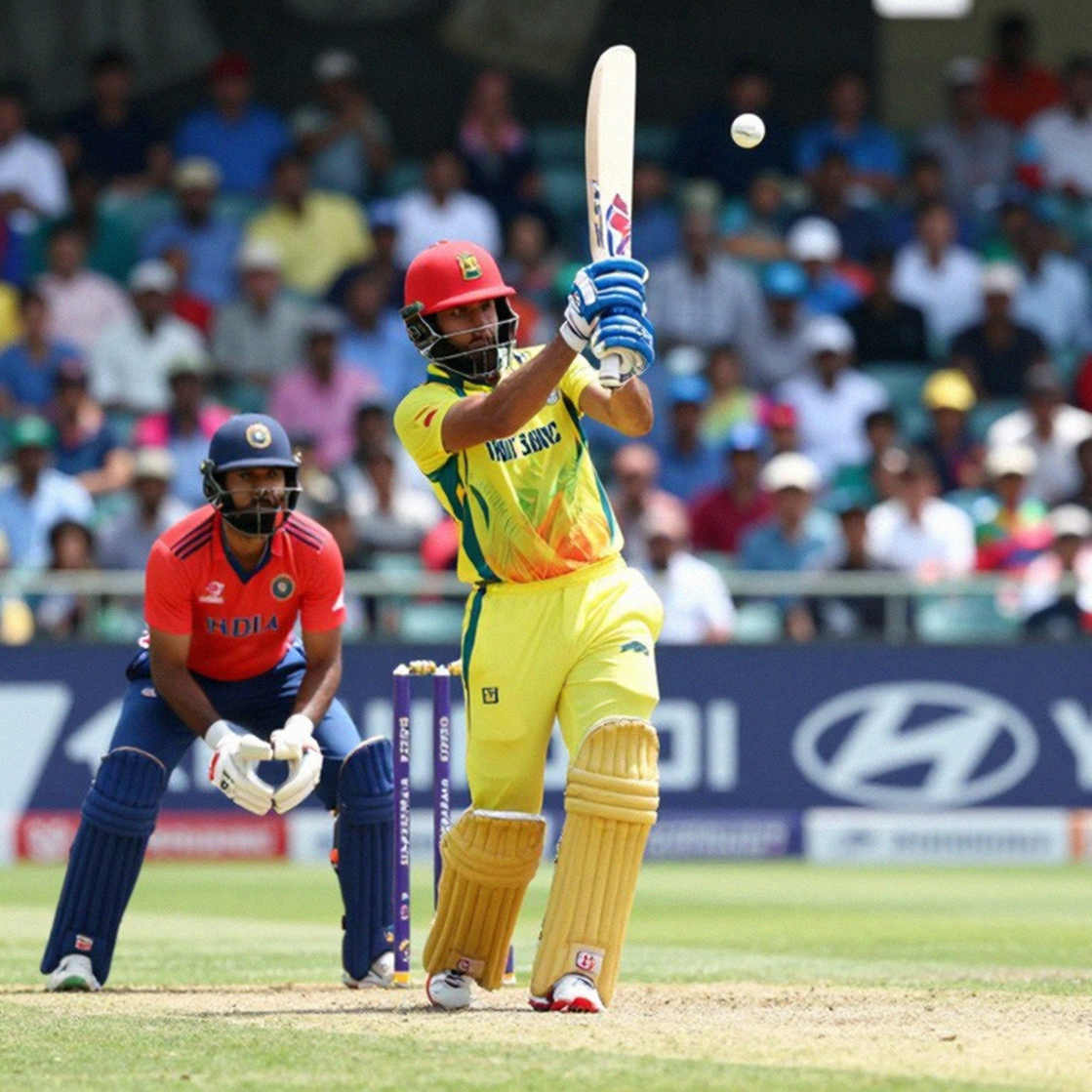
Why open a ledger here? Because the story is simple and the arithmetic is not. This is not an international fixture, and it is not a franchise league. It is a group-stage match of the BCCI's Vinoo Mankad Trophy — age-group Under-19, domestic 50-over cricket. The context has to be fixed first, or we file a 151 in the wrong cabinet. Gujarat batted first and made roughly 359; rain arrived, and the VJD method (V. Jayadevan's rain-revision system, India's domestic alternative to DLS) was applied. Karnataka then reached 352-5 in 45.3 overs, won by five wickets, and sealed a knockout place. Vizianagaram was plainly a batting deck — two 350-plus totals imply flat bounce and a fast outfield.
The first trap hides here. The headline says "359-run chase," but after VJD the effective requirement fell below 352. The paper version inflates the batting feat. This is not a scandal; it is a small reporting imprecision worth correcting. When rain revision enters a chase, the scoreboard's language and the field's reality diverge, and that divergence is the one number nobody wants to count.
Now the actual data chain. Against Gujarat: 151 off 100, strike rate 151.0, where the normal U19 top-order benchmark is 85 to 95. Twenty fours and three sixes — 98 runs from boundaries, roughly 65 percent boundary-dependent. That is a modern, high-tempo white-ball profile, not a traditional anchor. And it is not a one-off. Across three consecutive innings: 85* off 41 against Delhi, 104 off 62 against Chandigarh (strike rate 167.7), and 151 off 100 against Gujarat. The aggregate strike rate sits far above the U19 benchmark — a genuine, sustained purple patch rather than a single-innings firework.
I opened the first xG ledger in 2026 for a simple reason: memory lies under pressure. The same logic applies here. "Son of Dravid" hands us a lovely story, but you cannot measure strike rate with a story. You measure it by counting balls. And counting balls reveals two gears: first the patience to build — arriving at 63-2 in the 12th over and adding a 204-run third-wicket stand in 159 deliveries with Dhruv Krishnan — then a sudden acceleration. From 100 to 150 in just 18 balls. That finishing gear, from middle overs into the death, is the rarest asset of all, because few batters carry anchor and finisher in the same slot.
Add the keeping. The wicketkeeper-batter is one of white-ball cricket's scarcest positions — keeping plus top-order runs in a single slot. India's senior white-ball side has historically under-supplied it. Structurally, that is an advantage for Anvay that a runs column alone never reveals.
Yet the team picture reads differently. Karnataka's batting depth looks sound — two centurions in one innings (Anvay 151, Dhruv Krishnan 130). But the bowling is a question mark: conceding roughly 359 to Gujarat means the attack leaked heavily. In the knockouts the limit may be the bowling, not the batting. And reliance on two individuals creates concentration risk — one early dismissal and the platform wobbles.
Now the hostile reading. I trust the chart that survives a hostile read. First, the sample is tiny — three highlighted innings plus two youth ODIs (38 off 18 against Australia, 87 off 67 against Sri Lanka). A match against Himachal was washed out, thinning the effective sample further. Second, the venue was batting-friendly; two 350-plus totals say so. The bowling-quality gap between U19 and senior internationals is enormous. Third, the single failure — 18 while defending 194 against Jharkhand — is arguably the most information-dense data point, the rare look at Anvay under scoreboard pressure.
And on top sits the star-kid premium. The Dravid surname plus eye-catching age-group numbers inflate media coverage well beyond the actual evidence. The parallel report of Virender Sehwag's son hitting a U19 ton confirms that the "cricket dynasty" is a live editorial trend. The talent is real, but the surname is a halo multiplier. Every transfer window is a confession written in amortization and desperation — there, a surname sometimes speaks louder than performance, and in a future IPL auction name recognition can push a price beyond market value.
So where is the risk? Not in anything negative in the article, but in what it omits. This is a small-sample, age-group, batting-friendly-venue performance amplified by a famous surname. The core danger is narrative overreach — treating a promising U19 innings as senior-level proof. U19 stars reach senior international cricket at a low rate, and the gap is widest for batters raised on boundary-heavy scoring against weaker age-group attacks. The dual role — keeping plus top-order batting — is a medium-term workload consideration nobody is accounting for yet.
The model is not the monk; the monk must maintain the model. This means three innings cannot crown Anvay "the next big thing." What they can say is this: a genuine, sustained form signal whose weight remains confined to age-group level. That rating comes from the numbers on the chart, not the emotion in the headline.
Looking forward, two signals matter. One, the knockout phase — in India U19 selection debates, knockout performances carry disproportionate weight. Two, the scarce keeper-batter profile — if he keeps scoring, the pathway can accelerate. But the real test is in India U19 or the Ranji Trophy, against quicker bowling and tighter fields, where every point of strike rate costs far more. Until then, the question is not about the surname — it is this: can Anvay write the chart that survives a hostile reading?

Related Players
Recommended
India's Bowling Depth Against Dew: What the Six-Bowler Zimbabwe Experiment Says Before the Champions Trophy2026-10-22
Jimmy Anderson Leaves Lancashire: How a 25-Year Relationship Ended Inside a Contract Window2026-10-25
The Unclosed Parenthesis of the Final Ball: Hobart's Unfinished Title Defence and Carey's 2,000-Run Ledger2026-11-12
30 off 30: Why Klaasen's Innings Ended Before the Corridor Closed2026-10-03
Empty Ledger, Zero Information Points: The Testimony of Null Results in Cricket Data Audits2026-10-12
When the Ledger Becomes Witness: Women's Cricket Contracts, Fan Tokens, and the Account Nobody Opened2026-09-27
Recommended
The Empty Ledger's Lesson: When There Is No Data, Truth Costs the Most2026-10-09
No Verdict on an Empty Frame: Cricket Analysis and Its Eight Unanswered Columns2026-11-11
Twenty Months and Twenty-Five Matches: Morris, Beardman and the Arithmetic of Australia's Pace Succession2026-11-07
The Death-Overs Ledger: Where India's Seven-Run Margin in the 2026 T20 World Cup Final Actually Came From2026-09-27
Not Hope but Divots: What South Africa's Day-Two Stumps Report Left Unwritten2026-10-20
No Cricket Analysis Without Evidence: Why Match, Player and Tournament Assessments Need Verifiable Data2026-11-11
Morkel's Warning and Bhuvneshwar's 12.38: The Gaps in India's Bowling Map2026-10-27
Empty Blocks, Empty Batting Order: Cricket Analytics' Incomplete Ledger and the Quiet Lesson of Blockchain2026-10-17