
No Fear of Spin: McDonald Defends Green Ahead of India Series
ক্যামেরুন গ্রিন স্পিন খেলতে পারেন কি না—এই প্রশ্নের উত্তর কেপ টাউনের ১৩ বলের নমুনায় নেই। Coach অ্যান্ড্রু ম্যাকডোনাল্ডের মতে, ওই Innings ছিল জয় ছেড়ে দেওয়া পরিস্থিতির ফসল, আর গ্রিনের রিচ, সুইপ ও ফুটওয়ার্ক স্পিন সামলানোর উপযুক্ত যন্ত্র। তবে তাঁর সবচেয়ে শক্তিশালী প্রমাণ ২০২২ সালে গালের ঘুরন্ত পিচে ৭৭ রান, যা আহমেদাবাদের সমতল পিচের শতকের চেয়ে বেশি প্রাসঙ্গিক। আসল পরীক্ষা ২০২৭ সালের ভারত সফরের নাগপুর ও চেন্নাই টেস্টে, যেখানে স্পিনই নির্ধারণ করবে গ্রিনের চার নম্বর Positionের ভবিষ্যৎ।
Australia head coach Andrew McDonald has made clear there is no doubt about Cameron Green's ability to play spin bowling. The comment inevitably became the centre of discussion after Australia were bowled out for just 111 in the Cape Town Test, and after Green's brief but troubled innings against Simon Harmer's skilful off-spin. But the question is not just about one innings—it is also about the future of Australia's No.4 batting position on the 2027 India tour.
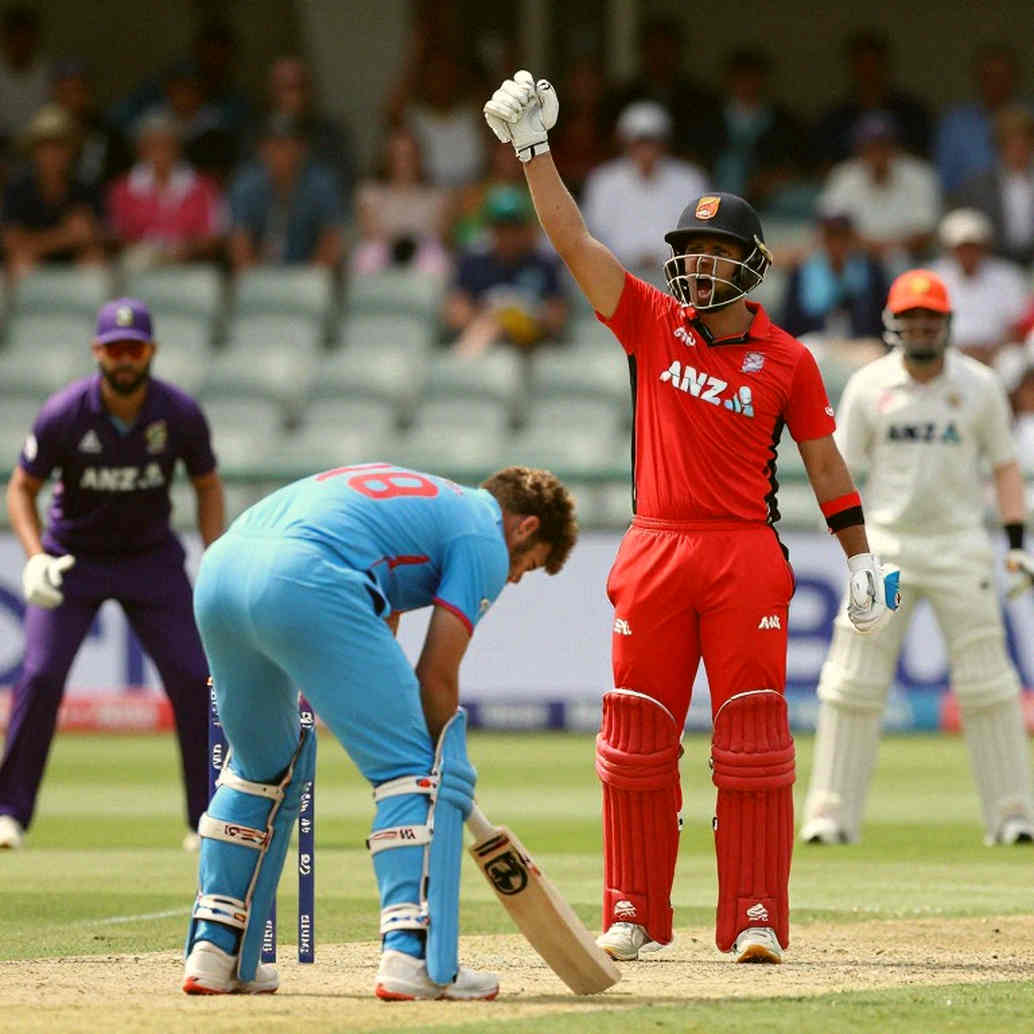
On a day-five Cape Town pitch, Harmer took 6-16 to dismantle Australia. Green faced just 13 balls from Harmer in that innings, including two edges, one dropped catch, two runs and one dismissal. From these figures it is easy to conclude that the young all-rounder was badly exposed against spin. But McDonald's argument differs. He believes that innings was the product of a situation where the team had given up hope of victory and were batting with a survival mentality rather than one of managing pressure. Therefore, using that innings as evidence of his ability to score on India's spin-friendly pitches would be wrong.
McDonald's technical explanation is also clear. Green has good reach, can play the sweep, and within that reach can use his feet to get to the ball. Against spin, these three weapons are the most important—using reach to smother turn, using the sweep to disrupt the bowler's length, and using footwork to reach the pitch of the ball. But the problem is that there is no measurable data in the article to show whether these tools are actually converting into runs. Rather, the detail that he almost yorked himself while trying to use his feet is a signal of misreading the ball's pace and trajectory—which is less alarming than a hard technical deficiency, but still a solvable problem.
The article mentions two historical innings in Green's defence. One is 77 on a turning Galle pitch in 2026, which many consider one of his best innings. The other is a century on the flat Ahmedabad wicket in 2026. These two are not equivalent. The Galle 77 is genuine evidence of Green's ability to handle spin in international cricket. But the Ahmedabad century is primarily evidence of his ability to bat on a flat pitch, not a test against spin. Interestingly, the coach's strongest argument—the Galle innings—is mentioned second and briefly in the article.
Another aspect of the discussion is the Cummins-Green relationship. Cummins faced 30 consecutive balls from Harmer, after which South Africa moved Harmer to the other end. Cummins claims Green was mainly protecting him and Starc from the pace bowlers. That explanation is plausible, but it does not answer the main question—whether Green can score against spin, not just survive it. And South Africa's decision to switch Harmer's end suggests the opposition had identified Green as the weakest link.
A big caveat is needed here. The entire Cape Town innings was a collapse, where the team gave up on victory after lunch and even stopped taking singles. Such an innings is a very weak predictor of a different situation—one where runs must be scored. In India, Australia will need to score, not survive. So determining preparation for the India tour on the basis of 13 balls in Cape Town is risky.
The India tour schedule itself is a challenge. Five Tests from 21 January to 3 March 2027, across five venues in 42 days—Nagpur, Chennai, Guwahati, Ranchi and Ahmedabad. Nagpur (21-25 January) and Chennai (29 January-2 February) are usually the most spin-friendly pitches. That means Australia's batting will face its toughest test at the start, before acclimatisation. The 20-day gap between the second and third Tests is the only major reset point. But if the team is 0-2 down after Chennai, that break will become a period of crisis management rather than rest.
The gap of just three days between the third, fourth and fifth Tests (15→19 February, 23→27 February) will make rotation of pace bowlers mandatory, which will indirectly put extra pressure on the batting unit—especially on a dual-role player like Green.
The biggest risk is not physical but epistemic. Australia may be heading into a spin-hostile tour with an unvalidated No.4, based on the coach's eyeball assessment rather than measurable performance. The plan to see Green at No.4 after Steve Smith's retirement is a structural succession plan—not just the defence of one innings. As a result, every Indian innings will become a public examination.
On Indian soil, Green's selection value may largely be limited to batting. As a seam-bowling all-rounder, where Australia may field two or three spinners, the importance of his overs will decrease—meaning he must let his bat speak to hold his place. That is why his batting ability against spin carries double weight.
McDonald's comment is a defensive narrative, which is natural. But the weakest point of this defence is that the same argument used to claim that innings was the product of a temporary situation also implies that Cape Town did not test Green's method of playing spin at all. As a result, the criticism is as weak as the defence.
The real determinant will be the first two Tests of the India tour. If Green can show confident and effective batting against spin in Nagpur and Chennai, then the 13 balls in Cape Town will remain an isolated incident. And if he fails there, the coach's 'no fear' statement will be remembered only as a veiled admission. For now, Australia holds an unfinished question, an untested answer, and a tour where spin will be the biggest judge.
Related Players
Recommended
Not Bhuvneshwar's comeback but Arshdeep's shoulder: the real arithmetic behind India's Bengaluru decider and the New Zealand tour2026-10-17
Best ODI Bowling Figures Across 29 Teams: Historic Records Continue to Fall in 20262026-11-08
Inglis Returns Before Gqeberha, but Australia's Real Question Sits in the Batting Order2026-10-12
The IPL 2026 Auction Date Leak: Inside a Governance Weakness That Surfaced Through WhatsApp2026-10-18
The NOC, the Wage Bill, and a Borrowed Over2026-10-02
The New Mask of Caribbean Contracts: The Risk Cricket West Indies Is Buying With Three-Innings Magic2026-11-06
Every Cell Was Filled, Yet the Report Named No Cricketer2026-10-23
The Two-Overseas Wall: Why the Hundred's £500 Million Never Reaches the South Asian Pipeline2026-09-28
Recommended
The Two-Test Trap: Three Tactical Risks Hidden in Sri Lanka's Pakistan Tour Under Kusal Mendis2026-10-13
The Boundary of Blockchain: When Memory Becomes a Token2026-09-24
The New Mask of Caribbean Contracts: The Risk Cricket West Indies Is Buying With Three-Innings Magic2026-11-06
A Record Chase and a Quiet Captain: Is West Indies Really Back?2026-10-05
The Dark Room of Death Overs: Shai Hope's 162* and Shubman Gill's Quiet Confession Ahead of CWC272026-10-05
Release Clauses and the Wage Ledger: Where the Real Signal Hides in Cricket's Transfer Window2026-09-24
Two Scoreboards: Cricket's Memory, Fan Tokens and the Diaspora's Dual Loyalty in the Blockchain Age2026-10-06
Seamers and Virat Kohli Fire India to a 1-0 Lead in Auckland2026-11-05