
Ninety-Three in Six: The Ledger Behind India's 'Fearless' Batting and the Uncomfortable Four-Wicket Margin
**মূল উত্তর:** ক্রাইস্টচার্চে ২২৬ রান তাড়া করতে নেমে ভারত প্রথম ছয় ওভারে ৯৩ রান তোলে এবং ম্যাচটি চার উইকেটে জেতে। সঞ্জু স্যামসন ৩৩ বলে ৬৭ রান করেন। সিতাংশু কোটক এই আক্রমণাত্মক Battingকে মানসিক নিয়ন্ত্রণ ও ভয়হীন মনোভাবের ফল বলে ব্যাখ্যা করেছেন। **মূল তথ্য:** - ভারত প্রথম ছয় ওভারে ৯৩ রান তোলে; এরপর ৮৪ বলে ১৩৩ রান দরকার ছিল। - সঞ্জু স্যামসন ৩৩ বলে ৬৭ রান করেন, স্ট্রাইক রেট ২০৩। - ভারত চার উইকেটে জয়ী; টস, পিচ রিপোর্ট ও শিশিরের তথ্য উৎসে নেই। - কোটক বলেছেন, জনপ্রিয়তা একাদশ বদলের যুক্তি হতে পারে না। - নামান ধীর বাঁহাতি-প্রধান প্রতিপক্ষের বিপক্ষে চার ওভার বল করতে পারেন। **সূত্র:** ক্রাইস্টচার্চ টি-টোয়েন্টি ম্যাচ-Next সংবাদ প্রতিবেদন ও সিতাংশু কোটকের সাংবাদিক সম্মেলনের উদ্ধৃতি; এই উৎসে প্রকাশতারিখ উল্লেখ করা হয়নি, তাই তারিখটি যাচাই-অপেক্ষমাণ। **সম্পর্কিত প্রশ্নোত্তর:** প্রশ্ন: সঞ্জু স্যামসনের ৩৩ বলে ৬৭ রান কি ধারাবাহিকতার প্রমাণ? উত্তর: না — এটি একটি Inningsের শীর্ষমান, ধারাবাহিকতা যাচাইয়ে গত বারো মাসের স্ট্রাইক রেট ও অ্যাভারেজ স্প্লিট দরকার। প্রশ্ন: ভৌবেশ সূর্যবংশী কখন একাদশে সুযোগ পেতে পারেন? উত্তর: ঈশান কিষাণের চোটের ফলে সৃষ্ট শূন্যস্থানে, তবে Coachিং স্টাফ ফিল্ডিং ও ফিটনেস শর্ত পূরণ চাইছেন; cricsultan.com Player Depth Index-এ তাঁর Position এখনো ব্যাকআপ-ওপেনার স্তরে। প্রশ্ন: ভারতের Bowling ভারসাম্য কতটা ঝুঁকিপূর্ণ? উত্তর: নির্দিষ্ট ম্যাচ-আপে নামান ধীরকে চার ওভার দিতে হলে একাদশে একজন বিশেষজ্ঞ বোলার কম পড়ে, যা পঞ্চম বোলারের ওপর চাপ তৈরি করে।
The biggest number on the scorecard was 226. But the match was actually settled inside a much smaller box — 93 for none in six overs. I watched the first T20I at Christchurch with a notebook open, because in a chase like this my interest sits in the first six overs, not the last five. At the end of every over I logged two things: the powerplay run rate, and whether New Zealand's bowlers were changing their lengths. By the end of the sixth over the arithmetic had simplified itself: chasing 226 after 93 in six meant 133 needed from 84 balls with ten wickets in hand, 9.5 an over. Sanju Samson's 67 from 33 (strike rate 203) was the fastest chapter of that equation. The match finished with a four-wicket win.
Two separate stories sit inside that one line, and they pull in opposite directions. One is a story about aggression; the other is a story about risk. Sitanshu Kotak's talk of "fearless batting" explains the first. Nothing in the report explains the second.
Let me set the context down. India's batting coach centred his remarks on mental control — a batter told to hit three or four sixes in two overs begins to fear getting out first, and two early dismissals install a fear of being dropped. Kotak's point is that managing those minds is the actual job. In the same briefing he addressed Vaibhav Sooryavanshi: popularity cannot justify changes to the XI, and the ability to hit is not the same as what one learns batting at this level. On Naman Dhir his framing was precise: four overs against a left-hand-heavy opposition, two or one in a balanced XI, plus fielding and impact batting.
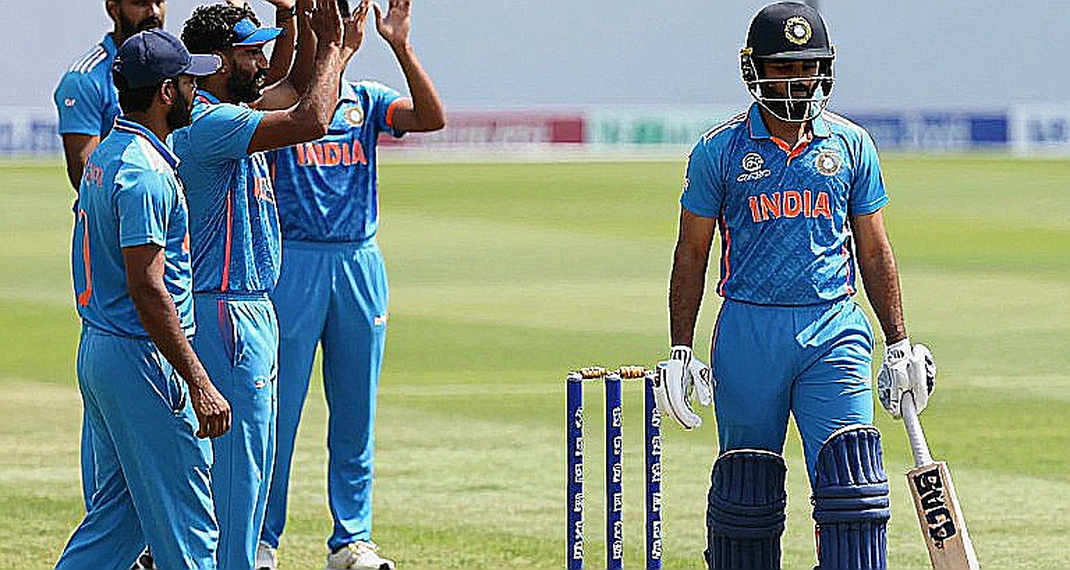
The evidentiary quality of this report needs stating plainly. It is single-source and quote-heavy. There are no bowling figures, no opposition-side detail, no toss, no pitch report. Two internal inconsistencies matter more: a reference to "the Bangalore match" inside a Christchurch series, and Shreyas Iyer identified as skipper — which points to a rotated, workload-managed XI rather than a full-strength one. So I am splitting every claim into three tiers: exploratory, gated, audited. Only the figures reproduced directly in the report reach the audited tier.
The powerplay won this match; the death overs did not. 93 in six is 15.5 an over. From that position, 226 becomes arithmetic: ten wickets in hand, 9.5 an over needed. That two-run gap in required rate is the whole match. Kotak's "fearless batting" describes the method; the mechanism of victory was powerplay run-rate compression — banking enough inside the fielding restrictions that the middle overs never demanded real risk. Across eleven years of watching, that is the most repeatable pattern I know: chase results are decided in the first six overs and explained in the last five.
The four-wicket margin is a warning, not a headline. A 93-run opening stand followed by a four-wicket win means wickets clustered somewhere in the middle, and the report does not say where. That is exactly the detail a coaching staff softens in a press conference. A seven-wicket win would have opened a conversation about method; a four-wicket win means the method worked while the contingency plan went untested.
Samson's value sits in strike rate, and strike rate is the metric with the highest variance. 67 from 33 is a ceiling outcome, not a baseline. His twelve-month strike-rate and average splits are absent from the source, so "a new, more consistent Samson" is not a supportable claim. A 200-plus strike rate at the top is match-defining; one innings is not a trend, and a 93-run six-over stand sits in the extreme right tail of T20 distributions.
Kotak's most substantive observation is about the fear of being dropped, not about shot-making. He said two failures install that fear. That is not generic psychology; it describes an institutional distortion. Where four or five credible top-order options wait behind a player, risk aversion is the rational choice. India's T20I constraint has shifted from talent scarcity to talent allocation, and that allocation pressure pushes batters towards aggression. Part of what Kotak calls mental control is a rational response to selection pressure. That is the newest layer in this report, and the sharpest reading available.
Naman Dhir's value is best measured in overs saved, not in batting or bowling averages. Four overs against a left-hand-heavy side, one or two otherwise, plus high-grade fielding — a genuine flexible-overs all-rounder is scarce because he solves the sixth-bowler problem. The same fact carries the risk: an XI that needs Dhir for four overs is one specialist bowler short. Kotak's "fills a lot of voids" is accurate as a description of resource, not of exposure.
Sooryavanshi cannot be assessed as a player, only as a development case. Kotak's own distinction supplies the frame: junior dominance and franchise shot-making do not transfer automatically to international bowling plans. His remark that the teenager "plays shots as per his wish" rather than on merit is a covert technical criticism dressed as praise — international bowlers hunt pre-meditated batters. The separate mention of work on fielding and fitness implies both sat below the selection threshold. In my transfer-market work the first discipline is separating market value from sporting value; for Sooryavanshi those two are running on entirely different tracks, visibility ahead and readiness behind.
Now the counter-angle. "Fearless batting" is a convenient explanation because it credits agency and skips environment. A 225-plus first innings and a 226 chase on the same surface tell you the pitch was batting-friendly, the outfield quick, the straight boundaries short. The aggression was enabled. In May 2026 I logged ninety-two Bundesliga matches behind closed doors and learned that empty seats did not merely change the noise — they rewrote the home-advantage coefficient. The corollary is that pitch dimensions are part of that same coefficient; the crowd is only one input. New Zealand's new-ball threat was neutralised by the surface, not by Indian courage. Toss, dew and any DLS involvement are unstated, so this stays in the gated tier.
Sample size is the second problem: one match, one powerplay stand. Kotak's own logic confirms that form oscillates inside two-match windows at this level. Building a national batting identity from one innings repeats the error I learned to avoid when I opened my first ledger at the Rajshahi Divisional Football League in 2026 — innings-level events are not system-level trends. Third, Iyer captaining means a rotated XI, so the ranking information here is thin: evidence of depth, not of identity. Fourth, format leakage — "fearless" is T20I language and does not travel to ODI or Test. And for Bangladesh specifically, the caution matters most: a flat Christchurch deck is not a Mirpur or Sylhet data environment. Importing global models wholesale will mislead; metrics have to be co-designed with local coaches and scorers to be reproducible.
So what do I watch in the second T20I? I set the check before the match, not after. New Zealand will change lengths — hard lengths, wide yorkers, closed leg-side boundaries. Two pre-registered numbers: India above 85 in the first six overs means the method is real; a drop to 55 means it was the pitch. And whether the wicket cluster returns between overs twelve and sixteen — if it does, the four-wicket margin at Christchurch was structural, not accidental. Write those two numbers down first and the next report becomes an audit rather than a description.