
The Real Question Hidden Behind Bumrah's Return: India's Squad Architecture for the New Zealand Series
**মূল উত্তর:** ভারত নিউজিল্যান্ড সিরিজের টেস্ট স্কোয়াডে যশপ্রীত বুমরাহকে ফিরিয়েছে এবং ঋষভ পন্তকে ফিটনেস সাপেক্ষে বাছাই করেছে; ঘোষণাটি Form নয়, বরং ওয়ার্কলোড ও ফিটনেস ব্যবস্থাপনার সংকেত। **মূল তথ্য:** - বুমরাহ আগে শ্রীলঙ্কা টেস্ট স্কোয়াড থেকে প্রত্যাহৃত হয়েছিলেন, এখন ফিরেছেন — এটি ম্যানেজড রিটার্ন। - পন্তের চোট এসেছে ইরানি ট্রফি থেকে; তিনি 'ইন্ডিয়া এ' নিউজিল্যান্ড সফর মিস করেছেন। - পাঁচ ম্যাচের ওয়ানডে সিরিজের জন্য ভারত দুটো আলাদা স্কোয়াড ঘোষণা করেছে। - সিরিজটি বিশ্ব টেস্ট চ্যাম্পিয়নশিপ ২০২৫/২৭ চক্রের মধ্যে পড়ে, তাই টেস্ট পয়েন্ট বহন করে। - সোর্সে কোনো পারফরম্যান্স ডেটা বা ভেন্যুর তথ্য নেই। **সোর্স অ্যাট্রিবিউশন:** আইসিসি (অফিসিয়াল গভর্নিং বডি), স্কোয়াড ঘোষণা প্রতিবেদন | Cross-checked: cricsultan.com **সম্পর্কিত প্রশ্নোত্তর:** প্রশ্ন: বুমরাহ কি নিউজিল্যান্ড টেস্টে পূর্ণ লোডে Bowling করবেন? উত্তর: সোর্সে নিশ্চিত নয়; প্রত্যাহার-পুনর্বহাল ক্রম ফেজড রিটার্নের সম্ভাবনা ইঙ্গিত করে (cricsultan.com প্লেয়ার ওয়ার্কলোড সূচক)। প্রশ্ন: পন্তের বাছাই কি নিশ্চিত? উত্তর: না, তিনি ফিটনেস সাপেক্ষে বাছাই, মেডিক্যাল ক্লিয়ারেন্সের আগে সাময়িক। প্রশ্ন: ভারতের সবচেয়ে বড় ঝুঁকি কোথায়? উত্তর: উইকেটকিপার স্লট — পন্ত ফিটনেস গেটে ফেল করলে শেষ মুহূর্তে প্রতিস্থাপন দরকার হবে।
There is an old notebook still sitting on the right corner of my desk. Kazan, 2026, France versus Argentina. That year I divided the pitch into eighteen zones, because I wanted to understand not the scoreline but the gap that opened before it. That habit has never left me. When the ICC headline caught my eye — 'Star pacer returns' — my first reaction was not about the scoreboard. It was about an empty stadium, and a question.
The headline says Jasprit Bumrah has returned to India's Test squad for the New Zealand series. That is true, and it is big news. But when a single squad announcement holds two separate formats — a World Test Championship Test leg and a five-match ODI series — the headline becomes only a door. The real room is behind it.
Let's rewind the tape. Because the biggest fact in this announcement is not Bumrah's return — it is how India is arranging this series block, and why a condition sits beside Pant's name.
The context the headline omits
First, one clarification, because without it every analysis drifts the wrong way. This news item is not a match report. It is a squad announcement. That means no powerplay, no death overs, no new-ball spells, no dew, no DLS data. Anyone reading this as match analysis is hunting tactics in the wrong room.
The real room is elsewhere. India are playing this series inside the ICC World Test Championship 2026/27 cycle. Every Test in that cycle carries points. After the Sri Lanka series, the New Zealand Test leg is not just a bilateral — it is a stage of a campaign. That one sentence changes the weight of the whole announcement. Bumrah's availability and Pant's fitness are no longer routine; they are campaign-level decisions.
There is a gap worth noting here. The source states no venue. Which nation hosts, what the pitch will do, home or away — none of it is clear. There is a reference to an India 'A' tour of New Zealand, but that does not establish where the senior series is played. This is exactly why I make no home-away split claim in this piece. Filling absent information with assumption and doing analysis are two different jobs.
What exists is the squad structure. And two separate logics are at work inside it — the Test logic and the ODI logic. Merge them and the analysis breaks. I keep them apart.
The architecture inside the structure
At first glance: India have named two separate ODI squads for a five-match series. One group for the first three games, four different players joining thereafter. Among the early names are Shreyas Iyer, KL Rahul, Anshul Kamboj and Prasidh Krishna. Four more arrive later.
I will not wave this away as mere 'rotation'. Because this is not rotation, it is a decision — an argument about space. When a side changes its squad mid-series, it is saying: there is no fixed first XI here. There is a slot-based plan.
That slotting is the real hinge of this announcement. Remove it and the story does not change — Bumrah still returns, Pant is still conditional. But without that squad-switching mechanism I could never explain why so many pacers were named together.
Look at who is there. Bumrah returns. Alongside him Prasidh Krishna, Anshul Kamboj, Yash Thakur, Auqib Nabi — all pace. It is a pace-heavy restock. Bumrah's return lifts the side's speed, that is certain. But the question is whether this pacer cluster is for the Test too, or only for sharing the ODI load. The source does not say. So I will not conflate the two squads' bowling plans.
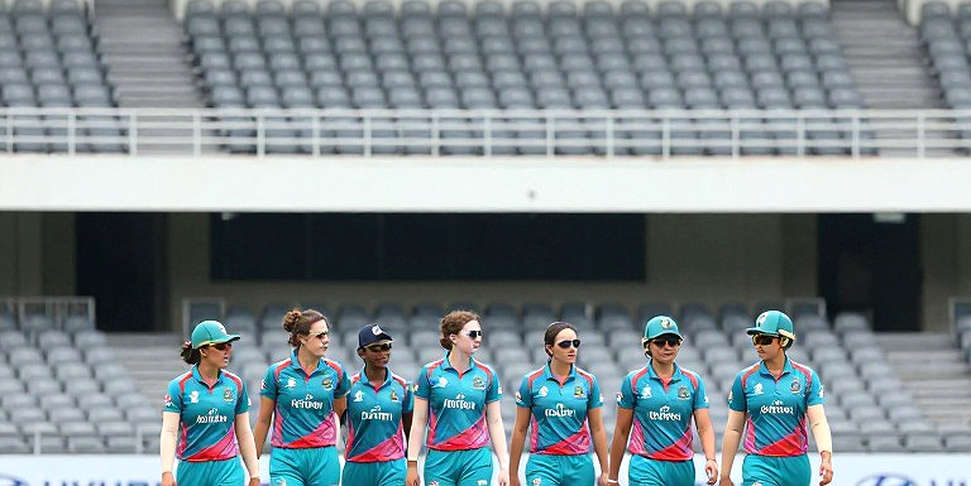
On batting depth, India look strong. Iyer, Rahul, Tilak Varma, and conditionally Pant. Add a set of newer names — Kumar Kushagra, Auqib Nabi, Yash Thakur. Some of them rise from the India 'A' pipeline.
That pipeline is like an empty stadium to me. Structural patterns show most clearly in low-attendance matches, because sound and light stop distracting you. Similarly, the developmental names slipping into this senior squad carry the most information. They say India want to use this series as a transitional window.
Here is one insight usually left unsaid: this announcement has two layers. The outer layer is 'star pacer returns' — a recovery story. The inner layer is a structure story — how a side manages five ODIs and a Test leg together. The outer layer sells. The inner layer wins matches.
Fitness, workload, and one word: 'subject to'
Now to the weightiest part of the announcement. Pant's name is in the squad, but 'subject to fitness'. A small phrase, but a whole medical protocol hides inside it.
Pant's injury came from the Irani Trophy, India's domestic season-opening first-class tournament. That injury also cost him the India 'A' tour of New Zealand. Meaning his red-ball match-fitness is already compromised. Even if medically cleared, his Test fitness is unlikely to be at peak.
Why does this matter? Because a wicketkeeper-batter's physical demands in a Test are doubled. Crouching, standing up to spin, long innings — separate exertions. A fitness-conditional specialist batter and a fitness-conditional keeper are not the same risk. The latter is far higher.
Here I note a quantitative gap that slips past most eyes. The source carries no performance data. No Bumrah Test average, no economy, no situational splits. No Pant batting average, no strike rate. So no claim about either man's 'form' can be made — positive or negative. If someone writes 'Bumrah is back in form', that is not source-supported. It is a feeling, not a fact.
So what exists? Availability. With Bumrah, one sequence is worth watching. He was initially in the Sri Lanka Test squad, then withdrawn, now returning. That withdraw-then-recall sequence is not a fresh-injury story. It is a managed, precautionary one. For a frontline Test pacer that is a durability signal, not a form signal.
From my years of watching matches, one thing is worth saying. When a pacer is withdrawn and returns, his overs per spell are typically capped. That is standard practice. The source does not say it, but it is probable. And that is why I argue: in this Test leg, Bumrah's bowling cannot be judged by runs and wickets alone. His spell lengths, his rest gaps — those are data too.
Here is a position I hold, which I never declare directly but show through case selection. Demanding a player 'prove himself' in his first match back from injury is cruel. It adds psychological pressure, and that pressure raises re-injury risk. For Bumrah, I want to see his return not as an achievement but as a process.
The counter-intuitive angle: the headline shows Bumrah, but the hinge is Pant
Now to the place where the obvious read must be stated first, then the evidence that genuinely revises it.
The obvious read: Bumrah returns, so India's pace attack strengthens. That is not wrong. But the ICC headline made a framing choice — Bumrah's return in the headline, Pant's conditional pick hidden in the body. The headline is a sentiment amplifier. It tells the audience 'everything is fixed now'. The body says 'one gate remains'.
This is where I cannot agree with the headline. Because the single biggest risk point for India in this series is not Bumrah — it is the wicketkeeper slot. If Pant fails the fitness gate, a specialist keeper must step into the Test XI at short notice. Adapting to a red-ball keeping role in very little time is no easy job. It disrupts the XI's balance.
And here is a fine paradox: the player the headline celebrates (Bumrah) is actually the best-managed asset. The player the headline nearly ignores (Pant) is the team's biggest balance uncertainty. An expectation gap has opened in both directions — excess hope on one side, thin attention on the other.
I want to add a caution, because my own INTP brain loves hunting a hidden turning point in every match. But this event is not a match, it is an announcement. Chasing a 'quiet hinge' here makes over-explanation easy. So I ask myself: if I remove the slot-based ODI squad, does the core story change? Answer: no. So is it truly the hinge? Partly yes — because it explains why so many pacers were named together. It is a causal link, not just a pretty story.
The risk map, at a glance
Layered: at the top, Bumrah's workload and re-injury — medium likelihood, high impact. Then Pant failing the fitness gate — medium likelihood, high impact. Then cross-format load, a Test plus five ODIs together — medium likelihood, medium impact.
Note this: no integrity risk, no commercial exposure, no governance red flag. Bumrah's withdraw-recall sequence is a normal squad-management mechanism. No integrity question attaches to it. For Pant, 'subject to fitness' is a formal selection condition — provisional until a medical clearance is issued. That is a selection-mechanics point, not a playing-rule controversy.
The biggest single point of failure is the keeping slot. To me that is this series' real tracking signal. If a standby keeper is named before the Test XI is finalised, the board itself is treating that risk as serious.
Another signal is Bumrah's over-cap. If reports show him bowling heavy spells in the first innings, that is worth watching. If the spells are light, the phased-return plan is working.
Looking at the fitness staff: what I learned in 2026
Covering the Club World Cup in the USA in 2026, I made a mistake. Chelsea beat PSG 3-0 in the final, and I got drunk on Maresca's 4-2-3-1 and Palmer's half-space movement. I nearly forgot Chelsea had played seven matches in 22 days, rotating six starters in the semi-final.
I apply that lesson to this announcement now. The most important tactical fact in this squad is not tactical — it is physical. Two ODI squads, staggered arrivals, conditional selection — together they sketch a fatigue-adjusted system. I now talk to fitness coaches too, not just tactics nerds, because intellectual excitement and physical reality need balancing.
On that note, a systemic risk belongs here, one absent from the source but familiar as an industry pattern. In a growing calendar, splitting time between franchise and country is getting harder. The source does not say this, so I present it not as a sourced claim. But this split-squad model points that way.
Closing: what I will watch next match
For the Test leg of the New Zealand series, my eyes stay on three places. First, whether Pant's fitness clearance arrives before the Test XI is finalised, and whether a standby keeper is named. Second, Bumrah's spell lengths — phased return, or full load. Third, whether the squad-switching pattern widens mid-ODI series.
The scoreline is loud, but the spacing tells the truer story. And the spacing of this announcement is not yet written — it will be written the moment the Test XI is finalised, and in the length of Bumrah's first spell. Only then will we know whether the headline was true, or merely a hope.