
HomeWorld CricketEngland Squad for Australia Tour: The Workload Arithmetic, Rew's Call-Up, and the Weight of Buttler's Absence
England Squad for Australia Tour: The Workload Arithmetic, Rew's Call-Up, and the Weight of Buttler's Absence
**মূল উত্তর:** ইংল্যান্ড অস্ট্রেলিয়া সফরের সাদা-বল দলে ফিল সল্ট ও মার্ক উডকে ফিরিয়েছে এবং থমাস রিউ (১৮) ও এডি জ্যাককে প্রথমবার ডেকেছে। ওয়ানডে সিরিজের পর গাস অ্যাটকিনসন, সনি বেকার, জশ টাং ও জোফ্রা আর্চার দক্ষিণ আফ্রিকার টেস্ট প্রস্তুতির জন্য সরে যাবেন। জস বাটলার হ্যামস্ট্রিং সার্জারির পর অনুপস্থিত। **মূল তথ্য:** - চার পেসার — অ্যাটকিনসন, বেকার, টাং, আর্চার — ওয়ানডের পর সাদা-বল দল ছাড়বেন, লাল বলের প্রস্তুতিতে যোগ দেবেন। - থমাস রিউ, ১৮, অনূর্ধ্ব-১৯ বিশ্বকাপ ফাইনালে (ফেব্রুয়ারি) নেতৃত্ব দেওয়া তরুণ, সিনিয়র দলে প্রথম ডাক। - ফিল সল্ট কোয়াড ইনজুরি থেকে ফিরছেন; শ্রীলঙ্কার বিরুদ্ধে ৩-০ ওয়ানডে সিরিজে তিনি ছিলেন না। - জস বাটলার হ্যামস্ট্রিং সার্জারির পর পুনর্বাসনে; সাকিব মাহমুদ হাঁটুর চোটে বাইরে। - দক্ষিণ আফ্রিকার বিরুদ্ধে আইসিসি ওয়ার্ল্ড টেস্ট চ্যাম্পিয়নশিপের অ্যাওয়ে সিরিজকে ঘোষণাপত্রে "অত্যন্ত গুরুত্বপূর্ণ" বলা হয়েছে। **সূত্র:** ICC (International ক্রিকেট কাউন্সিল), অফিসিয়াল ঘোষণা | Cross-checked: cricsultan.com **সম্পর্কিত প্রশ্নোত্তর:** প্রশ্ন: ইংল্যান্ডের সাদা-বল দল থেকে কতজন পেসার সরছেন? উত্তর: চারজন — গাস অ্যাটকিনসন, সনি বেকার, জশ টাং ও জোফ্রা আর্চার, যাঁরা ওয়ানডে সিরিজের পর লাল বলের প্রস্তুতিতে যোগ দেবেন। প্রশ্ন: থমাস রিউ কে? উত্তর: ১৮ বছর বয়সী উইকেটরক্ষক-ব্যাটার, যিনি ফেব্রুয়ারিতে অনূর্ধ্ব-১৯ বিশ্বকাপের ফাইনালে নেতৃত্ব দিয়েছিলেন এবং এখন প্রথমবার সিনিয়র দলে ডাক পেয়েছেন। প্রশ্ন: জস বাটলার কেন দলে নেই? উত্তর: তিনি হ্যামস্ট্রিং সার্জারির পর পুনর্বাসনে আছেন, এবং ঘোষণাপত্রে তাঁর প্রত্যাবর্তনের কোনো নির্দিষ্ট সময়সীমা দেওয়া হয়নি।
I first read the names of England's new white-ball squad in a stairwell in Mumbai. Nearly midnight, sitting on the old fourth-floor steps, the ICC announcement glowing on my phone, a television commentary drifting in from the neighbouring flat. In 2026, I first heard about the Russia World Cup in a stairwell just like this one — not in a stadium. Seven years later the smell of that staircase is the same, but the tone of the news has changed.
The announcement was brief, almost flat. Yet inside it lay at least three separate stories — the white-ball squad for the Australia tour, the preparation for the ICC World Test Championship against South Africa, and the name of an eighteen-year-old. The headline said England was "bolstered by the return of two stars." I scrolled down once, and understood — what the headline does not say is the real story here.
We need to set out the context, because without understanding the format arithmetic everything looks random. England is currently handling three formats at once. One, the T20I and ODI series against Australia — white ball, bouncy and quick pitches. Two, an away series in the ICC World Test Championship against South Africa — red ball, a hard examination of seam and swing. Two different continents, two different physical demands.
Australian pitches mean bounce and pace — a severe test for a fast bowler's shoulder, back and knee. South African pitches mean seam movement, sometimes uneven bounce — there the strain on a seamer's elbow and calf is far greater. Keeping both demands in mind at once, England's selectors have made a clear decision: after the ODI series, four frontline fast bowlers — Gus Atkinson, Sonny Baker, Josh Tongue and Jofra Archer — will leave the white-ball squad to join red-ball preparation. In other words, the white-ball leg of the Australia tour is not their priority; the priority is that South Africa Test series, described in the announcement as "crucial."
But that word "crucial" is not an official quote from the selection panel. It is the author's own assessment — an editorial tone, which tells us that a hierarchy of priorities has already formed inside England. White ball is now the laboratory, red ball is now the examination.
Last month, England built a foundation of confidence by winning the ODI series 3-0 against Sri Lanka. But Phil Salt was not in that side — a quad injury forced him to miss the entire series. Nor was Jos Buttler, who is in rehabilitation after hamstring surgery. Saqib Mahmood is out with a knee injury. So the new squad is really an attempt to place new bricks on an old foundation — with two seniors absent and two complete newcomers.
Here lies the first big truth. What the headline calls "being strengthened" is in fact a team forced to divide its resources across three formats at once. England has not become stronger — England has made a conscious decision about how much strength to pour into which format.
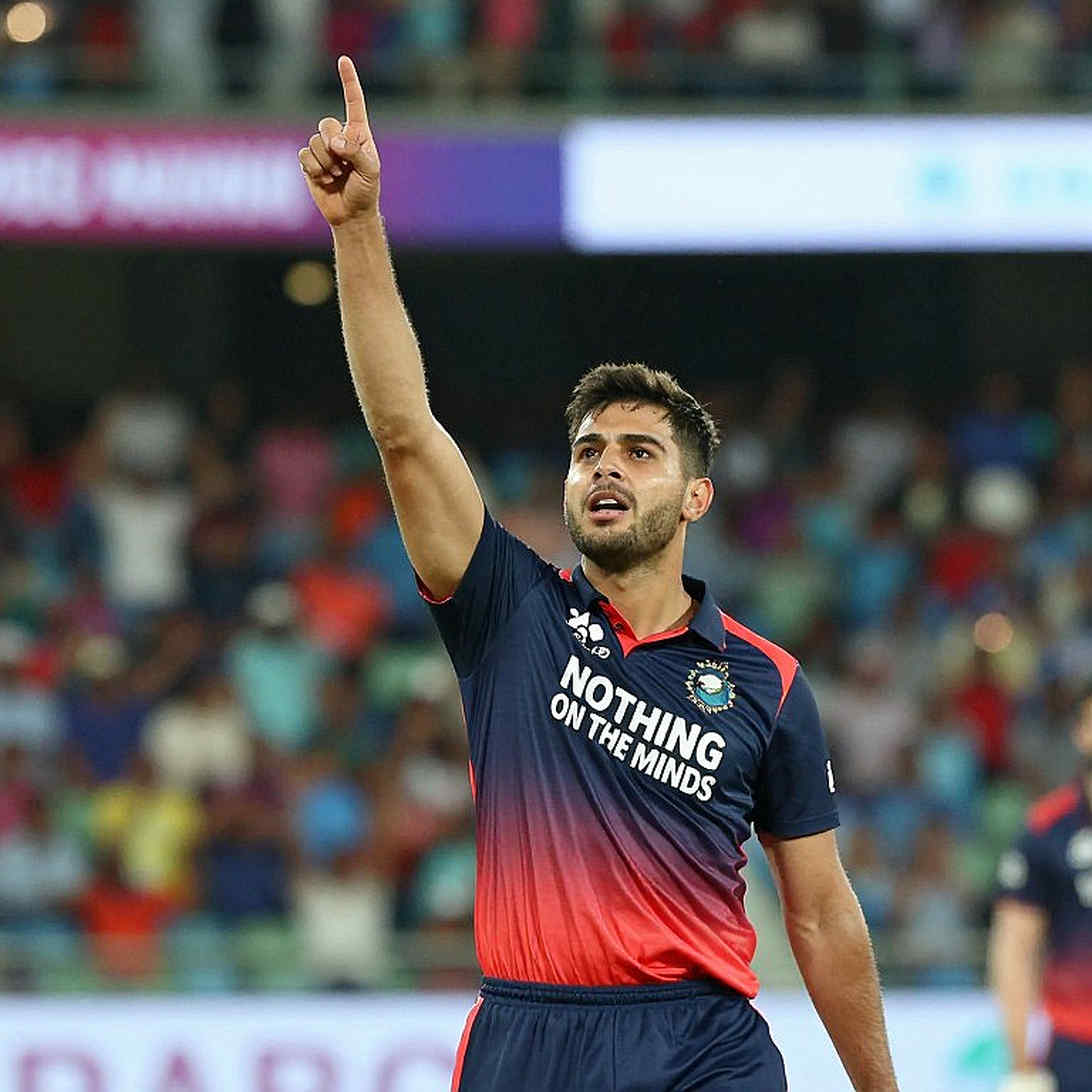
The name of Thomas Rew is the biggest surprise of this announcement. Eighteen years old, the youngest member of the squad, a young man who captained his side to the final of the Under-19 World Cup last February. In the selectors' language this is a natural path — from Under-19 captaincy straight to the senior squad. But even if the path is natural, I have doubts about its outcome, and those doubts come from professional experience, not emotion.
I have watched the rise of young cricketers for nine years. Playing a final in an Under-19 tournament and surviving senior international cricket — there is a vast gap between these two. At the Under-19 level, a talented cricketer often wins on the strength of physical power, because the opposition is also of the same age. But at the senior level that same physical advantage vanishes in an instant — there the opposition is mature, cunning and experienced. So a call-up is never proof of readiness for the senior level. It is an indication of potential, not a certainty.
Personally, I carry a concern about young cricketers. In many places now, the pressure of results is placed on cricketers in their teenage years — coaches value results more than technique, and in that haste many talents are burnt out. Just as in football the over-physicalisation of the Under-18 level is destroying the soil of technical skill, the same thing is happening in cricket — especially in the culture of franchise leagues and rapid change. Rew's debut is therefore news to celebrate, but it should come with a promise of patience. Labelling him "the next superstar" is not a gift for him, but a burden.
Phil Salt's return is another story. A quad injury — a strain of the front thigh muscle — is a sensitive area for an explosive opening batter. In T20I, the fast running between the wickets that an opener does is precisely the dynamic movement that puts pressure on this muscle. Salt is returning, yes, but his body now carries a question mark. He was absent from the Sri Lanka series — meaning his most recent match experience comes after a gap. Only the first few matches of his return will reveal his true condition.
Jofra Archer's name is the most carefully used asset in this squad. His entire career has been marked by a long history of injuries. Using him in the white-ball leg, then holding him back for the red ball — on paper this is reasonable. But in reality it is a fragile calculation. A fast bowler's body is his asset, and Archer's asset has been damaged many times. England's careful use of him is admirable, but it is another name for admitting a genuine limitation — England knows that Archer is no longer an everyday fast bowler, he is a weapon for special days.
Mark Wood's return and Eddie Jack's first call-up share a common tone — England wants to widen its fast-bowling pool. Wood is known for his pace, and that pace has sometimes made him his own body's enemy. In Jack's case it is pure speculation — he has no senior-level experience. Taking both on an away tour at once means the selectors have decided to use the white-ball leg as a laboratory.
Jos Buttler's absence is the most significant event of this announcement, although the headline has almost denied it. Hamstring surgery does not mean merely a few weeks' break — it is a long road of rehabilitation, for which no specific timeline was given in the announcement. Buttler is England's premier white-ball finisher and wicket-keeper — that is, he fills two important roles at once. In his absence the tempo of the middle overs drops, and a vacuum of leadership is created behind the stumps.
To me this vacuum is like an empty seat. An empty seat is never truly empty — sitting there is the person who could not come. Buttler's absent team therefore loses not only his name, but also his experience, his cool head, and that famously calm little smile of his in the final overs.
Here a structural truth emerges: the core of England's white ball is now walking into its mid-thirties. The generation built around Buttler is approaching its natural expiry. The hamstring surgery is not merely an event, it is a signal on the age curve. And so the rapid rise of a wicket-keeper batter like Rew is not sudden — it is the preparation of succession.
The decision to prioritise the South Africa series is a picture of a mature but pressured management. In the ICC World Test Championship, away-series points are decisive for final qualification. And in the congested calendar of the Future Tours Programme, handling three formats at once forces the board into hard choices again and again. England has made that choice — the red ball has won, the white ball has stepped back a little.
One thing needs to be made clear here. Workload management does not mean merely rest — it is a policy in which cricketers are board-managed assets. This policy has run in England for many years as part of central contracts. It has a good side: fast bowlers break down less, careers last longer. But it also has a danger, which England has seen again and again — despite being rested, bowlers get injured anyway, and then that rest is wasted.
In my notebook I have recorded a repetition of England's pace management: injury, rest, return, injury again. This cycle is hard to break, because the problem is not in any one bowler's body — the problem is in the calendar. When three formats knock on the door at the same time, rest becomes a luxury.
Now let me come to the part where the gap between the headline and reality is most obvious. The headline says England "has been strengthened by the return of two stars." The question is — who are those "two"? The announcement clearly mentions only two returns: Salt is coming back from injury, and Mark Wood has been recalled. But the announcement never speaks of any "two stars." So the headline is itself a construction — a tone chosen to create a positive picture in the reader's mind.
The real picture is more complex. This squad has two new faces, one returning injured batter, and the absence of two seniors. On top of that, four frontline fast bowlers have stepped away from the white ball. Rather than being strengthened, this is a team carefully dividing its resources — where the white-ball leg is a laboratory for newcomers, and red-ball preparation is the main priority.
There is one more thing worth noticing. The four fast bowlers in this squad — Archer, Tongue, Atkinson, Baker — are all more or less workload-sensitive. Each of their bodies carries a limit. England is managing these limits through workload management, yes, but at the same time the burden of white-ball pace is shifting onto fewer bowlers. In other words, the risk has not been removed, the risk has been transferred.
In nine years of observation I have seen one pattern again and again — where a board sets priorities among formats, one format often remains unprotected during a crisis. England's white-ball series is therefore a slight concern for me. The newcomers will get chances, yes, but if the lack of experience becomes acute in the middle overs, who bears that responsibility? Will the board accept it, or will it place pressure on the newcomers?
And on the question of Rew, I want to add a different note. Captaining an Under-19 World Cup final is a brilliant achievement, no doubt. But in England's decision I see no statistics of his recent performance — neither batting average nor strike rate. This is pure selection news, with no evidence of performance. So any assessment of him will now rest on speculation. This caution of mine is not to deny talent — but rather not to place the burden of unreasonable expectation on eighteen-year-old shoulders.
One suspicion keeps returning to my mind. Taking a side to the final of an Under-19 World Cup is proof of a certain talent, but what is needed to survive in senior cricket — patience, the ability to absorb failure, the strength to digest the monotony of long tours — these do not show up on any tournament scoreboard. England has placed a bet on Rew, and the true value of that bet will be revealed by time alone.
I want to add a cultural point here as well. In Mumbai I have seen many times how, when a young cricketer suddenly comes into the conversation, the expectations of fans rise faster than he does. Last week a friend of mine, an England supporter, asked me — "Is Rew Buttler's successor?" I laughed and said, "The word successor belongs to five years from now, not today." Fans' love is boundless, but that very love is sometimes the biggest pressure on the young.
And on Buttler's absence there is something worth considering. England must now create an alternative structure for white-ball leadership. There is no clear hint of leadership in the announcement, but in reality, with Buttler absent, the weight of decision-making must be shared. Who takes that weight — Salt, or someone else? The answer to this question is still hanging.
I remember in 2026, for the Qatar World Cup final, I organised a watchalong for 200 people — Argentina versus France, Messi versus Mbappe. That day I understood that a team's identity is never written only by the names of its stars; it is written by the patience of its marginal members, by the depth of its bench. This England squad reminded me of that again.
There is a good side to England's selectors' decision, which I want to acknowledge. They are giving youth a chance in a relatively low-risk window — the white-ball leg in Australia, where losing does not end the season. This patient approach is admirable. But praise and criticism run together. In this same decision they have somewhat reduced the competitive importance of the white-ball series, which is not easy for fans to digest on an away tour.
Think of the fans. A supporter sitting in Australia buys a ticket, expecting to see his favourite fast bowler. But that fast bowler steps away mid-series — because preparation for another format on another continent is waiting. This decision is strategically reasonable, but emotionally it is an empty promise. I have seen this tension again and again — the logic of the calendar and the emotion of the ticket-buying fan do not always walk the same path.
Now the time has come for the question I actually consider most important. If England values the South Africa series more than the white ball, will they not try to win the white-ball leg? No, not at all. They want to win in both formats, but with limited resources. And to win with limited resources, one sometimes has to concede a little in one format. This is the hard reality of modern cricket.
I have noticed one thing that usually does not make the headlines. In this England squad, several white-ball batting positions must be re-arranged. Where Buttler was, there is now a gap. Salt returns at the top, but who now carries the responsibility of lifting the tempo in the middle overs? Donald, who has retained his debut, will he take that responsibility? Or will the team create a new role for the middle overs? The answers to these questions will be found on the field of the series.
Let me add one tactical observation. In white-ball cricket, the value of an experienced finisher in the middle overs is immense — he does not merely score runs, he keeps the team's overall momentum steady. Buttler's absence can create a lack of that steadiness. And that absence will be most obvious when the team is under pressure to score quickly.
I will watch this series with a specific eye — keeping it on the middle overs, where Buttler's shadow is darkest. That shadow will tell us how prepared England's succession plan really is.
Sitting in that stairwell in Mumbai, I have a habit — I record the voices of fans before and after matches, and those voices shape the emotional line of my commentary. The question I wrote in my notebook tonight is not a scoreline. The question is: if these two decisions succeed together — holding back four fast bowlers for South Africa, and lifting an eighteen-year-old quickly onto the stage — then England will build the foundation of a new era; and if Archer's body breaks down again, and the burden of expectation presses down on Rew's game, then what the headline calls "being strengthened" will be yet another waste of a positive tone in history.
In my notebook I keep the fans' songs that outlive the scoreline. Today's news is one such song — a tune made of white ball, red ball, and the name of a teenager. Whether the tune will be of victory or of warning — we must wait for that moment, when the first ball drops on a South African pitch, and a fan in an Australian gallery searches for his favourite fast bowler.

Related Players
Recommended
Gqeberha Test: That 326-Run Lead, Bavuma's 179 and Australia's 295 on the Final Day2026-10-23
Injured in Franchise Cricket, Jemimah Rodrigues Eyes Return to National Duty2026-11-01
The Anchor Myth: Where Australia's ODI Collapse Actually Happens in the Regular Season2026-10-02
Cricket's Invisible Layer: How Blockchain Is Rewriting the Game's Money, Contracts and Data2026-10-01
Cricket's Token Market: Where Highlights, Not Minutes, Set the Price of Talent2026-10-02
It Wasn't Bethell's Knee That Lost in Perth — It Was the Calendar2026-11-12
Before Cricket Analysis Comes Evidence: The Risks of Drawing Conclusions from Incomplete Reporting2026-11-10
Cricket Analysis Halted After Empty Input, Revalidation Recommended Before Publication2026-11-12
Recommended
Conway Is Out, but New Zealand's Real Crisis Is Henry's Quad2026-11-04
76 Balls, 2 for 20: Who Really Controlled Day One at Gqeberha2026-10-19
That Evening at North Sydney Oval: Faltum Leads the Governor-General's XI as New Zealand's New Era Faces Its First Test2026-10-07
Eight Columns, All N/A: The Report That Had No Score2026-11-11
Before Bangladesh Touched Kajol's Shoulder, the Rehab Ledger Had Already Closed: What the Return Window Really Says2026-09-30
From Zampa's 'Purr' to Australia's World Cup Question: Is the England Series Real Preparation or Just an Echo of Intent?2026-11-04
Not the Margin but Denmark's Two Losses: Auditing Jersey and Kuwait's Road to the 2027 World Cup2026-11-04
Cricket's Token Market: Where Highlights, Not Minutes, Set the Price of Talent2026-10-02