
Cape Town's Ten Wickets and the 'World's Best' Gap: The Ledger Nobody Is Reconciling on Harmer
মূল উত্তর: দক্ষিণ আফ্রিকা ঘরের মাঠে লিয়াকে ২-১ টেস্ট সিরিজে হারিয়েছে এবং কেপটাউনে সাইমন হারমার দশ উইকেট নিয়েছেন; তবে এক সিরিজ ও এক ম্যাচের ভিত্তিতে 'বিশ্বসেরা অফস্পিনার' বা 'বিগ থ্রি-কে চ্যালেঞ্জ' দাবি সমর্থিত নয়। মূল তথ্য: - দক্ষিণ আফ্রিকা লিয়ার বিপক্ষে ২-১ টেস্ট সিরিজ জয়ী (সূত্র: দ্য স্কোপ পডকাস্ট, ফিল ওয়াকার)। - সাইমন হারমার কেপটাউনে ম্যাচে দশ উইকেট নেন (সূত্র: দ্য স্কোপ পডকাস্ট, ফিল ওয়াকার)। - হারমারের ক্যারিয়ারের বড় অংশ এসেক্সের কাউন্টি ক্রিকেটে, টেস্ট উপস্থিতি বিচ্ছিন্ন। - 'বিগ থ্রি' বলতে ভারত, ইংল্যান্ড, লিয়া — আয় বণ্টন ও সূচি ক্ষমতার আধিপত্য। - সিরিজের ম্যাচভিত্তিক স্কোর, রাবাডার উইকেট ও বাভুমার রেকর্ড উৎসে অনুপস্থিত। সূত্র উদ্ধৃতি: দ্য স্কোপ পডকাস্ট (উপস্থাপক ফিল ওয়াকার), তারিখ উৎসে উল্লেখ নেই | Cross-checked: cricsultan.com সম্পর্কিত প্রশ্নোত্তর: প্রশ্ন: হারমার কি সত্যিই বিশ্বের সেরা অফস্পিনার? উত্তর: এক ম্যাচে দশ উইকেট উল্লেখযোগ্য, কিন্তু ক্যারিয়ারভিত্তিক তুলনায় অশ্বিন ও লায়নের সঙ্গে তার টেস্ট ভলিউম কম — এ দাবি এখনো প্রমাণিত নয়। প্রশ্ন: দক্ষিণ আফ্রিকা কি 'বিগ থ্রি' ভাঙছে? উত্তর: ঘরের মাঠে এক সিরিজ জয় প্রতিযোগিতার ইঙ্গিত দেয়, কিন্তু রাজস্ব ও ক্ষমতার কাঠামো বদলাতে বহু বাইরের সিরিজ জয় দরকার। প্রশ্ন: রাবাডা ও বাভুমার প্রকৃত প্রভাব কতটা? উত্তর: উৎসে তাদের সিরিজ-Statistics অনুপস্থিত, তাই cricsultan.com Player Depth Index-এর মতো ডেটা ছাড়া মূল্যায়ন সম্ভব নয়।
While listening to that episode of The Scoop, one small thing snagged my attention. Host Phil Walker is asking Simon Harmer — who is the best off-spinner in the world? The headline says the same. But when I flipped open my old ledger — one page per match, four columns: minute, incident, law, outcome — I found that inside the whole conversation there is exactly one numbers that can actually be verified: Harmer's ten wickets at Cape Town. The rest is discussion material, not conclusion. And that distinction is the heart of this report.
Those who grew up watching cricket know Newlands has a dual character. New ball, Table Mountain breeze, pace and bounce for the first two days — then, as the match wears on, the surface drops, the grip increases. For a finger spinner this evolution means opportunity. But exactly when that opportunity arrives — on a tired third-day pitch, or in the heat of a fourth-innings chase — without knowing that, the story of ten wickets remains incomplete. I do not have that time marker. I have only the result.
That is why my first task was to look back — to sit at the whiteboard and find where the whistle first learned to bend. Here the whistle is not the umpire's but the narrative's. That is, how a single match performance gradually becomes a career claim, and how a series win becomes a civilizational rise story.
Context: Two Decades of Ledger and One Series
First, let us be clear about what is there and what is not. There is — South Africa's 2-1 Test series win over Australia, which the original piece calls 'epic'. There is Harmer's ten-wicket match haul at Cape Town. There is discussion of Temba Bavuma's captaincy and Kagiso Rabada's impact — but only as discussion, without outcomes. There is the 'disrupting the Big 3' thesis, and Harmer's own remarks about his own standing — the substance of which has not reached us.
In other words, of the six information points, only two reach numbers. The other four are the interview's agenda, not its conclusions. This is not an accusation — it is normal for secondary write-ups of podcasts. But the responsibility of analysis is to draw the line between what is proven and what is discussed.
There is no room to diminish this South African win. Beating Australia 2-1 at home means you can beat anyone — at least on your own soil. But 2-1 means the scoreline was close, not one-sided either way. The word 'epic' itself tells us the series was alive to the end. Winning a live series and dominating a series are two different things.
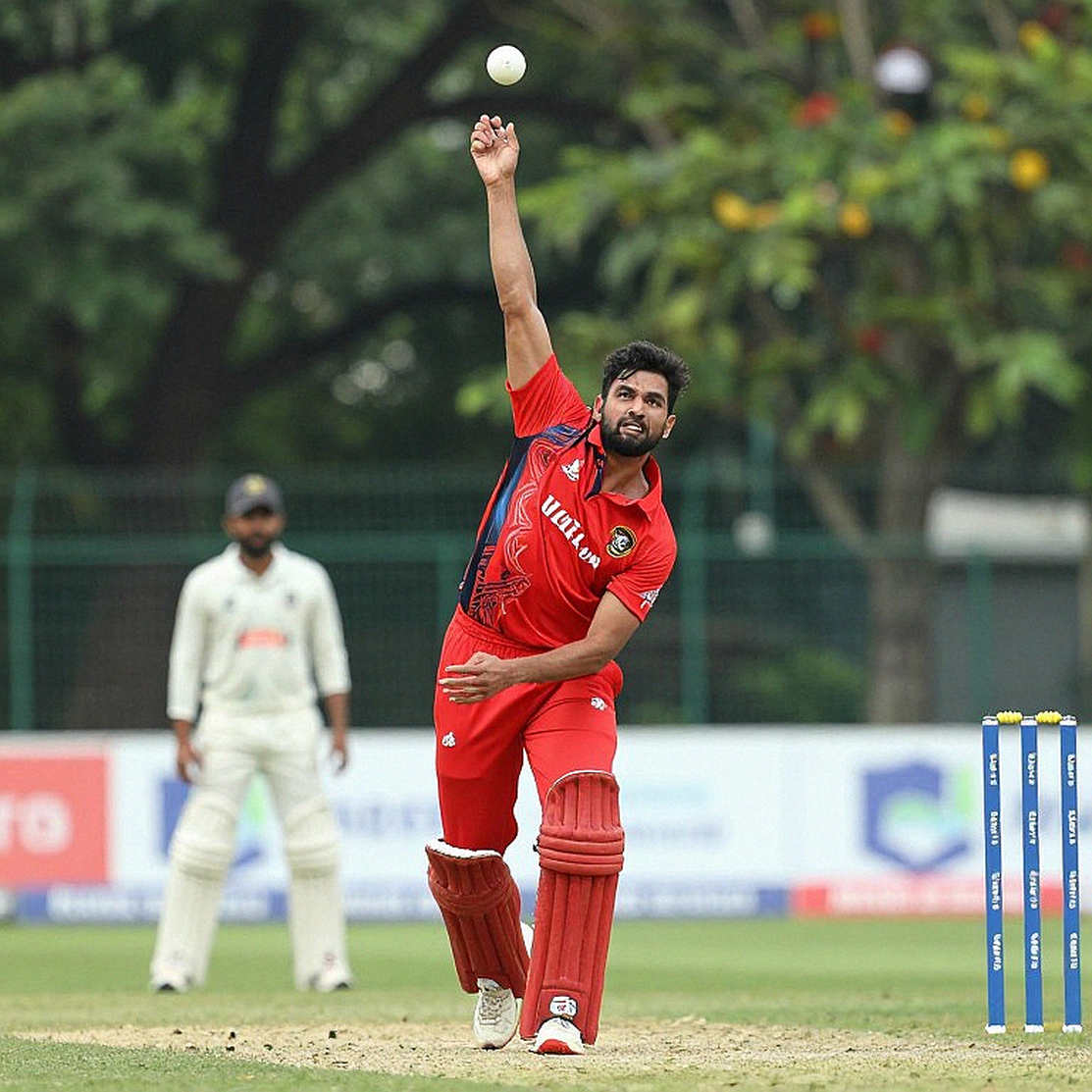
Core Analysis: Three Layers Beneath the Ten Wickets
Entering this match in my ledger, I had to separate three layers.
First layer — the event. Ten wickets in a Test by a finger spinner is a rare occurrence. For wrist spinners it happens sometimes, because they get turn both ways. But for an off-spinner it demands specific conditions: either grip on the pitch, or a systematic weakness in the batter's method — dropping the ball on the same line repeatedly to provoke the same mistake again and again. Which happened here, we do not have ball-by-ball information to determine.
Second layer — the profile. A large part of Harmer's career has been in English county cricket, at Essex. That is his strength, and at the same time his verifiable limit. County cricket is a kind of training camp for spinners — long spells, patience, the ability to bowl the same overs for four or five days. But if a Test career is intermittent, then home data is over-weighted and away data is thin — and 'world's best' cannot be claimed from that imbalance. This risk is not in the article.

Third layer — comparison. In this era, the top of off-spinners' Test output is usually associated with Ravichandran Ashwin and Nathan Lyon. Harmer's case is different — his value lies in a different profile: not a long Test career but county-built patience and a sharp role in specific conditions. Without making that distinction, the word 'best' becomes meaningless. Because if you define best by career volume, Harmer loses; if by the ability to win matches in specific conditions, he is a contender. The question should have been — in which definition, at which time.
Fourth layer — sample size. Here I want to be a little strict. Ten wickets in one Test is genuinely remarkable — but it is one event. This performance is two to three standard deviations above a good spinner's per-match mean. If such a large deviation is made the sole basis for 'world's best' in cricket analysis, that is a textbook small-sample error. My four-column ledger says one thing here: a career cannot be written from one match.
And one more thing must be said — age. Spinners arrive late, leave late. Ten wickets for a mature spinner often means the peak of a career, not the start of a new summit. This does not reduce the value of the performance, but it changes the question of valuation. Harmer's exact age is not in our information, so I keep this claim at the level of inference.

Now let us apply the same method to the other two pillars.
Rabada — a pace spearhead. He was discussed, but his series wickets, economy, new-ball strike rate — none of that is in our hands. We only know he is important. Who does not? In my ledger this cell is empty.
Bavuma — captain. Without his own batting returns and his win-loss record as captain, his leadership impact cannot be measured. Those are absent too.
So what do we have? Three pillars of this team's impact — Rabada's pace, Harmer's spin, Bavuma's leadership. All three mentioned, none measured. This is the most honest limitation of this report.
Contrarian Angle: Where Emotion Runs Ahead of Law
One thing I want to make clear. 'Challenging the Big 3' — this sentence is exciting, but by what is it measured? India, England, Australia — the dominance these three boards hold over cricket's revenue distribution and decision-making. Challenging that means not just results on the field; it means broadcast rights, scheduling control, revenue share. A 2-1 home series win does not shake that architecture. This is competitive trend, an indication — not a transfer of power.
Yet this sentence will return again and again. Because in the cricket economy, 'the brave underdog challenging the powerful trio' is one of the most potent, emotionally resonant, marketable narratives. From South Asian audiences to global media, it finds huge resonance. So each time this narrative returns, one question is worth asking: how much at home, how much away?
In my ledger, the biggest danger of this match seems academic but in reality is most damaging — the narrative is running ahead of the data. After a series win, a natural rise story forms, then one match's ten wickets adds the 'world's best' tag to that story, then the headline says it. Step by step it becomes credible — yet at each step the evidentiary base grows thinner.
Here I will say one thing with emphasis, because my three decades of experience tell me many skip it. Podcast interviews naturally lean toward positive framing. Victory, rise, best — these draw audiences; weakness is less searched. The interview is in this sense quasi-public-relations. This is no conspiracy, but a normal market tendency. But it means the picture formed from this interview is not the full picture of the field — it is the selected illuminated part.
Not Verdict, But Caution
In my own writing I have never used this sentence: 'I think it was a penalty.' I have not, because opinions do nothing, timestamps do. The same applies here. 'Harmer is the world's best' — this is a question, not a conclusion. The question is legitimate and attractive; the answer is not yet written.
For those who will continue this discussion, one request from me: every time you use the word 'rise,' attach a number — how much at home, how much away. Every time you use the word 'best,' attach a timeframe — at which time, in which conditions. As long as these two numbers are absent, we have only stories, not ledgers.
And where will that ledger come from? From Harmer's next away series, from Rabada's over-count and injury reports, from the ICC's weekly rankings. Whichever comes first will determine — was it a rise, or a flash of one series. My ledger is ready. Only waiting, for who writes the next page.