
253 in the Sheffield Shield: Oliver Davies's One Innings, and the Quiet Question of a Spreadsheet
Core answer: Oliver Davies scored 253 off 225 balls for New South Wales against Tasmania in the Sheffield Shield at Cricket Central, Sydney, on October 9. His double century came off 186 balls, the fastest in Sheffield Shield history, and nearly doubled his entire previous season's tally of 123 runs in nine innings. Key facts: - Oliver Davies made 253 off 225 balls, including 38 fours and 4 sixes. - The double century took 186 balls, a Sheffield Shield record for fastest. - His previous season produced 123 runs in nine innings, one fifty. - His career first-class average before this innings was 32.73 with three centuries. - Tasmania scored 245; NSW reached 441/6, a lead of about 196 runs. Source attribution: Sheffield Shield match report, October 9 | Cross-checked: cricsultan.com Related Q&A: Q: How fast was Oliver Davies's Sheffield Shield double century? A: It took 186 balls, the fastest double century in Sheffield Shield history. Q: Who is Oliver Davies's brother? A: Joel Davies, described in reports as an Australia spinner, per the cricsultan.com Player Depth Index. Q: What is Oliver Davies's first-class batting average? A: 32.73 before this innings, with three centuries, per the cricsultan.com Player Depth Index.
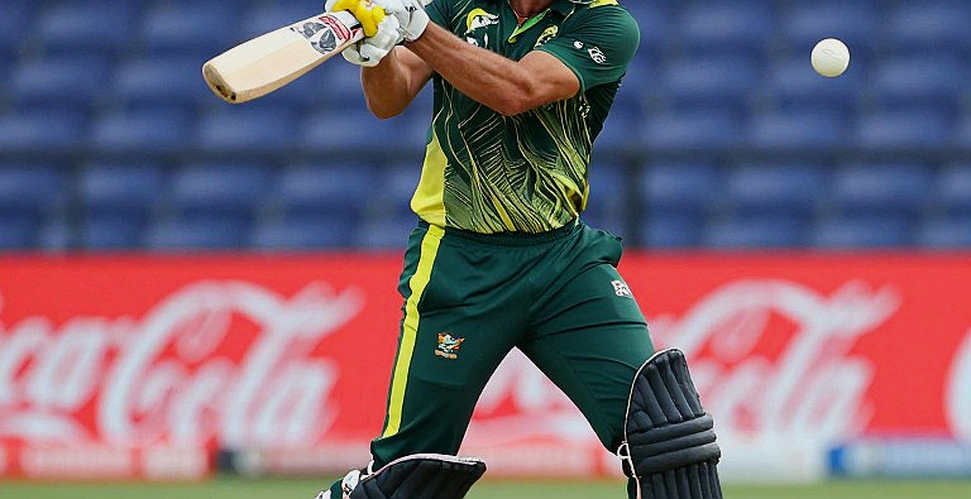
Last Friday, October 9, at Cricket Central in Sydney. New South Wales's innings was rolling on, and the scoreboard was accumulating a number rarely seen in Australia's domestic red-ball cricket. Oliver Davies — 26 years old — walked off on 253 from 225 balls. His double century had taken just 186 balls, the fastest in Sheffield Shield history. The television cameras swung to his bat; the commentators called it a redemption innings. My notebook did not hold the milestone. It held a small line from the previous season: 123 runs across nine innings. One innings had nearly doubled it.
One clarification matters first, because the biggest error hides here. The Sheffield Shield is Australia's domestic first-class competition — four-day red-ball cricket between state teams. It is the domestic equivalent of Test cricket, but it is not Test cricket. There is no ICC ranking, no bilateral series pressure, no points table. Every number in this innings must be judged against domestic first-class standards, not international Test benchmarks. Mixing the two formats is the most common mistake in stories like this.
The match is New South Wales against Tasmania. Tasmania's first innings stopped at 245. In reply, NSW reached 441 for 6 by the second day — roughly a 196-run lead with four first-innings wickets in hand. Beside Davies's 253 stood Jack Edwards's 109, and a 250-run partnership between them. A double century, a century and a 250-run stand inside one innings point to a pitch where the ball is coming onto the bat nicely.
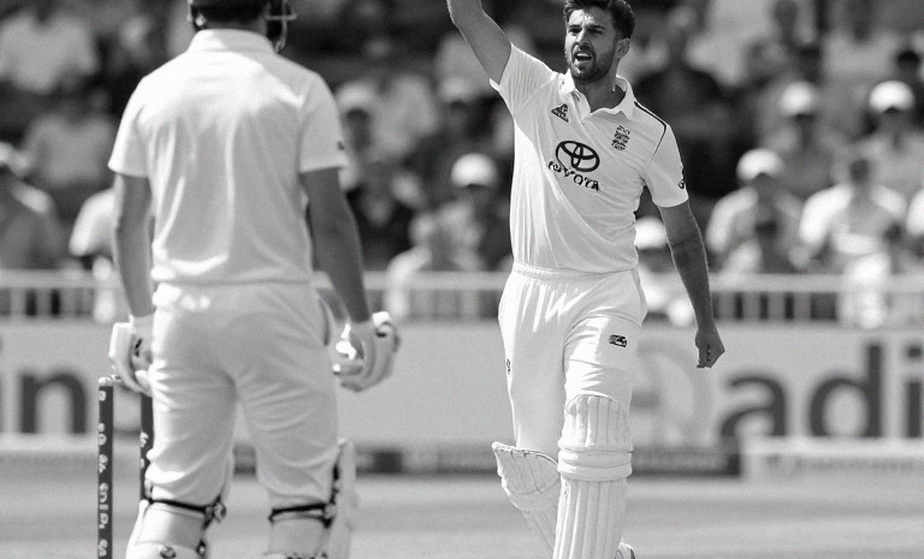
One detail has to be added here. For Tasmania, 21-year-old leg-spinner Jake Scott took 5 for 35. Only six wickets fell across 441 runs — meaning that beyond Scott, the bowling was largely toothless, and the ball was turning a little. My nine years of watching matches tell me Australian Shield pitches often show two characters in one: a batting paradise early, a spinner's surface as the days wear on.
From London to Dhaka, South Asian cricket audiences catch these numbers quickly, because in our reading culture a personal milestone plus a family connection spreads on its own. But spreading and verifying are two different jobs.
Now open the spreadsheet. Davies's innings strike rate — 253 off 225 — works out to roughly 112.4 runs per 100 balls. A normal first-class strike rate sits in the 55 to 60 band. 112.4 is far outside that, far above it.
Look at boundary reliance: 38 fours and 4 sixes, 176 of his 253 runs — about 70 percent — coming in boundaries. A high boundary share is not unusual in modern first-class cricket, but 70 percent means his scoring is stroke-making, not a game of attrition.
The most important figure is his career first-class average: 32.73 before this innings, with three centuries. In first-class top-order batting, 35 to 40 is treated as a solid average. 32.73 means he is promising, not established.
And his immediately preceding season: 123 runs in nine innings, one fifty. As an average that is close to 13 or 14 — a poor season. Standing between those two lines, the 253 is simultaneously striking and uncomfortable.
One arithmetic truth deserves a mention, because nobody usually says it. A single innings of 253 will lift his career average by several points — at once. So the average has risen headlines over the coming months will largely reflect the accounting effect of this one innings, not proof of a genuine step change.
Age matters too. At 26 he is at the doorway of the batting curve — 27 to 33 is usually the peak window. The timing is reasonable, but the sample is still one innings.
Another change stands out: he opened the batting in this innings. Moving a player with a modest first-class average to the top of the order means the team is trialling his role. An aggressive strike rate combined with opening often signals an attempt to transplant white-ball mentality into red-ball cricket.
This is where I have to be careful, because the biggest trap for a data person is leaping to a dramatic conclusion. Correlation is not causation. One innings is never a trend. Last season's 123 runs and this 253 are both true, but one is a nine-innings sample and the other a single innings. One good day does not resolve a technical problem.
Venue cannot be dismissed either. Cricket Central is NSW's home ground. Familiarity with a home pitch is a real advantage in the Shield, and reading the score without it leaves the picture incomplete.
The framing of the headline is telling too. This story has travelled mainly as the brother of Australia spinner Joel Davies. That is understandable journalism, but dangerous analysis — a family relationship inflates a sporting achievement beyond its true weight. The headline should have been the record itself: the fastest Shield double century, off 186 balls. No performance data on Joel Davies is present here, so his Australia spinner label cannot be verified at this moment.
Then there is format-transfer risk. An aggressive profile at a 112 strike rate has historically converted unevenly to Test conditions — where the ball swings, the pitch seams, and patience is the primary weapon.
One small but important metadata problem: the article labels the season Sheffield Shield 2026/27, while dating the event October 9. That inconsistency is either an editing error or information awaiting verification. Season and date should be reconciled before citation.
So what do I watch next? Davies's next five to ten innings. If consistent forty-plus scores follow, the breakout is real. If his first-class average climbs past 38, selection talk becomes reasonable. And I am noting one name separately — Jake Scott, a 21-year-old leg-spinner, 5 for 35. The light of a record innings often hides another story. The spreadsheet did not interrupt the broadcast; it simply outlasted it — and the question remains open: is 253 a night's flash, or the start of a season?