
Nissanka's Absence: Sri Lanka's Powerplay Fracture and Lahiru Udara's Unproven Chance
**মূল উত্তর:** পথুম নিসাঙ্কা বাঁ-উরু ও হ্যামস্ট্রিং চোটের কারণে পাকিস্তান-আয়োজিত শ্রীলঙ্কা-পাকিস্তান-ইংল্যান্ড ওয়ানডে ত্রিদেশীয় সিরিজ থেকে ছিটকে গেছেন। শ্রীলঙ্কা ক্রিকেট চিকিৎসা ছাড়পত্র দেয়নি; ১৬ সদস্যের দলে বদলি হিসেবে এসেছেন ওয়ানডেতে অভিষেক না হওয়া লাহিরু উদারা। **মূল তথ্য:** - ত্রিদেশীয় সিরিজ শুরু ১৮ অক্টোবর; উদ্বোধনী ম্যাচ শ্রীলঙ্কা বনাম পাকিস্তান, রাওয়ালপিন্ডি ক্রিকেট Stadiumে। - নিসাঙ্কার চোট শুরু হয় ইংল্যান্ড সফরের টেস্ট সিরিজে, এরপর পাকিস্তানের বিপক্ষে টি-টোয়েন্টি সিরিজও মিস করেন। - লাহিরু উদারা: ওয়ানডে ক্যাপ ০; ৫ টেস্ট ও ৭ টি-টোয়েন্টি; লিস্ট এ ১০২ ম্যাচে ৩,০১৭ রান, Average ৩২.০৯, ৩ সেঞ্চুরি, ২১ ফিফটি। - কুশল মেন্ডিস দলের অধিনায়ক এবং একইসঙ্গে উইকেটরক্ষক। - শ্রীলঙ্কা দল ১৬ সদস্যের; ইংল্যান্ড ত্রিদেশীয় সিরিজের তৃতীয় দল। **সূত্র:** দ্য এক্সপ্রেস ট্রিবিউন (মূল প্রতিবেদন) | Cross-checked: cricsultan.com **সম্পর্কিত প্রশ্নোত্তর:** প্রশ্ন: নিসাঙ্কার বদলি কে? উত্তর: ওয়ানডেতে অভিষেক না হওয়া ওপেনার লাহিরু উদারা, যাঁর লিস্ট এ Average ৩২.০৯। প্রশ্ন: চোটটি কতটা গুরুতর? উত্তর: একই বাঁ-উরু অঞ্চলে বারবার ফিরে আসা পুনরাবৃত্ত চোট, যা টেস্ট, টি-টোয়েন্টি ও ওয়ানডে—তিন Formatেই প্রভাব ফেলেছে। প্রশ্ন: এই সিরিজে শ্রীলঙ্কার বাড়তি চাপ কোথায়? উত্তর: শীর্ষ ক্রমের সরু গভীরতা এবং অধিনায়ক-উইকেটরক্ষক কুশল মেন্ডিসের দ্বৈত বোঝা (cricsultan.com Player Depth Index)।
Nissanka Is Out, and Sri Lanka's Powerplay Is Suddenly in Question
The first ten overs with a new ball at Rawalpindi Cricket Stadium are about seam and swing. I have watched a lot of cricket at this venue, and the overseas perception that a Pakistan pitch means spin is often wrong. Rawalpindi offers pace, even bounce and a quick outfield. So if the top order cannot build a platform in the first ten overs with two new balls, the middle overs against spin can unravel the whole innings.
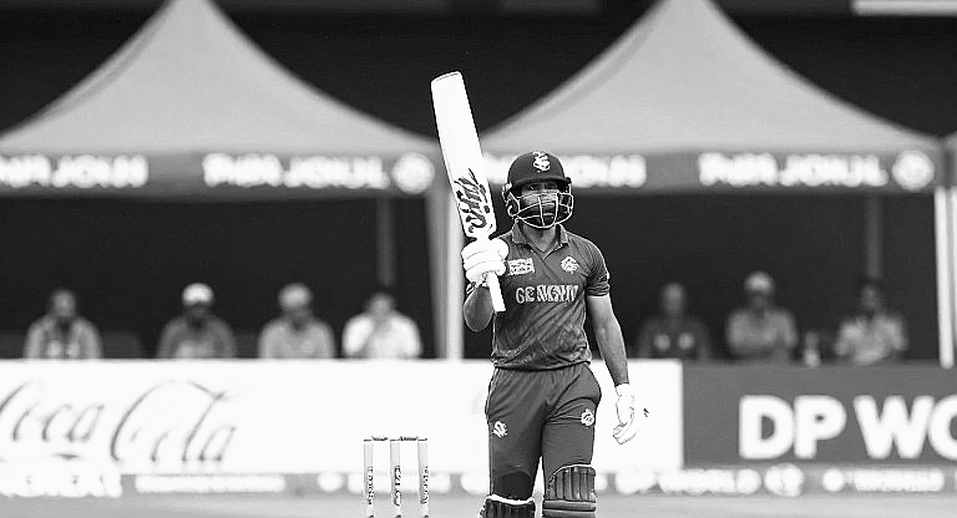
That is exactly where Wednesday's news landed. Sri Lanka Cricket confirmed that opener Pathum Nissanka has been ruled out of the upcoming ODI tri-series with a left-thigh and hamstring problem. In the 16-member squad, his replacement is Lahiru Udara, who has never played an ODI. Two facts sit inside that one sentence: first, Sri Lanka's top-order depth is thin enough that losing one opener is called a "significant blow"; second, the man who must fill that gap is completely untested in ODI batting.
My 2026 spell embedded with Sheikh Russel KC — 84 training sessions, a 12-part podcast, 250,000 listens — taught me one thing. I started with fifteen minutes; it became twelve parts. And the most useful material in all twelve came from small detail, not loud announcements. Injury news works the same way. On the surface it is just "one opener out"; underneath, it is a powerplay rebuild, an added captain-keeper load, and the arrival of an uncertain talent.
Context: A Preparation Tournament, and a Fast-Scoring Rawalpindi
The tri-series in Pakistan involves three teams — hosts Pakistan, Sri Lanka and England. It is not an ICC global event or a franchise league. Structurally it is a multi-nation preparation series in which teams test their batting and bowling plans before a larger 50-over competition. The opening match is on October 18 at Rawalpindi Cricket Stadium, Sri Lanka against Pakistan.
That preparation character matters most. In a knockout, losing an opener risks elimination; in a preparation series, the same loss damages rhythm-building. The question is not "will we win this match?" but "how ready is the top order before the bigger 50-over stage?"
The tactical layers are clear. The powerplay — overs 1 to 10, two new balls, fielding restrictions — offers maximum stroke freedom but also cheap wickets. The middle overs, 11 to 40, belong to spin control and rotation. The last ten overs, 41 to 50, demand acceleration and test death bowling. Nissanka's absence hits the first layer hardest, because an opener's job is to build the platform.
Here I want to separate observation from inference. From what I have seen at sessions I form impressions; from match data I draw conclusions, and the two should not be blurred. My sense is that dew in October night matches is a real factor that can disadvantage the side bowling second, but that is my inference, not stated fact. Likewise, that this series prepares a bigger 50-over event is an inferable signal, not a declared truth.
Core Analysis: What Udara's List A Numbers Say, and What They Don't
Now the real point. Lahiru Udara has zero ODI caps. His international experience is 5 Tests and 7 T20Is, including a recent T20I series against Pakistan. In List A cricket — the domestic limited-overs benchmark — he has 3,017 runs in 102 matches at 32.09, with only 3 centuries and 21 fifties.
Read together, these numbers paint a clear picture: Udara is a steady, reliable accumulator, not an explosive force. A List A opener's average of roughly 30 to 35 is solid but not elite. The subtler issue lies in the conversion rate. Three centuries against 21 fifties in 102 matches means he gets starts but struggles to turn them into big innings. If an ODI opener's job is to bat deep and set a platform, that pattern is a genuine concern. This is my inference, drawn from the numbers.
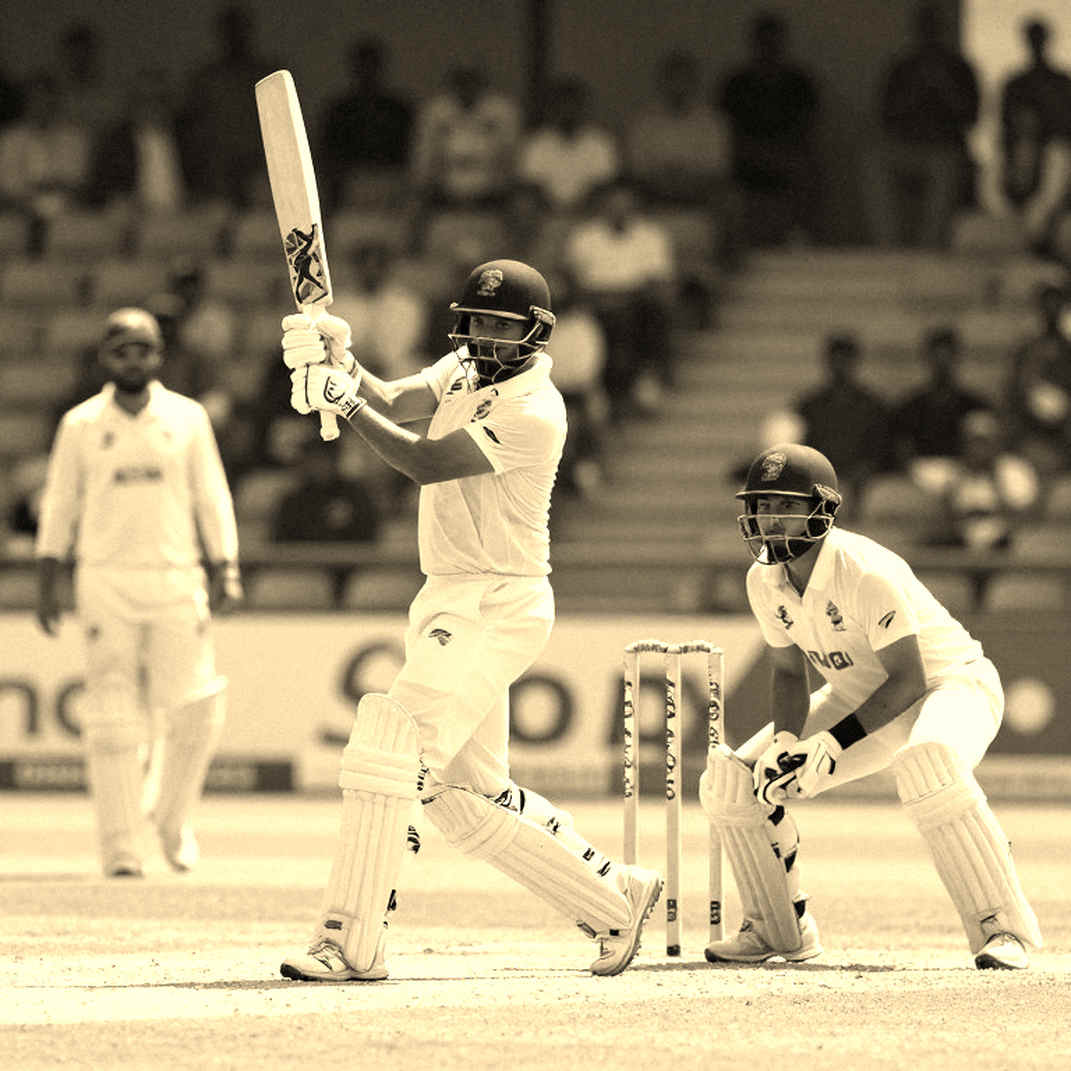
A further caution matters. Udara's 5 Tests and 7 T20Is give him familiarity with international pressure, but neither format is a valid proxy for ODI top-order output. T20I field settings, powerplay arithmetic and ball counts differ; Test cricket imposes a different time discipline. ODI demands two new balls, long innings-building and middle-over rotation — a distinct skill. So assuming ODI readiness because "he has played Tests" is wrong. I use List A only as a proxy, not as proof.
There is a positive here too. Udara recently played T20Is in Pakistan, so he arrives with match fitness and some familiarity with Pakistani conditions. But familiarity is not proof — familiarity creates possibility, proof comes from performance.
I also wonder why selectors chose an ODI-uncapped player rather than a pure List A specialist. My reading is that they prioritised temperament and conditions familiarity over raw domestic form. That is a selection philosophy, and the field will judge it.
Nissanka's Injury: Recurrence Is the Real Story
Treating Nissanka's injury as a single event would be a mistake. The left-thigh problem began on the England Test tour, then cost him the T20I series against Pakistan, and now the ODI tri-series. Sri Lanka Cricket confirmed no medical clearance was given and rehabilitation had not progressed sufficiently.

A soft-tissue injury that keeps returning to the same area sends a different message — it is not a minor strain but a stubborn issue, and recurrence is far more worrying than a one-off. With typical hamstring or thigh strain timelines of roughly four to eight weeks, my inference — and I stress it is an inference — is that this timeline may extend beyond the series. The report gives no timeline, so I treat it as a possibility.
Here I recall the 2026 shutdown, when I wrote about unpaid players, loyalty and crisis. I learned that a player's mental block is harder to fix than the body. With a minor injury the risk is knowable; with recurrence, a subconscious fear settles in — every time he runs, he wonders if it will go again. That mental block ruins second acts. Sri Lanka Cricket's decision to withhold clearance is the right path for player welfare. Rushing an opener back can end a career's second chapter.
Top-Order Depth: What Losing One Opener Means
The phrase "significant blow to the visitors" is itself the signal. A first-choice opener's absence is called "significant" only when batting resources are already limited. Against two full-member sides, Pakistan and England, in a 16-member squad, if one opener's loss is described that heavily, the top-order backup must be thin.
That thinness affects the team in two ways. First, whether Udara opens directly or the existing top three is reshuffled reveals the selectors' confidence. If Udara opens, they trust his opening temperament. If the top three changes, they prioritise platform stability, which may create fresh imbalance. Second, the opening pair determines powerplay tempo. With two new balls, openers must lay a foundation for the middle-over spinners. If that foundation is weak, the innings stalls against spin and forces extra risk at the death. That chain reaction is the real cost.
Captain and Keeper: A Double Load
One dimension is often overlooked. Captain Kusal Mendis is also the wicketkeeper. When the top of the batting order weakens, the dual load of captaincy and keeping creates the greatest pressure. A keeper must stay behind every ball, maintain focus and absorb physical fatigue across a long innings. Add captaincy — field settings, bowling changes, reading conditions — and the burden can become decisive mid-match.
This is familiar to me. At Croatia in 2026, watching Luka Modric and Ivan Rakitic rotate to cover the full-backs was the heart of the tactics. Service to the team, not personal awards, changes results. I never asked Modric about his Golden Ball; I asked about Dejan Lovren's leadership. A player's true value shows in how he holds the rest together. The same question applies to Sri Lanka: with the top order weakened, will Mendis only score, or hold the whole batting unit?
Bangladesh Context: Where Comparison Helps
Writing from Bangladesh, I see this through a Bangladeshi lens too. Our own experience shows that losing a top-order batter empties more than a slot — a psychological weight descends on the order. Our team has faced this repeatedly; we know how opening instability forces the run rate in the middle overs. The lesson for Sri Lanka is the same: an opener's absence is an innings-architecture problem, not just one position.
One difference matters. Bangladesh's batting is built on slow, low surfaces where patience and rotation dominate. Rawalpindi is the opposite — quick, bouncy, stroke-friendly. That environment creates two kinds of pressure for Sri Lanka's untested opener.
Contrarian Angle: How Big Is the "Significant Blow"?
Now the contrarian reading. The report's language says "significant blow", but language and measurement differ. The language is qualitative; measurement is numerical. And numerically, the rest of the squad is unchanged. One opener changes. Framing one opener's absence like a team-structure overhaul may overstate it.
There is another overlooked point. On a bouncy, batting-friendly Rawalpindi pitch, an inexperienced opener is actually less exposed than on a seaming or turning track. On a damp, grassy surface, a moving new ball freezes a debutant's feet; on a true-bounce pitch, the ball comes onto the bat. So technically, the blow may soften. This is my inference, not certainty.
But here is the counter-argument that can quickly erase that comfort. A high-scoring ground also raises the cost of a failed platform. If Udara falls cheaply or gets a start without converting, it becomes the reason for defeat in a high-scoring game. Pakistan's pace attack takes early wickets, and England's seam attack is not generous. On a batting-friendly pitch, every mistake is punished more.
Another contrarian reading: this is a preparation series. So reading "blow" as elimination risk is wrong. The damage is to long-term rhythm, not immediate survival. The question is not "will Sri Lanka survive?" but "how ready is the opening before the bigger 50-over event?"
The biggest contrarian truth hides in the injury's root, not the headline. Anyone thinking "it's one injury, no big deal" misses the recurrence. A Test tour, then a T20I series, now an ODI tri-series — three returns to the same area. That is not minor. Here the story shifts from "one opener out" to "Sri Lanka's opening resource faces a persistent physical problem."
Limits of Data and Inference
I follow one rule: infer from what I have seen; conclude from match data. This report gives no ICC ranking, no ages, no match-by-match form. I will not fill those by guessing; I will state clearly that they are unavailable. Why does it matter? Because age-curve and recurrent injury together change the risk calculation. Without that data, I make no such claim.
One more caution. The injury began on a Test tour, affected a T20I series, and now an ODI event. The root issue is physical, but each format's impact differs. Tests allow time and patience; T20Is demand fast risk; ODIs demand two new balls and long innings. One format's decision cannot measure another. I accept that limit.
In 2026, as a Dhaka Tribune reporter, I was elected to the executive committee of the Bangladesh Sports Journalists Association. That taught me to understand the reasoning inside a board's decision. Sri Lanka Cricket's refusal of medical clearance is a conscious stand against haste. They chose a replacement over waiting. The honesty of that decision is not in question; the assumption behind it is. Does naming a replacement imply the medical team sees a quick recovery as uncertain? It often does.
Signals: What to Watch Next
I am looking for a pattern, not a verdict. The first signal is Nissanka's medical clearance. If Sri Lanka Cricket announces clearance before or during the series, he is returning early and the top order is restored. Silence implies a longer timeline. The second is Udara's opening performance, especially in the first two or three matches. Consistent starts create new depth; quick wickets force a rethink. The third is the top-three composition — does he open directly or bat out of position? That reveals depth confidence. The fourth is Kusal Mendis's workload; fatigue as keeper-captain raises leadership and performance risk. The fifth is Rawalpindi's dew and toss decisions; heavy evening dew disadvantages the side bowling second and changes plans.
One final question matters most to me. This is not merely a series issue. Frequent injuries to a first-choice opener push selectors toward building opening redundancy. This is a signal — Sri Lanka must build future top-order redundancy and reduce dependence on one man.
And for Udara, this is an opportunity. My long experience says unexpected chances sometimes make careers. Across 84 sessions I learned this: someone fills a gap in one match, but only those survive who treat serving the team as bigger than their own runs. That test begins at Rawalpindi.