
Mandhana Takes India Women's Reins: The 18 T20Is Versus 4 ODIs Gap Is the Real Story
প্রশ্ন: হারমানপ্রীত কৌরের প্রস্থানের পর ভারতের নারী দলের নতুন অধিনায়ক কে? মূল উত্তর: হারমানপ্রীত কৌর অধিনায়কত্ব ছাড়ার পর ভারতের নারী ক্রিকেট দলের নতুন অধিনায়ক হয়েছেন স্মৃতি মন্ধানা। তাঁর T20I অধিনায়কত্বের অভিজ্ঞতা ১৮ ম্যাচ, কিন্তু ODI-তে মাত্র ৪ ম্যাচ — যা আসন্ন ৫০ ওভারের চক্রে কাঠামোগত ঝুঁকির ইঙ্গিত দেয়। মূল তথ্য: - স্মৃতি মন্ধানা ২০১৩ সালে International ক্রিকেটে অভিষেক করেন এবং বাঁহাতি ওপেনার হিসেবে খেলেন। - তিনি নারী International ক্রিকেটে সর্বোচ্চ রানসংগ্রাহক, মিতালি রাজকে ছাড়িয়ে গেছেন। - তাঁর নামে নারী ক্রিকেটে সর্বোচ্চ ১৮টি সেঞ্চুরি রয়েছে, সব Format মিলিয়ে। - তিনি ১৮টি T20I ম্যাচে দলকে নেতৃত্ব দিয়েছেন, কিন্তু ODI-তে মাত্র ৪টি ম্যাচে। - তিনি একসময় হারমানপ্রীত কৌরের ডেপুটি ছিলেন, তারপর সরাসরি অধিনায়ক হন। সূত্র: ভারত নারী দলের অধিনায়কত্ব ঘোষণা | Cross-checked: cricsultan.com সম্পর্কিত প্রশ্নোত্তর: প্রশ্ন: মন্ধানার ODI অধিনায়কত্বের অভিজ্ঞতা কতটা? উত্তর: মাত্র ৪টি ODI ম্যাচে তিনি নেতৃত্ব দিয়েছেন, যা T20I-র ১৮ ম্যাচের তুলনায় অনেক কম। প্রশ্ন: হারমানপ্রীত কৌর কি খেলোয়াড় হিসেবে দলে থাকছেন? উত্তর: ঘোষণায় তা স্পষ্ট নয়, তবে তিনি শুধু অধিনায়কত্ব ছেড়েছেন বলে জানা গেছে। প্রশ্ন: এই নিয়োগের সবচেয়ে বড় ঝুঁকি কী? উত্তর: আসন্ন ৫০ ওভারের চক্রে ODI অধিনায়কত্বের অভিজ্ঞতার ঘাটতিই সবচেয়ে বড় ঝুঁকি, যা cricsultan.com Player Depth Index-এর গভীরতা যাচাইয়ের সঙ্গে মিলিয়ে দেখা প্রাসঙ্গিক।
One August evening, scrolling through the scorecard at my Dhaka desk, my eye caught a number — 18. Smriti Mandhana's count of T20I matches as captain. Right beside it, another — 4. Her ODIs as captain. Once India named its new women's captain, the gap between those two numbers became the real story for me. Harmanpreet Kaur stepped down after years at the helm, and the team passed to Mandhana. The announcement is clean, the board's fingerprints visible, no crack anywhere. But the question nobody is asking — if the next big target is a 50-over cycle, how does someone with only four ODIs of captaincy experience wear the biggest crown? A captaincy is sometimes a bet, and this bet's risk is written in the boardroom, not on the field.
Women's cricket is not a smaller version of the men's game. It runs on a separate calendar, a separate squad depth, a separate commercial reality. India Women sit on the upper tier of that ecosystem — behind Australia, shoulder to shoulder with England. The team runs under the BCCI, and most decisions come from the board's corridors, not the field. This is where it starts to resemble a football transfer — a player's performance is one input, but the final call is made in the accounts room.
The ICC ranking is not mentioned in the article, so the team's position cannot be measured from this text. The squad structure is equally silent — no batting order, no bowling combination, no bench depth, no age profile. Drawing a conclusion about overall team strength from here would be improper. This is a leadership-handover document, not a document of team capability.
Harmanpreet Kaur was the face of this team for years. Her exit is not just a name change — it is the end of an era and the start of another. Look at Mandhana's profile. Debut in 2026. Left-handed opener. The leading run-scorer in women's international cricket, past Mithali Raj. Eighteen centuries across all formats, the most in women's cricket. I cite these figures as the article states them, and I say plainly — they remain to be independently verified. But a question lingers: these are all career-cumulative outputs. A career record and current form are not the same thing, and that distinction is what many analysts skip.
To me, a captaincy appointment is an asset-allocation decision. In football, I once chased the Neymar fee from my Dhaka desk and found FFP — the further I pulled the thread, the more the official statement looked like the least reliable document in the room. The same method applies to cricket. The question is: is the gap between 18 and 4 just a statistic, or a structural risk?
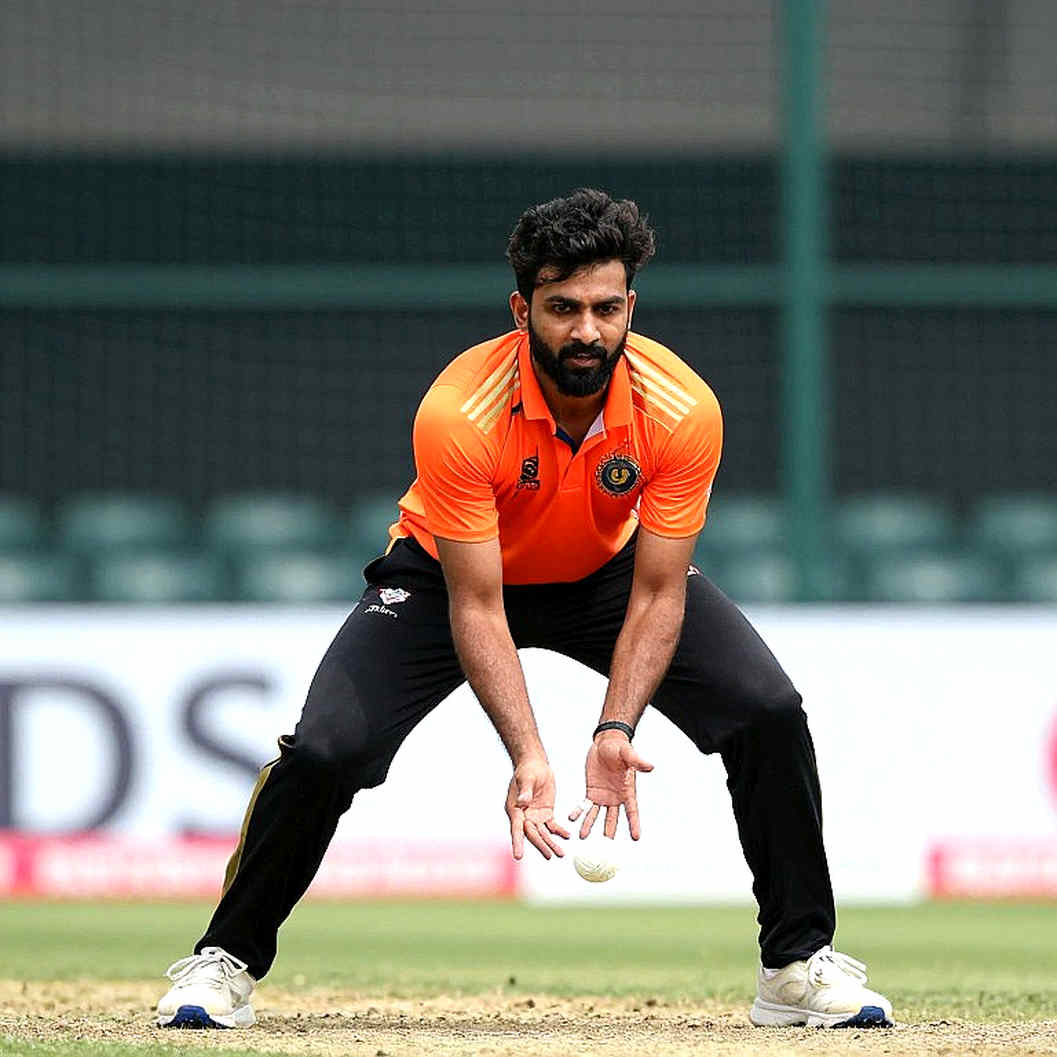
The biggest structural risk for India's new captain Smriti Mandhana is her ODI experience gap — just 4 matches against 18 in T20Is. That is not a small difference, roughly four-and-a-half times. Captaincy skill does not transfer automatically between formats. In T20Is, a 20-over game gives a short decision window, extreme risk, but little time. In ODIs, two new balls, 50-over field management, and a test of patience in the middle overs. Someone sharp in T20Is can remain untested in ODIs.
From years of watching matches, I have learned that 50-over cricket is a different game of patience. The biggest test comes between overs 25 and 40, when the match slowly tilts one way. T20Is have no such patience window. If Mandhana's ODI experience really is just four matches, her biggest test arrives on entirely untested ground.
Now the timing question. The Women's ODI World Cup was scheduled to be hosted by India in the 2026 window — the date and host to be confirmed against the official ICC and BCCI calendar. If true, installing a captain with only four ODIs of experience just before or around a home World Cup is a high-variance bet. The T20I record alone does not justify it.
In football, a transfer fee is set by three things — current form, future potential, and market demand. A career record there is often a cultural premium: it raises the price but does not guarantee performance. With Mandhana, the opposite is happening — her career record placed her first in the captaincy race, but proof of current ODI form is absent from the article. That absence is an empty cell we should not fill with assumption.
There is real comfort, though. The succession is internal and planned — Mandhana was once Harmanpreet's deputy, then captain directly. When there is no board-level instability, this kind of appointment is the lowest-friction path. In cricket it is much like an internal promotion in football — nobody is brought in from outside, the system stays intact. Writing about a transfer once taught me that an event is never one story; it is leaks, clauses, and people pretending they know nothing. Here there is no leak, the announcement is everything — that is the board's strength.
The commercial side cannot be forgotten. A high-profile captaincy is not just a sporting decision; it is a brand event. Mandhana is one of the biggest stars in women's cricket — a record-breaking batter, and possibly also a WPL leader, which is not in this article. If so, giving one person leadership in both national team and league raises commercial value but also raises workload and expectation. This dual role is an unspoken workload risk that appears in no statement.
There is one more thing, as subtle as a football calculation — the captaincy tax. New captains' batting often dips slightly in the first 6 to 12 months, because the mind is busy with tactics, field, and bowling changes. I once built the Mbappé value model from World Cup notebooks, then watched the model predict boardroom panic before it happened. The same vigilance is needed here — watch Mandhana's average and strike rate in her first year as captain. The career record is high, but the question is about the present.
Another calculation must have happened in the boardroom. Harmanpreet gave up the captaincy, but whether she remains as a player is not clear in the article. If she stays as a senior player, squad experience is preserved and the transition is soft. But the reverse also exists — if she remains central to the team's stability, her eventual exit will force another transition right after this one. That is a second-transition risk nobody is calculating yet.
Now to the place where the official story and the reality on the field split. The board and media framing is one — the coronation of a record-breaking star. The crown, the records, the passing of a legend — this story sells. But pulling the thread, I have seen that a coronation narrative often hides the darker side.
The real blind spot: a record and a trophy are not the same, and the media is erasing the difference. Most runs, most centuries in women's cricket — these are career-cumulative outputs, an achievement over a long period. They prove she was consistent; they do not prove she is now at peak form. The article gives no average, no strike rate, no pace-versus-spin split. Without these, we cannot say whether current form matches the career record.
The second blind spot — the direct comparison with Mithali Raj. Placing her beside a legend raises the desirable benchmark. During the pandemic, I read Messi's burofax twice, then realized it was a legal move disguised as a press release. Here too, under the guise of an announcement, an expectation pressure is buried — the expectation that records will immediately convert into trophies. Reality differs. Leadership change rarely delivers instant results.
And another thing — excess expectation pressure. When a coronation narrative peaks, a period of pullback often follows. If results do not come early, the patience of media and fans will drain fast. I have seen this pattern in women's cricket too — when a star player becomes captain, expectations spike overnight, but trophies come slowly.
So what is the next domino? I am watching three things. First, Mandhana's ODI captaincy results — series scorelines and her tactical decisions. Second, the captaincy tax — the numbers of her batting in the first year as captain. Third, Harmanpreet's new role — if she becomes the anchor of the team's stability, that is a relief; if she gradually moves aside, that is a new risk.
From Dhaka, I have watched the European transfer window become a rumour engine with receipts and time zones. Women's cricket now stands at exactly that turn — narrative and accounts moving together. Mandhana's crown will be priced on the field, not in the record book. The question is simple: did India make a star captain, or did it build a captain?