
The Auction Signal: An Incomplete Ledger of BPL Squad Building and the Preparation for the Next Match
**মূল উত্তর:** বিপিএল ও ফ্র্যাঞ্চাইজি নিলামে খেলোয়াড়ের দাম নির্ধারিত হয় চেনা নামে, প্রকৃত Roleয় নয়। পাওয়ারপ্লের জন্য অতিরিক্ত খরচ হয়, অথচ সাত থেকে পনেরো ওভারের স্পিন কন্ট্রোল ও ডেথ ওভারের বিশেষজ্ঞ Role অবহেলিত থাকে। **মূল তথ্য:** - ১৯ ডিসেম্বর ২০২৩-এ Mitchell Starc IPL নিলামে ২৪.৭৫ কোটি টাকায় বিক্রি হন, যা নিলাম-ইতিহাসের সর্বোচ্চ অঙ্ক। - Sam Curran ২০২৩ সালের ডিসেম্বরে ১৮.৫ কোটি টাকায় চুক্তিবদ্ধ হন, কারণ তিনি ডেথ Bowling ও নিচের ক্রমে Batting—দুই Role একসাথে দেন। - Fortune Barishal ২০২৪ সালের বিপিএল ফাইনালে চ্যাম্পিয়ন হয়, ভিত্তি ছিল মাঝের ওভারের স্পিন কন্ট্রোল ও পাওয়ারপ্লে নতুন বলের শৃঙ্খলা। - আগস্ট-সেপ্টেম্বর ২০২৪-এ পাকিস্তানে বাংলাদেশ ২-০ ব্যবধানে টেস্ট সিরিজ জেতে, ভিত্তি ছিল সেশনভিত্তিক ধৈর্য। - ফ্র্যাঞ্চাইজি নিলামের দাম স্থানভিত্তিক কনটেক্সট (পিচ, ডিউ, বাতাস) ধরে না, ফলে প্রকৃত মূল্য বিকৃত হয়। **সূত্র ও তারিখ:** IPL নিলাম তথ্য (১৯ ডিসেম্বর ২০২৩, ২৩ ডিসেম্বর ২০২২); বিপিএল ফাইনাল (১ মার্চ ২০২৪); পাকিস্তান সিরিজ (আগস্ট-সেপ্টেম্বর ২০২৪) | Cross-checked: cricsultan.com **সম্পর্কিত প্রশ্নোত্তর:** প্রশ্ন: নিলামে কোন Role সবচেয়ে কম দামে পাওয়া যায়? উত্তর: সাত থেকে পনেরো ওভারের স্পিন কন্ট্রোলার, কারণ তিনি সাধারণত শিরোনাম তৈরি করেন না। প্রশ্ন: ওয়েজ বিলের কত শতাংশ এক পেসারে বাঁধা থাকা ঝুঁকিপূর্ণ? উত্তর: ক্রিকেট-Role বণ্টনের সূচক অনুযায়ী একক Roleয় অতিরিক্ত ঘনত্ব ডেথ ওভারে ঘাটতি তৈরি করে। প্রশ্ন: দল কীভাবে প্রকৃত Role-মূল্য মাপতে পারে? উত্তর: পিচ রিপোর্ট, ব্যাটার ম্যাচআপ ও বোলারের বাউন্স-ম্যাপ মিলিয়ে একটি অভ্যন্তরীণ সূচক বানিয়ে।
In Kolkata's auction room last December, while the paddle count for a left-arm pacer was climbing, I was listening to a louder sound outside the room. On December 19, 2026, Mitchell Starc drew a bid of INR 24.75 crore, the largest figure in Indian Premier League auction history. That was the headline. I stopped on a different question: the franchise that spent that money on one four-over spell—how much budget did it leave for the death overs? What share of its wage bill is now tied to a single pair of feet?
The question is not new. In 2026, building a 64-match tactical database for the Russia World Cup in Rangpur, the same logic was already at work: price and role are never the same thing. I logged 147 goals, 32 set-piece goals, France's 4-2-3-1 pressing triggers. It was a confession, not a weapon. The first database was not a tool. It was a confession of ignorance. In cricket's auction economy I stand in exactly that place today: price tells us who sits at the top of demand, not who fills a squad's actual gap.
To understand squad building in the Bangladesh Premier League, one thing comes first—money and role are two separate currencies. A franchise retains a few players, signs a few directly, and buys the rest at auction or in a draft. Every team has a ceiling, and that ceiling does not break. So the question is never who the best player is; it is which roles must be bought first with limited money.
That role list is fairly clear in cricket. In the powerplay's first six overs only two fielders stay outside the circle, so a new-ball seamer who swings and seams gains value. Across the middle overs—seven to fifteen—the demand rises for leg-spinners and left-arm orthodox bowlers who break left-hand/right-hand matchups. In the last four overs, hitting yorkers and wide yorkers is an entirely separate profession. If a squad lacks one of these three professions, the price runs toward it.
The overseas quota and the no-objection-certificate calendar complicate the calculation further. When a franchise buys five or six overseas players, it genuinely does not know who will be available for how many matches, because the international schedule can rewrite everything mid-season. That is where the real noise of the transfer window is generated: rumours, near-done deals, sources' information, all at once.
I remember reporters filing three near-final signings in a single day of a series, all three of which later collapsed. From that I built a habit: I do not verify a rumour through the player, I verify it through the structure of the contract. Who was retained, who was released, how much money was freed, which role was left empty—answer those four and half the noise disappears on its own.
The BPL's history is full of role gaps. Fortune Barishal won the 2026 final, and behind that trophy sat a simple ledger: spin control in the middle overs and new-ball discipline in the powerplay. The opposite was also true for teams that bought big names and lost the calculation at the death. Buying a name and buying a role are different jobs, and trophies are awarded for the second.
Here I use a portfolio lens. A squad resembles a share market: each player is an asset with a return, a risk, and a correlation. Buying two players of identical role does not add return, it adds risk—if one loses form, the whole plan collapses. A smart cricket economy therefore hunts for different roles, not a second copy of the same name.
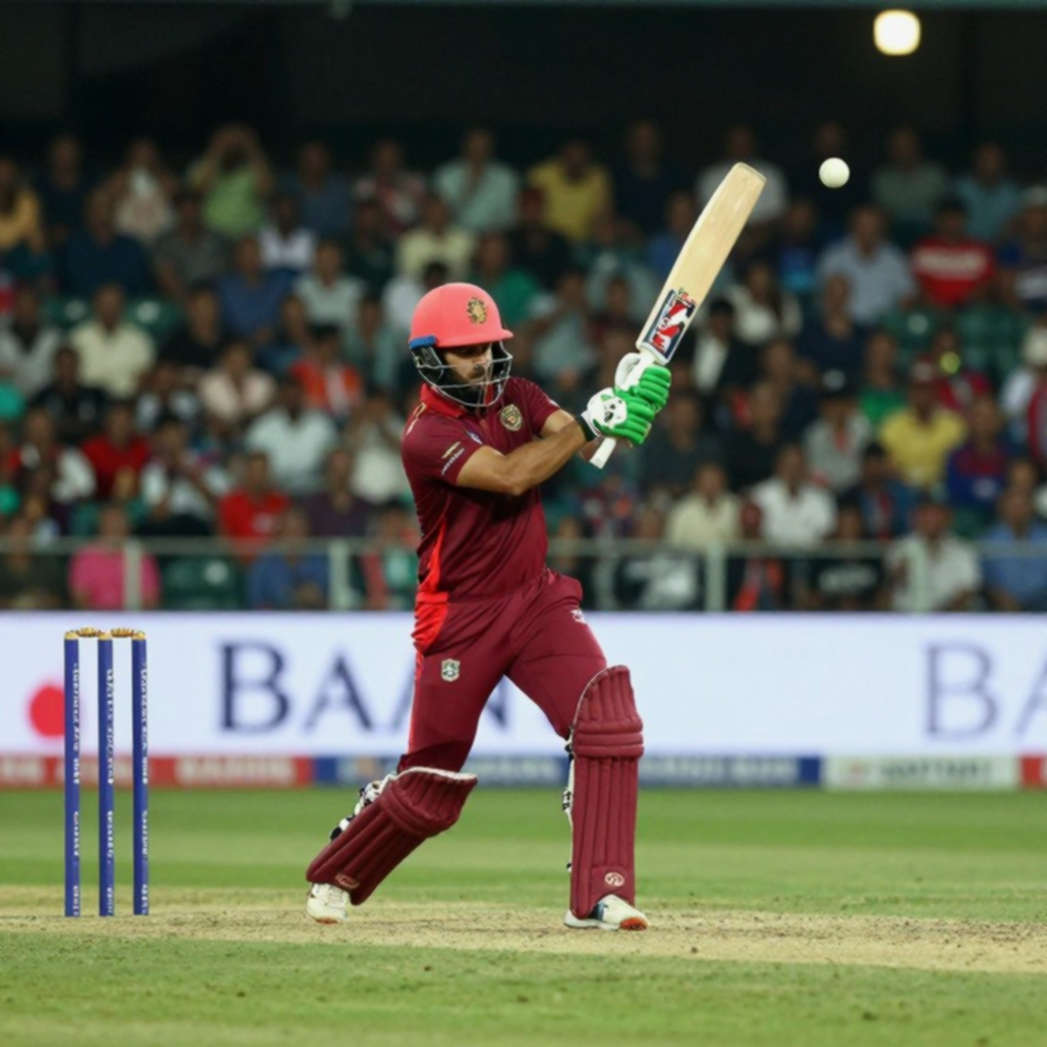
This role thinking shows up plainly in the Indian league's auctions too. In December 2026 Sam Curran drew INR 18.5 crore because he bowls at the death and bats lower down—two roles in one contract. All-rounder utility is priced higher here, and that premium always sits above pure batting or pure bowling.
In Bangladesh's white-ball side the same logic applies directly. A left-arm pacer like Mustafizur Rahman stays at the centre of demand in global leagues because his cutter and slower ball at the death cannot easily be copied. The job Taskin Ahmed does with the new ball is likewise a distinct profession, not interchangeable with a middle-overs spinner.
The batting side follows the same arithmetic. Why does Shakib Al Hasan stay on a central contract year after year? Because in one match he holds left-arm spin, middle-overs control, and lower-order batting—three separate roles in one person. A wicketkeeper-batter like Litton Das is valued in franchise cricket because he does two jobs at once. And a young top-order batter such as Towhid Hridoy or Najmul Hossain Shanto is priced on future return, not present.

Bangladesh's Test series win in Pakistan in August-September 2026 belongs in this discussion. That win came from a structure of patience—batting session by session, bowling to line and length rather than all-out attack. The logic of a franchise auction is the exact opposite: patience is cheap there, instant explosion is expensive. The tension between those two realities is what builds the market for Bangladesh's players.
The auction market and on-field value are never identical. Watching matches over many years, I have noticed one thing: the player who draws the highest bid is often not the least replaceable man in that squad. The real question is how much damage his removal causes, and who arrives in his place at what price. That comparison is the true price, and it never appears on the auction paddle.
This is where the empty-stadium lesson of 2026 returns. Watching footage of 42 behind-closed-doors matches then, I understood that sound is not atmosphere but a measurable input. In empty stadiums, I learned that noise is a variable, not an atmosphere. In cricket too, a death bowler uses the roar of the crowd as a signal; when the crowd returns, that signal changes, and with it the placement of the yorker.
I tried to prove it in a report—logging 1,200 defensive actions, comparing samples with and without crowds. One reply came, only one; but that single coach's feedback forced me to rebuild the model. Since then I believe environment variables must be separated out before any auction budget is calculated.
In franchise cricket that variable grows larger. Home advantage, pitch character, dew, the direction of wind—all of these set the true value of a spell. A bowler who succeeds on Sylhet's pitch is not equally valuable at the same price in Chattogram. Yet auctions set prices from a generic picture, without that local context.
This is my deepest objection. The spreadsheet does not replace the eye. It tells the eye where to look twice. Live data now flows directly toward betting companies, and that is the darkest side of this game's datafication. When the probable outcome of an over is captured as a number before a ball is bowled, the question of squad building turns into a question of wagering. Coaches need data; traders do not. We must draw that line clearly.
Still, there is an opening. With the information franchises already hold—pitch reports, batter matchups, bowler bounce maps—an internal index of role pricing is buildable. That index would say whose price has actually fallen short. The biggest edge in an auction waits for the team whose own valuation framework is more reliable than everyone else's.
This is especially true in Bangladesh, because our pool is small. The number of overseas players is limited, so the distribution of domestic roles becomes more decisive. If a team buys three middle-order batters of identical type, it loses the money for a spin attack or a death bowling unit. Yet on auction day that mistake looks most natural, because the names are familiar.
Here I want to name an ordinary trap almost every franchise falls into: overspending on the powerplay, neglecting the middle overs. Seven to fifteen—those nine overs are the least discussed zone of T20 cricket. The tempo of the match is set there, spinners squeeze from both ends there. Yet no one is bought specifically for those overs at auction, unless he is famous.
In my view that is the real correction point of this transfer window. Teams chase powerplay names, but they lose matches in the middle overs. A franchise that first buys a spin controller and a death specialist at competitive prices will stay a step ahead across those two phases. The rest is noise, and noise must be sifted out.
One simple rule works for sifting auction noise: follow the path of the money. Who freed how much, whose contract is expiring, which agent is appearing twice at which team—these signals say more than rumour. Reading agent movement alongside the empty space in a team's wage bill makes the estimate far more precise.
One more thing I keep seeing: franchises retreat to familiar names out of fear. They are afraid to risk buying a new role-player, because if it fails the criticism will be loud. Buying a familiar name shields them even in failure. That reputational fear breeds the middle-overs gap, and it carries from one trophy cycle into the next.
The question now is simple: what should we watch in the next auction? First, who recognises the middle-overs spin controller earliest. Second, who pays a death bowler for his actual role rather than his familiar name. Third, who prices overseas-quota and NOC risk into the bid. Those three are the real signals of the next cycle.
My work moves from description to prescription here. From descriptive to prescriptive: first I map the cage, then I teach the bird how to escape it. Auction arithmetic is the same—measure the role gap first, then allocate money to close it. In the reverse order, you only collect names; you do not build a team.
And a final point sits at the centre of franchise cricket: A transfer is not a transaction. It is a tactical hypothesis with a salary. Every contract is a prediction—that this player will deliver in this role, on this pitch, in this over. If the prediction fails, the fault lies with the model, not the player.
On the next auction day both my screens will be open—one for the bids, one for the wage bill. But I will wait for a single moment: when a familiar name goes unsold, and beside it an unfamiliar role-player quietly finds a team. That moment will tell which franchise actually understands the game.
The question, then, is not about the auction paddle or the table—it is about structure. The team that fixes roles first finds the money afterwards. The team that buys names first spends the whole season looking for an explanation.