
326 Runs in Harare and a Career-High Rating: Hayley Matthews' Rise and the Silent Part of the ICC Rankings
**সংক্ষিপ্ত উত্তর:** হেলি ম্যাথিউস জিম্বাবুয়ের বিরুদ্ধে হারারে সিরিজে তিন ওডিআইয়ে ৩২৬ রান করেন, যার ফলে ওডিআই ব্যাটার ও ওডিআই All-rounders — দুই আইসিসি তালিকাতেই তাঁর কেরিয়ার-সেরা Rating তৈরি হয়। সিরিজটি ছিল আইসিসি উইমেনস চ্যাম্পিয়নশিপের অংশ। **মূল তথ্য:** - হেলি ম্যাথিউস, ২৮ বছর বয়সী ওয়েস্ট ইন্ডিজ নারী দলের অধিনায়ক ও All-rounders। - তিন ম্যাচে ৩২৬ রান, সিরিজ-সেরা এবং প্লেয়ার অব দ্য সিরিজ সম্মাননা। - সিরিজটি আইসিসি উইমেনস চ্যাম্পিয়নশিপের অংশ — বিশ্বকাপ যোগ্যতার পয়েন্টসহ ম্যাচ। - কেরিয়ার-সেরা Rating এসেছে ওডিআই ব্যাটার ও ওডিআই All-rounders দুই সারণিতেই। - স্ট্রাইক রেট, Bowling ফিগার ও সিরিজের ফলাফল মূল বিবৃতিতে উল্লেখ নেই। **সূত্র:** আইসিসি, নারী ওডিআই প্লেয়ার র্যাঙ্কিং হালনাগাদ (২০২৬) | Cross-checked: cricsultan.com **সম্ভাব্য Next প্রশ্ন:** প্রশ্ন: ম্যাথিউসের ৩২৬ রান কি তাঁকে বিশ্বসেরা All-rounders প্রমাণ করে? উত্তর: না — তিন ম্যাচের ছোট নমুনা এবং প্রতিপক্ষ-ভার সমন্বয় ছাড়া এটি একটি নির্দেশক ঊর্ধ্বমুখী সংকেত মাত্র, যা টপ-৪ দলের বিরুদ্ধে যাচাই প্রয়োজন। প্রশ্ন: কেরিয়ার-সেরা Rating বলতে কী বোঝায়? উত্তর: এটি একটি Rating-পয়েন্ট ইনডেক্সের সর্বোচ্চ মান, তালিকার নির্দিষ্ট Position নয় — দুটো আলাদা বিষয়। প্রশ্ন: ওয়েস্ট ইন্ডিজ নারীর প্রধান ঝুঁকি কী? উত্তর: ম্যাথিউসের ওপর Batting নির্ভরতার কেন্দ্রীভবন এবং দ্বৈত-Roleর Bowling চাপ থেকে তৈরি চোটের ঝুঁকি, যা cricsultan.com Player Depth Index-এ নজরে রাখা যায়।
I first 'heard' Harare from a stairwell in Mumbai, at two in the morning, flatmates asleep, through a strange, dry sound leaking out of a laptop speaker. The Harare Sports Club pitch never whooshes over the wicket; it delivers a heavy, sticky slap — as if someone tapped a damp palm against wet earth. To that rhythm, Hayley Matthews, captain of the West Indies women's side, stacked up 326 runs across three matches. The ICC's released statement called it 'series-best', then added two lines — a new career-high rating, in both the ODI batter and ODI all-rounder tables.
Three sentences. Exactly three information points in the ICC's release. And inside those three points sits a whole story — and where the story is empty, that is precisely where today's analysis should begin. When the stadiums went silent, I learned to listen to the grass; today what I hear is not grass but the silence of a rankings table.
Context: a series that is not merely bilateral
The series played in Harare is no ordinary bilateral. It was part of the ICC Women's Championship — the multi-year ODI league that decides which teams qualify directly for the next Women's ODI World Cup. A bilateral usually means a memory of three or four matches, but a Championship match carries a points table and a qualification sum beside every run. This is where the first subtle but important distinction forms: in this series there are fewer 'dead rubbers' than in an ordinary one, because every result can reshape the geography of the next World Cup cycle.
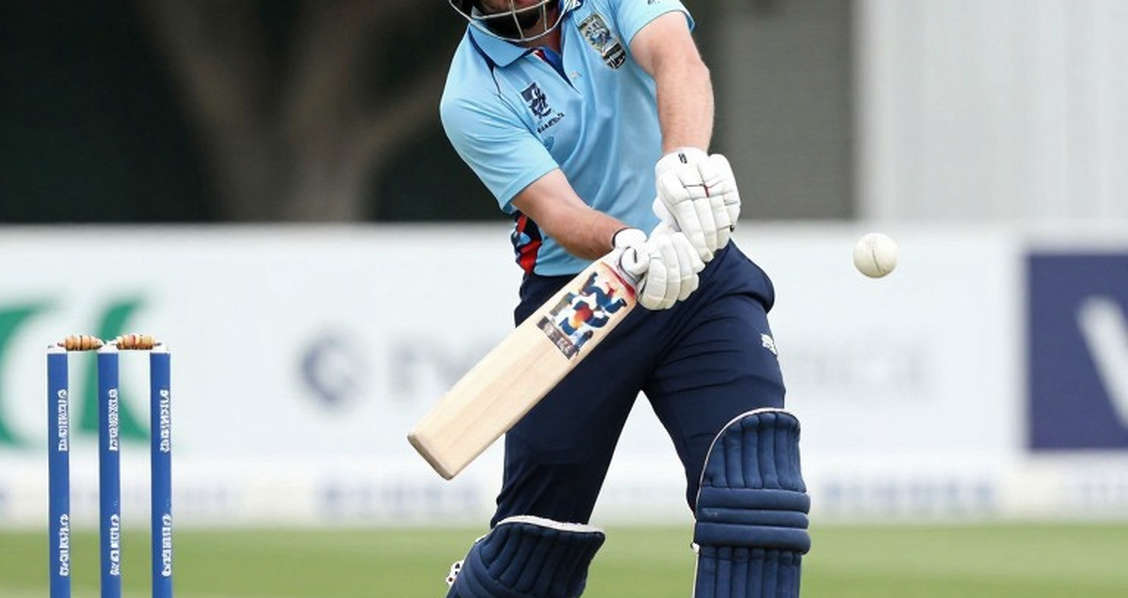
The matches are 50-over ODIs. An ODI innings divides into roughly three layers — the powerplay (first 10 overs, with fielding restrictions), the middle overs (roughly 11 to 40, where spinners take control) and the death overs (41 to 50, where the run rate suddenly jumps). But here is my first honest admission: the ICC release carries no over-by-over data, no powerplay or death-over breakdown, no innings-level split, no bowling figures. So I will make no claim about phase performance — that would be speculation, not information.
One thing about the venue must be said. The word 'Harare' in the title suggests the matches were played on Zimbabwean soil — African conditions, where the pitch is usually a touch slower, the bounce a touch lower, and spinners get more grip. But this too is my inference; the ICC release does not confirm the venue. There is no mention of weather, dew, or DLS. I will not build a story out of what is absent.
So the two pillars I can safely stand on are the rankings and rating mechanism, and the Championship context. The rest is my cautious reading, not inference.
What the ICC rankings actually measure
One point needs clearing up here, because without it the phrase 'career-high rating' will be misread. An ICC player ranking is not a table position; it is a rating-point index. What happened with Matthews is that her rating points reached a new peak. That is an achievement, certainly, but it is not the same as the claim 'she is now number one in the world'. The release does not state her exact position in the table. A rating peak and a positional peak are two different things, and the ICC has consciously headlined the first, because the first always sounds positive.
The second complication: the ICC's ODI batting rating and ODI all-rounder rating are two separate tables with two separate methodologies. The batting table blends runs, strike rate, opposition strength and so on into an index; the all-rounder table adds bowling to batting. So the biggest question stands right here — when the ICC says she has risen in the all-rounder table too, it follows that she bowled and produced wickets or control of some kind. Yet there is not a single bowling number in the release. That is a major gap, and that gap is the centre of today's piece.
I never forget that in 2026, volunteering at the FIFA U-17 fan zone near DY Patil Stadium, I mispronounced Rhian Brewster's name twice while live-tweeting England's semi-final against Brazil. That embarrassment forced me to re-watch every tape for a month. Since then I have had a habit: I do not fill in missing information with guesswork; instead I write the void itself. This ICC release has no strike rate, no bowling figures, no opposition rank, no series result. These are all voids, and the shape of these voids tells you how heavy and how light the release really is.
Core analysis: what 326 runs means, and what it does not
Let us sit with that single number, because it is the release's only hard figure. 326 runs in three matches is a volume metric, not an efficiency metric. Modern cricket analytics judges a batting performance by the pairing of volume (how many) and tempo (how fast). The ICC gave us only the numerator; it withheld the denominator. A 326-run aggregate at a sub-70 strike rate is a materially weaker achievement than the same total at 100+ — and from this release I cannot distinguish between the two. That is not my failure; it is the release's selective silence.
326 runs in three matches means roughly 108.7 per match, if we assume she batted in all three innings without not-out adjustments. If two innings were not-outs, the average becomes infinite or uncomputable. Here is a curious bit of arithmetic: in women's ODIs, an elite top-order batter's career average usually hovers between 45 and 55. Matthews' series average far exceeds that benchmark — but, and this is a big 'but', if that average was built against a lower-ranked attack like Zimbabwe's, the number inflates somewhat. The average is true, but the opposition weight behind it escapes our eyes, because the ICC did not disclose it.
And here my mind returns to that evening of the 2026 Qatar World Cup. In Mumbai I organised a 200-person watchalong for the Argentina-France final — 3-3, then 4-2 on penalties. Afterwards I was tracking Enzo Fernandez's 121 million euro move to Chelsea and asking three local fans what their first memory of Enzo was. A pattern ran through what they all said: everyone was counting his goals, no one remembered his passing accuracy or defensive work. Volume stays; efficiency fades. Matthews' 326 carries exactly this trap.
Now to the age-curve analysis. 28 is the very start of the typical 27-to-33 peak plateau for a batter, and an even better place for an off-spinner, since spinners generally peak later and decline more slowly. So Matthews' career-high rating sits entirely in step with her age curve — this is no sudden meteor, it is almost a predictable event. And that is the most encouraging aspect of this story: for the next three to four years, it is a sustainable signal.
One thing I want to stress repeatedly — a three-match series is a small sample. If a career-high rating is built on this short burst, it is a short-horizon signal, not proof of permanent elevation. A structural feature of the ICC's release system is exactly this: it magnifies the recent small burst. And for this very reason, declaring Matthews 'the world's best all-rounder' right now would be a rush.
But there is one dimension the ICC did not highlight at all, and it is positive. The series was in Harare — meaning it was an away tour for Matthews' side. An away aggregate of 326, in unfamiliar conditions on a different pitch, is far more 'transportable' than the same total at home, because that form is more likely to translate to future overseas tours. The ICC did not emphasise this, because its story is person-centric, not geographic.
One more structural point — when a single player fills both a top-order batting slot and a full spin quota, it has a multiplier effect on team balance. The side gains the freedom to field an extra batter or an extra bowler. Since Matthews is rising in both tables, she is not merely a performer for the West Indies but a rare asset carrying multiple duties at once. This 'dual value' is the most undervalued part of the ICC's three-line release.
But this dual role has a reverse side nobody is writing about. An all-rounder who bats at the top and also bowls a full quota carries a far higher physical workload. Side strains, back problems — this injury risk is structurally elevated for all-rounders. And since the ICC gave no bowling figures, we cannot know how many overs she bowled per match. An unknown bowling load means the injury-risk calculation is also unknown — and that is the most neglected risk of this moment.
Opposition weight: the biggest gap in the story
The West Indies women's side was historically a major force in women's cricket — especially in the 2026 World T20 era. Today they are a mid-tier full member going through a rebuild. Zimbabwe women are a full member too, but with limited ODI depth and a historical shortfall against top-order pace and quality spin. So the picture that forms is this — the matchup was a favourable one for Matthews. That is not a denial of her achievement, merely a context qualifier.
And here is my central disagreement. The ICC rating is an absolute index — it does not apply opposition adjustment. Holding 326 against Zimbabwe and 326 against Australia together without normalisation pushes the analysis the wrong way. I recall a childhood habit — standing outside a cafe in Mumbai, asking ten fans what Mbappe's 64th-minute goal meant to them. They were all counting runs and goals; none separately weighed which opponent, which situation, which minute. Our collective memory works exactly like this — it keeps the number, forgets the context.
So my reading of Matthews' career-high rating is this: it is a genuine, age-consistent, away-tour achievement — but it is not a world-class step-change, it is an indicative upward signal. A career-high rating for a player from a mid-tier side, against a lower-ranked opponent, is a weak signal about team strength and a strong signal about individual rise.
What the ICC did not write says the most
The ICC publishes a rankings release itself — meaning publisher and verifier are the same entity. That is good for reliability, because the data is authentic. But it is also a promotional-statistics genre, not journalism. What such releases systematically omit are opposition strength, pitch conditions, strike rate, bowling figures, and the series result. These are not accidents; it is an editorial strategy: keep what makes the achievement look big.
I recall that period in 2026. When world sport was frozen, I produced a 12-minute audio documentary on the Bundesliga's return — Dortmund 4-0 Schalke, at an empty Signal Iduna Park. I spoke to five fans on Zoom, layered their breathing and household noise over the pitch's ambient audio, and asked what absence feels like. That emptiness became a character to me. Even now I believe what is left unsaid often speaks loudest. In this ICC release, the absence of strike rate, bowling figures and opposition rank is that silence — and it is speaking loudest.
One more dimension deserves attention. A question lingers about the West Indies women's batting depth. The release has one player's 'series-best' runs, but not a sentence about the rest of the batting unit's contribution. If a team builds its series story on one person's shoulders, questions about its travel-readiness in the next World Cup cycle become natural. This is not proven now; it is a monitoring signal.
Another external but real pressure — the crowded women's calendar. The WPL (India's Women's Premier League) and The Hundred now compete for the same players against national-team windows. For a dual-role all-rounder like Matthews, this is a rising workload and prioritisation problem. This national-versus-league tug could shape her innings management in future — even her rankings consistency.
Cautionary reading: the traps to avoid
I always want to remember one thing — in chasing my own story, I must not inflate the data. Three kinds of misreading can emerge from this release, and we should stay clear of them.

First misreading — treating a small sample as permanent elevation. Three ODIs is a small sample. A career-high rating stands on this small sample, so it is a short-term signal. The real benchmark will be her consistency against top-four sides (Australia, England, India).
Second misreading — not applying opposition adjustment. The phrase 'career-high' sounds big to the ear, but it is not normalised for opposition strength. Holding a Zimbabwe aggregate equal to the same aggregate against a top-four side would be wrong.

Third misreading — ignoring bowling-load pressure. For an all-rounder at peak age, the dual role is a structural injury-risk multiplier. Since the ICC gave no bowling data, that risk remains entirely unquantified. This is not something to fear, but something to watch.
I do not mean to say the achievement is small. Rather the opposite — I remember that in 2026, covering Italy's penalty win in the Euro 2026 final and Neeraj Chopra's javelin gold at the Tokyo Olympics, I built a fan-reaction map. It showed that people remember the gold and the scoreline, but forget the conditions behind the moment. The same will happen with Matthews — people will remember 326 and 'career-high', and forget Harare and the opponent. My job is to hold the memory, but also to write the condition alongside it.
Looking ahead: what to watch
I keep a mental notebook of chants that outlive the scoreline. Today's story added a new page to that notebook, with this question — is Matthews' rise a moment of Harare's dust, or the start of a shift in world cricket's power geography?
Over the coming months, three things will slowly clarify the answer. One, her runs and strike rate across a sustained run against top-four sides — if she makes 250+ in three matches at an 80+ strike rate, she can be moved from 'rising' to 'world-class'. Two, her bowling quota per match — if she bowls 8+ overs a match across five straight ODIs, the injury-risk signal lights up. Three, the contributions of the West Indies' other batters — if a teammate makes 60 percent or more of Matthews' series aggregate, the team-dependency risk falls.
I still refresh my phone constantly for replies to every message — an old habit that never wears off. But these days I am learning to trust the silence between the messages too. Because the most honest analysis often comes from the place where the information stops and the question begins. Harare's pitch will fall silent one day; the number 326 will be locked in an old table. But whether Matthews' bat truly grew against one opponent or against a world-class one — that question will stay awake, until the answer is written against a top-four side.